
Study: Only 154 People Have Joined the Amish in Nearly a Century
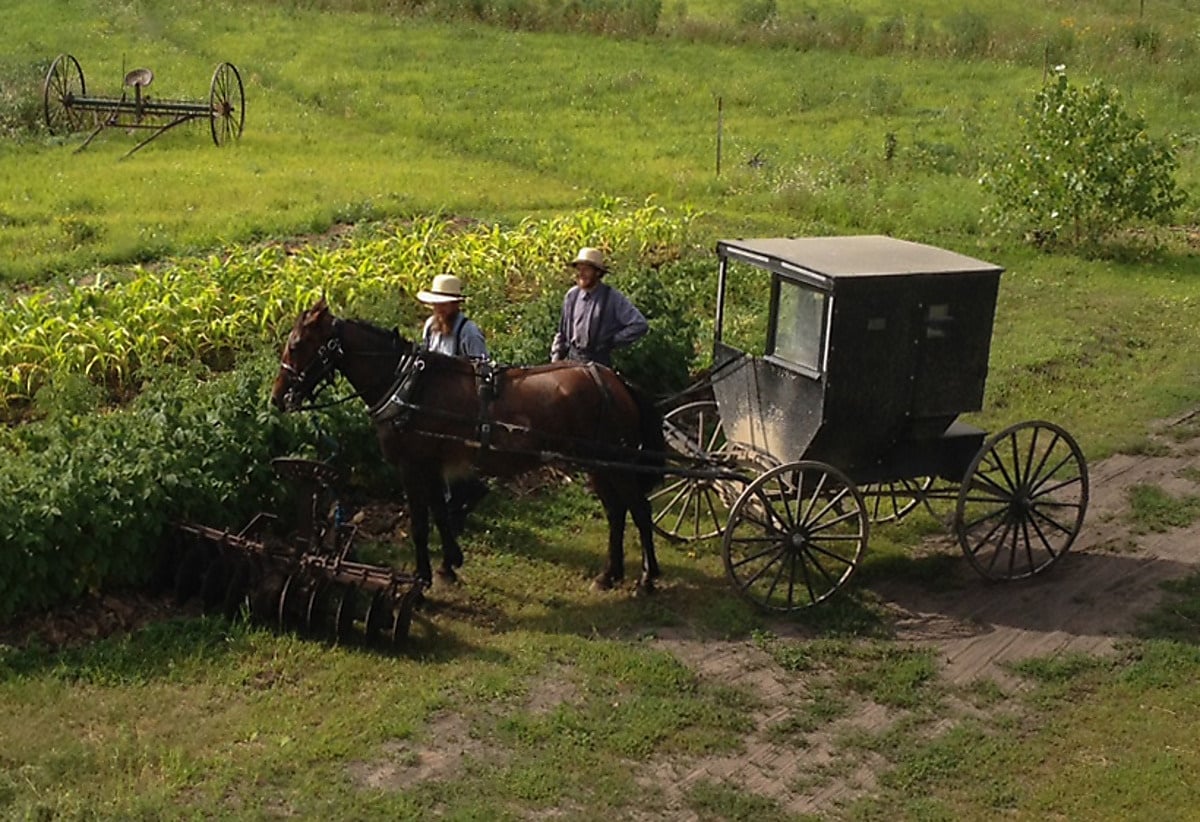
It seems there’s no shortage of curiosity about joining the Amish – especially given the recent “Suddenly Amish” television program. We’ve also covered the topic fairly often over the years here.
One thing has been consistently true: while joining the Amish fascinates a fair number of people, it’s simply not that common, for reasons we’ve gone into before.
Those include cultural differences, misperceptions or wrong expectations of the Amish, and the fact that the Amish generally do not seek converts to begin with.
We’ve also looked at individual examples of people who have joined in the past. Personally, I’ve met or known only about a half-dozen such individuals in about twenty years, though have encountered more than that in media reports. But never all that many.
How many people have actually joined the Amish?
From time to time you hear speculation as to how many have actually joined the Amish over the years.
But a study I came across recently aimed to put a concrete number to that question – at least looking at roughly the past 100 years.
The study, reported in December in an article at Population Studies: A Journal of Demography, by Cory Anderson and Stephanie Thiehoff found that the total figure of Amish converts comes to just 154 individuals across nearly a century.
They broke down how many of those were unmarried men, unmarried women – and husband-and-wife couples who joined together. They also found an interesting concentration of converts in one of the smaller US states. More on that below.
Where The Numbers Come From
The Amish publish and periodically update church directories. These are simple publications, primarily used within the community, listing households, births, marriages, deaths, addresses, and often occupations. Not every community publishes one, but many do.
The researchers created a database using 71 Amish church directories (I’m going to assume they focused on the largest ones that were readily available), which covered an estimated 89.9 percent of all Amish in North America at the time. The ones they used were published between 2009 and 2020, having a median year of 2015.
The final data set contains 263,158 individuals in 50,065 households. Astute readers will note that that figure is significantly less than the latest estimates of 410,955 people (via the Young Center 2025 figures).
That’s because the paper mainly covers a window from 2002 to 2011, the most recent decade for which the database has complete data. The Amish population in 2010 was roughly 250,000 people.
It should be noted that converts to the Amish is not the main focus of the paper. It has the title “The population structure of the Amish, a rapidly growing ethnic religion in North America,” and seeks to provide “an up-to-date population-wide analysis.”
In so doing, it includes data for median marriage age, fertility rate, life expectancy, retention, and other demographic numbers.
Finding The Converts – And Who They Left Out
But when it came to converts, their focus was “to identify all conversions across the past century or so” using “mixed methods”, including identifying non-Amish surnames.
They also employed two knowledgeable Amish converts to fill in any gaps (eg, missing individuals; converts who had a surname already common among the Amish).
They did leave out possible converts from two specific special groups. Those were 1), closely-related plain Anabaptists who became Amish, and 2), converts to a number of Amish churches in Latin America existing dating from the 1970s to as late as the 1990s. They explain why:
We opted not to include people converting from closely related plain Anabaptist groups, such as Low German Mennonites and Amish Mennonites, due to the occasional fluidity between such closely related groups and some difficulty in identifying them by surname, but we expect their numbers to be, at most, as low as for non-Anabaptist converts.
We also excluded converts—largely rural peasants—to two Amish churches in Honduras (1970s) and five in Paraguay (1970s–90s) due to difficulties in counting them and their location outside the standard North American Amish areas.
Who The 154 Converts Were
The study counted first-generation adult converts only: people raised outside the Amish who were later accepted as church members. Children and grandchildren of converts were not counted.
So I read that as this being about “true converts” – people that started somewhere else, and made the adult decision to become Amish. They break down as:
- 22 husband-and-wife pairs
- 64 unmarried men
- 46 unmarried women
It doesn’t surprise me that there are more unmarried men than women joining. But what does surprise me is that the number of unmarried women is that high. That probably reflects my own experience of mostly coming across unmarried males joining.
The earliest birth year among them is 1934. The authors note that many of those converts subsequently left the Amish, and that even had they stayed, “their children would have experienced a high risk of exit.”
They make this point in emphasizing the fact that converts, as a whole, contribute very little to Amish population growth. Further to that, the 154-strong convert group “represents 0.146 per cent of the total Amish baptized membership alive in 2010” – a tiny figure.
A Small Network in A Single State Accounts for 24 of Them
Another interesting observation of note: of the 154 converts, fully 24 of them were found in what the paper describes as “the Maine Amish churches, a small network that uses English rather than German in church services.”
This wouldn’t refer to all Maine Amish communities, but likely means those “seeker-friendly” ones such as at Unity in Waldo County.
That comes out to be roughly one in six of all converts, concentrated in one of the smaller Amish regions in North America. The authors draw this conclusion: “This suggests that any seeker-receptive changes Amish churches make could increase the in-conversion rate.”
There are additional figures and findings in the paper of interest, which we may take a look at another time. But for now, this 154 figure serves as another piece of evidence backing the idea that joining the Amish – not to mention joining and remaining Amish – is difficult, and especially rare.
Converting
About 25 years ago, I was in a circle letter with a woman who joined the Amish. We were a group of young, unmarried women who all wanted to convert and join the Old Order Amish church. She was the only one of us who had already converted and joined the Church. She married and had three children with her always-Amish husband before they divorced. He became Mennonite, and she left the faith all together, I believe.
50 Years Strong
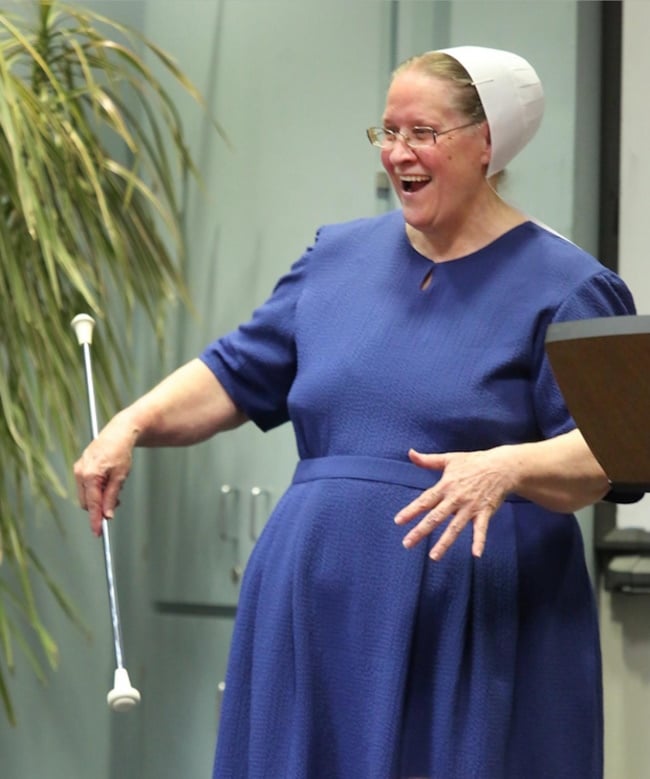
One of my favorite books about an Old Order Amish convert is a story by Marlene C. Miller. Her memoir is called Called to Be Amish: My Journey from Head Majorette to the Old Order (Plainspoken) details her remarkable transition from a modern lifestyle to the strict Old Order Amish church after marrying an Amish man named Johnny. Over a 50-year journey, she successfully integrated into the community, raised ten children on a farm, and became one of a few outsiders to permanently join the church. Her book can be found on Amazon for you lovers of true stories about the Amish. It is SO worth the read!
Another interesting book is “A Bridge Between Two Worlds: My Journey to be Amish” by Elizabeth “Joanie” Farmwald. Joanie Lelekacs was a young Catholic woman from Cleveland, Ohio, who fell in love with Jonas Farmwald, an Old Order Amish young man from Middlefield, Ohio (Geauga settlement). After they were married, she eventually joined the Amish church. They later moved to the Munfordville, Ky., Amish settlement and Jonas eventually became an Amish minister. I especially enjoyed reading the “Reflections” section in the last part of the book where Joanie includes her expressions of gratitude to the Amish, and many “memories” written by her husband and several of their adult children.
Thanks for mentioning that one Al. I don’t believe I was aware of it.
Thanks Al
That’s a book that I had not heard of. I will be trying to find a copy.
I had read Marlene Miller’s book years ago, it is a very good read.
I had the pleasure of meeting Marlene once. She was a delight to visit with. From what I recall her real life “voice” matched what I read in the book.
Thanks very much for a most-interesting post and for including a link to the study on which this AA post is based. I read the study and was very impressed about its thoroughness and methods used to collect data. I especially appreciate how the authors of the study shared their initial findings “with two knowledgeable Amish converts” who further helped them identify “additional converts missing from the directory” as well as other factors to help them get more accurate information.
Through the years, I have met and talked with several Amish converts in several settlements. I visited the Swartzentruber Amish settlement in Ethridge, Tenn., about five years ago and at that time I remember there being four or five such households at Ethridge with another household in process of joining. The most interesting person I met there was an older gentleman who had attended college and after he converted had been an Amish school teacher for a few years. I became an Amish taxi driver for him when he traveled to Louisville, Ky. via Greyhound bus and then needed transportation to Amish communities who did not have bus service. One time I provided transportation for him he was on his way home from Missouri from a gathering of other such Amish converts from settlements in various states. I would like to have more conversations with him to learn more about these gatherings of Amish converts, but he is now deceased.
Yes I thought that was a smart and I suspect pretty effective way to fill in gaps. I would be curious to know how many fit into the two categories that were left out, but I can see why they did so.
It’s really interesting to learn that you came across so many convert households in the Ethridge area. I have only heard of one convert from that area, and he was in the news several years ago in a way that you generally don’t want to make the news.
Do you happen to know if those households were joining the traditional Swartzentruber group, or rather the “Abe Miller” church there? That’s who I believe this other convert joined.
Greetings
I joined the swarzentruber Amish in Wayne county Ohio . Was banned over 20 years ago for disagreeing with the bed courtship . Still live almost the same as the Amish In south east Ecuador. My wife was never Amish . David Johansen
Convert
Hi, Erik. I am a convert to the Amish. I have been here for a year this January . I have learned Dutch. I am only 18. I was old order for 4 months in Holmes County, Ohio. Now I am Dan gma. I go with the youth and have been in many Amish parties….I am somewhat of a celebrity here and the acceptance I have experienced from the Amish is unreal. When I first moved here many of the girls didn’t trust me now you can’t even tell I didn’t come from the Amish. I want to say it is not easy but with the right reasons it is more than possible. You have to give everything you have. Every day. I have learned so much. How to get up early and put in long hours. Respect. Honesty. Responsibility. I have got so far. Get to know people and treat them with respect. It’s weird to say but I know more Amish than English. And it’s just not the same interacting with English. There’s a form of separation. We don’t see a lot things that go on with the English. We just live with each other and don’t really think about it. So I just want to say it’s not for everybody…I wouldn’t advice you do so unless it is for the right reasons and your willing to put everything you have. It can be very draining but it’s more than possible. I am grateful to God for the chances I have been given. Without him nothing would be possible.