
If you “left the English”, what would you gain?
When I first met the Amish, I spent a warm fuzzy period admiring and even idealizing Amish society. This was in the summer of 2004, and I was selling a set of books called the Family Bible Library to Amish families. I had spent a fruitful few weeks in the Arthur, Illinois community before traveling to Indiana.
I remember one day in the Daviess County, Indiana Amish settlement thinking to myself, wow, wouldn’t it be neat to be a part of this culture. I even remember who I’d been speaking to at the time.
It was a particularly sunny young farmer (late-20s, with some small kids) on the western side of the settlement. For some reason the topic of joining the Amish had come up. We’d been discussing another member of his community–let’s call him Mike.
Mike was unlike most Amishmen–he had actually joined the church from the outside, marrying an Amish girl and starting a family and a small home business. “He’s doing okay so far!” the born-and-bred Amishman told me, striking a note of hope and optimism about the convert’s chances of making it.

I had actually previously met Mike, and though I didn’t think to ask him much about his experience at the time, he provided a concrete example of someone who had actually done it. What if..?
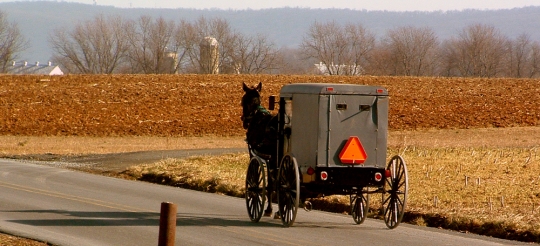
However, the allure of joining the Amish quickly wore off, as I describe in this piece about romanticizing the Amish. I came to see the Amish as similar to us (i.e., human), learned to appreciate the positive aspects of Amish life, and recognized that for various reasons there was no way I’d ever cut it in a pair of broadfall trousers.
I think everyone who comes to know the Amish on some level has the thought at least cross their mind, though.
It’s not for nothing that the all-time most-commented post on this blog is “So you want to join the Amish“. I can understand a lot of the sentiment expressed in the comments of that post, even if I think a lot of people are approaching the idea without fully thinking through the implications.
But for a few, I think joining the Amish is a dead-end road. Well, maybe not a dead-end road–that’s too negative. I’m sure that people that fail to be Amish take something important away from their experiences.
In any case, there are numerous examples of people who have tried to join but failed, either deciding against baptism or leaving some time after becoming a church member.
The sacrifices are great, and Amish themselves say that it is really hard to do unless you have been raised in the culture. On this point, I found Lance’s comments on “So you want to join the Amish” interesting:

When I tried to go Amish, I made the decision that it was pointless to long after things the Amish did not allow. I could not have them and that was that. So it was not a difficult burden to leave them behind. It took as long as it took to drive somewhere and there was no point to getting upset that a car could go faster. I never even thought of phone, TV, radio or computer.
I did miss running water for a shower, and, in hot weather, no fan to move the air made nights much more miserable.
What was problematic was the language barrier and the illogical/irrational rules. You must learn the language or you will just be left out at times. English speakers do not adapt easily to Germanic languages and you really need to learn both PA Deitsch and High German to understand at all times. It is not easy and some Amish do not learn the High German well.
Amish make changes to their rules by consensus of the church and if you were not there at the time the rule was made, it can be very hard to understand those rules. Without being born Amish and living in the system since young, you have a hard time adapting to, believing in and trusting it. It is the trust in the system or lack thereof that makes being Amish easy or hard. Our modern school systems teach critical thinking and that goes against Amish thought. They value a high level of yielding to the church in all things the church makes a stand. We have not been taught that and it is not easy to develop.

Though people’s experiences vary, I think Lance’s frank comments reflect a lot of the challenges of becoming Amish.
Yet even with the unlikelihood that that will ever happen, I still occasionally catch myself thinking what it would be like to live as an Amish person.
The well-known positive sides of Amish culture–a strong faith community, an arguably simpler lifestyle, family focus–have timeless appeal. When you’re stuck in traffic, breathing polluted air, anonymous in a big city, Amish grass can start to look pretty green.
I’m curious if you’ve ever pondered it too.
And so I’m wondering–if you “left the English”, why would you do it–and what is the greatest thing you think you’d gain?
Photo credit: whatatravisty




Jitka,
Probably because we (as men) are expected to repair said technology and can’t stand something that is too complicated for us to easily repair?
I actually prefer the older manual methods over the more modern “labor saving” ones. Saw an interesting study a while back that the time saved by a variety of labor saving devices is paid for by having to work that time. I guess you either have time or money…
Aaron
Food for thought...
Like so may others, I think the allure of joining an Amsih community mostly centers around a slower, simpler, less crazy pace of life. Family and community would be a great blessing, as would the new perspective on God and a deeper relationship with Him. I’m not sure they would accept me, however, as I am a veteran and have a handful of tattoos.
I understand and completely agree. I am honestly thinking about joining the Amish. I don’t want to hurt my family I have but this is something I have to do
Joining the Amish is not just living a simple life
I have been reading comments and see that many people equate joining the Amish with embracing a simple life. While that is true, it is also false to believe that it is simply a matter of renouncing your current life and shun electricity. I have never known any one from the “English” world joining the Amish community and there is good reason for this. First of all, the Amish do not have that same sense of individuality that we do. In fact, most of the bloggers here who want to leave their families to be Amish, are acting upon a sense of individual will that simply does not exist in Amish living. You cannot just do what you want to do because you are part of a community, not a lone wolf. Secondly, you would need to speak and read fluent German. This is the communal language because it is the language of the church. Every worship service is spoken in German and if you do not know it you would quickly feel like an outsider. Lastly, the Christianity of the Amish is not the evangelical kind. Amish and Old Order Mennonite churches bypassed pietism and evangelicalism , so you would not feel so much you were in a fundamentalist Baptist church as you would a liturgical one. The services are 500 years old and have not changed in all that time. The hymn singing is not your Wesleyan type but sound like Gregorian chants. It is beautiful but if you are a born again Christian and like praise music, you will never hear it. I feel for those who want to live simpler lives in close community as I share those sentiments. But you are wiser to simplify your own present lives, perhaps look to moving to a rural area, and attending a conservative Mennonite church where you can find the peace you are seeking.
Left the English
Very well written
Romancing the Amish
You have a wonderful blog, and great book. I hope you write another book one. Maybe a practical comparison contrasts of Amish and English life.
To answer your question, we would gain the joys & struggles of a Godly life on the path of humility & yielding. Your friend Dr Kraybill covers it well in many writings; “Gelassenheit”; yielding fully to God’s will, with a dedicated heat, forsaking selfishness. It WILL be much harder for English because we are usually raised the opposite; training the individual for self fulfillment and individual success.
What I don’t understand is many leave because of an Amish lack of spirituality. Apparently the individuality of a growing a deep spiritual life creates conflicts. What is interesting is Amish culture & governance is built and maintained on the Bible.
In my honest opinion, peace <
Dave
Dave thank you, and I hope to be able to write a few more yet 🙂
On spirituality, an interesting point, which may rest on what “spirituality” really means. I think there is a certain popular conception of spirituality but which may not be the only way to look at it. I also am not sure that being Amish would preclude individualism; in fact I have friends who would argue the opposite.
Appreciate you sharing here.
Amish religion
“I also am not sure that being Amish would preclude individualism; in fact I have friends who would argue the opposite.”
Erik,
Thank you for creating such an interesting blog. I wanted to respond to this thread regarding joining the Amish and the accompanying concern that there is a lack of spirituality in their faith practice. ALthough, most of my experience is with Old Order Mennonites, I think there is a similarity in their faith practices with those of the Amish. Members of the church are encouraged to reflect on their personal walk with Christ, but it is always in submission to the church community. I think what has most evangelical Christians confused is that they, the evangelicals, are used to the kind of pietistic and overtly evangelicaland proselytizing practices that were instituted in the Protestant church of the 19th century. These included methods that were never embraced by the Amish or O.O. Mennonites like the Sunday School movement or the wednesday night Bible study. Evangelicals assume that all believers, particularly those who like the Amish or O.O. Mennonites have biblical proscriptions for daily living, welcome these facets of Christian practice and are taken aback when they realize that they are not. For example, the first time I attended an Old Order Mennonite service in Lancaster County, PA, I had my Bible with me as I am wont to carry to church every Sunday to read and to make notes. My Mennonite friend, Erma, informed me that they did not ever bring Bibles to church and certainly never took notes, although she did say that there were some conservative Mennonite churches who did just that. It is interesting to note that my reaction to this initial visit was that the service, despite the overtly plain interior and egalatarian aspects of minister placement, had more the feeling of a liturgical Anglican service than it did a contemporary Baptist one. I thought a lot about this and came to the conclusion that the O.O. Mennonite service was unchanged since the 16th century and that the chanting of hymns and the use of the Gesangbuch was more akin to the ancient liturgical mass than it was the more individual and expository preaching services of the evangelical churches.After all, German is the language of the service as was Latin the preferred language of the liturgy. It is as if the plain church here in America skipped all the inroads of evangelical and pietist movements that the centuries of industrialization made in the Christian churches. Anyhow,I felt that the Christian walk was not something discussed or studied among members of the O.O. Mennonite church rather it was a path already laid out for them in the ordnung of the church. Because they are committed to the Church and truly believe that it is the bride of Christ, there is no hesitation or questioning the ways of it. That is why leaving the church or deviating away from it are such serious matters.
Great topic!
Nice post Susan, very true. In answer to the critics who raise the points you listed, I would like to give more flippant answers in addition to what you gave, if I may. Thank you.
The strangest thing about the non-Plain churches is how they actually believe that they have a right to an opinion about scripture, about how they should follow it. It’s simple, God gave His opinion, we obey and follow, we do not have Bible studies in order to find out if we can find a better way of fulfilling scripture according to our opinion and in opposition to God’s opinion.
Ours not to question why, ours not to wonder why, ours just to do or die. Simple enough, thats what submission to the yoke of heaven as servants of the Most High King is all about. Obedience to the written Word as is, not how we believe it should have been written if we were to have writ it.
As to taking a Bible to Sunday service. We trust that the preacher is able to read scripture from his Bible without making a mistake. As to writing notes, we already have the Bible, we are forbidden to add to it, so what is there to write down? If hearing the live preaching is unable to move ones soul to repentance, writing it down certainly won’t help. Not so.
The Amish who leave the community on account of having found a personal Jesus, lie. It’s just a cover up to justify to themselves a more worldly technologically advanced lifestyle. Having a personal faith in Jesus does not exclude one from being separated from worldly technology, which seems to be what they think it means. Why can’t they just be honest and say “I can’t live this primitive technological lifestyle anymore” instead of hiding behind religion to justify their leaving.
Amen to that post! absolutely!!
Is this how the Amish see contemporary Christians when they have Bible studies? As trying to change the word of God? There’s a lot more to scripture than just doing what it says, especially if you are misunderstanding what it says.
What allows you to think You understand the Bible?
I grew up in the Catholic church. We certainly never had Bible study. The reason for this was apparent to me when I attended my first Bible study with women in a First Methodist church. It made my hair stand on end to listen to people with zero theological background interpret the Word of God. YIKES!
Susan, I did not consider the impact of 18th & 19th Century piest and evalgelical movements. Your point on German to O.O. as Latin to Catholic is right on the mark.
Can you have the best of both worlds?
I just came across this blog and find it quite refreshing to see how many people actually do their homework on the Amish and Mennonite traditions and life style, whether to support or admonish it. Refreshing, because I have a general admiration for the simplicity of the life style, simple, demure, devoted. I don’t have a car, which seems to so many people be such a huge obstacle, such a huge thing that they cannot understand about the Amish lifestyle. I would love to have a horse and buggy and the surrounding where it is appropriate, such as in Amish communities, where even Walmart seems to appreciate and accommodate their Amish customers by putting up a buggy port (saw it somewhere, and thought it was so cool!)
I gave up TV over 15 years ago, because of all the doom and violence and advertising and frankly BS that one is bombarded with every moment the TV (or radio, even internet tho there are a few more options to control what one has to put up with.) is on.
Yet I don’t think I would agree with the total dependency on the church and the irrational, illogical, and to some point probably ridiculous rules created by the church. I believe in God, not in church. One does not need church to be close to God. But I don’t want to continue a long sermon about spirituality, belief, or religion as such. These can really not be defined but are as individual as each person and their relationship with God.
What I would rather like to know is, if it is possible to live and work on an Amish farm without having to join their order? Like a hired farmhand. I would love to learn their way of farming, with the horses, and without many of the modern technology, and yes, enjoy the romantic side of the simple Amish lifestyle. Without the strict and even scary church rules… I think I have an advantage, I do speak fluent German and know some Dutch and Swiss German which would probably make it easier for me to fit in in some way.
And, what would be the way to find an Amish farm that might be open to hiring an ‘English’ (German) to work for and stay with them?
Even though I am not living among the Amish, I believe that their way of life is the only way I can live. I am so much like them, it almost seems like I grew up with the Amish. I went to a public school after the second grade. No one understood me or was my friend. I didn’t laugh at their jokes, I didn’t speak like they did, I didn’t talk about people behind their backs, I didn’t want to dress like they did, I helped those who everyone else ignored, and I was always respectful to my parents and teachers. So I just focused on becoming smarter and smarter. Until I was a freshman in college. In highschool I had been at the top of my class. My parents had encouraged me to go to college. I didn’t think there was anything else to do with my life. The only good thing I saw in myself was intelligence. I had grown up around Asian culture. The influence of international students that had come to America to study PhDs in engineering had great influence on me. I wanted to be smart like them. The thought of being a mother and having a family was put out of my mind, as I couldn’t understand how to put a family and a modern job together. But shortly before I went to college, I became a fervent follower of Jesus. I knew that I had to give up my pride and love for knowledge, and look to Jesus to help me choose His will. Conflicted between the will of my parents and the will of God, I couldn’t share my heart with anyone out of fear of the conflict that would come and already existed in my family. I had grown up around many different cultures and ways of thinking. Being exposed to that made some in my family confused and they drifted towards hindu beliefs. I think that if we children would have only been protected from these other cultures, my family would not have been torn to shreds. The land mine that my family went through sent me reeling with a wound that I don’t think will ever heal. I had been raised in a traditional Christian home. Much of my family’s beliefs are shared by the Amish. But one thing isn’t: our desire to see the nations see the love of God in Jesus. That is one main reason why I went to public school. My dad is a farmer. We could have stayed with him and learned how to harvest hay and care for animals. But he valued our modern education more than he did value us learning skills of a farmer. Throughout my school years I would hear my dad warn us about the things the teachers would be saying, that we had to learn to distinguish the truth from lies. I took him very seriously. I wanted to know the truth. Because I am gifted with articulating the sounds and grammar of foreign languages, I decided that a foreign missionary could be the only way that I could do what the Lord wanted. So when I went to college I studied Spanish. I dropped out after one semester from not knowing how to obey the Lord and didn’t tell anybody for a year. I didn’t know what to do. Really scared, I decided I would try it again. I then began to study nursing. It was a little while after that I understood, from the opposition I had experienced my whole life from Western women,from reading the Bible, and from my church, that I was meant to be a mother. Western women are opposed to the concept that women are a treasure because of one main reason: for being a wife and a mother. Though Muslim women like to say that they value being a wife/mother, they really do envy the lives of Western women. About 7 months ago, I realized the onset of a much worser version of feminism was coming to America and the world. I knew that I wanted to get as far away as possible from it. Because I read the scripture on the head covering for women, I thought about wearing the Muslim abaya and hijab. I thought about becoming a nun. I wanted to quit school and go home to my parents, but they wouldn’t allow me to. I thought about becoming a seamstress and starting a school to teach the homeless to sew, cook, midwife, grow their own food, raise their own animals, build houses, and do all the things that American people had chosen to leave behind and have poorer countries do for them. I wanted to give the homeless a new way of life. I saw that Christian families were being made defective as a witness for Jesus because of modern jobs and the influence of strangers and other cultures on their children. Reading “A Chance to Die” about Amy Carmichael helped me to see that I could not have a family that would be effective as a bearer of light for the nations, if I couldn’t protect my children from the world’s influences- I want them to grow up knowing about only one culture. When they are old enough then they can decide whether or not to believe something else. I have a disdain for American culture in general. Perhaps it is the Asian influence on me, but I have a high value for family, for clean, joyful celebration, am very careful with my words, conscientious, able to laugh easily at simple, clean humor, disdain laziness/sloppiness/short cuts, and have a high value for politeness, quietness, and kindness. I have come to the conclusion that technology destroys culture, home-based skills for knitting the family together, and ultimately the home itself. Maybe what is going to happen is a global culture of technology. There will be no more separate families, trades, or cultures. Everybody will know one culture. Maybe there will be separate trades of technology. People might say, “I live on XYZ300”, indicating a type of technology that they live on. They will grow up with the idea that a type of technology is where they live.
So, “if I left the English, what would I lose?” The only thing is the memory of my family as it was before it was destroyed. And I won’t really lose that because it is a memory. I have already lost the cohesiveness of my family. I feel that there is nothing left. The way of life I have now- pretending to enjoy and admire the beauty and pride of this world while I am in nursing school- it is absolutely worthless and futile to me…and to those generations who may follow me. If I would give anything to my children, it would be a love for the Lord Jesus. I can only do this by making sure that my hands are fruitful by working with my husband and children and so that our children can learn from us and work with us. This is the only way to be effective for Jesus as a family. In any other way and any family will fall apart. “If I left the English, what would I gain?” I would gain the support of people who are fervent to protect their children from the influences of the world, so that they might be rooted securely in the truth and love of Jesus. The Amish may not be “evangelistic” but their families are proof in itself of the life and testimony of the Lord Jesus that is waiting in heaven for His church. I have nothing but the Lord. All is laid waste. There is no one to redeem us but You, O Lord.
Catherine
It seems to me that you have been doing a lot of seeking your entire life and that you claim to be a follower of Jesus without really having any of the peace that accompanies that walk. Your comment indicates that you are jumping all over the place because you are looking for what you think for that moment is what you are being called to do and not seeing that God does not instigage such freneticism in His people. The Amish are a people who believe in being quiet and obedient and the means they do not assert their individual selves very much. Perhaps Catherine, you should join a biblically sound Church and find edification and strength with other believers.
Sharing in your pain
Catherine,
I was really touched by your comment. I can personally identify with some of the pain you share with family falling apart. It could even be, why I was originally drawn to the Amish so much even as a Born Again Christian. You sound like your sharing so many observations of so many needs in the culture we live. And the culture, has infected the church. I agree with Susan, a good sound church, Bible teaching, with women’s study would be good, yet they’re getting harder to find that haven’t been influenced by the confusing culture, slowly departing from the way of the Cross.
I believe you would find alot of peace in this message by Alister Begg, parts A & B (9/1/11 & 9/2/11)”The Biblical Role for Women”
Interestingly enough, this pastor points out we could draw alot from the Amish regarding women’s roles, in light of the book of Titus.
Also, there is a single woman, Nancy Leigh DeMoss who is so counter-cultural with regard’s to the direction for Christian women, I praise God for her radio ministry & books.
2 books to recommend to regain what the church has lost when we bought into the lies of the Women’s Lib Movement
1. Lies Women Believe 2. Lies Young Women Believe (for teens)
Her radio show, can be heard by http://www.reviveourhearts.com so just a note of encouragement, many Christian women are experiencing a time of trying to find our way back to God’s intentions for us.
Blessings to you.
sounds to me like you took up your cross and are following Jesus…anyone who thinks it’s a peaceful easy walk, doesn’t know the scriptures. narrow is the way and few find it.
Catherine,
I identify with you so much. I, also, want to be a stay-at-home mom. I wish my church weren’t so modern. I wish my life weren’t so modern. I wish others would have respect for others with their speech and dress. I hate being exposed to vulgar language and immodestly dressed men and women. I don’t think your search means you aren’t where you should be in your walk with God. For all we know, God has allowed a spirit of uneasiness with your life because he’s leading you elsewhere. We should have our hearts broken for the things that break the heart of our Lord. The ways of America have broken my heart, too. I don’t want my daughter exposed, but I feel I have no choice. I can do my part, share my love for the Lord, raise her knowing the scriptures, tell her why we dress modestly, why we use respectful language, and why I feel it is important for children to have their mother at home. But I also know that our world is very precarious. I think it would be good for her to have training at the college level and beyond because she may need to support herself or the family. If she never marries, if her husband loses his job, if her husband dies. I think your training as a nurse will come in very handy. What better and safer thing for your kids than having a mom who can handle emergency situations? If you feel a calling for it, embrace it. But if you don’t, maybe you can look into work that would incorporate your passions. God bless.
dis-heartened by the "world"
My primary physician is a Mennonite and i had the pleasure of staying with his family for a few days several years ago. I believe they are conservatives.
I reflect often on thier aversion to the culture of the world and in recent months have been spending a lot of time, due to illness, on the net looking at many things, and imparticular conspiracy theories.
It does appear as if there is a conspiracy that emanates through the catholic church all the way to hollywood that is, at the highest levels covertly and on the lowest reaches flagrantly, satanic.
I am not here to preach or enlighten, I wept for days over the catholic church and and still punch drunk from these realizations.
But in the past several days I did remember Doc saying to me “just remember if you get too beat up out there you can always come out here to be with us”
I never dreamed I would see something so pervasively evil in our culture that I would consider it, but I do now, I really do.
Knowledge of this conspiracy has changed my views on music, art and
entertainment…I have heard of this band or that band worshipping
satan, but the whole industry?? Check it , don’t take my word. For all you know I could be some paranoid conspiracy theorist! Which is exactly what I used to think when i heard someone rambling on about this stuff.
What i would gain is purity, A knowing that I was really striving toward holiness and among those who were not tainted, in any way, by this pollution.
I can’t believe I just said that. God certainly has done a work in me.
Vicky,
Come on, so you believe everything you read on the internet? Do you read the National Enquirer for the truth as well? The Catholic church has done a great deal of good in the world. Every group that large will have some stinkers as well, but don’t let this large load of negativity overtake you! Remember St. Theresa of Lisieux? How about St. Francis?
Vicki: Actually, you should pray for them, do without “Hollywood” in your life, if that is The Lord’s will, but pray for them, forgive them. Let yourself do what The Lord wills for you to do.
Just a thought.
thank you
WHY THANK YOU FOR THE KIND ADVICE. Praying for the deceived is a good idea in any case.
I do not feel it is my position to forgive or not forgive; in any event I feel sorry for the countless mis-led and grateful for the miracle of my salvation.
I am praying for our Lord to reveal his plans for my life after a long illness and I welcome your prayers for me also brother. thank you.
Please clarify your comments on Catholic church
Vicky: Can you clarify your ocmments on the conspiracy in the Catholic church? I, too, am catholic and have my own concerns over the church becoming far too liberal on many things. So, I’m interested in your clarification of the satanic influence within the Catholic church. Thanks!
CHURCH
I LOVE CATHOLICS, BUT WHO DO THEY BELIEVE AND HONOR AS THE HEAD OF THE CHURCH? HOW DO THEY EXPLAIN ALL TEACHING IN THE BIBLE TO FLEE IDOLITRY AND TO WORSHIP A MAN AS THE HEAD OF THE CHURCH. HOW DOES A CATHOLIC GET TO HEAVEN? IN MY OPINION WE NEED TO READ OUR BIBLE NOT BE TOLD WE CANT UNDERSTAND IT.READ THE BIBLE TO BE SURE WE ARE RECEIVING THE TRUTH. THERE ARE MANY FALSE TEACHERS OUT THERE.TO THE CHURCH IN CORINTHIANS WE ARE TOLD TO JUDGE THOSE WITHIN AND I (GOD) WILL JUDGE THOSE WITHOUT.SO WE ARE TO TEST THOSE MINISTERING TO US. MY QUESTION FOR THE AMISH IS THIS, DOES NT THE HEAD COVERING REFFER TO WHEN A WOMAN IS PRAYING WHILE IN A MEETING SHE SHOULD HAVE HER HEAD COVERED AND A MAN NO HEAD COVERING?
YIKES!
Catholics don’t worship the Pope! We revere him as we revere any great leader. We respect him and we believe in his ability to receive the Word of God.
Individuals reading their Bibles will doubtless interpret their reading to their own ends and desires. I have heard countless preachers twist the Word to their own benefit. One favorite trick of protestant preachers is to take a sentence from one book of the Bible and a paragraph from another and a few words from yet a third, stick them together, and call it Scripture. This isn’t Scripture it is a weird twisted lie.
Catholis worship and adore only God, the three Divine Persons
Catholics honor and adore only the Lord Jesus, true God and true Man.
We honor the saints who have given examples of the saving grace of Christ at work in humanity.
We do not worship idols. Statues or pictures merely remind us of
the Holy Ones. The Lord commanded that images of cherubim be
part of the temple and Ark of the Covenant, and so that shows the
godly use of images is not the same as the forbidden use of idols.
You do not adore pictures of loved ones, but the pictures can
help you to love more deeply.
here are some key words for you to research
Reformation, jesuits, illuminati, nwo, black pope, president central bank of europe (a jesuit), rothschild, rockefeller, bildenberg…all connected to each other. try searching i.e. jesuits and bildenberg or jesuits and illuminati etc. mix it up.
try to sort through fanatic haters and concerned observers of history.
Catholic Church
I must say, Vicki, your search words cause me concern. Not for my religion, Church or Faith, which under Pope Francis has never been closer to the teachings of the Carpenter from Nazareth in the History of the Catholic Church, but for your mental health. To see conspiracy where there is none, is a sign of paranoia. The type of paranoia that has been fed to the ultra-right – that Obama was the anti-Christ, that Left don’t believe in God, that immigrants and people of color are criminals and bad, that the Left is evil etc. etc. ad nauseum. Your words worry me – for you.
My advice would be to look up these words in a search: Forgiveness, Kindness, Hospitality to Strangers, Generosity, Healing of Spirit and Body, and last, but certainly not least, agape Love. Love for those who are less fortunate than you. Love for those who are hurting, Love for the stranger among us, Love for those who suffer and mourn, Love for those who are poor in Spirit, Love for those who love Christ in all his glory and message to the poor.
Remember – the last shall be first, and the first shall be last. Do not judge, lest ye be judged. Love your neighbor as thyself. Love God above all else. It is easier for a rich man to go through the eye of a needle, than to enter the Kingdom of Heaven.
The Conservatives in the election want you to believe the Left is evil – but they are the greedy Pharisees. They are the ones who steal from the poor. Conspiracies exist – but they exist on the Right. And the Devil himself loves greed, avarice, envy, thievery, enslavement.
Your right wing agenda just might send you to Hell. So be careful.
further info
Brother rob,
found this today on youtube most holy family monastery.
I would start with a video called abortion, rock music and freemasonry. be prepared to take in a lot of info.
lmk what you think and what you find
A different "look" at why we seek amish values/Culture
I have read with interest and pleasure all of my fellow Christian friends here at this site and many other sites about the subject of becoming Amish,being Amish,Amish religion and beliefs. It occurs to me that it’s our human infalabilities of our sort of “on the fence” religious upbringings that has lead us here to these Amish pages and subjects. We are all looking for answers and on the other hand we still have questions. Its sounds weird but hear me out.
Most of us have been taught to lead a Christian life. Most of us have been taught as someone said earlier to achieve a “self-fulfilling role” in our modern Industrial nations. ALL of our churches have struggled with trying to use scripture to help with moderating the ever changing world we live in which by the way includes our greedy thoughts and pleasures. The Amish have seemed to define the answer we seek. Although we have found flaws in their beliefs, in genereral, I feel that they have been one of the few religions that have accomodated the values and work ethics that we want to live with. They have taken the “static” as it were out of the signal. For us we just can’t seem to sacrifice some ingredients in our “Bread of Life” in order to make a better loaf. We are weak and there in lies our struggle.
We are bombarded with commercials everywhere in books,magazines,T.V.,radio,etc. The pressure to buy our material goods to bring us pleasure is never ending. Look to our amish friends examples to show us what little we need in our lives to be happy-no big church : but a stronger following envied by millions. no big egos-no big sprots stars-no big anything. We must get over this buying to succeed/big churches/big everything ! Until we see ourselves as the Amish see them selves we will never move onto what they show us every day. The real way to live our lives-Faith,smallness of ones self and ego-God and Family and community above all else.
Well said.
I don’t feel I would gain anything….I would lose a lot……not about to give up my car, and water in the house…..been there, done that…..now I want the easy things….why would I want to get up @ 4:am to start milking the cows…..or start my day using a gas powered washing machine and having to hang the wash outside….been there,done that….I feel I have earned the easy life now and I would want it no other way….I admire the Amish if that is what they want to do…..I don’t feel you have to make life hard for you to serve the Lord……I’ve had things hard growing up and appreciate what I have now,so I will admire the Amish and read about them and visit them, but never would I leave the English…..just sayin 🙂
Kentuckylady
A lot of Amish now have indoor plumbing. But yeah, no car.
If I left the Englisch, the main (possibly only) thing I would gain would be fitting in. Even just visiting Amish country for a couple of days, I felt easy acceptance by a lot of the Amish and Mennonites I spoke to (after the initial “Are you Mennonite? Are you Brethren? Are you sure you’re not Mennonite?” phase). I guess modest dresses and prayer coverings just don’t seem normal in Australia…
Apart from that, I don’t think there’s much I would gain from leaving the Englisch and joining the Amish that I couldn’t gain whilst remaining “Englisch”. A lot of their lifestyle, faith, and clothing can be a personal choice for anyone, Amish or not. The only difference is that they don’t consider it strange!
No individuality
One of the points about Amish living that no one seems to recognize is the fact that their lifestyle is one of very restrictive conformity, something nearly all of us would balk at. The hallmark of the Amish persepective is something called gelassenheit which means a letting go. You let go of your sense of “rugged individualism” in favor of suppressed ego that is secondary to the community. You just don’t “join the Amish” because so much of what it means to be Amish has to be instilled into you from birth including understanding German. There are no lone ranger Amish,that would be a contradiction of terms. The Amish are fascinating and their unadorned Christianity inspiring but despite your “back to nature” outlook, converts to their community almost never exist.
People not born into the Amish culture — and many who are born into it — may nearly all view Amish culture as mind-numbingly conformist and dull, a culture full of submissive followers.
After all, nearly from birth, most English are raised with praise for being just the opposite; English culture ( in the US and for the most part ) values individuality, independence, excitement, leadership, and I believe, dominance. Express yourself! Be yourself! Don’t be a follower, be a leader! Leadership awards abound in public schools — do you really think there would be praise for wisdom for something like wise discipleship ( no religious connotation )? *grins*
The two cultures seem just about at odds as to what they value.
Just as there are quite a fair number of Amish people whose personalities, and wills, in the end will drive them from their communities and even families, it seems safe to say there would also be a fair number of those born English whose natures would seem to fit better with Amish principles.
It doesn’t seem to me that either culture is 100% either way, though. There are many opportunities for English people — who, had they been Amish-born, been likely to be quite content — to thrive while not being Amish. Though opportunities for those people inclined to express individuality among the Amish may be far fewer, I would truly not say there are none; they seem to me to be more inclined to be instances where expressing one’s special talents, ideas, and individuality will be valued more for the beneficial effect upon the whole — rather than on financial gain, fame, or pride. For example, a man among the Amish whose talents and inclinations lean toward teaching or leather working may be more likely to end up in an occupation like those, rather than making a living as a farmer. To most English, that may seem an exceedingly dull choice. But not to all — and I think that for a very small number of non-Amish who recognize the subtlety of such discrepancies, who can also not only tolerate, but find happiness and contentment within the multitude of incredibly foreign boundaries and expectations of Amish culture, then it’d not necessarily be impossible for one to leave the English — and thrive without giving up who they are, but finding their place there.
To be Amish means that you are a German speaking, Christian whose beliefs are not evangelistic but proscribed from 16th century texts. You may have a talented craft and make money at it, but it is not to express yourself rather it is to earn money for your family. Your education is 8th grade because anything beyond that does not comply with the criteria of plain living . You are ever mindful of how you are perceived by others. It means your behavior and your family’s behavior is scrutinized by your neighbor. In the Amish world (not the Old Order Mennonite) you can still be shunned if you do something that the community prohibits. The Amish do not welcome converts because they know you just don’t convert to being Amish. It is not like living in a Hippie commune nor is it like living in a 19th century museum village. They do not churn their own butter or cook on a fireplace. They embrace modern technology rather passionately if it is allowed by the Bishops for earning money like cell phones or computers in the workplace. I have seen teens texting . So, although we can certainly learn from the Amish, I don’t see many “English” entering their lifestyles for very long.
Notes
I have scoured the net for writings on adult converts to Amish living. There are a few, I have no real scholarly data. It is an uphill change; individuals who marry in for love, a family who see it as more Godly living, or individuals who want to break from the worldly English ways. Threads they seem to share is deep conviction about simplicity, subordination of self, importance of community, and devotion to God. They all say learning the German is hard, and conforming to ordnung are a big challenge.
I think we all can agree that our admiration for the Amish is bc we truly feel they live a God-centered life. I read a lot of the comments..and have soul searched within myself. For I fear I might fall into this category of being the Pharisee as well..Last week the gospel was about the Pharisee and what we all MUST remember is to never be Like the Pharisee…giving thanks to The Lord that we are NOT like the others.(sinners) …and look upon them with disdain. May we all pray” Lord, I am a sinner…have Mercy on ME!” Which is how I see the Amish…never judging us,.Englischers, just living Their faith based, God centered life. And for the record, that is Pope Francis’ exact message…May our love for Christ be a beacon of hope and a place that sinners can come and lay down their burdens..not be judged but find MERCY!
Observations
Last night, PBS ran a show from the American Experience series titled “The Amish, Shunned”. I watched it and I was mesmerized. I immediately downloaded “The Amish” and watched that. I spent the last two day re-watching each and going to several web sites for more information. Having read all the comments on almost all of the bogs on this site I’ve come to some realizations. First, what is attractive to the “English” is the simple, structured, uncomplicated way of life and the strong family and community fellowship. These, fundamentally American attributes, especially for older baby boomers, has a very strong attraction. I think this is because many “boomers” may remember a time at Dad’s or Grandpa’s farm, I know I do. But, what most fail to recognize is that are strings attached to being Amish. Listening carefully to the commentary by the Amish speakers in the films and you will discover that there is a deep, unwavering belief and conviction that their “ways” are the narrow path to salvation. They are convinced that the time on earth is but a second of eternity and worldly items are a deterrent to living a Christ like life. This belief and conviction is instilled in them from birth. Call it indoctrination, whatever, it works, well for about 90% of them. There is no questioning or negotiating with the church. You must be totally subservient and be committed totally to it. All decisions on how to run your life are essentially made for you by the community, the church. As long as you are obedient to the ordnung, the rules, all is good. And that, in my honest opinion, is an extremely hard line for outsiders “English” to understand and even harder to accept. This is why so few have successfully joined the Amish. One must be totally committed to leaving their “English” ways and world. And I’m not talking about your beliefs here. The other thing is when born into the Amish life you have a home and family, lots of family you’ve grow up with. So there is an existing fellowship and structure there already. And that is very powerful. You won’t have that for a long time if your an outsider coming in because with your commitment you will have left your English family behind. Learning the language is very had, not impossible, but very hard. Still, the yearning for strong family, community fellowship, living by Christ focused church, simple, humble, self sufficient life stile appeals to me. But I couldn’t become Amish and I’d be better off buying my own farm, emulating the Amish ways and then focus on living a Christ like life.
Very well thought through.
I don't want to join, just learn
I live surrounded by Amish and enjoy being around them. BUT, while I admire their simple lifestyle and would like to simplify my own, I do not wish to join them. I am a born-again Christian, and I realize what a huge difference living an Amish lifestyle would make even to this. What I would like to do is simply learn from them……my husband and I are aiming for self-sufficiency, and I would love to learn how they go about doing some things. However, even though I’ve been around them my whole life, I’ve never felt it was proper to just go up and ask them to teach me, no matter how much I want to!
Great thread Erik! How about a book; Amish –> English, English –> Amish
If I went back to the Amish way, I would lose my husband. I would keep my children.
I would gain a community of experienced, talented, intelligent people that I could learn from. I would be free to love God without persecution or ridicule, unlike now. I would be allowed to Thank God whenever something wonderful happens. I would be allowed to pray and got to church. I would be free from the burden of acting like someone I am not anymore.
If I went back, I could focus on just my children.
I would also have a lot more housework. Laundry alone would be daunting. I would still cook on a woodstove. I would still make herbal medicine, but I would have other women to expand my knowledge. I wouldn’t have air conditioning or a freezer, so everything would need to be canned which is a huge job. I would have a bigger garden. I would need to get reading lamps. I already sew by hand, so little would change except perhaps what I sew.
My children could finally got to school. They would learn English and German. They would taste the sweet cakes I did as a child during sermons. My daughter might finally find a young man she can love and that shares her values and will accept a young woman that wears dresses and avoids make up. I home school because I am afraid they will pick up some of the nasty habits I see other children which were not raised as I have been do.
My work load would double, but my children would have more opportunities to be a part of a community. Currently we are not accepted as part of any community. We stick out like sore thumbs. We don’t try to, but just following what is best for your children and the family does that in this modern world.
whole families joining Amish
hi
I’m on this thread because I’m trying to contact english families who are genuinely interested in joining a plain Mennonite community for a filmed TV project that would be an honest portrayal of joining a community and starting a new plain life.
I’m with a television company in England that has made several series with Amish / Mennonite communities in the USA for Channel 4 TV here in the UK, and have maintained good relations with the churches we filmed.
It interests me that most of the posts about joining Amish are written by individuals who want to leave their family or their current life. Is it possible an entire family could make the switch – together?
Our new filmed project will document the authentic experience, by following a family joining the community we are working with on this. Its a great opportunity for a family that is open to taking part. Of course the family may end up staying beyond our short filming period, if it all works out as everyone hopes.
We want to find people who are genuine in their faith and who have some real skills to bring – perhaps in carpentry or farming or similar.
Let me know if you know families that may be interested
Thanks , MATT
Joining Mennonites
There are many versions of the Mennonite faith in the United States. They range from the fairly liberal Mennonite Church to the ultra conservative and plain dressing, Old Order Mennonite. I assume that your project is focusing on Old Order Mennonites since their lifestyle is the most different than that of the “English”. Similar to Amish, the O.O. Mennonites usually have access to modern conveniences like electricity and indoor phones. However, like the Amish anyone seriously considering joining their community would have to speak “Dutch” and know German . If you do not have these skills, you will never really be part of the group. IN addition, the Christian faith of the O.O. Mennonites is similar to the Amish. IT is based on NON RESISTANCE which does not simply mean pacifism in war , it means you are non resistant in every aspect of your life. It is connected to the concept of gelassenheit which means in essence, “Let go”. You subsume your individual personality into the Church as it is the Church, the body of believers, that you are upholding and edifying. Nearly every non O.O. Mennonite or Amish , has an extremely difficult time embracing this as we are raised exclusively with the rugged individualist mind set. In addition, O.O. Mennonites do not like themselves photographed, let alone filmed for t.v which they do not watch and are skeptical of. Certainly, if some “English” person was trying to join them, and brought in a television crew, their chance at acceptance would pretty much be nil.
Absolutely Nothing
My family and I recently visited the Amish settlements for a weekend trip. We had a wonderful time seeing the sights, eating the food, talking to the locals, etc. We, too, caught ourselves daydreaming in the thought of being one of those hard-working, selfless people who must be better off than us, right??
Hmmm…. Although I know just enough about their culture to fill up a thimble, I do know this: I believe in Jesus Christ, I believe that you would be better off if you didn’t depend on your government, I believe that technology can give you a false sense of control, and I believe that chasing the almighty dollar can lead to nine kinds of hell. I also believe that a person should have a personal relationship with God, should always question authority when it’s needed, and should be free to put his/her two cents in the pot. With that being said, the lifestyle of the Amish appeals to me, but I can choose to live a simpler life right here where I am. Do I disagree with the Amish? Of course not. I learned a lot just in our little weekend jaunt that I plan to put into action in my own life! I think they are wonderful people, and we have many things in common with each other…. But, I think Mexicans are wonderful people too. Get my drift??? Other cultures can be celebrated and respected without being invaded. I grew up in a rural Appalachian coal county. A New Yorker couldn’t come down here and “turn country”, it just can’t happen…. not successfully anyway. I’m totally okay with being the visitor in the Amish world, as long as they keep letting us visit. That’s the beauty of different cultures…So what would I gain by leaving? Absolutely nothing.
Very well said.
Well said, we can grow where we are planted and learn from their examples; community, service, simplicity, frugality, etc…
Wishin
I could join the Amish. It’s been a strong desire my whole life. But the biggest obstacle, for me, would be to learn to speak Dutch. I’m very bad at memorizing. It saddens me that this keeps me from realizing my biggest dream, but I will always keep reading about the Amish people and admiring them from a distance. I love the Amish deep in my heart.
I meant to say Wishing.
Options for being plain and speaking English
Dear Angel,
I read your post to my son, Mark. He joined the Amish about thirteen years ago. He picked up the Dutch and speaks it fluently. But, he said that there are options for folks that can’t or don’t desire to learn the German. One option is the Old Order German Baptist Brethren. They are a non-electric, horse and buggy people. They dress plain and a lot of people think they are Amish. There is a group of the horse and buggy Dunkards (another name for them) over by Covington, Ohio. There is a community at Caneyville, Kentucky that is horse and buggy and speak English. There are a couple of Amish communities that use English in their preaching:, Marion, Michigan; and another up in Maine that Mark couldn’t remember the name of. Anyway, there are options if you are truly seeking a plain life.
Marion Michigan eh? I lived in Mich. for over 30 yrs. I don’t recall a Marion Michigan 🙂 Guess I didn’t get around much….best place to go in Michigan is Mackinaw Island…..it is absolutely beautiful there….been there many times……I could live on that island……even in the winter it would be beautiful…….
I wonder if Marion is anywhere close to this….will have to do some google work 🙂 Have a great day….thank God it is warming up….rain today, but that’s ok…..need it to make the grass and the gardens grow…..40 some here today…..
Thank you
Wow, thank you so much for your reply. I really appreciate it and will look into it! You’ve given me hope! 🙂
Angel,
I know what you mean about picking up a new language. I’m struggling with Spanish. It is hard memorizing a new language. I would love to live with the Amish. The way they live their life is very interesting because they don’t use electricity.
what are you willing to sacrifice?
Most people who seek a simple life long to join the Amish. There are, of course, many different groups that are similar to the Amish but are not the Old Order Amish. My guess is that the people who join these groups are joining much more progressive sects than the Old Orders. Not only do you need to know plattdeutsch or “dutch” , you need to know Hochdeutsch or formal German because all the Amish churches as is their Bible in that language. More importantly, it is important to realize that all of us born and raised outside the Plain groups are taught to be individuals first and then community members. It is quite the opposite in the Old Orders. You subvert your individual will in favor of the will of the community . This is probably the hardest thing for most “English” people to do. Other “Amish” groups are perhaps Beachy Amish or Brethren groups that are much more progressive using computers and cars etc. THey also do not use German in their churches. So, it is important to make the distinction in what group you are referring to when you say, ” I want to join the Amish.”
AMISH VERSUS LIFE IN AFRICA
I am a Kenyan lady who is so interested in the Amish, not because I would like to join them but because their lifestyle is such a great contrast from the regular American life as we in Africa know it.
Sad to say, a lot of the individualism and materialism exists even in the churches in Africa or let me be more specific and say in Kenya. People are all about competing to construct huge structures which they adorn so as to look like the ‘in’ church where it is all happening. Unfortunately all this is at the expense of the individual church members, some of who are so poor that they cannot afford to have three square meals a day. In spite of their poverty they are expected to give contributions and donations so that the church structure can be beautified and as most of the leaders will say ‘to the glory of God.’ I admire the Amish because their focus is not on the buildings but that the church exists in the body of believers. I just wish more church leaders in Kenya would get that.
As to the simplicity of the Amish life it is quite appealing but from what I have read about them, the poorest Amish is richer than the average Kenyan. They own their own farms, have a nice simple modern house according to standards in Kenya, have a lot of things in comparison to what an average family would have. Believe me if the Amish were to come as missionaries to Kenya (some Mennonites have come here) and teach people on how to farm and eke out a living from their farms, they would get many converts from Kenyans who hope that they can have serve God in all simplicity without being manipulated to give and give and give, have their own farms and escape the corruption that is so rampant in our towns.
I would not join the Amish because though I am a born again Christian I feel that one of the ways in which to impact the community is live among them and influence them for Christ. Secondly, I am a writer by profession and need my computer, telephone and once in a while the television for my work, but their simple lives have made me take a good look at my own life and try to live as simply as I can.
I really enjoy reading all the posts and comments about the Amish, keep up the good work all of you and it is a blessing to get such information.
Leonida.
Beachy Amish in Kenya
Leonida, some Beachy Amish-Mennonites are in Kisumu, Kenya, and Nakuru, Kenya, but maybe that is what you were referring to.
Mission work
Very nice comment, Leonida and an interesting one. I don’t think you will ever see Old Order Amish doing mission work in Africa.They , as a group, do not do any evangelizing and have very few converts. The Amish believe that the face they show the world is the way they spread the Gospel and not in actual face to face evangelizing. They also do not travel in airplanes, but I have read about young Amish men traveling to visit Germany by booking passage on a freighter. Your suggestion of a plain group teaching farming methods is a good one, and I would think there were conservative Mennonites doing mission work in Africa who would love to take up the challenge.
NEW ORDER AMISH
I came across an article on the New Order Amish who are even more conservative than the Old Order because they preach against alcohol and tobacco use, as well as bundling among the Amish youth. Something that really caught my interest was that this particular group meet every alternate Sunday for their services and on the odd Sundays that they do not meet for service they meet for Bible study. They also print pamphlets for evangelism and they travel on airplanes for mission work. If I remember correctly, they have some mission stations in South America, Asia but I am not too sure about Africa.
Yes, Linda, I have seen some of the Mennonite followers in Kisumu and they are a very gentle group. Does anyone know if any of the New Order Amish have any mission stations in Kenya? It would be nice to visit them and spend time with them.
What would I gain?
I would gain a world where things are done more the way God intended. I would also gain a headache from all of the things I’d want to argue about that don’t make sense.
I would gain a world where I didn’t have to worry about what I wore and where no one would criticize me for having my hair covered. I might also gain the frustration of possibly having to get permission to specially order organic fabrics with earth-friendly dyes.
I would gain a world where everyone in my community worshipped together, lived together, worked together, and played together, where we weren’t separated by the world.
I would also probably gain a loss of privacy. Woot!
I would gain a world where life is slower, quieter, and without all of the interruptions of modern-day contraptions, a place where EMF’s have no hold, and, I would hope, people revving their motorbikes at 2 a.m. would be nonexistent.
I would also have the hard work of caring for a horse, which could include some very not pleasant stall shoveling.
I would gain a community that takes care of one another, effectively living out the command to love one another.
I would also gain a community that would unlovingly shun me if I did something against the Ordnung and didn’t repent of my sinful ways, even if that thing really didn’t matter in the eyes of the Lord.
I would gain a community that puts the Lord first and family second, where marriage is valued and seen as a lifelong covenant, drinking and smoking are not seen as normal, women aren’t objectified and children aren’t as easily influenced by the modern world’s idea of love, family, modesty, and sex. And where children are taught to respect their parents and aren’t watching Disney shows that portray adults as stupid and something to be disdained.
I would also gain a lot of comments from family members that would think I’d finally lost it completely.
I would gain a life of healthy hard work.
I would also gain a lot of fibromyalgia flares, since fibromyalgia and hard work don’t coincide well.
To sum up, I would never be able to make it in an Amish community, no matter how much I like some of their ways. There are just as many ways of theirs that I don’t like. With Fibro and Fibro fog, I can’t work hard and I can’t learn new languages, so I’d be stuck saying bei schönem Wetter haben wir no matter what the topic of conversation or the actual state of the weather.
If only more Christian communities would show an interest in moving to a way of life that is more like the Amish but not quite so restrictive.
Christian communities?
I have often thought a thoroughly Christian community would be appealing but the fact is outside the more conservative Anabaptist groups on America like the Amish and Old Order Mennonites, they do not exist. What defines the traditional communities is their centuries old practice of gelasseheit which is intrinsic to their religious practice. This “letting go” is nearly the antithesis as to what most Christians, even Bible believing ones, are brought up to embrace. Most of us live in the shadow of the rugged individualism of our own ancestors where “turn the other cheek” and non resistance is not how we react to life’s struggles. Although the Amish do not practice the kind of socialism you see in Hutterite communities out West, they live together for support, for marriage, and for the perpetuation of their way of life.
Amy
Amy
You are a great student of the human condition. You see, respect, and love the example but also see where you are and what change would require.
Maybe we can learn from observation and change around the edges.
Peace
djc
My goal now is to be a homesteader. Many Christians are now turning to the Amish way of life without being Amish. I know one, at least, that even uses a horse and buggy. Of course that would require land and money to start up a homestead, and with Fibromyalgia that seems to be heading me towards disability, I don’t see that ever happening. Plus, my husband enjoys modern life far too much.
A better way of life, in my opinion anyways.
Not sure if anyone will read this since this post is old, and don’t know if I even should post it, but I don’t really have anyone to talk to about it, so here it goes :P.
Long story short, in-case no one wants to read my life story :P: It would be a better way of life for me, I could more closely live like I believe I should (assuming I found the right community), and I could have a strong, supportive community. Just not sure if I could handle it because of health issues.
I’ve recently ‘discovered’ the Amish (I’d heard of them before, but only knew of them as ‘those strange people who don’t use modern technology’) about a week ago from a youtube video, and have since spent every day reading up about them and watching videos of them. First thing that caught my eye, and really surprised me, was how similar my beliefs are to the Amish, on most things anyways.
I was born n’ raised in the mountains of Southern WV to a poor and very religious family, mostly Baptist. We grew some of our own food, raised hogs and chickens, etc, and my grandparents even dressed very similarly to the Amish :P. So maybe living an isolated life in the mountains for the first few years of my life, is why I have quite a bit in common with them.
Always went to church about twice a week (would have been more If it wasn’t an hours drive away), up until I was almost 5 or 6. It didn’t last though, because my grandpa died when I was 4, and it hit my dad really hard and he turned to alcohol.. It also made the family drift apart, everyone moved away, got jobs, etc, and eventually we stopped going to church because my dad would always be drunk and try to argue and pick fights with people.
My dad became very distant from me, and my mom was VERY protective of me, not wanting me to get hurt, so I never learned how to do any work from dad, and mom never made me do anything around the house. I got addicted to video games, and became lazy, which obviously led to me becoming overweight and very unhealthy.
One thing lead to another, and my parents divorced. My mom had to get a job to support us, she eventually got with someone else after a few years, and we started renting a nice house that we could barely afford. They both lost their jobs, and we had to move into a small 4 room house which was nearly falling apart, and I became very depressed and secluded myself from the outside world entirely, which is pretty much where we are still at right now. Mom did eventually find a job though.
Anyways, around a week ago I prayed that God would guide me and help me sort out my life, and help me live in a way that would bring me closer to him. The next day I randomly came upon a video of the Amish, and something ‘clicked’ in my mind instantly.. I then realized just how far I had strayed from my beliefs, and how much life I had wasted away sticking my nose into video games all day every day.
Then I started reading the Bible again, and started reading and watching anything I could find about the Amish every day, being careful to sort out all of the fake stuff. From the best I can tell from what I researched, I feel like, chances are, there is probably an Amish or Mennonite (or something similar) community out there somewhere, that I could fit right in with..
Some seem to be so strict though, that they appear to be more worried about keeping up their traditions than they are about following the word of God.. I’m kind of hoping that there is one out there that is in the middle ground, still separating themselves from the world and all that, but don’t have silly restrictions that doesn’t seem have anything to do with the bible (like how wide your hat brim has to be, or not having any indoor plumbing, or not being allowed to play any instruments, even if it is to play gospel music and not to say ‘look what I can do’ :P).
If there is one out there like that, and who’s main purpose really IS to live by the Bible, then I think I’d like to get into contact with them somehow (traveling to ‘Amish country’ isn’t really possible right now and I don’t have a phone, so internet only :/).. A big problem with joining one though, is that I’ve never done anything my entire life except play video games, so I’m very out of shape and unhealthy.. surprisingly I’m only around 200-220 pounds though, so it probably wouldn’t be super hard to get to an acceptable weight :D. I can only hope that it hasn’t already done permanent damage to my body, though it most likely has to be honest.
Not sure if I’d really be able to join a community, but I would like to have the chance to try someday in the future, even if only a few weeks.. If I did have a chance and didn’t stay, then the benefits I’d get for my health and my faith would probably be worth it, I feel :P. Or I may really hate it, or it may even kill me if my health is worse than I know of, who knows..
Either way my life right now is leading nowhere near the direction I want it to, being completely secluded from everything, to the point where I rarely ever even step outside. I know it would be very difficult, but I hope to have a simpler, healthier life, with a supportive community to live in, and a place to raise any future children I may have that is far removed from most of the temptations of the ‘modern world’. I realize it wouldn’t be perfect, we all sin, but still, compare this generation of Non-Amish kids, and this generation of Amish kids.. 😛
Dave M
Hi Dave,
I’m not sure where you currently live at but my best suggestion is to “grow where you are planted” first. Meaning, start on your own. I know, it is much easier when you are within a group of like minded people but sometimes that is not always possible.
I am in a similar situation as you as far as health goes and also as not being where I feel I need to be with my walk with God. But for whatever reason, I am here, also cannot go anywhere at this point either. I am probably much older than you, but I believe you can start anew at any age. But take baby steps. Make a priority list. First on my list is my health. I had cancer three years ago which really took its toll on me and fighting to get it back has been hard. I keep a list on the wall above my computer of things I want to do in my future and things I need to do now to get there.
Study, study, study. Not just about the Amish, but also about being a “homesteader”. You will learn the things you need to survive as a separated person, such as gardening, canning, putting food up, raising livestock, etc. Study wood working or some other hands on trade you can do to make the money you will need to pay bills. Learn about off grid living, solar power, alternative energy. There are a lot of web sites, books and magazines that can help you with this study and it will be well worth it in the end.
There are many groups besides the Amish that you might fit into as well. Perhaps even a bit easier. Check them out.
You can email me if you want, my email is alice@candlehillfarms.com
Alice
Alice Aber
Hi Alice, thanks for the advice, I currently live in Southwestern VA, right near the borders of KY and WV, so I’m pretty far from any Amish communities (that I know of) anyways, closest one that I’ve heard of is the one near Pearisburg VA, which is about 3 hours away give or take.
Studying about homesteading and woodworking is actually how I came across the Amish :P. I’ve been saving up what I can and plan on buying some tools soon so I can start learning woodworking.. The plan is to only use hand tools, or atleast keep power tools to a minimum, both to keep the cost of tools low, and for exercise :P.
Yeah, Some groups I’ve heard of are so strict that I’d never even consider living there, and some are not strict enough on certain things.. There are some more ‘main-stream’ Baptist churches in my local area, but are a bit too lenient on some things, in my opinion, but I guess it won’t hurt to go to one of them for now :P.
Lots of options
Dave, I don’t know the area where you are, but there are plenty of Mennonites in VA and KY, though I don’t know if there are any right near you. Check out Anabaptist Perspectives. A lot of their comments are people trying to find a plain church, and they try to tell you if there are any near you. I could look up some of the groups, (when I get to my parents)as they have some of the books that tell of every church in that group. We are a plain (I guess) non-resistant, women-wear-coverings, Mennonite church an hour south of Knoxville. There are lots more than most people realize, I think, because most do not have a website. There are also some Old Order Mennonites around us, and some more of different ‘stipes’ in middle TN. Hope you can find like-minded believers to worship with, whether ‘plain’ or not!
In Gods Time
This thread has root & vine. It sounds as Dave M has had challenges. Walking with God, and joining a solid Christian community is always a good start. Work on your foundation and keep researching change. God does need us where we are, to plant seeds, deepen soil, pull weeds, etc… Amish & homestead living comes with its own challenges. You are not the first person to cry out in darkness. Read PSALMS. < Peace
Dave C
Hi Dave, yeah I’ve had a very rocky road for being in my early 20’s, but I know there are others out there who have had it much harder than I have, so I try not to complain. I have always believed in God, but I haven’t lived it in a while.. There are some ‘main-stream’ Baptist churches nearby, but they are too lenient on certain things, and sometimes it just seems to be a competition of who can preach better than who.
I’ve had a hard time finding any communities, or even people, that share my beliefs, but I do realize that we all have different opinions on things. In the mean time I’ve been reading the Bible more and trying to improve my attitude and such, I feel like I’ve changed a lot in the past week, so that’s good. I have found it to be even harder than I expected to live the way I feel I should, hardest part being to overcome my inactivity, which is pretty much ingrained now, but I guess I just have to take baby steps to unlearn it lol.
Yeah I know that it’s very hard work, my grandparents were homesteaders, I remember watching them work in the garden and take care of their livestock every day, but never was taught how to do any of it.. Beliefs wise though I feel I have more in common with them than I don’t, and even more in common with them than I do my own family.
Ok I will do that right now, and thanks to both you and Alice for the advice, I wish you well :).
Amish admimrers
Greetings:
For your simpler mortal life, may I suggest reading Living the Good Life by Helen and Scott Nearing (now deceased). However, their homestead in ME is open to the public; see http://goodlife.org/.
For your simpler spiritual life, may I suggest the Quakers (considered a plain people).
As a combination of a simpler mortal and spiritual life, may I refer your attention to the Shakers (an off-shoot of the Quakers). Although mostly extinct, there are communities/museums worth visiting in the USA. There are, I believe, a few (2) believers left in ME.
Warm regards,
Edward
Peace
You’d gain quiet, peace, simplicity, tranquility, humility, spirituality, joyfulness…..
Becoming Amish
I have just finished reading this whole blog and am responding to a few in the blog. I grew up Amish and left at the age of 18 and am now 80 and am a professing christian and try to live according. To Susan Gill a good read that I think you would like and benefit from would be a book ‘Called to be Amish” by Marlene C. Miller. Also “Amish Grace” by Donald B. Kraybill, Steven M. Nolt and David L. weaver-Zercher. Others in this blog that I believe would really benefit by reading these two books would be Greg Wright, Dave, Derek J.,Kimberly, and Angel. I do fully agree it is and would not be easy for an outsider to join the Amish life style and live it also. Unless you grow up in it it is and will be a struggle. It can be done with real commitment and perseverance. Blessings to anyone that believes that is there calling. I would not discourage it but just know it will not be easy.
My short, honest answer
What would I gain?: Peace in my heart and soul
What would I lose?: Nothing that I cannot do without
Thank you so much for this essay/post!!!
Good evening, Erik, I just finished reading this post, and thank you! You’ve really made my day, and also made me feel less alone. I’ve known since childhood that there have been, and still are, non-Amish who join the Amish. Fortunately for me, the teacher who first educated me about all this included, very clearly, that many seekers/outsiders who fully join the Amish end up leaving, and some reasons why. Yet until reading your post just now,I had felt strongly, most of the time, for over 10 years now, a very hard-to-shake sense of being totally alone in wanting to become Amish. Of course, I knew all along, intellectually, that I wasn’t.Yet I have never felt any relief from my, “Seeker-aloneness,” til I read this brilliant post. I also wish to thank you for including the language info, because it gives me much hope! May God bless you!
joining the Amish
I would probably be not allowed to be Amish because I understand that salvation is not following rules, but is in repenting from sins and believing that Jesus died because of them instead of my going to hell eternally, and I would be asking them if they were saved.
You can be Amish and saved.