
I Grew Up Riding in a Buggy — Here’s What All Those Amish Vehicles Are For
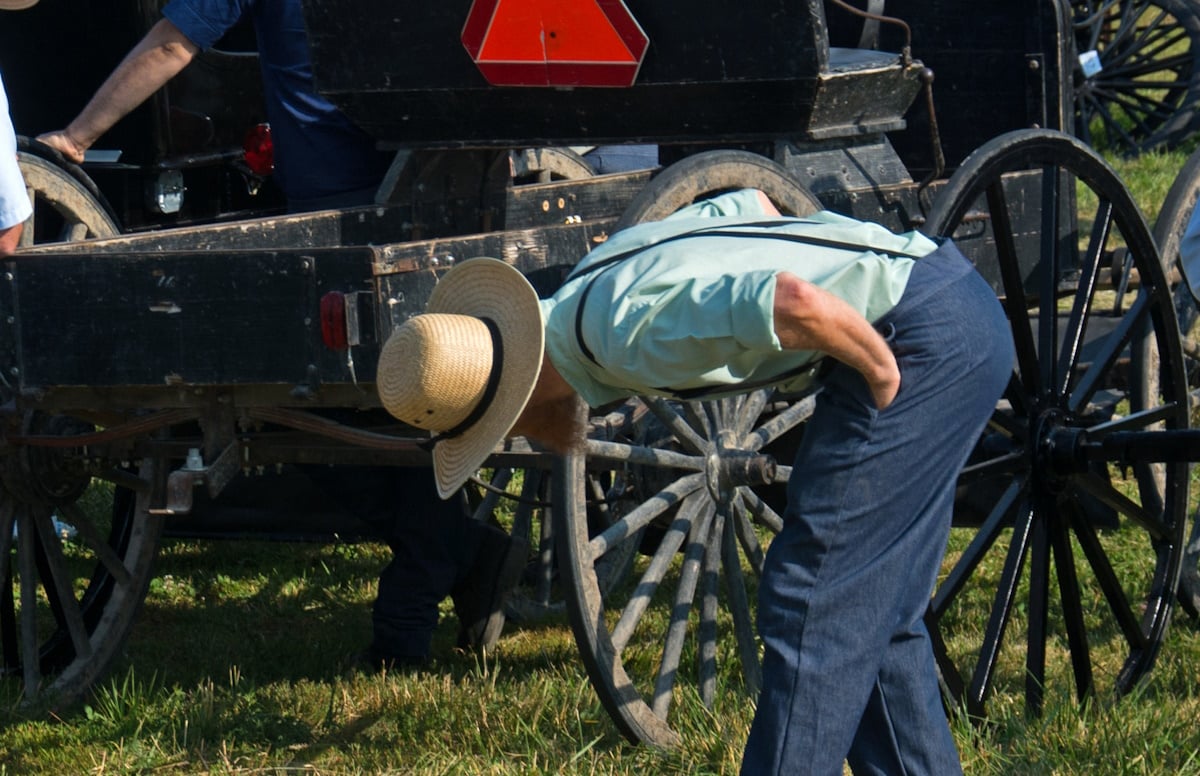
In today’s post – part 1 of 3 – Don Burke and Laura Graber take us into the world of Amish horse-drawn transport. Together they look at photos Don has taken over the years in the Jamesport, Missouri Amish community, showing various horse-powered vehicles used by the Amish.
Laura, who grew up Amish (and recently shared how she managed eight grades at once as an Amish school teacher), lends us her insights in explaining what these vehicles are, what they’re used for, and so on. Let’s dive into their conversation now!
Don Burke: Hey, don’t I know you? You look familiar. You wouldn’t happen to be the young bride I took pictures of nearly a decade ago in “An Amish-ish Wedding” would you?
Laura Graber: That feels like ages ago! But yes, that was me.

Don: As a reminder to our readers here, you grew up Amish and some of your family are still Amish, right? But a few months before your wedding you and a number of others in the community here transitioned, eventually moving from Old Order Amish to New Order Amish, with some transitioning further to Mennonites.
As I recall this process of change even impacted how you designed elements of your wedding service, which was built around this theme: “A little old…, a little new…, and a little of just because I want it.”
Laura: I grew up Amish and left the culture in my late teens. My mom and one of my brothers are still Amish – and Mom still gives tours of her Amish home. And yes, it definitely was a journey leaving a culture that was all I had known. Our wedding was definitely a little bit of everything, but we loved it and that’s what matters, right?
Don: No argument from me. So, do you still live in Jamesport?
Laura: Yes! I live on the outskirts of the Amish community.
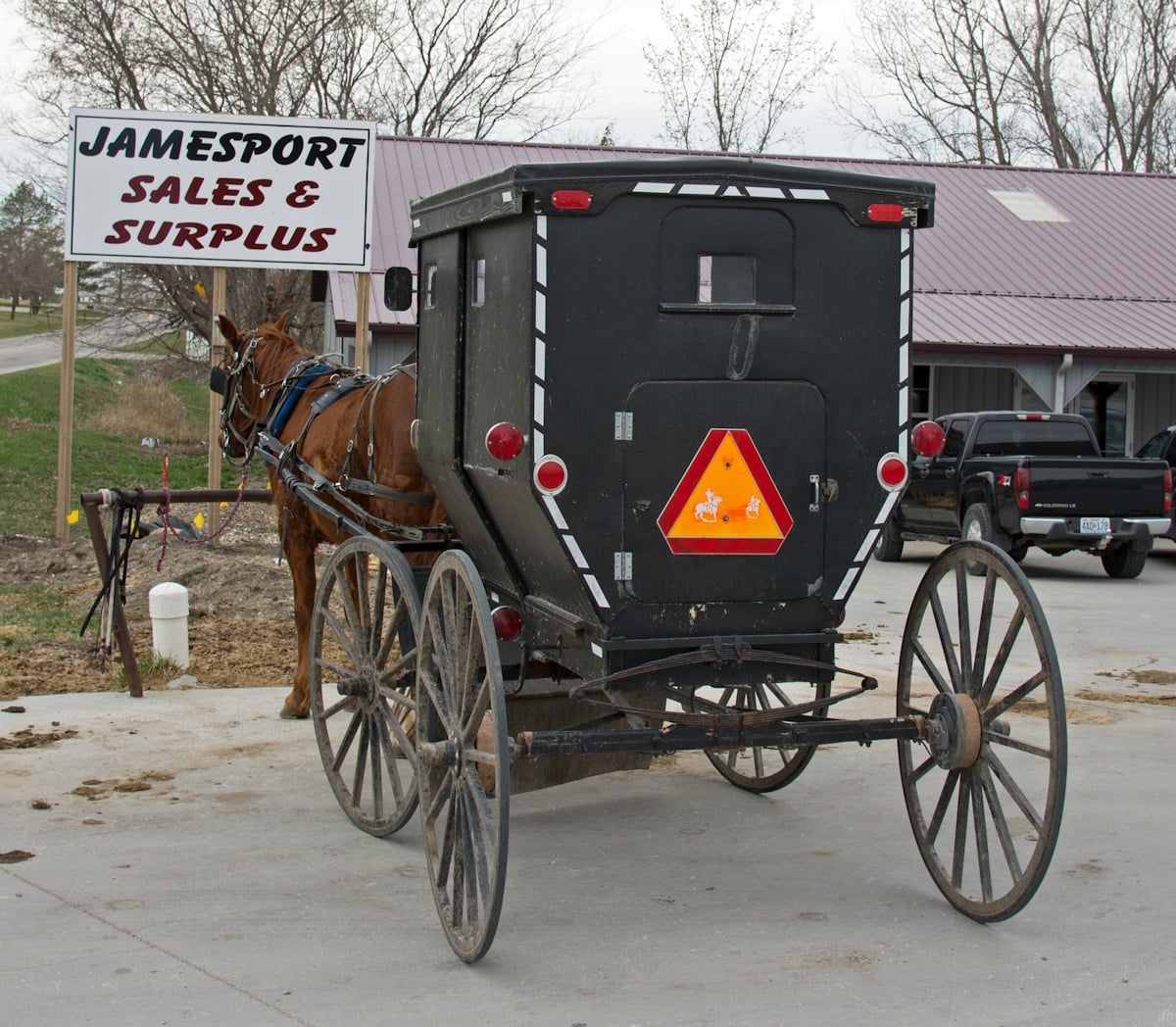
Don: Great, because in my various visits to Jamesport I have noticed so many different ways that the Amish get around. And I was hoping that with your Amish background and familiarity with the area you can give some insights into the various vehicles I have pictures of – what some of these Amish forms of transportation are called, and why the Amish might choose one over another.
Laura: I will do my best, but realize that some days I see contraptions on the road that even I can’t explain!
Don: So how about we start with what are probably the smallest buggies I’ve seen around Jamesport – and which are often powered by the smallest horses I’ve seen here. What is this type of Amish transportation called?
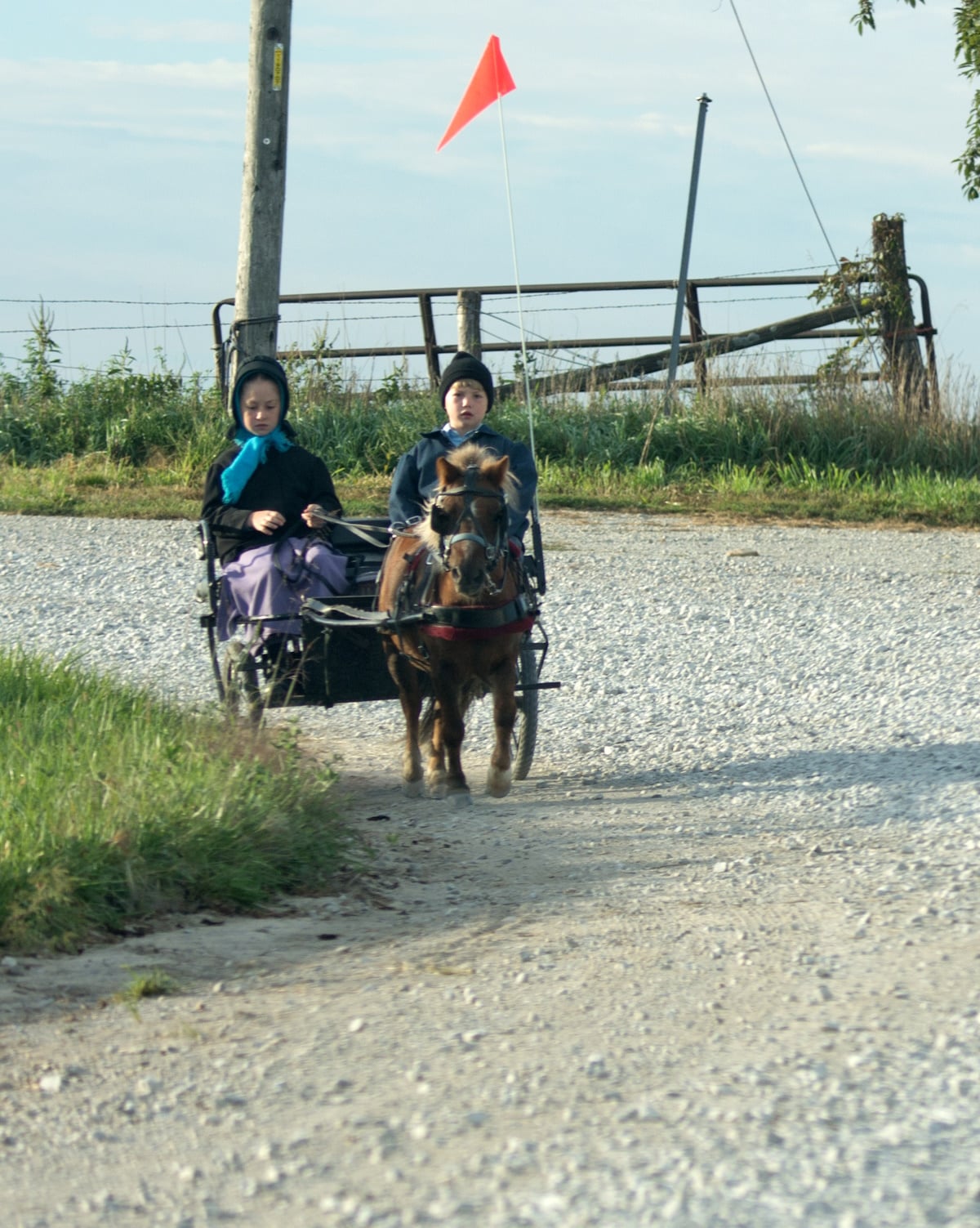
Laura: Pony carts.
Don: Okay, so tell us about pony carts.
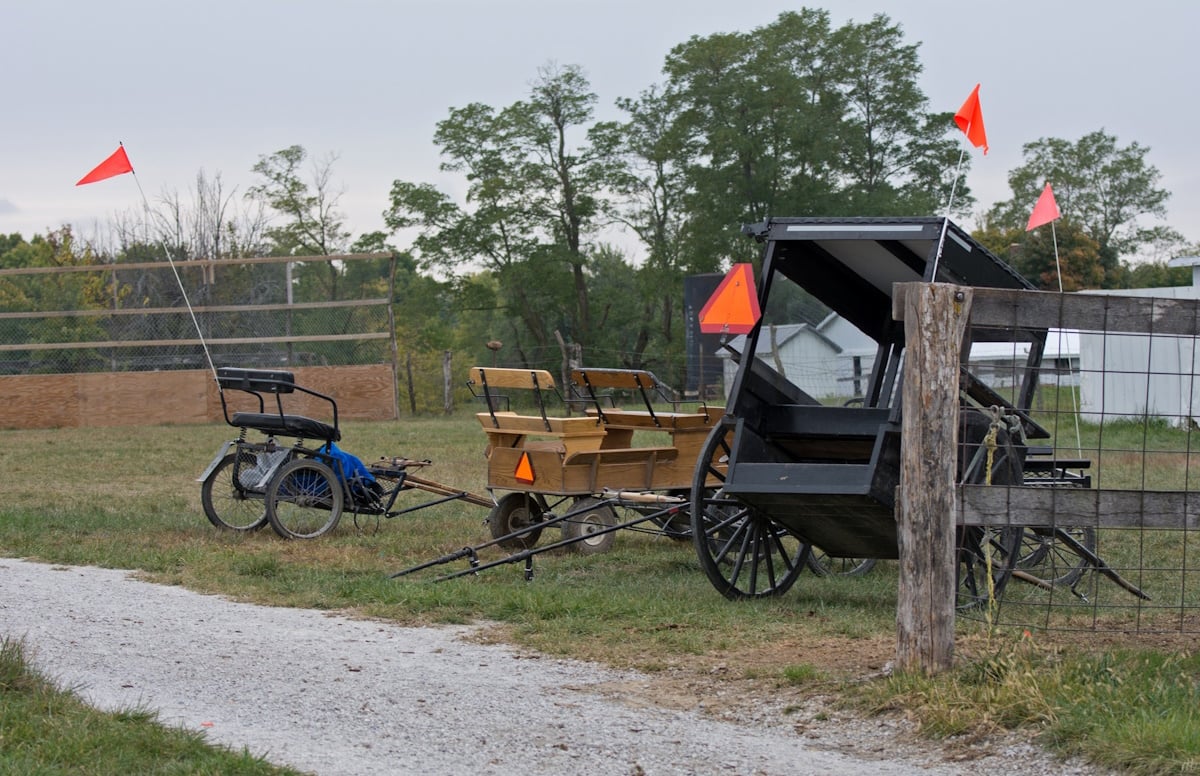
Laura: A pony is typically half the size of a horse, or even smaller. As such, ponies are much easier for children to handle, with less chance for hurting a child or damaging things. In short, they are a much safer choice.
Most pony carts are used by children or teens. The cart for a pony needs to be smaller and lighter weight since the size and strength of a pony is not that of a horse – although this can vary from pony to pony.
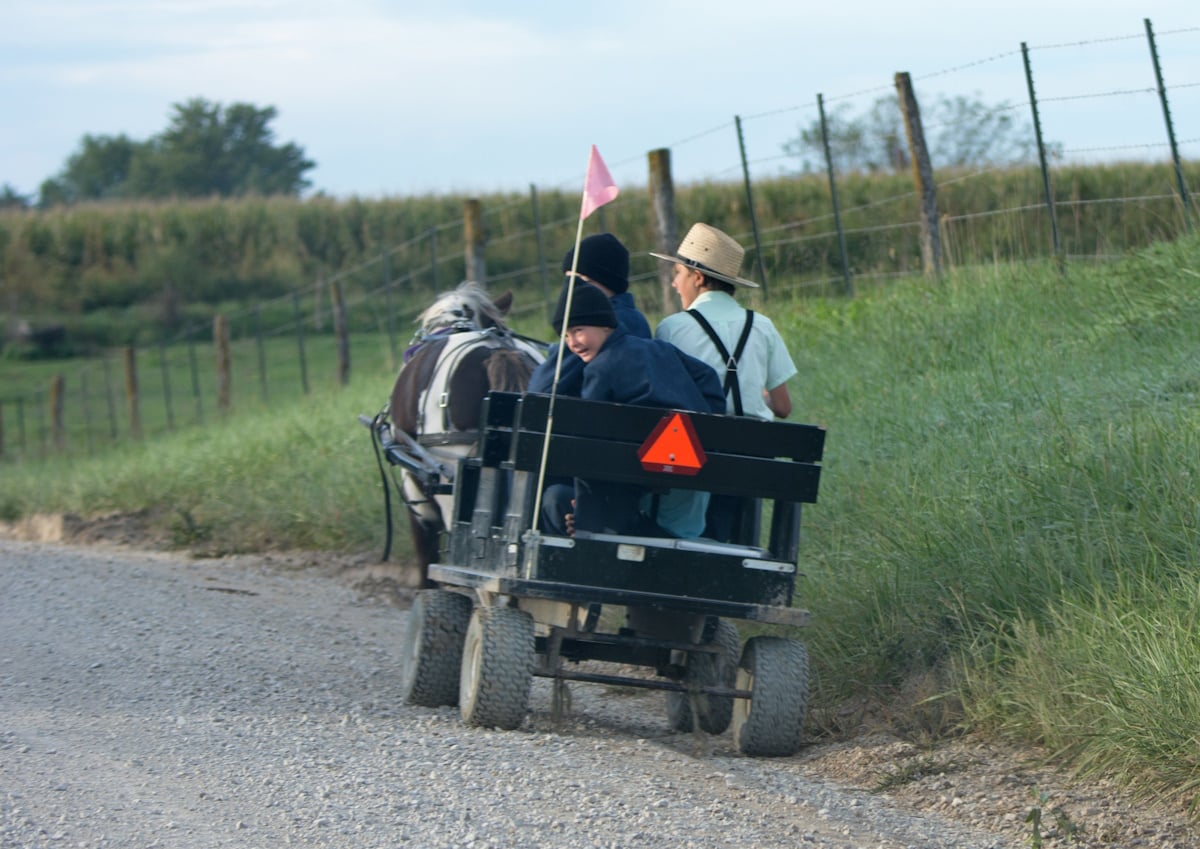
Don: Like you say, some of those ponies look pretty small. Are they strong enough to take kids into town and back?
Laura: No, that’s not really how it’s done. A teen might take a pony cart to town, usually with a larger horse. But the younger kids stay close to home.
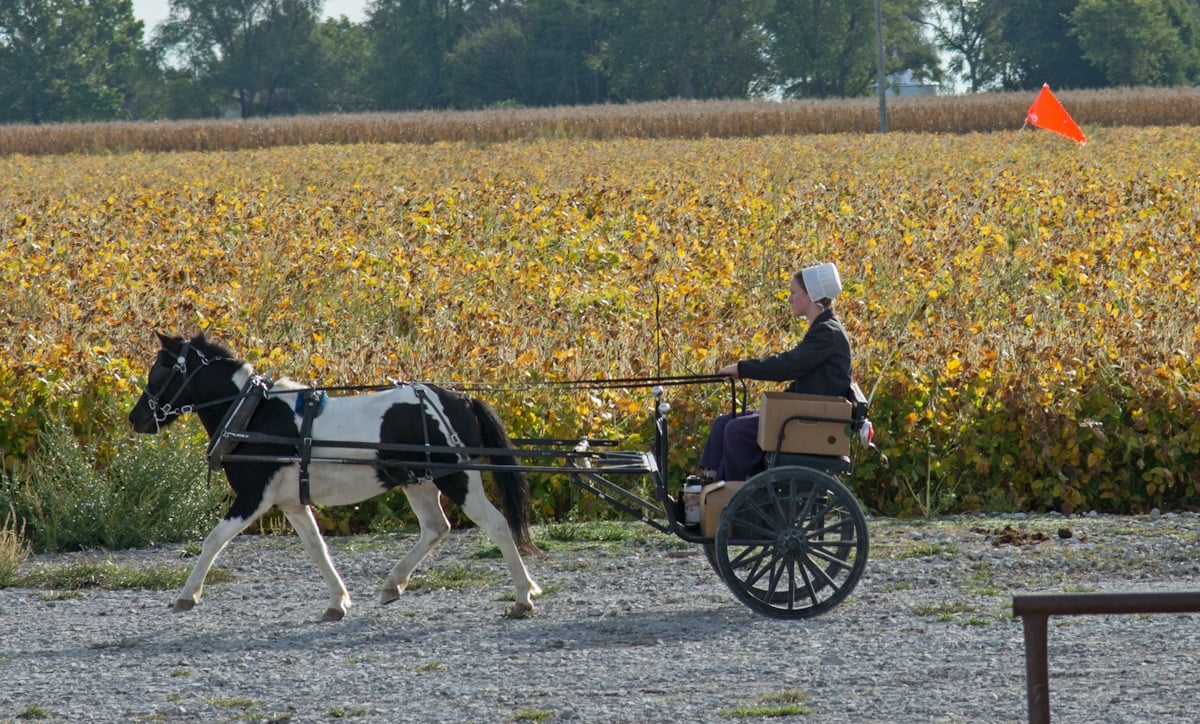
Don: I notice some of these carts have coverings over them.
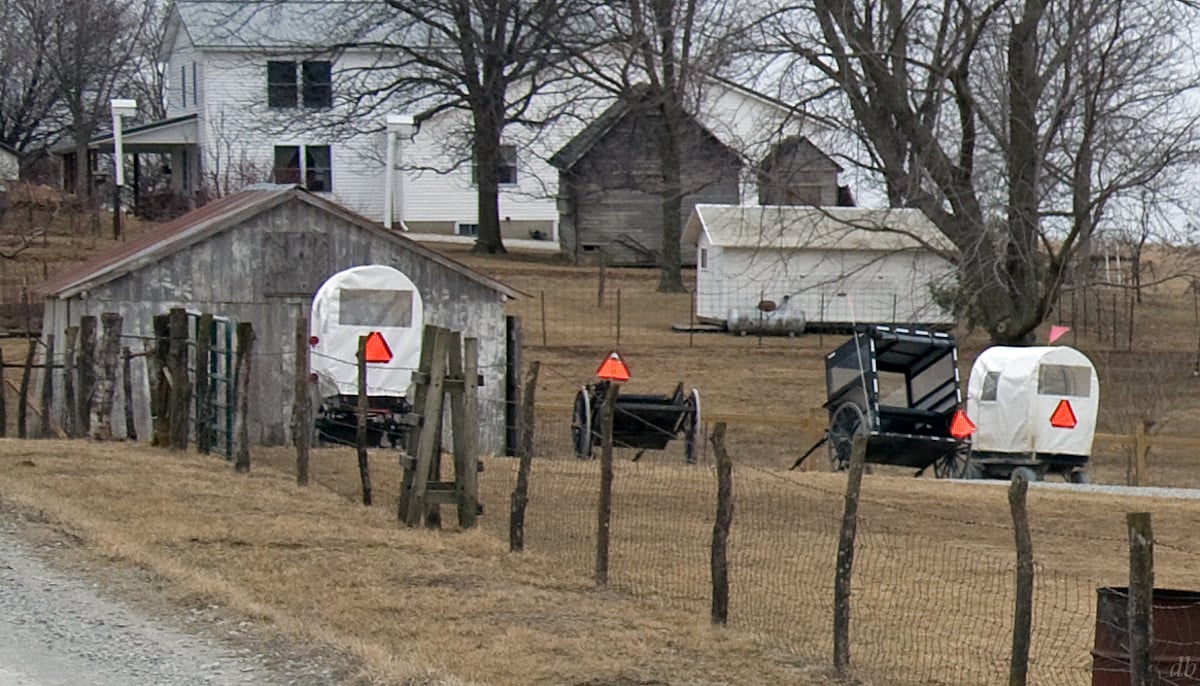
Laura: The coverings or tops on some of the carts are for protecting the occupants from weather conditions like rain or cold or heavy winds. Different people come up with different ideas and designs on how to accomplish that. Typically a top can be removed and set aside when weather permits.
Don: So, did your family have a pony cart when you were growing up?
Laura : We never owned one. My dad thought it was a waste of money which was always a bummer for us kids.
Don: Now, moving from the smallest to the largest, I’ve seen these bigger rigs often being used by farmers to carry goods to sell at the Amish auction. What are these called, and what all are they used for?
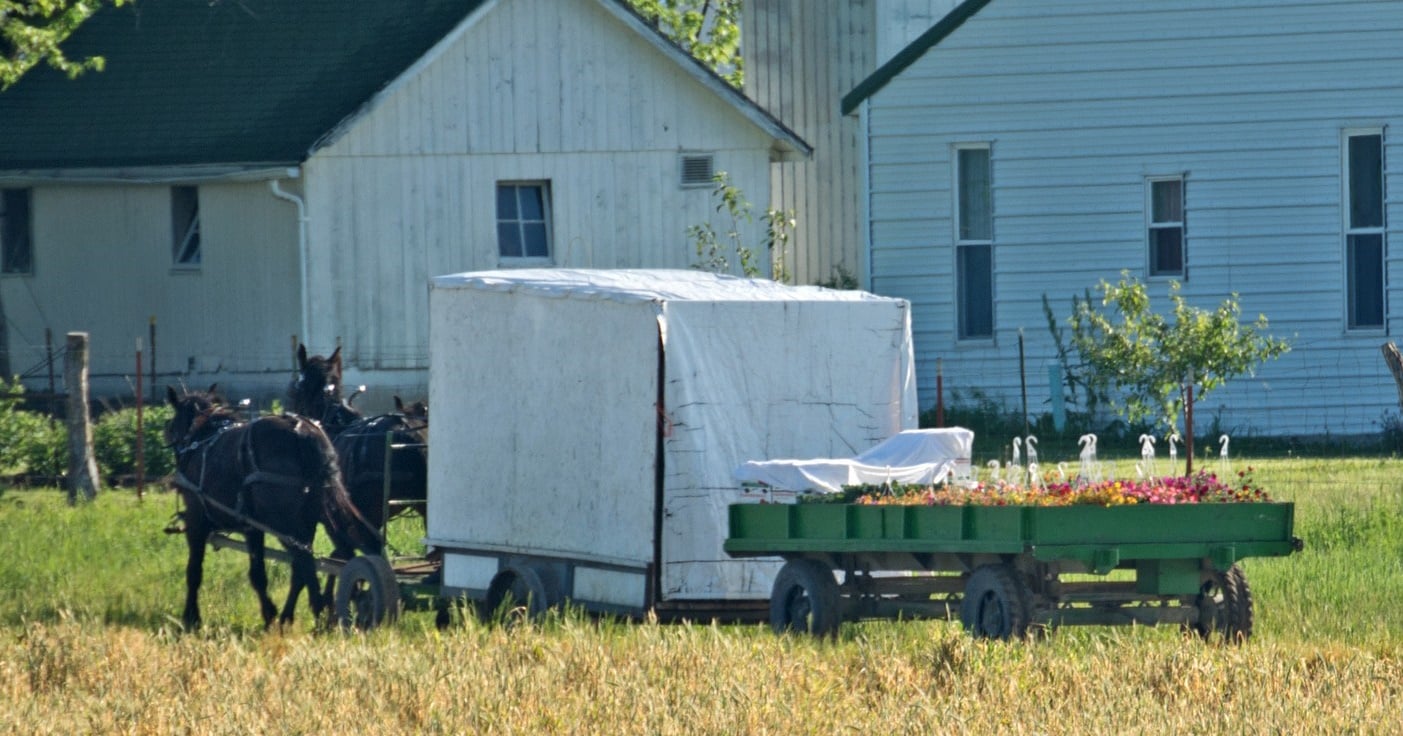
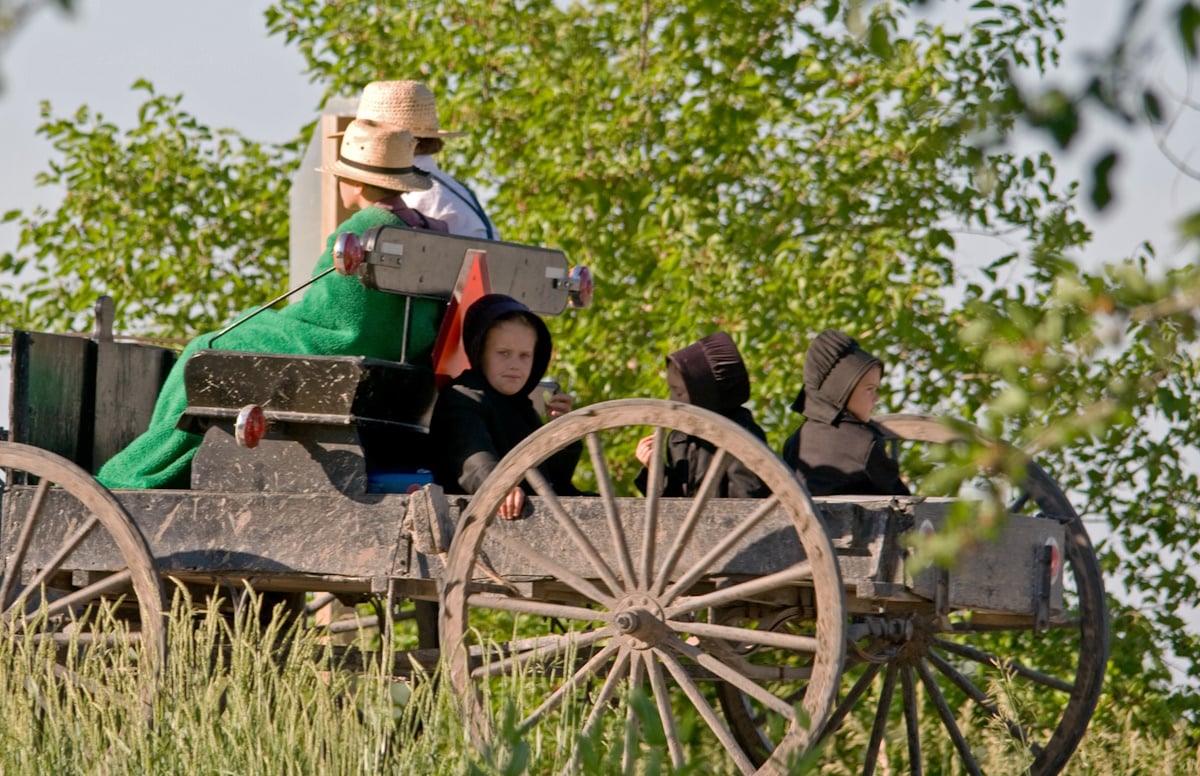
Laura: These are typically called a wagon. They serve as a means of transporting a large amount of people or a large amount of items. Produce growers and farmers use these a lot. This would also haul your hay from the field, etc.
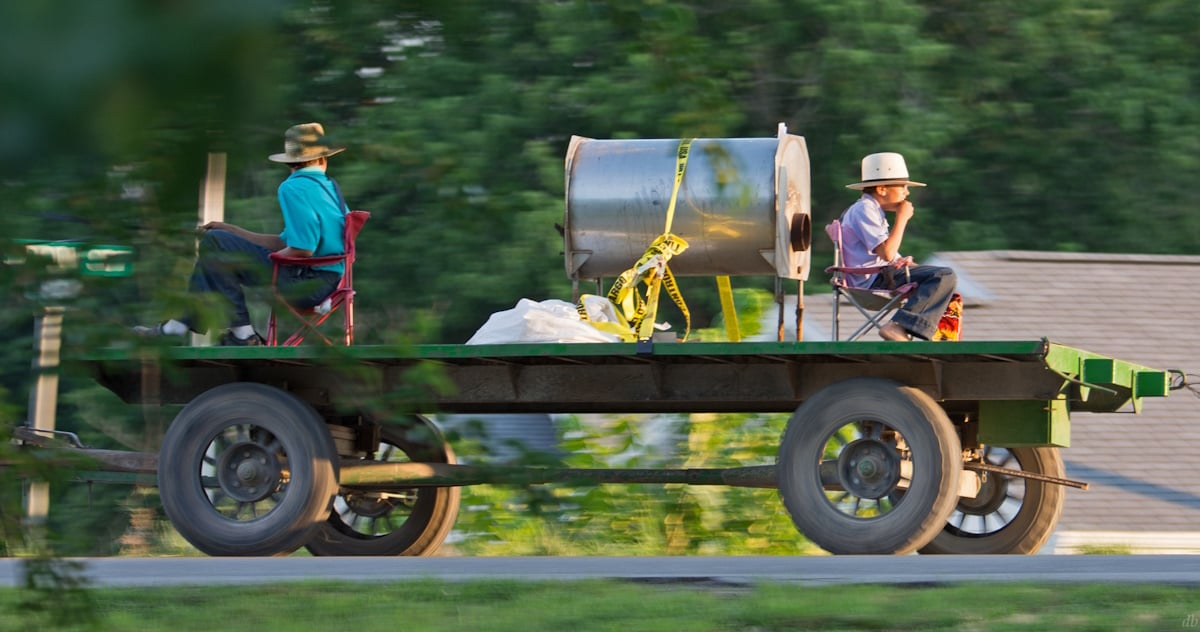
This wagon is always pulled by two horses, and in the majority of the time it’s the big draft horses. You won’t move the fastest with a load like this, but strength wise you’re set! A team of draft horses is strong enough that they have been hitched to a vehicle to drag it out of a snow bank.
The cover on some of the wagons is to protect its cargo from weather.
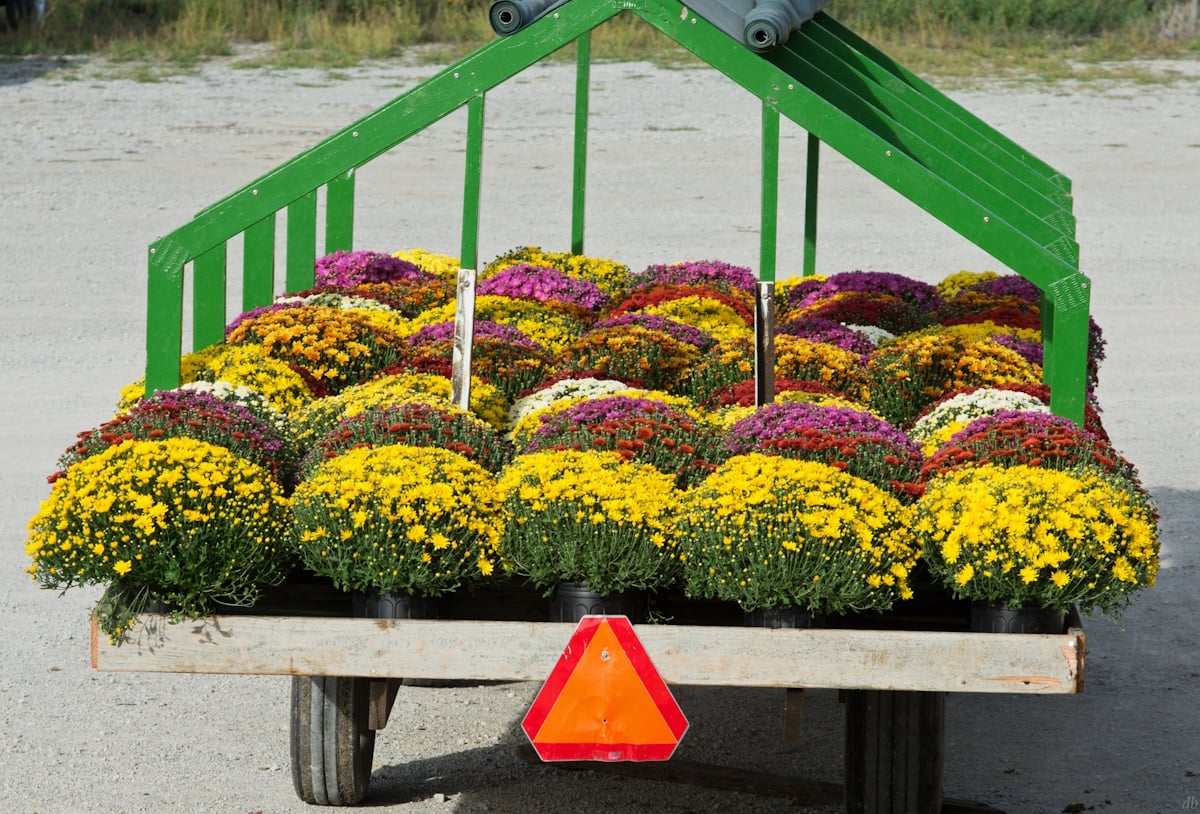
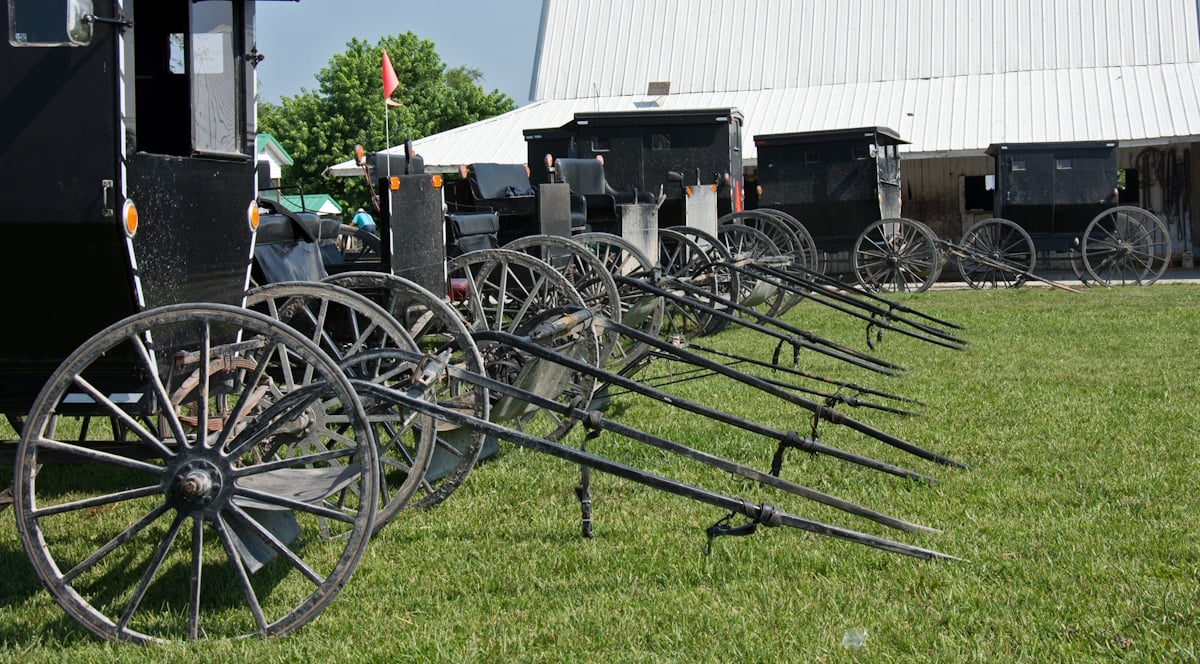
Don: Speaking of wagons, we can’t overlook the beloved church wagon. Can you explain how a church wagon is different from a regular wagon?
Laura: The church wagon is used only for church. Each church district has one. It has the folded benches and songbooks which are used for services, the cups, silverware, coffee cups, the dish towels, etc. for the noon meal after the service. In short, it has every little item needed to host a church service at your house.
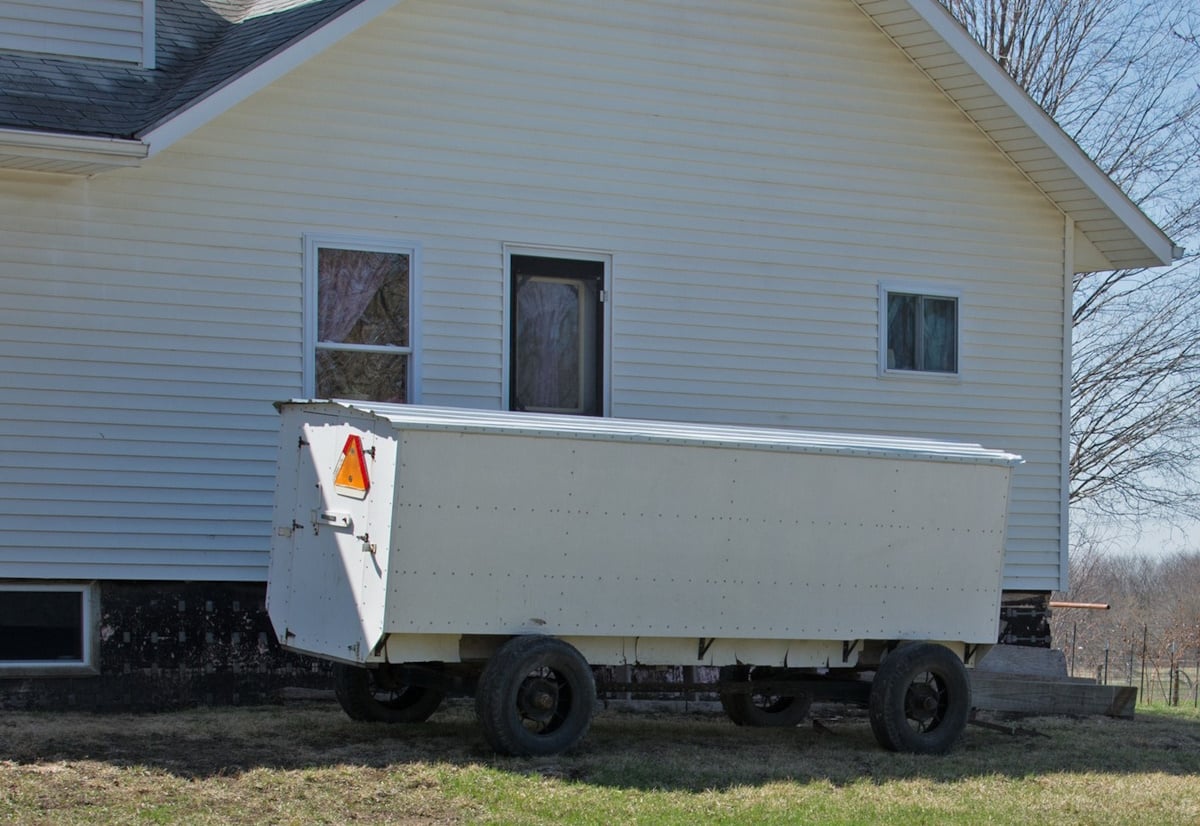
This wagon is moved every two weeks as the meeting place cycles from home to home throughout the church. The church wagon is an elite wagon – as a child I knew better than to play on it or play with anything in it!
Don: In these pictures we have some close-ups of some people driving wagons. What is the name of the two-wheeled vehicle the drivers are standing on between the horses and the wagons? What is its purpose, and is pulling wagons the only thing it is used for?
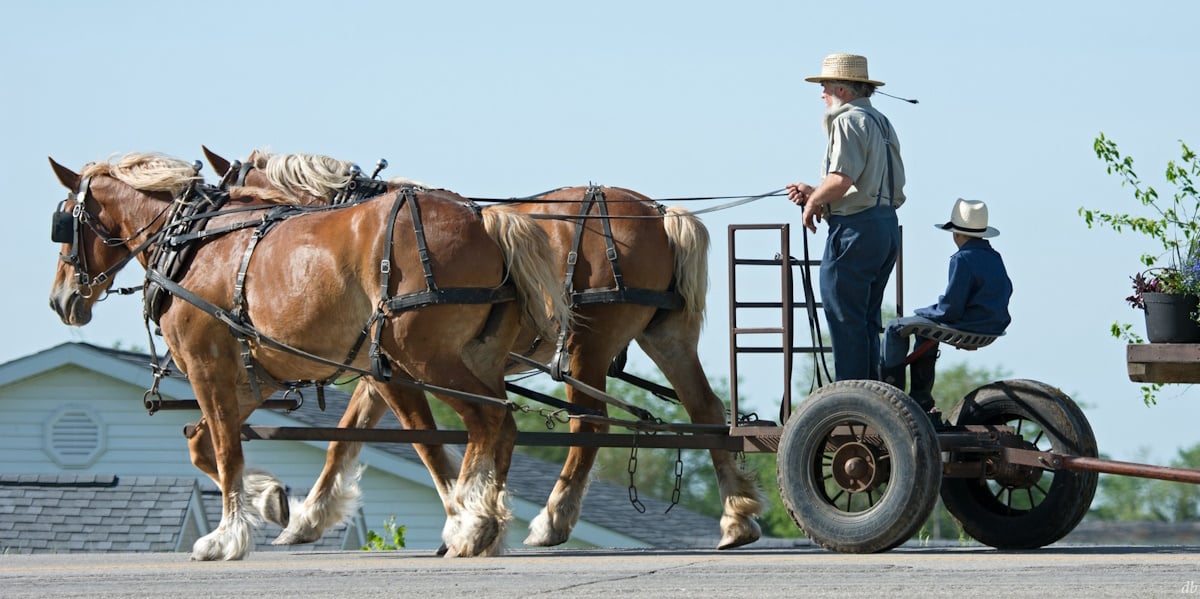
Laura: I’ve only ever heard the German word for it (pronounced something like Fwah-cart), but not the English. The German terms are translated as “fore-cart,” and I’m wondering if that’s the English word for it. This cart is hitched to the team.
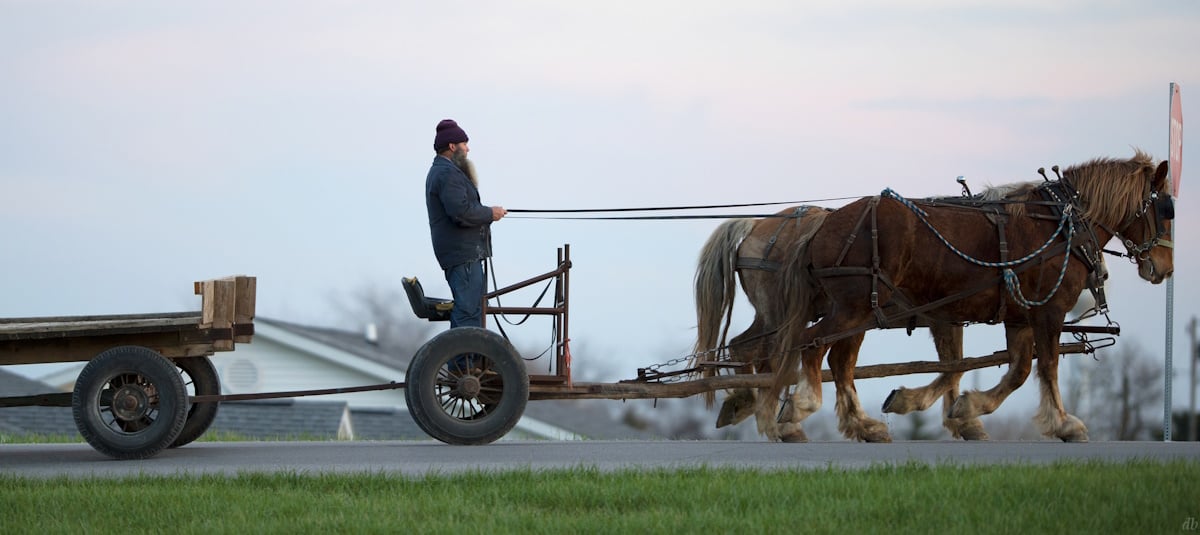
Then whatever piece of machinery or wagon you want to pull gets attached to the forecart. It works as a hitch to allow you to pull whatever equipment you may own without having to have a “hitching pole” on each piece of equipment.
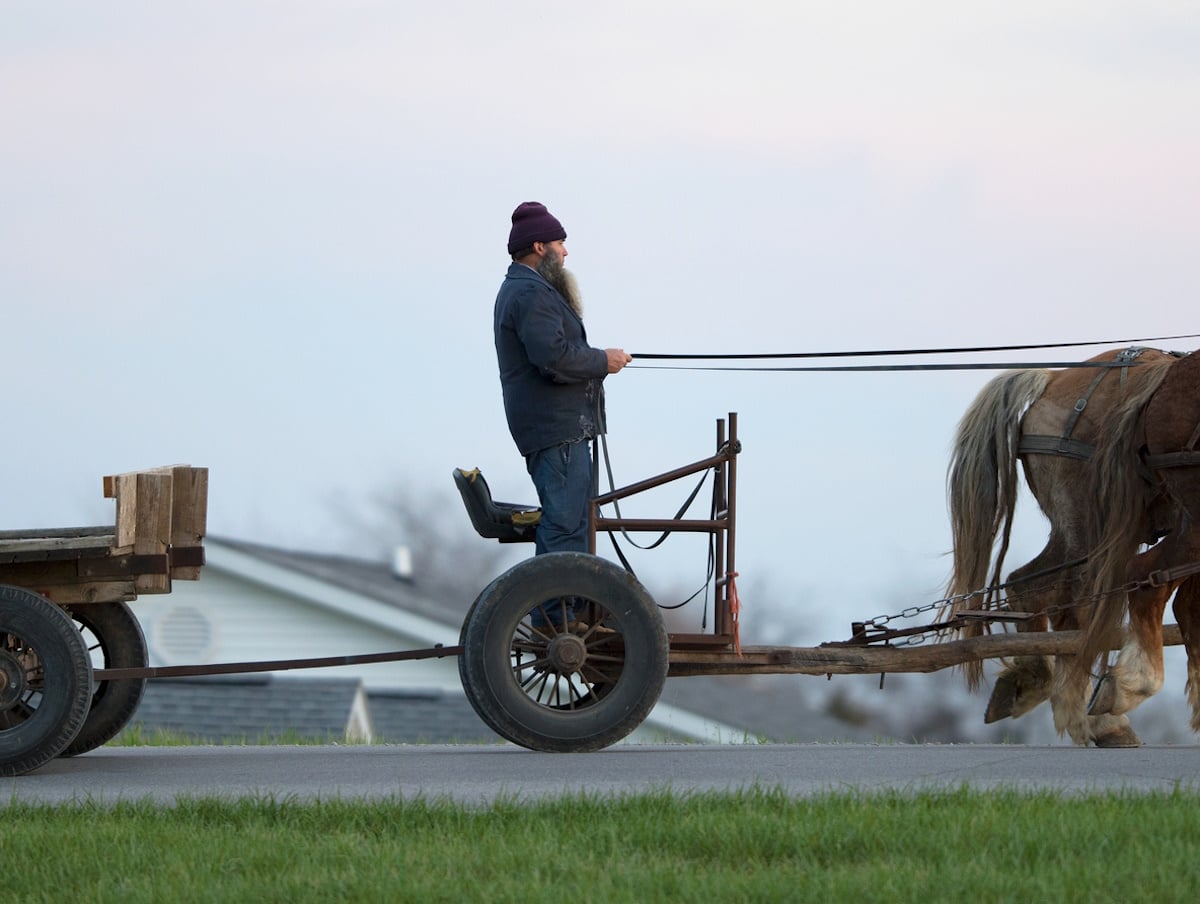
Don: The forecarts here are pretty basic, but is it possible that I have seen some that have smaller gasoline-powered motors mounted on them for powering farm equipment out in the field?
Laura: Oh, definitely some of them would have motors attached to them.
Don: Before leaving the topic of wagons, I saw one of these while visiting an Amish home in Jamesport. I believe they called it a power cart or power wagon. It’s not for transportation, but the wagon is designed around a very large gasoline or diesel engine to power small- to medium-size mechanical farm implements – like a much larger version of a motorized forecart.
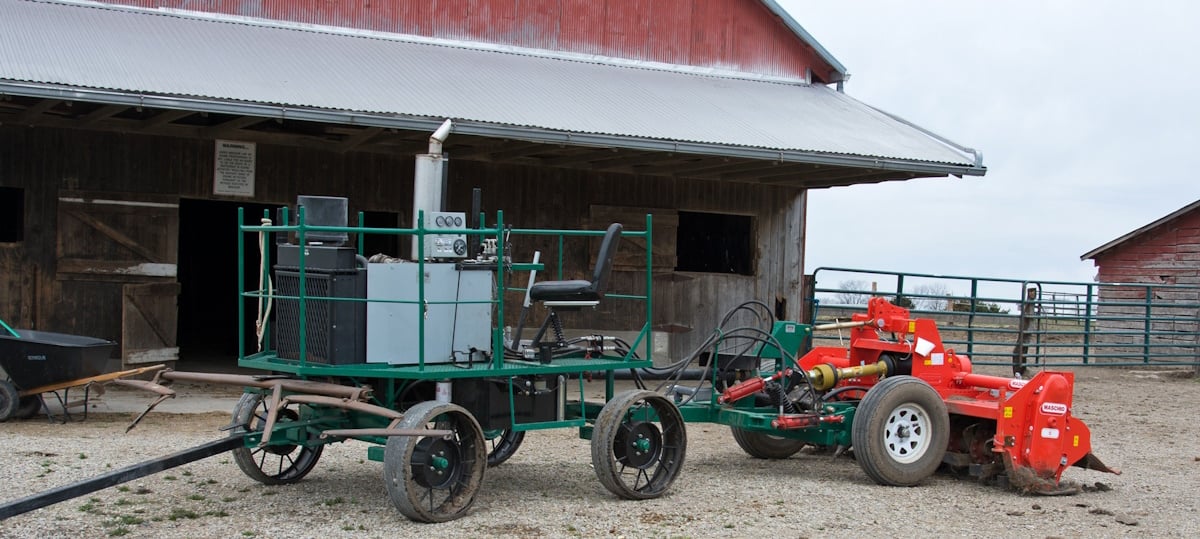
As I understand it, not all Amish communities allow these, but there was at that time at least one or two in Jamesport. Are you familiar with these?
Laura: We never owned one at home and I’m very unfamiliar with its use. But yes, I would also assume it’s only used in the more progressive communities.
Check back for Part 2 of this conversation with Laura Graber on Amish transportation. In it, Don and Laura take a closer look at the standard Amish buggy — what it’s like inside, the difference between a surrey and a “normal” buggy, and why Amish teenagers getting their own buggy at 17 is more complicated than it might sound. And for more from Don and Laura in the meantime, they explore what a typical day at Amish school is really like.


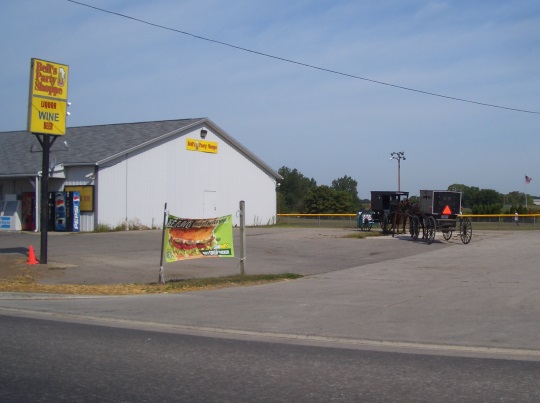
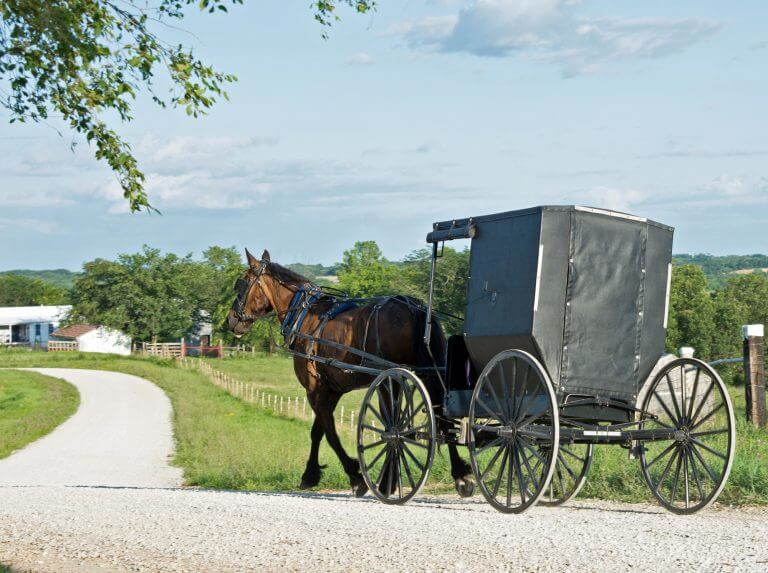

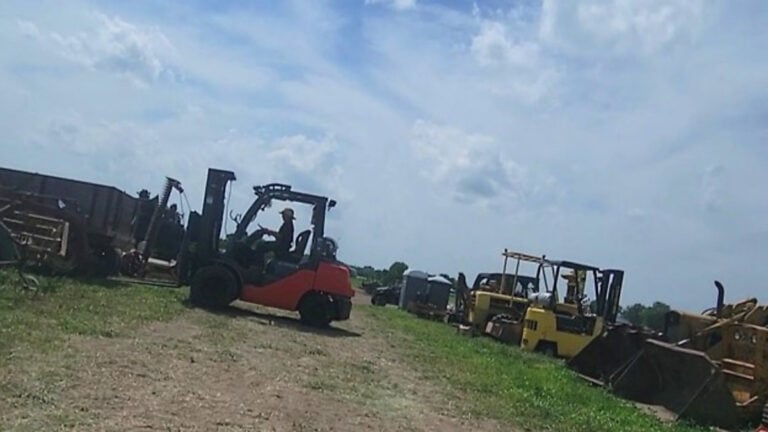
All kinds of buggies
This was such a helpful and enjoyable read—thank you both for taking the time to explain all of this so clearly.
As someone who has spent years driving Amish families, I’ve joked that I’ve had my own version of “buggies”—a maxi-van buggy, a minivan buggy, even a pickup truck buggy. At one point, a young Amish boy even took off across the yard on my riding lawnmower… so I suppose that counts too (we’ll keep that between us ).
What’s funny is, despite all those miles, I’ve never actually ridden in a real Amish buggy myself.
I’ve heard of van rider guidelines in some communities, and it made me wonder—are there similar expectations or unwritten rules when it comes to buggy driving as well? It seems like there would have to be, given how much depends on the horse, the road, and the person handling both.
Really appreciated this look into a part of Amish life most of us only see from a distance.
Glad you enjoyed the article so far.
Never had a buggy ride? Oddly enough, our experience was exactly (in a way) the opposite — within a hour of meeting our very first Amish person (who served as a cashier at a restaurant we stopped at our first visit to Millersburg, OH), she was giving us a buggy tour of the Amish countryside around her family home. (But now that I think of it, that was possibly the only buggy ride I/we have had even after years of being involved with the Amish culture.)
Buggy guidelines? I’ve not heard of any written rules, but tend to think there are some unwritten ones. For one, thou shalt not abstain from making corny jokes, no matter how worn-out they are (e.g., “How many horse-power does this vehicle have under the hood?”). Two, “There are no dumb questions” is totally bogus — but don’t let that stop you from asking it anyway. Three, even if a question is too rude for someone to ask your mother or you sister, don’t let that stop you from asking this modest, conservative Amish lady the same thing. And there are likely many, many others.
“All kinds of buggies” — indeed…, and stick around for the follow-up posts as they get more and more “all kinds”!