
“People Spoke, They Don’t Want It” — Amish Rest Easier After Steel Wheel Buggy Ban Scrapped
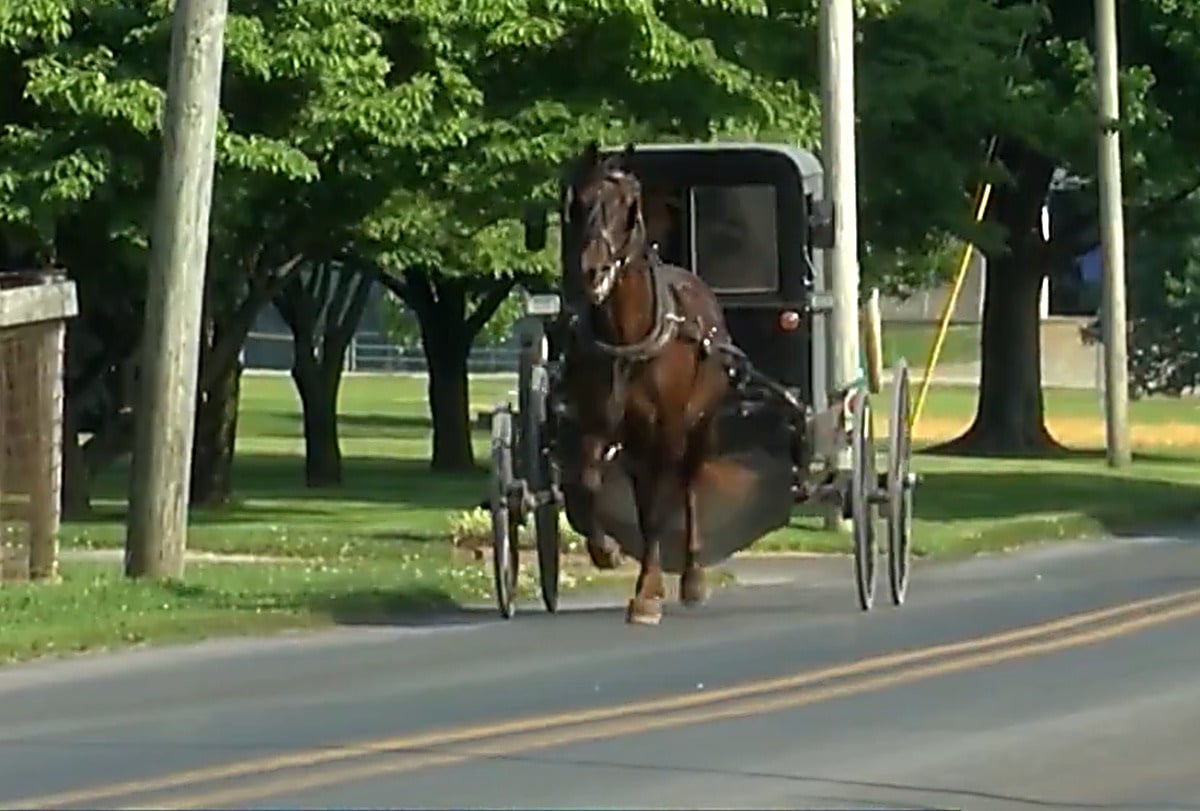
The Bedford Township ordinance we’ve been following for the past three weeks is not happening. And in contrast to the last township meeting, where residents spoke out passionately against the steel wheel ban and manure ordinance, there was no more drama to it. Supervisors have simply scrapped it.
Residents arriving for the August 4th meeting found a sign posted on the door telling them the matter was over. Heather Koontz of the Bedford Gazette was there and described what it said:
A sign on the door alerted attendees that “The steel wheel and refuse ordinance is no longer being proposed.”
Thanking people for their input, the sign stated “After listening to and considering the feedback from our residents, the Board of Supervisors has decided not to move forward with the proposed ordinance.”
Board Chair Greg Crist put it plainly before the meeting started, saying “We’re going to kill it. People spoke, they don’t want it, so we killed it.”
In contrast to the last standing-room only meeting, only about 20 people showed up on August 4th. Which makes sense when you consider that the sign on the door had answered the most pressing question for many.
This likely wraps up the story, at least the Amish-related portion of it, which began in mid-July when the proposed ordinance started making news. We later covered a fuller account of a contentious meeting where we learned of additional concerns of residents (more on that below).
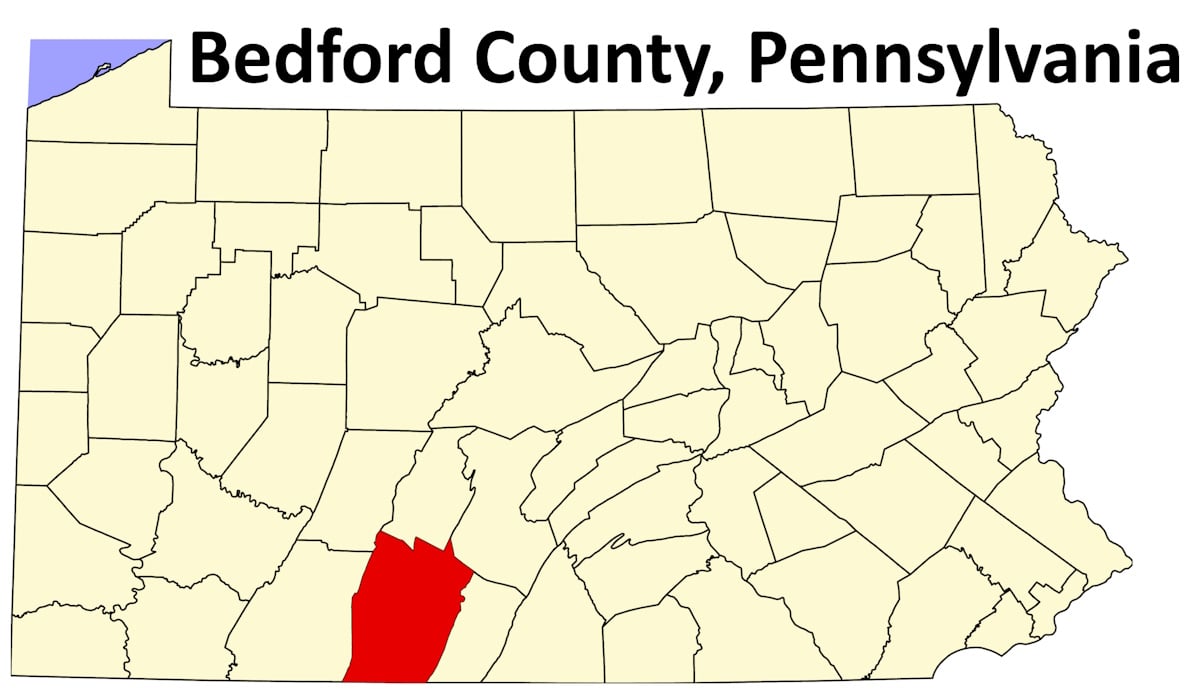
The proposal would have prohibited metal-wheeled vehicles on township roads and required owners of horses, mules, donkeys, and cows to clean up or contain animal waste on public roadways. Fines would have run from $250 to $500. The text never named the Amish. But in a township with a growing Amish settlement, that’s clearly who it was about.
The Data Center Ordinance Did Pass
Our last post here did draw attention to another concern of residents raised at the prior township meeting – the matter of data centers.
Residents at the July meeting worried the two matters might be connected – that pressure on Amish families could open up farmland for exactly this kind of development.
And this time, supervisors unanimously approved a data center ordinance, which the Gazette describes as a 20-page document covering setbacks, lighting, noise limits, environmental impacts, and electricity use.
However, Koontz addresses the fact that some may not have been as informed as they could have been:
Some who attended the July 21 session had not read the data center ordinance, and made an assumption that the supervisors were creating an unwelcoming climate for the Amish residents to drive them off of their farmland, thus opening it up to data center development.
In reality, the data center ordinance is an attempt to put regulations in place before such a facility comes in, after which time it would be too late to put any safeguards in place.
“You can’t prohibit their development, but you can regulate under the law,” Township Attorney Brad Allison said.
Township attorney Brad Allison also told residents there is no secret deal with any developer, and added that Bedford County likely doesn’t have the kind of large water sources to support these facilities in the first place.
That noted, I’d still say that the concern was not simply a matter of whether people read the ordinance. It passed at the August meeting, and residents there were still raising the same questions, per the Gazette:
The few people in attendance who spoke up about the ordinance questioned who would protect local rights if such a center came, fouled the water, made incessant noise, and put a strain on the electric grid.
One woman played a sound from her cell phone that she said was emitted by data centers around the clock. The sound was like metallic white noise, and slightly reminiscent of the noise made when logging on to dial-up internet services.
The issue of pollinators was also raised, as data centers can make an area unattractive to bees and other insects (and wildlife) through the destruction of natural habitats and persistent noise.
The worry isn’t really about ordinance language. It’s about water, farmland, noise, and so on, and as we discussed in the last post, it’s showing up in rural communities all over the country right now.
A reader in the Ethridge, Tennessee area even left a comment on the last post saying something similar is being debated there:
I’m in the Ethridge area, and while on city property there has been much debate over the addition of a data center to this area.
We haven’t noted any particular reduction of the Swartzentruber community here, but this could be a real concern in the future.
And it’s worth remembering what officials said at the July meeting, that the state can take land for data centers by eminent domain. A township ordinance regulates what gets proposed locally, but doesn’t control what happens above that level.
The steel wheel and manure matters, though, look to be put to bed now. So the local Amish community, and their supporters, can rest easy on that point, for now at least.

Can't happen in Tennessee
According to grok the State of Tennessee (or its local governments) generally cannot take private land by eminent domain solely to build or enable a private data center.
Key legal limits in Tennessee
Tennessee law is stricter than the U.S. Supreme Court’s Kelo v. City of New London (2005) decision. After Kelo, the Tennessee General Assembly amended the definition of “public use” in Tenn. Code Ann. § 29-17-102. It explicitly excludes takings for private use or benefit, including the indirect public benefits of private economic development such as increased tax revenue or jobs.
Allowed exceptions are narrow and include:
Transportation projects (roads, bridges, etc.)
Land necessary for a utility’s function
Redevelopment of designated blighted areas by a housing or community development authority
Private uses that are merely incidental to a true public use
A pure private commercial project like a data center does not qualify as a public use under this statute. Cities and counties also lost the ability to use eminent domain for industrial parks in 2017.
Personally we think they are going after the Amish farm land and we all need to stand up to it. No one wants these data centers and they definitely shouldn’t be stealing them either.
In summary: the Amish had voted on being irresponsible and not community-minded!
With due respect, as an ethnic Mennonite, I am really disappointed in the Amish community in compelling the local authorities scrapping the laws on the steel wheels and the manure pick up!
It is fascinating, as the Amish are extremely legalistic in their own communities! Yet, when the outside authorities want to institute the reasonable regulation laws in regard to the safety and cleanliness on the roads, the Amish automatically dig in their heels! This kind of inherent, extreme stubbornness does a great disservice to the Amish themselves!
It is well known the steel wheels ruin the surface of the roads! I am sure the Amish could find an acceptable compromise, if they were so inclined! The other Amish communities have done so!
Also, not picking up the manure after own large animals on the roads is not only disgusting, but also disrespectful to the other vehicles and to all nearby communities using these official roads!
Furthermore, it is decidedly un-Christian and shows up these religious Amish communities for the questionable wisdom of their leaders!
In summary: the Amish had voted on being irresponsible and not community-minded!
The Amish can not be allowed to have the final say on these matters! Many accommodations have been made for the Amish already! Why the kid glove treatment? Why the Laws for others, but not for them?
I suggest you raise the taxes for the Amish to help with the better maintenance of the roads and picking up the manure! Unless the Amish want to volunteer??
Dear Amish Community: what happened to the ‘treating others as u want to be treated’, ‘loving ur neighbours’, and respecting the authorities!?