
I Grew Up Riding in a Buggy — The Differences Between 3 Common Types
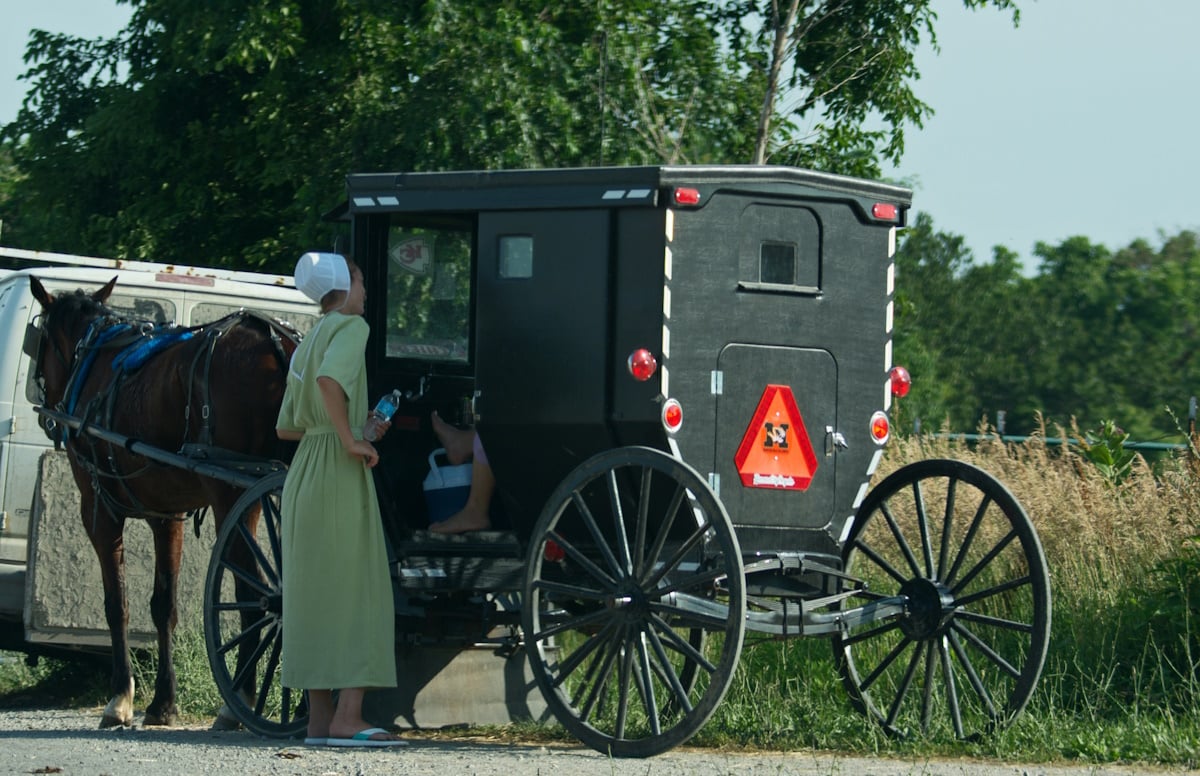
We’re back with Part 2 of 3 of our conversation with Don Burke and Laura Graber on Amish horse-drawn transport in Jamesport, Missouri.
In Part 1, Don and Laura covered the smallest and largest vehicles on the road — from pony carts to draft horse wagons and the church wagon. Here in Part 2, they get to the vehicles most people picture when they think “Amish buggy”: the standard enclosed buggy, the surrey, and the open-air hack buggy. (All photos this post by Don Burke)
Don Burke: We are looking next at what I imagine comes to mind when most people hear the expression, “Amish buggy.” Is there a particular name for this kind of buggy? What is it like inside one of these?
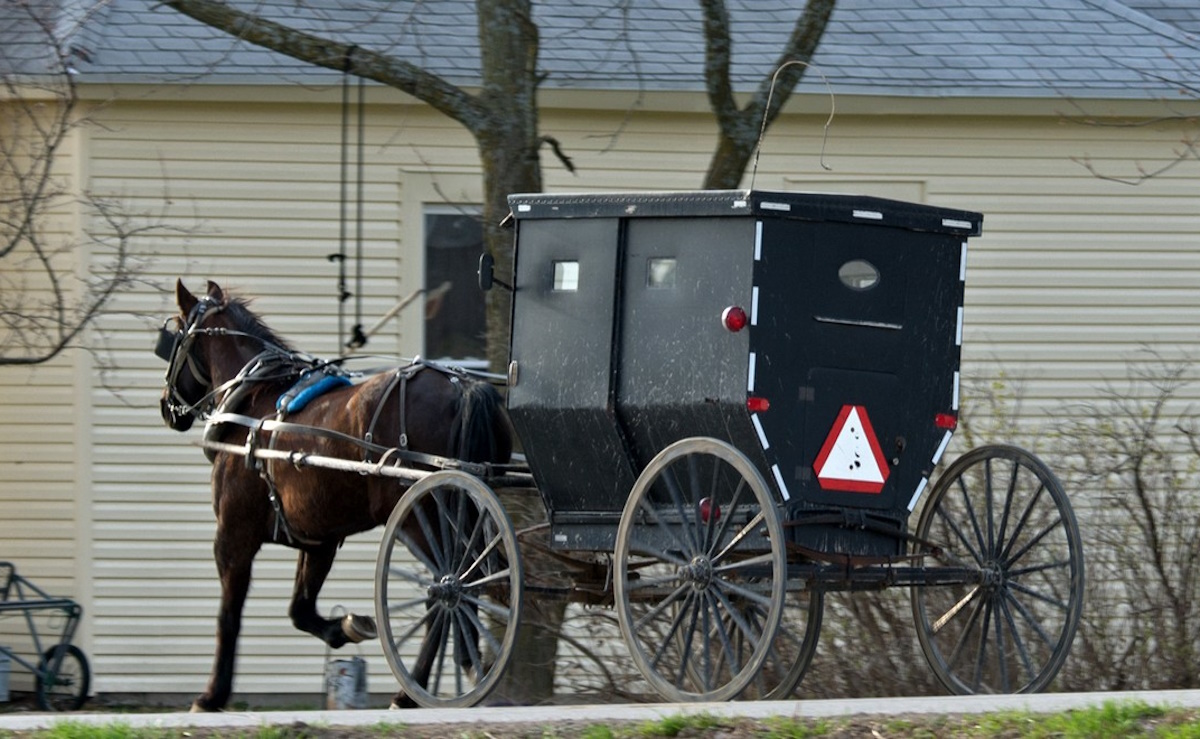
Laura Graber: It’s called just that – a buggy. The inside has a seat where the people sit and a shelf in the back top area for little children or personal items. There is a 4-5 foot space in front of the seat for your legs. The driver sits on the right typically.
You have your mirrors obviously and front window to open. There are two narrow slots underneath the window to put the reins to guide the horse. The seat is lined with a heavy cloth and is cushioned to make it comfortable. The cloth color on the inside can vary, which was a big deal to me as a kid.
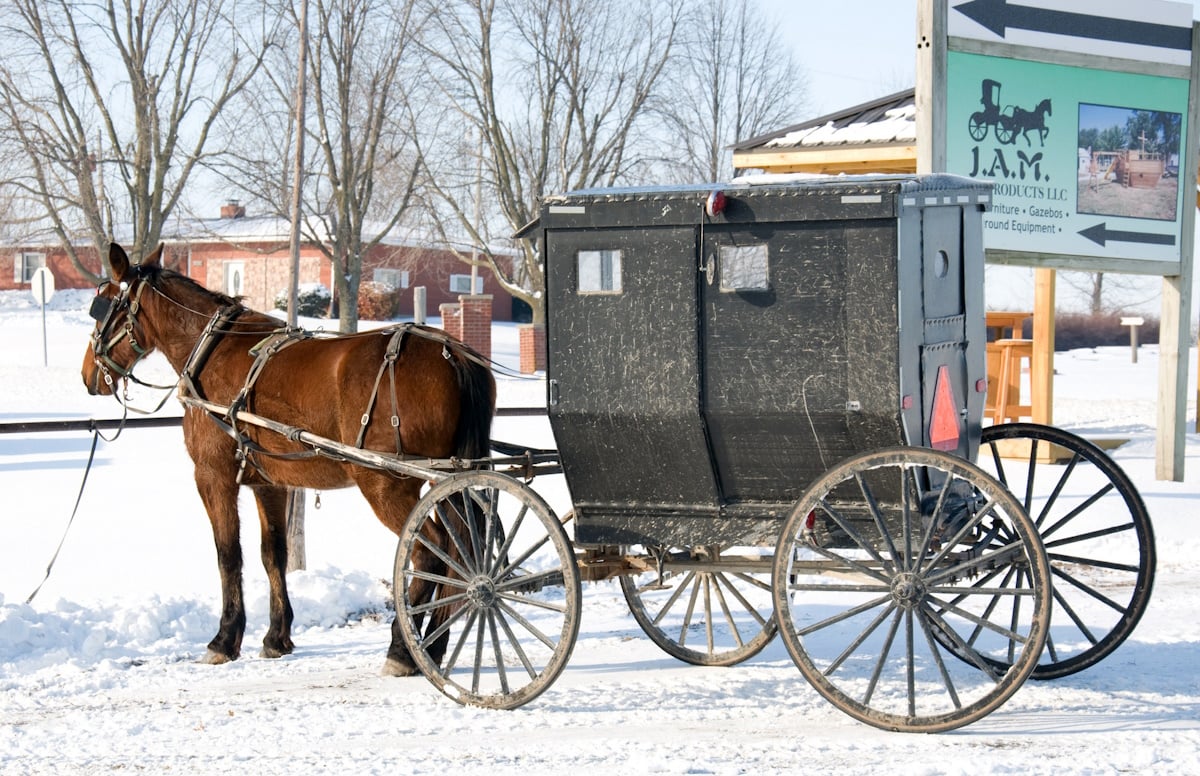
Don: About how many people will this kind of buggy carry? Do Amish families (which can be pretty large sometimes) have more than one?
Laura: Three adults is your usual maximum, . . . that is two people sitting normally and one siting forward in the middle. As far as children, there’s an unlimited amount to those – they can be stacked on the shelf or in the front area of the buggy.
A large family will drive a surrey (more on that next), which is a longer buggy that has two seats. These can be piled pretty full! Most families have a large surrey and a normal-size buggy . . . and which one is used on a given outing depends on the amount of people going.
Don: For English kids, at least here in Missouri, when they turn 16 they are able to drive on their own, and often want their own car. How does that work with the Amish?
Laura: Often when a teenager turns 17 he gets his own buggy or has one for his own personal use. At one point our family would have had four normal buggies and a large one. (I come from a family of nine.)
Don: They often get access to their own buggy at 17 – I see. So does this vary a lot with different families and different situations – and does this apply differently to boys and girls?
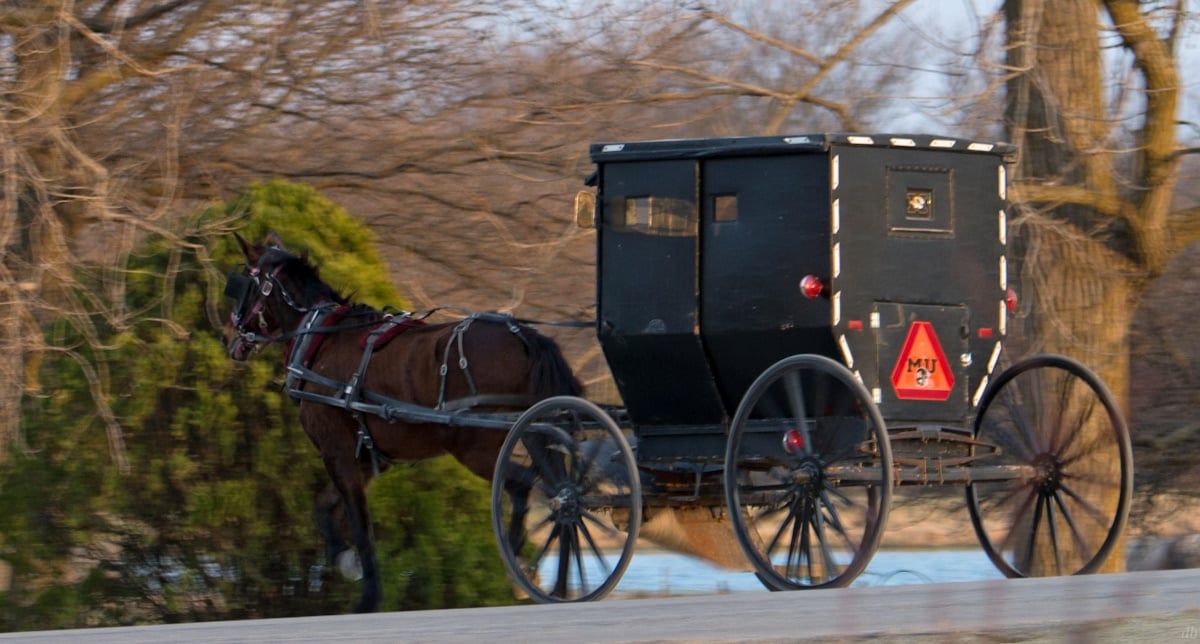
Laura: Some families do this at 17, but it all depends on the family . . . and the birth order . . . and financial factors at the time. My brothers each got a new buggy at the age of 20-21 that was theirs to keep. Prior to that they used older used buggies or a new buggy that dad owned.
Let’s say you’re the third guy in a family . . . you’ll probably just tag along with your two older brothers in a buggy. Typically girls will not receive a buggy of their own, but will use their parents’ buggy.
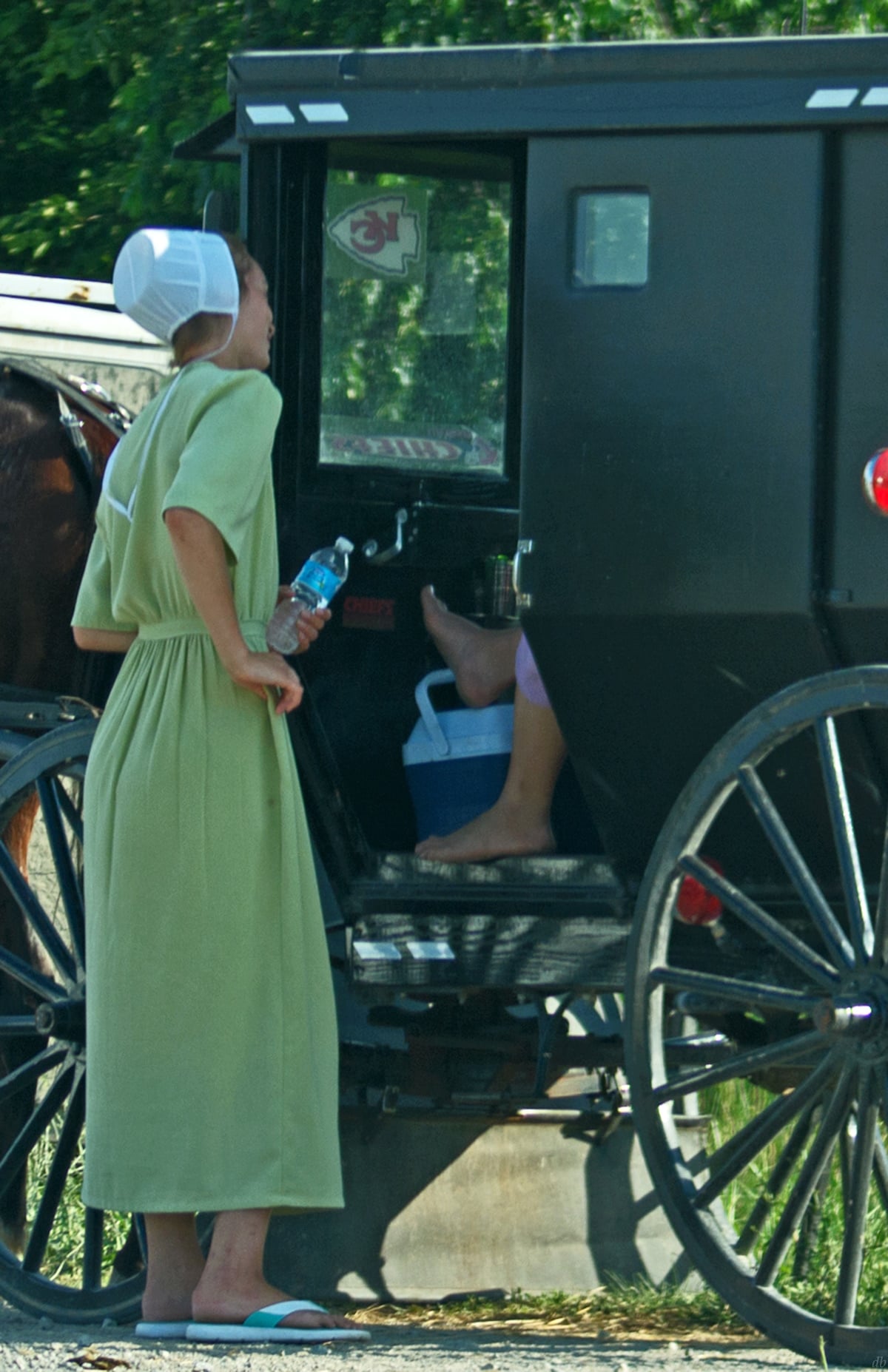
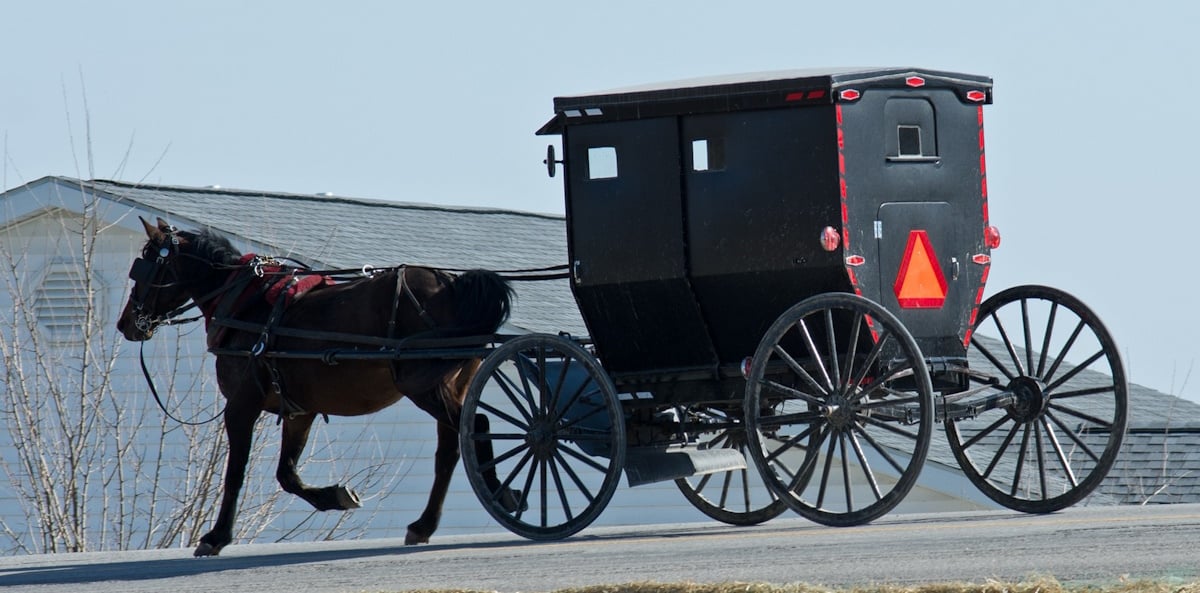
Don: I know that some groups of Amish have different color tops for their buggies such as gray top in Lancaster County and yellow or white or rust-colored tops in other areas of Pennsylvania. Are black-topped buggies the only type of enclosed ones used in the Jamesport community?
Laura: Yes. That is how the one local buggy maker makes them. I’m unsure if there is a set rule on color but typically everyone wants their buggy to look like everyone else, or you would be very noticeable as you drive down the road.
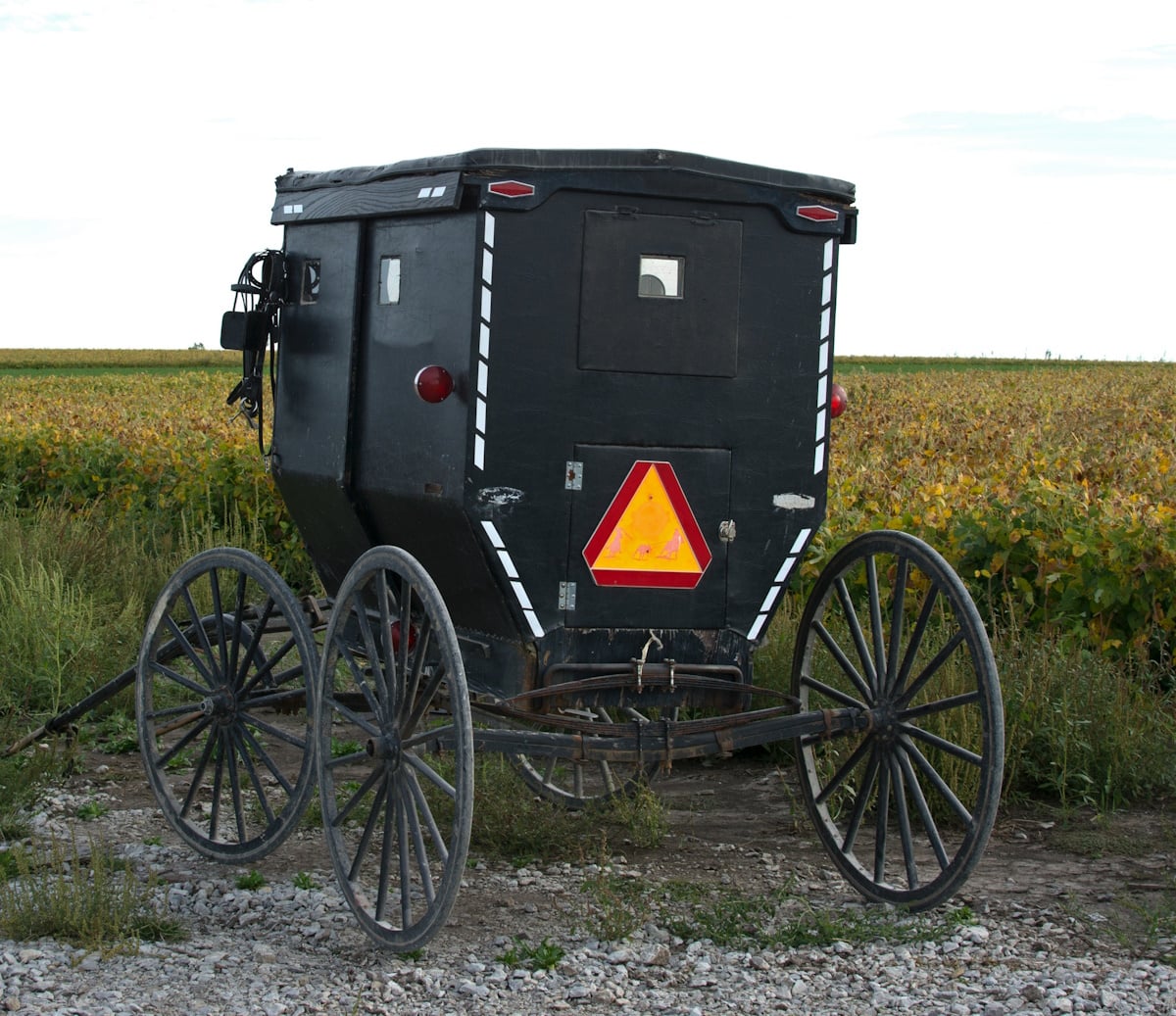
Don: Okay, I can understand how no one would want to stick out by breaking community norms. But with hundreds of these buggies that look so much alike in the community, how do you know which buggy belongs to who – even your own?
Laura: Most just learn to recognize your horse or harness or a particular detail on your buggy and can identify what’s yours by that.
Don: So, the longer buggy – the surrey – you mention, is that what these are? Is the surrey – being bigger and heavier, especially when it is filled with more people – too heavy to be pulled by one horse? And what is it like to ride in either of these buggies – is it comfortable?
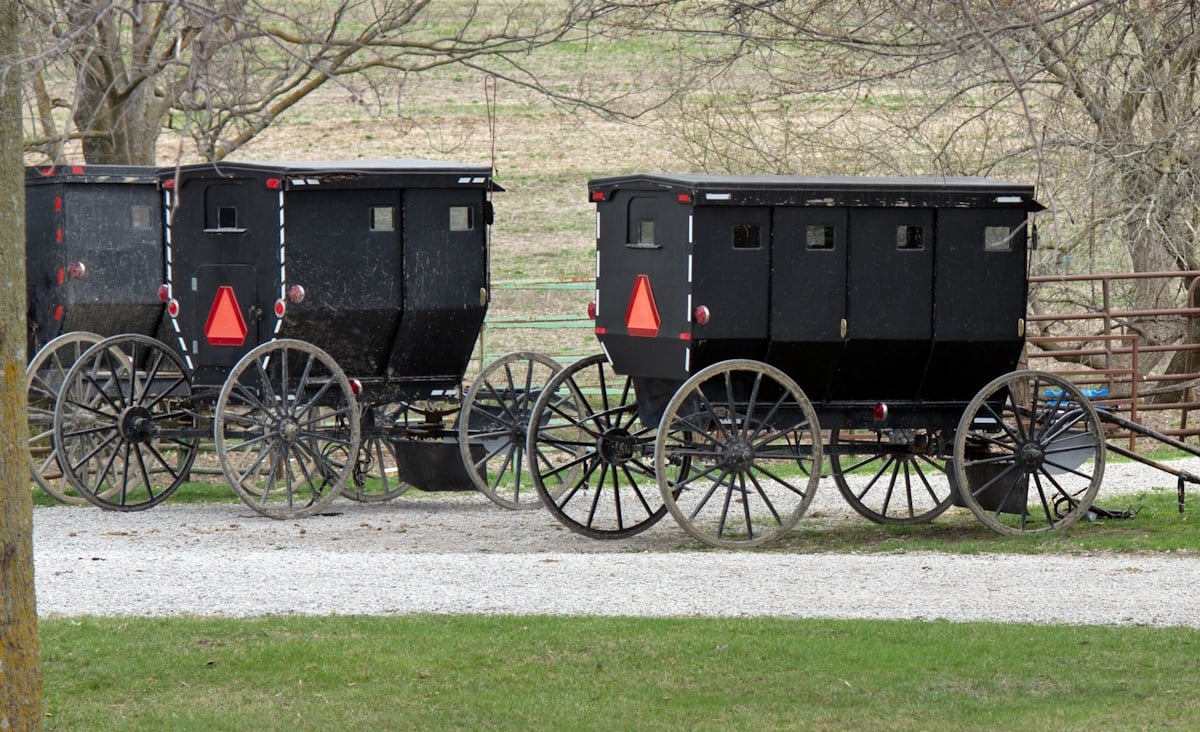
Laura: Yes these are surreys. You can tell by the additional door toward the back that there is another row of seating. Both seats in either buggy are fairly comfortable. It’s the sides of the seats that do not have the best padding.
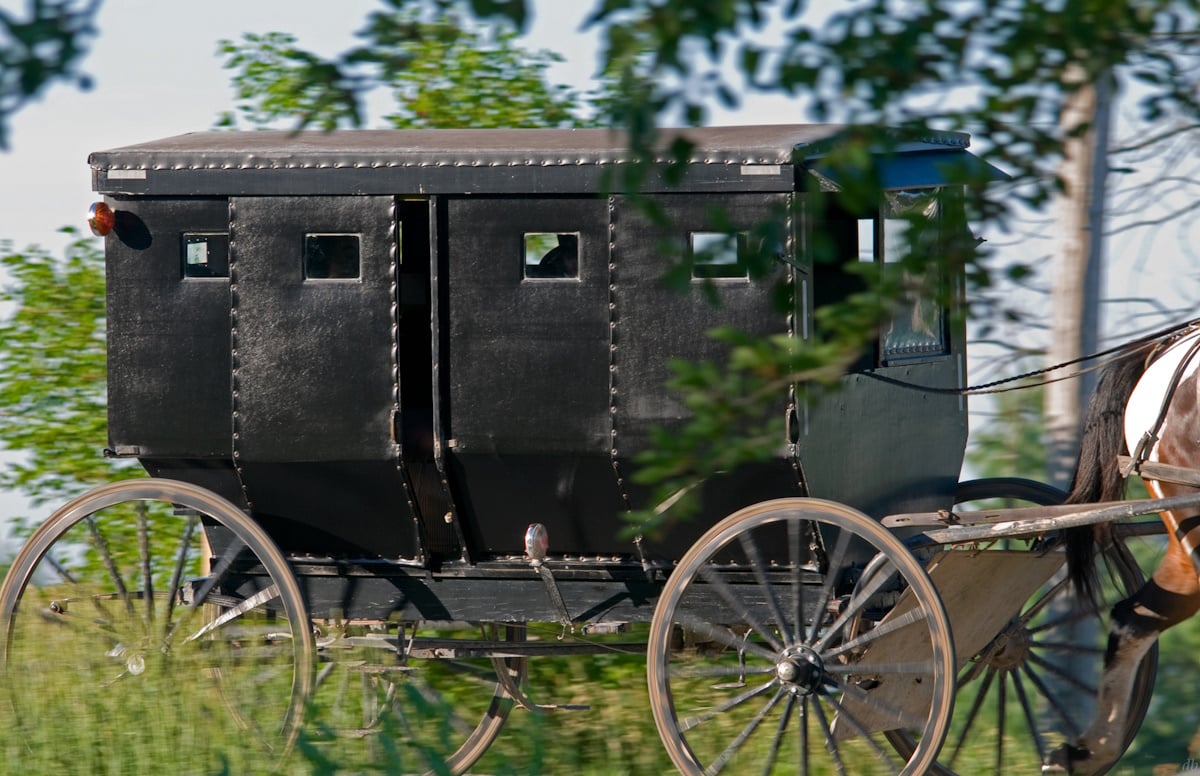
And if you’re the person sitting forward in the middle it can get uncomfortable after 15 minutes of riding. But the main thing that makes or breaks a ride in a buggy is the temperature outside – there is no heating or cooling in a buggy.
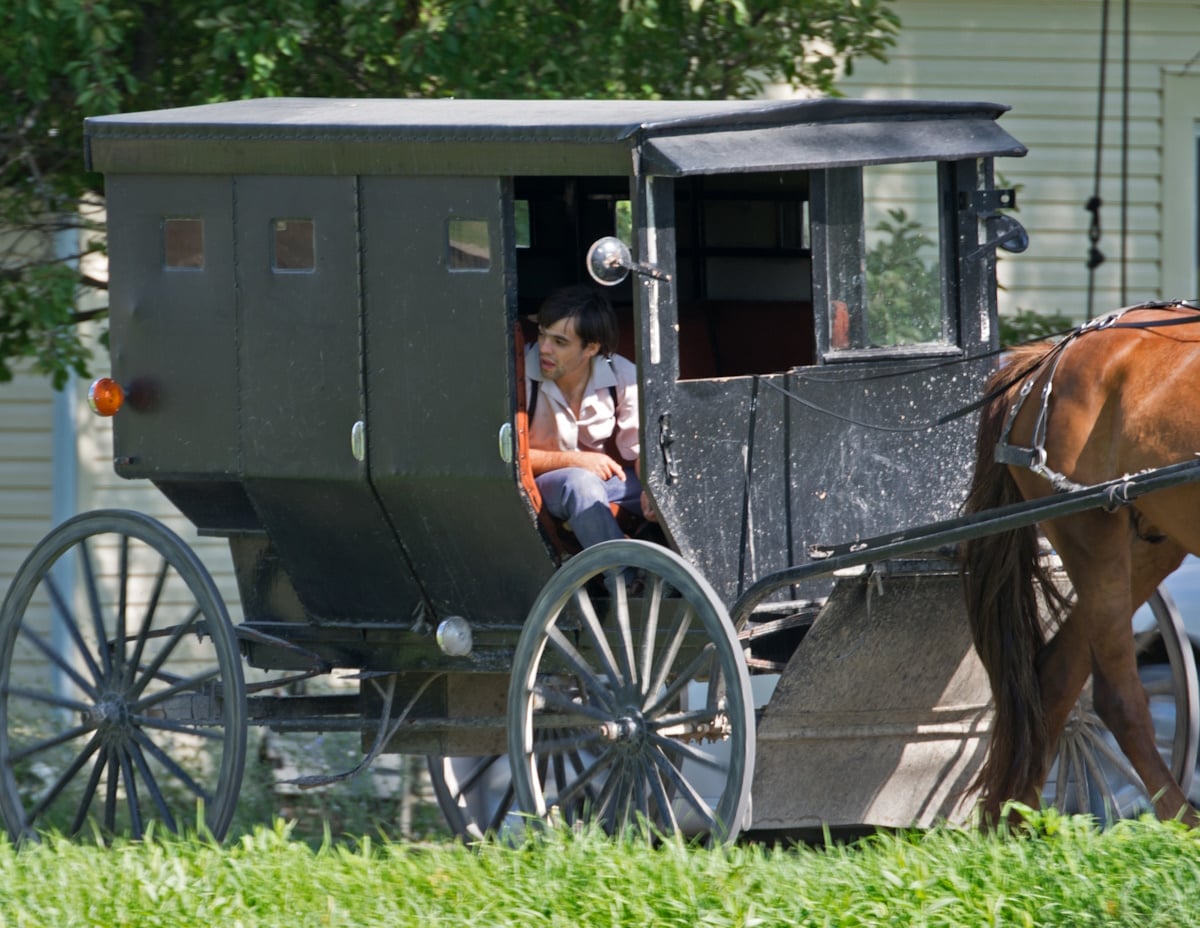
Typically a surrey only needs one horse. We had a particular horse – a bit of a larger horse – that pulled our surrey. I’m not sure if it is common to have a specific horse for surrey use, or if it was just our family that did that. But you certainly wouldn’t want to hitch a small horse to a full surrey.
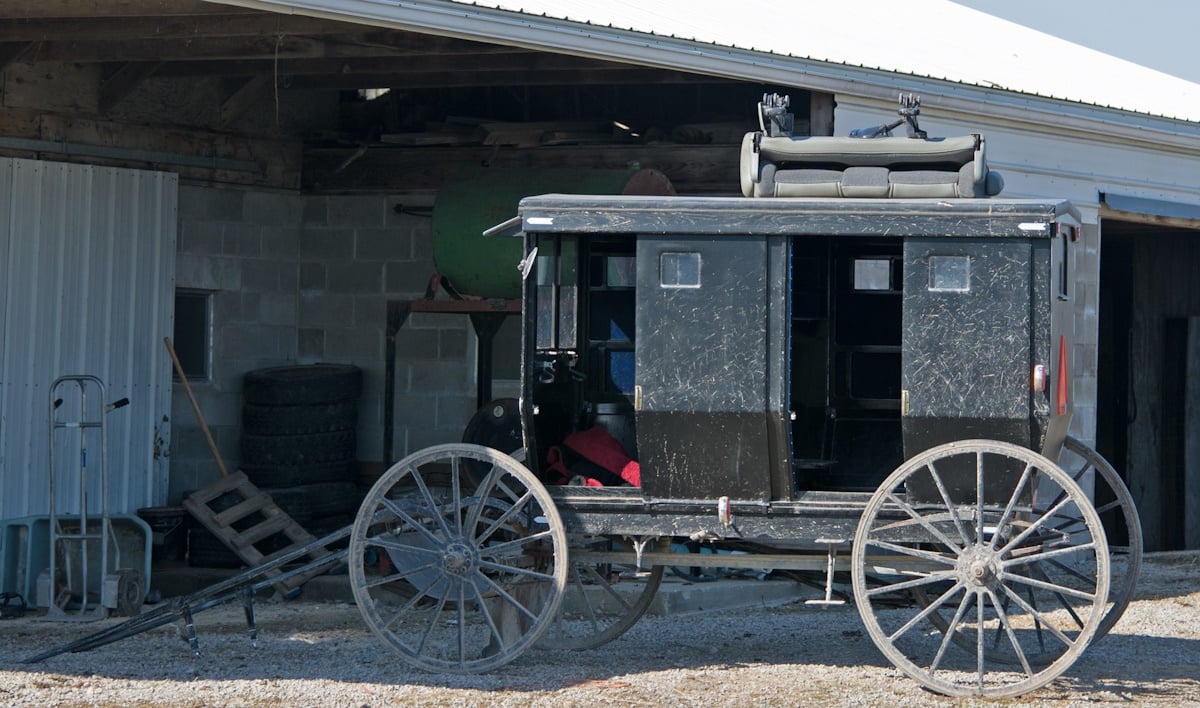
Don: So far the buggies we’ve talked about have been enclosed buggies. But here in Jamesport that are a lot of open-air buggies as well, right? Which of the two would you say is more popular? What are the advantages and disadvantages of each type – why might an Amish person buy one over another?
Laura: Yes! A lot of open air options are available. The popularity depends on the weather. When it’s cold, or a chance of rain, or windy, one would definitely pick the enclosed option. Otherwise the open air option is perfect to enjoy the sunshine or moonlight or cool off in the breeze as they drive.
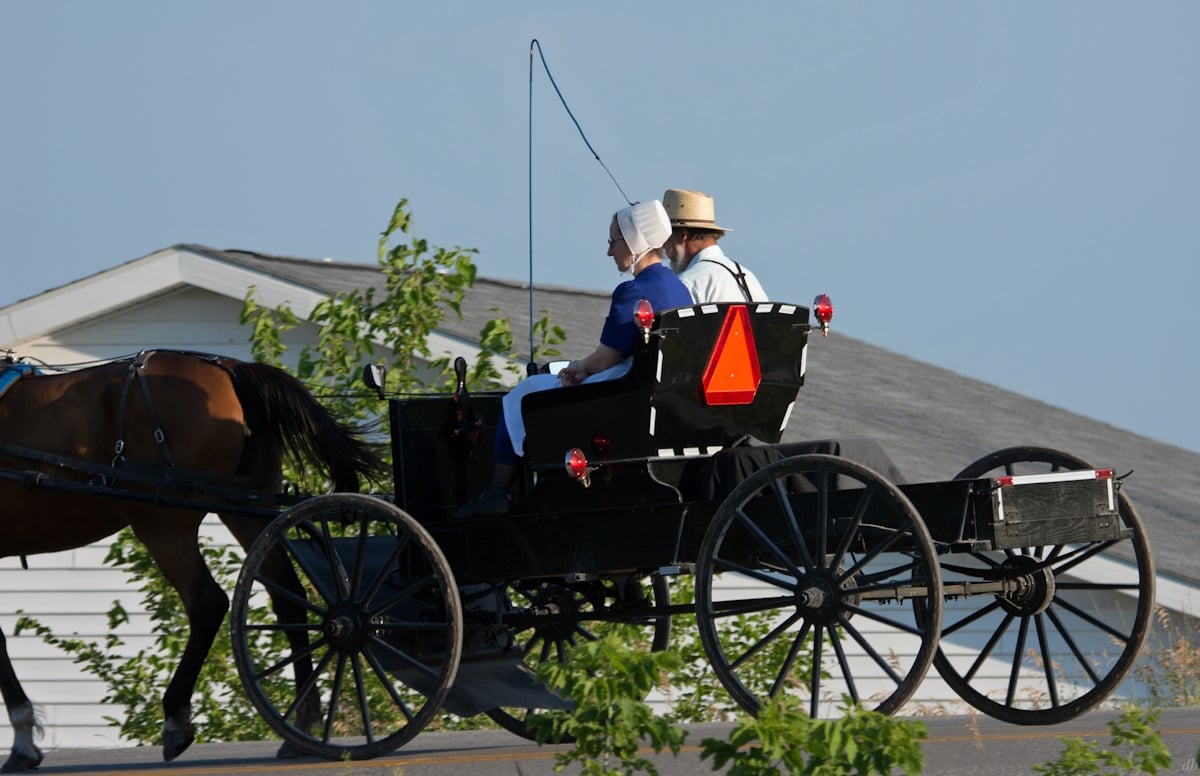
Obviously the covered ones are heavier so during the summer when the horse has to work harder in the heat, the lightest buggy type is often chosen. Typically owning both options would be ideal, but I’m assuming a covered option would be the first choice for buying.
No one drives an uncovered buggy to church . . . for some reason open-air is used for daily things but not important events. A wedding or funeral would also require a covered buggy. I don’t exactly know the reason why.
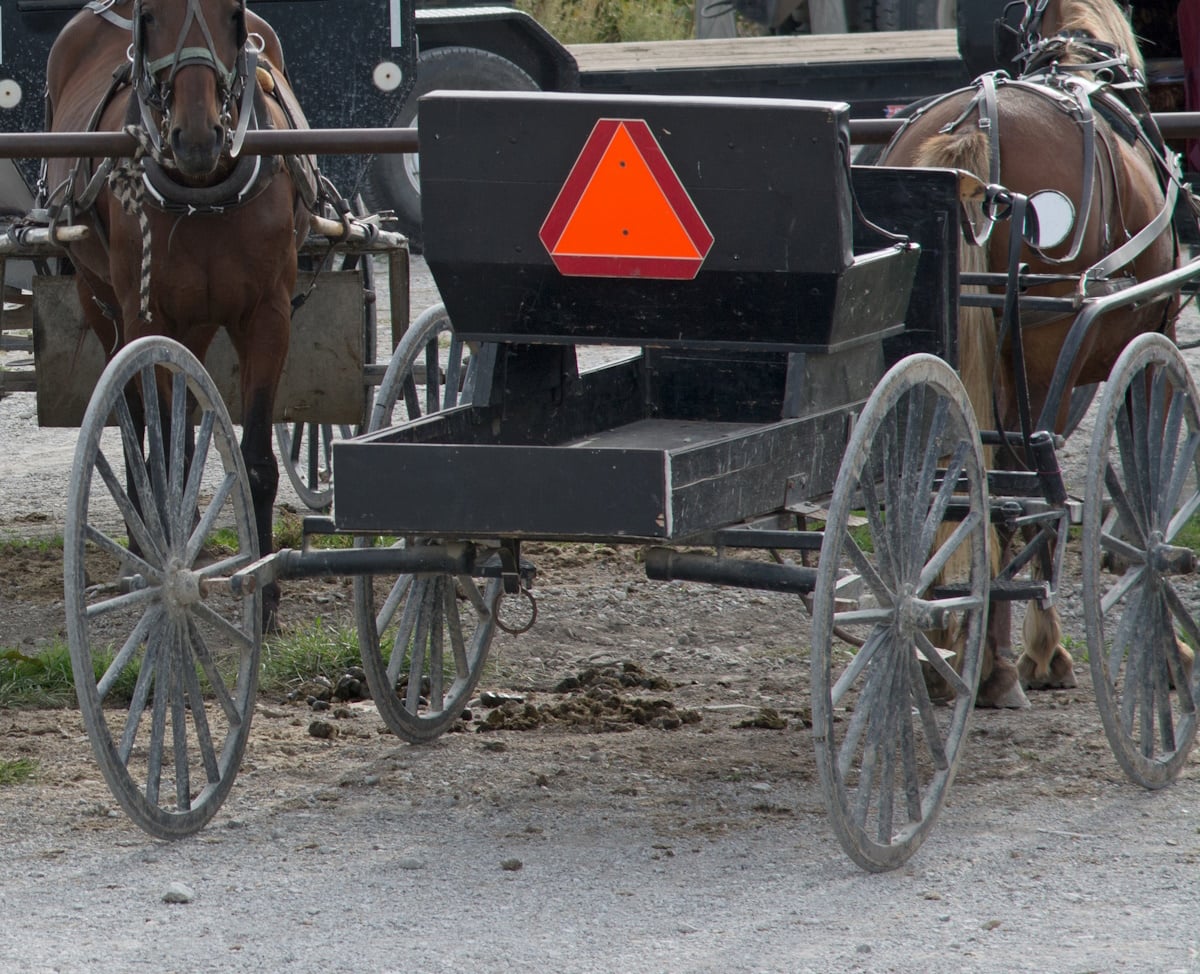
Don: So you’re saying they are the informal ride of choice – weather permitting. Interesting. Are these also called buggies, or do they have a different name? I see some are one-seaters with room behind the bench to carry stuff (groceries, tools, kids, etc.), and others have two bench seats for people to ride on. Are these just slight alterations of the same basic thing?
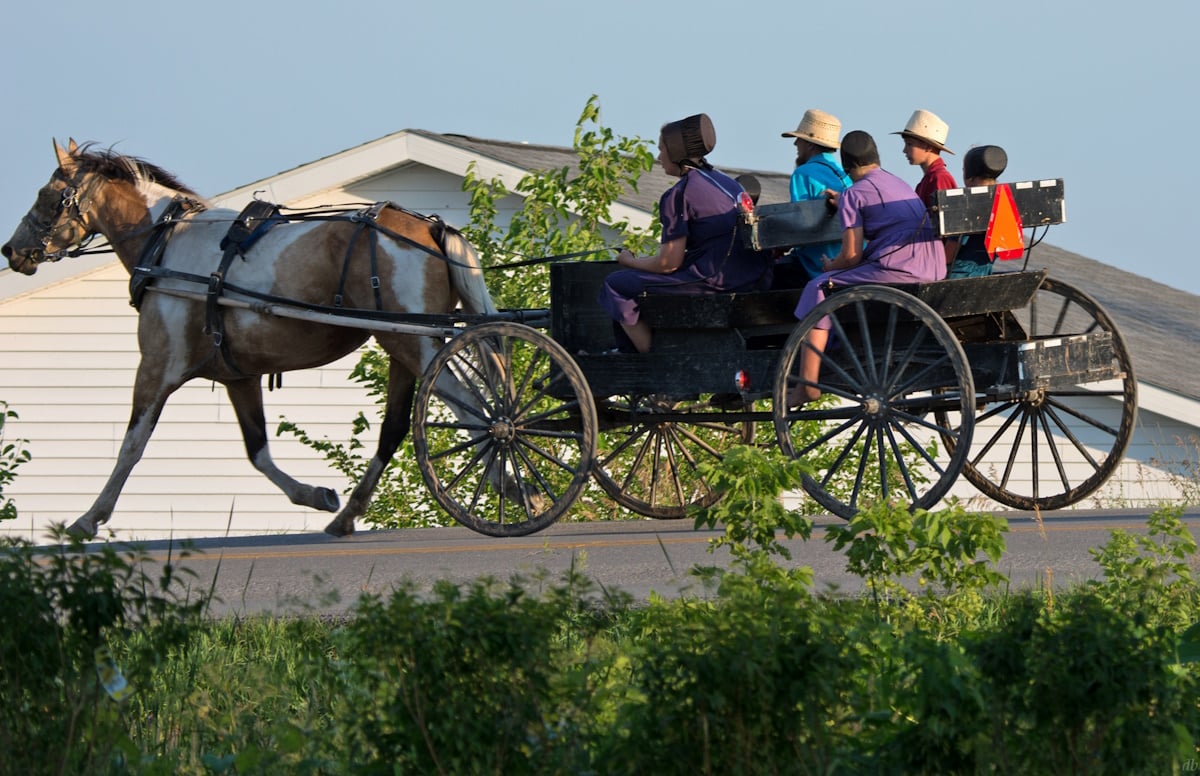
Laura: The most common term used for the open-aired option is “hack-buggy,”. . . and don’t ask me why because I don’t know. As far as the one seat or two . . . that will differ based upon what you are using it for on a given outing. The second seat typically detaches easily so if you’re hauling people, you use two seats. If you’re hauling items, removing the second seat can give you extra space.
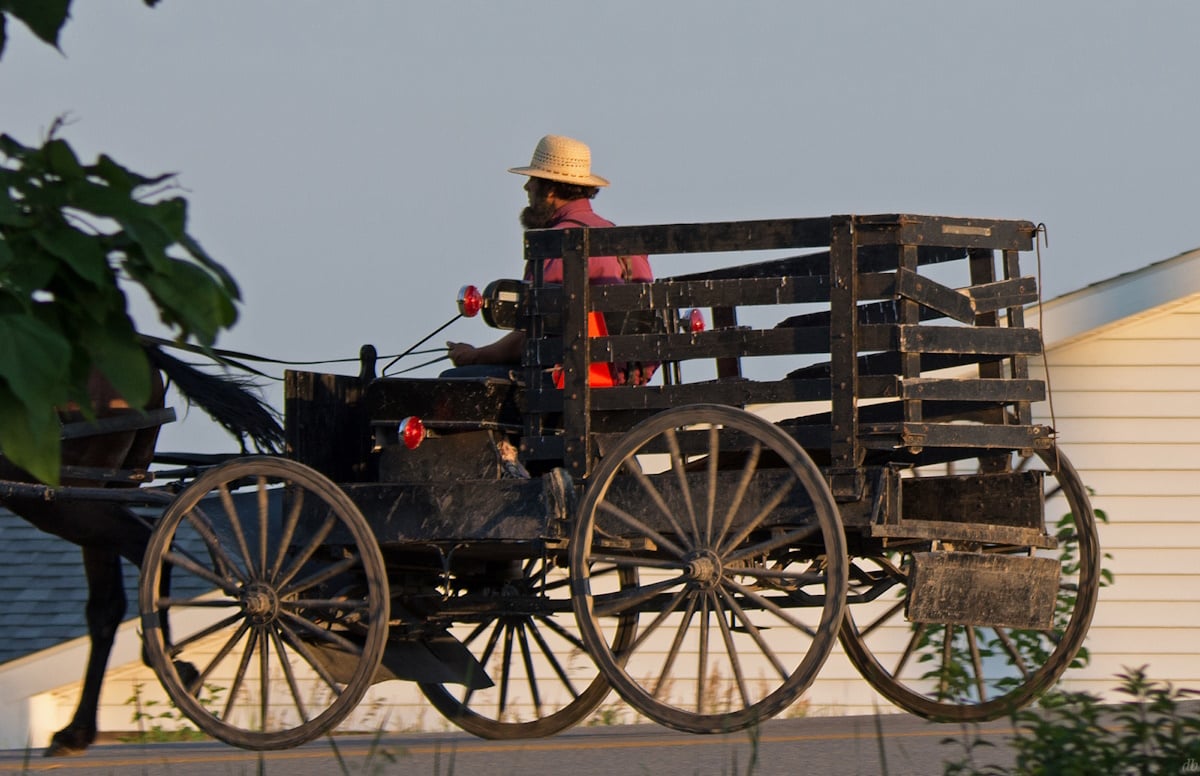
Don: So, it’s not two different types of buggies, but just a removable second seat – now why didn’t I think of that?
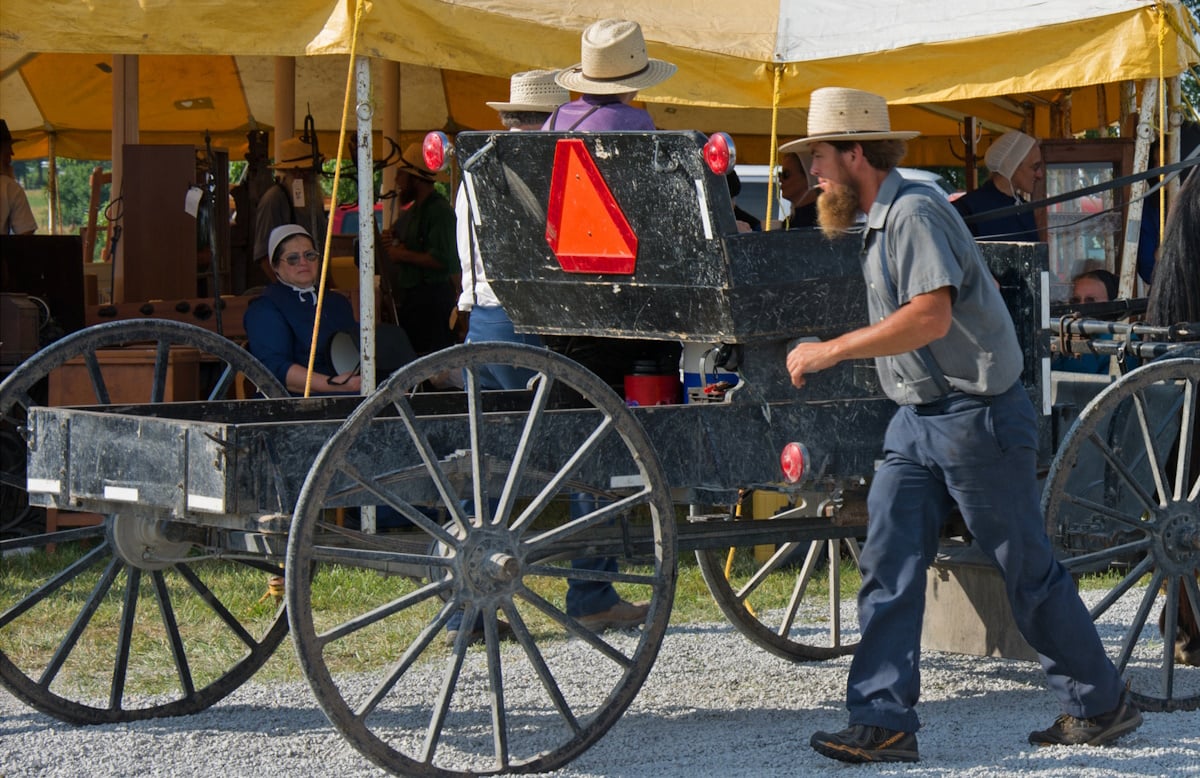
Here’s something that struck me as being a little different: One of the buggy has a ball-mount trailer hitch. Is that as rare in the Amish world as I think it is? What might an Amish person have to pull with their horse and buggy?
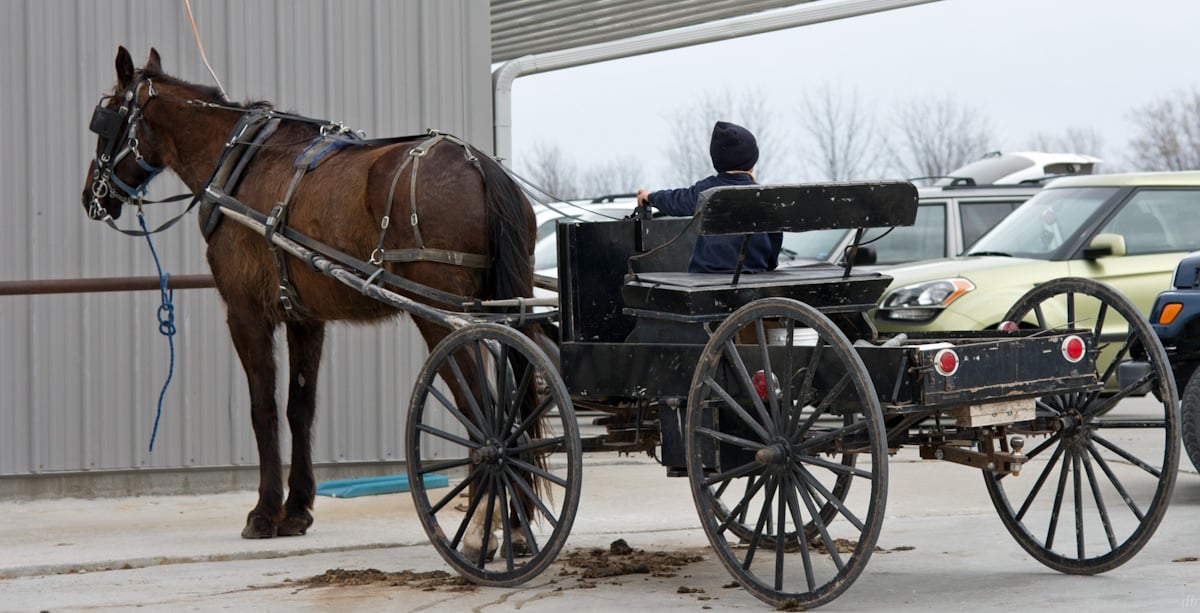
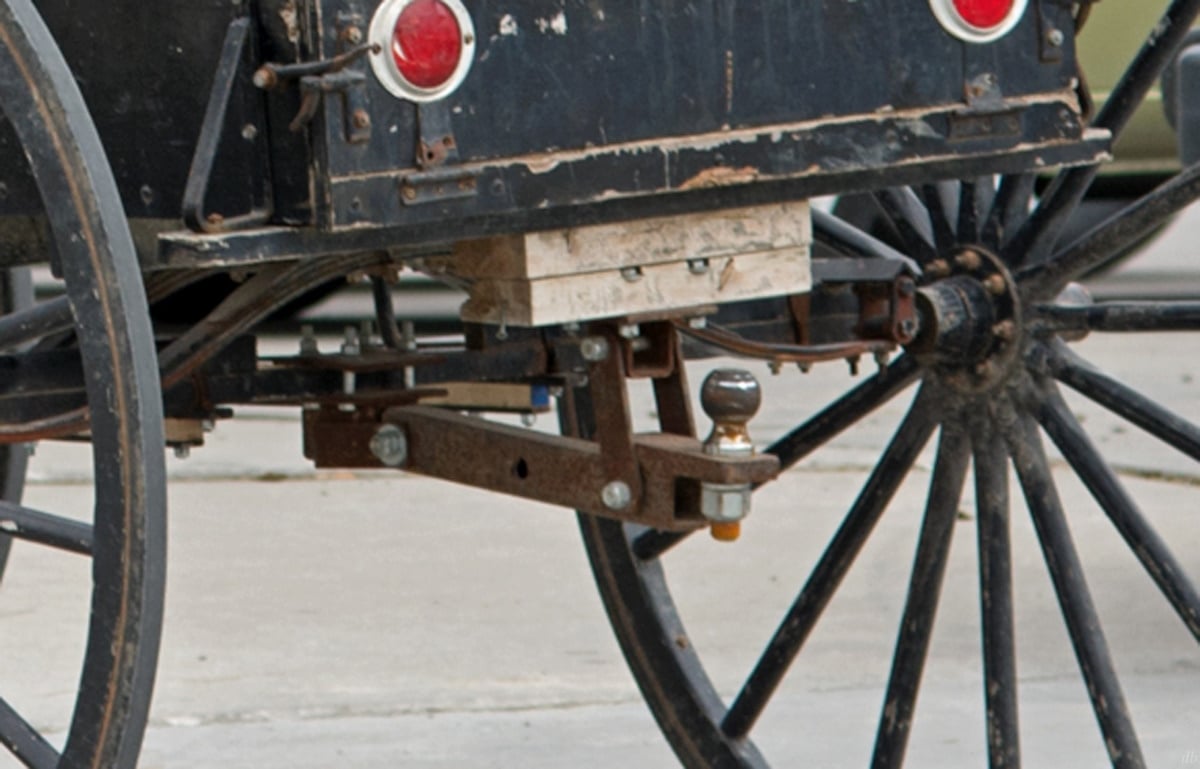
Laura: That is a rare sight, but there are some contraptions that people drive around, and pretty much anything is possible as long as it is safe. My first guess would be someone has a tiny enclosed trailer to haul a load of wood or something similar.
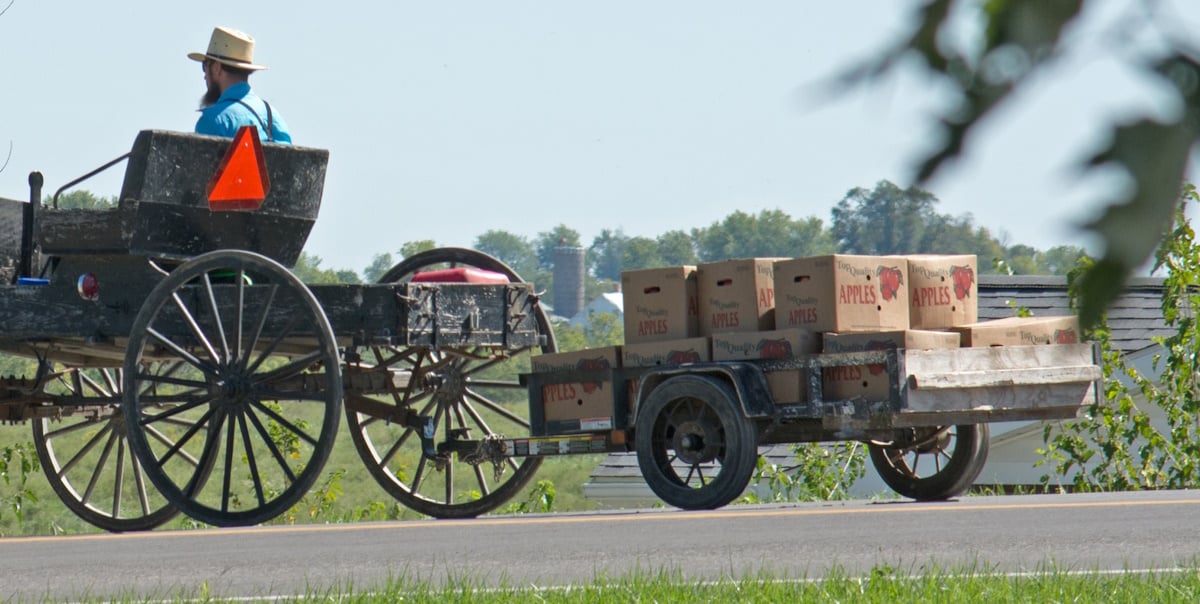
Usually a wagon would be used for something like that, but let’s say someone doesn’t have any need for draft horses but has some items they need to haul, hence the hitch behind the buggy.
Check back next week for Part 3 of this conversation with Laura Graber on Amish transportation. In it, Don and Laura look at some of the less-common vehicles on Jamesport’s roads — from the two-wheeled road cart to an unusual horse-drawn vehicle that Don has only seen one example of in all his years visiting the community. And for more from Don and Laura in the meantime, they explore how Amish teachers manage 8 grades in one room.




Amish life
I was born English. At 45 I left my 28 year career with the Air National Guard and my 12 year engineering position with the FAA to spend 15 years in three Amish communities and was a member of two Amish churches. I miss the plain and simple lifestyle. At 59 I was throwing hay up into a hay wagon, driving the team, helping treading the hay down, and delivering it into the barn. I worked on several farms and a cannery and had my own business to run.
I returned to society, joined a Word of Faith Church, but still miss the plain and simple lifestyle. I miss my slow poke horse. Good enough for a “seeker”.
There is a lot to appreciate about the Amish, but there is a dark side that they try hard to hide. There is a facade that hides the dark side. The English only see the plain and simple people. But there is a dark side which is fuel by the secret lies they live.
Since leaving I earned my bachelor degree at Liberty University. My final paper was about my experience with the Amish.
I’ve started a book about my experience.