
Visiting The Amish in “The Middle Of Nowhere” (10 Photos)

Each year the Amish start new settlements (with nine new ones arising in the past year). Some grow slowly over time, others more quickly. Others eventually fail and disband. Dynamics such as the local economy, climate, and in-group harmony all can affect a given community’s chances of success.
Today, Timothy L. Price shares a closer look at the goings-on in one such young Amish community, which we learned of in 2023 – when it was first reported they were settling in the “middle of nowhere”.
Nebraska has been largely overlooked by the Amish for many years. Since the founding of a few communities in the 2000s, there has been little new Amish settlement in the state.
Part of it was likely the state’s education policy. Also, Nebraska isn’t really supportive of home births. However, since 2020, several new communities have blossomed here, and another is set to start next spring.
Hi, my name is Timothy L. Price, and I am an “Amish Uber driver”. On October 24th and 25th, I took one group on a goodwill tour. The group I drive as a pinch-hitter for is in Dannebrog, Nebraska. They are New Order, but originally from Kalona, Iowa. Their new Bishop hails from Hutchinson, Kansas.

They sought a more spiritual observation in their lives. Old molds and resentment toward new modes in Kalona made it easier to move to Nebraska into a different association—the New Order “tractor Amish.”
They use tractors, get power from the pole, and have electricity in their homes, but no smartphones, cars, or so forth. There are now five families, some of them single, and lots of children, with two newly married couples.

For two years, we’ve heard about another group coming in from central Michigan – four brothers, along with a family from Bloomfield, IA, and another from Missouri.
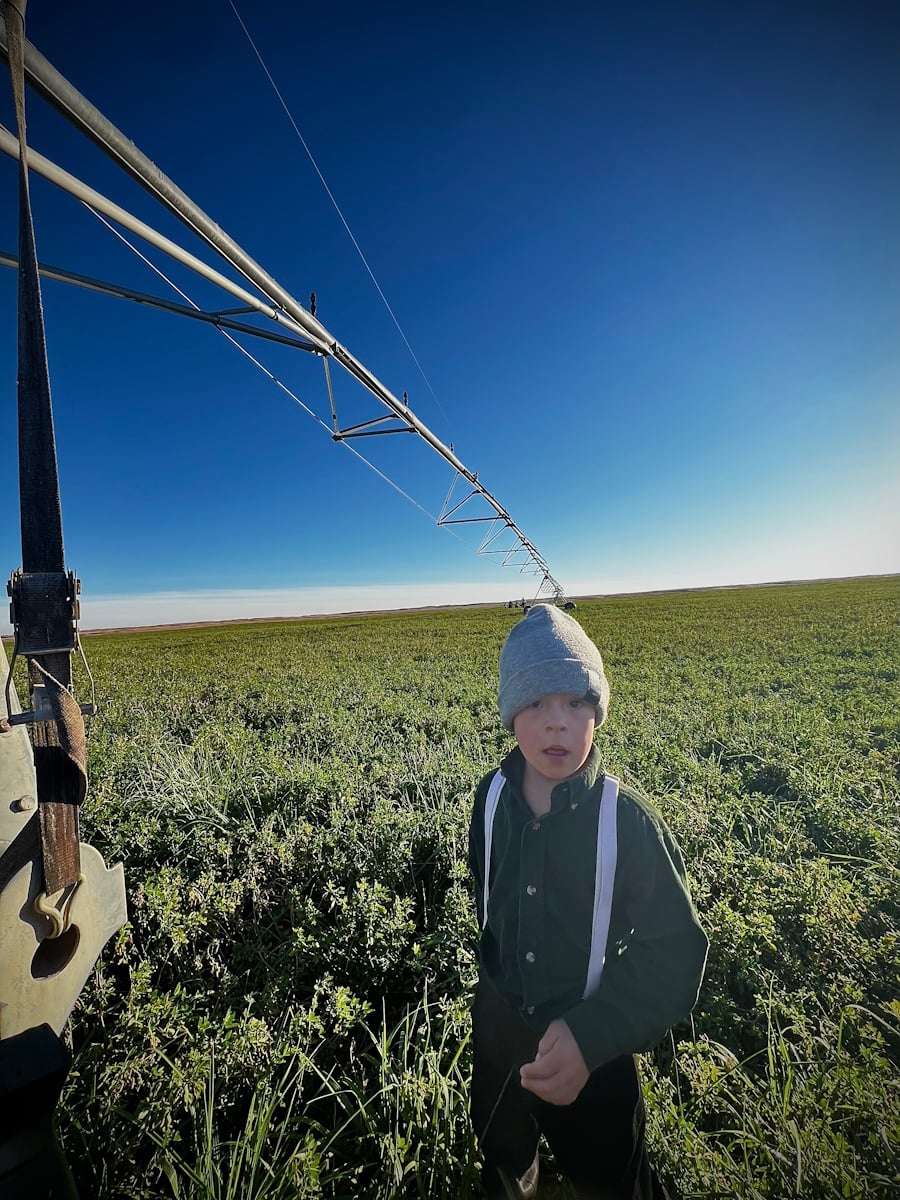
They bought 5,600 acres south and west of Kilgore, NE, off Hwy 20. They are commonly called “Valentine Amish” because Valentine is the biggest town for more than 100 miles. Reuben Miller is the Bishop there. They have a classical history library and run more than 500 head of cattle and three half-section pivots of alfalfa.

On top of this, they run several businesses: cabinet making, welding/fabrication, making bandsaw blades, and building old-growth log homes, among others. The boys love the cowboy life. They dress traditionally Amish, even in the saddle. One young teenager had a blue roan horse and rode as well as any barrel rider might.
To say they have been busy is an understatement. All families have built not only houses, but work barns, bridges, and outbuildings. Their homes aren’t what you’d find in Holmes County, Ohio, or Shipshewana, Indiana. They’ve built log homes and barndominiums for themselves.

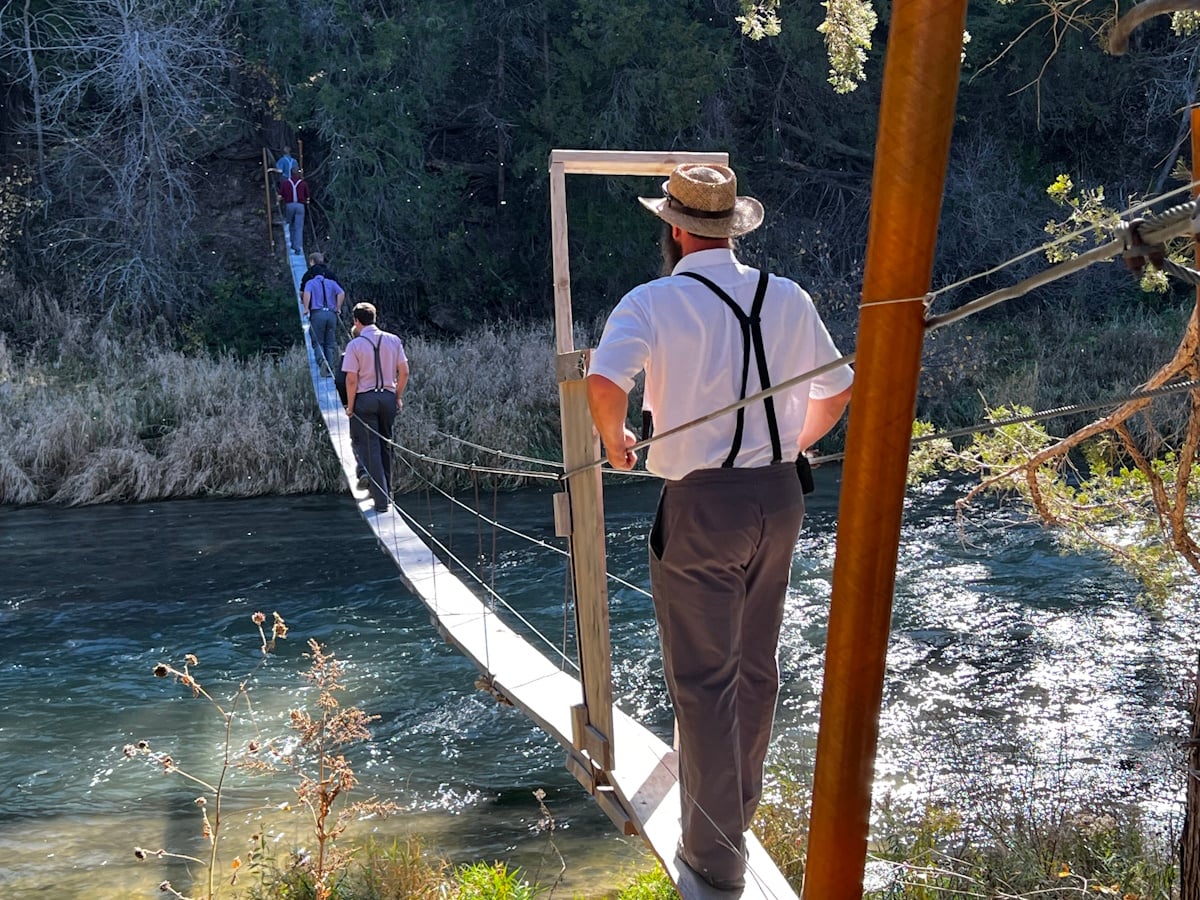
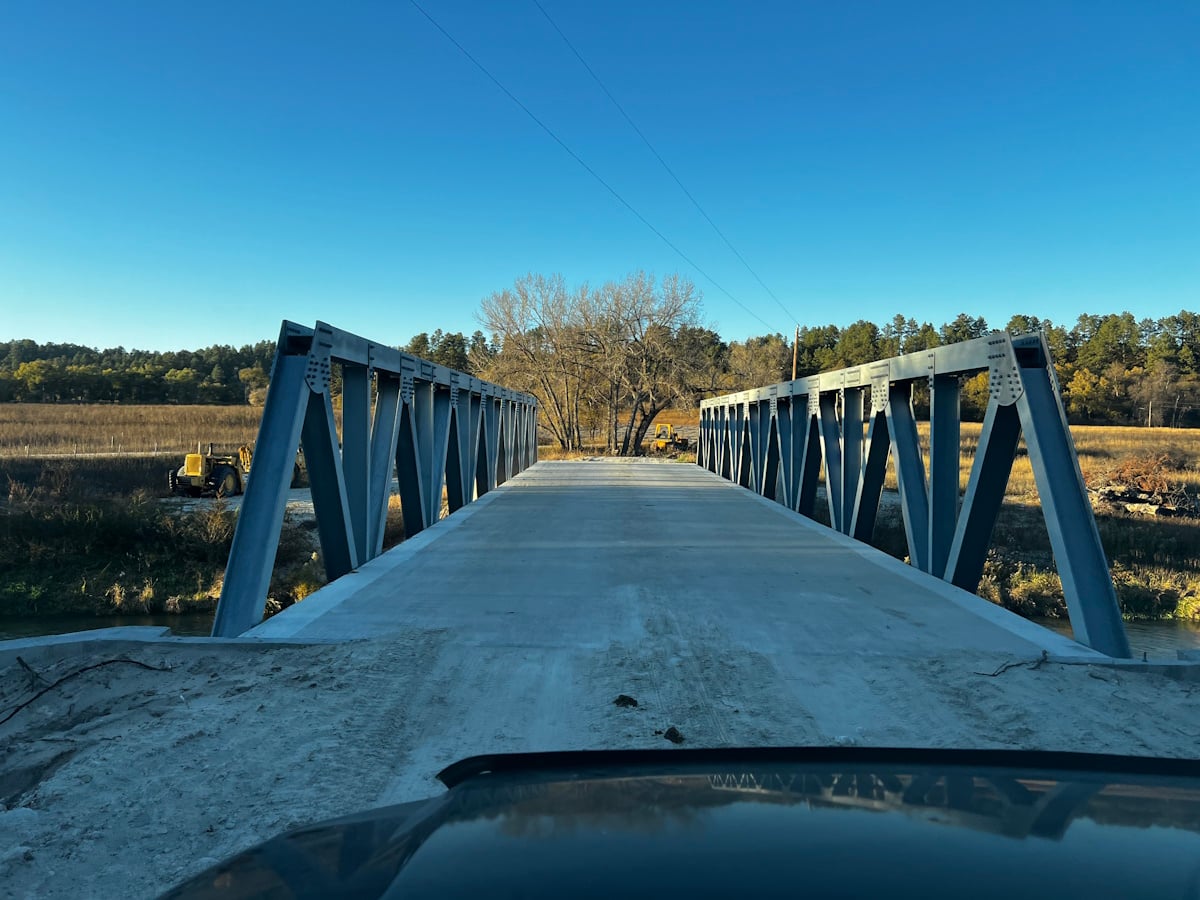
A major river snakes through the ranch they bought, flowing at 600 cubic feet per second. The Niobrara has many artesian springs feeding it in this area. The Amish have built three bridges over the Niobrara. Two hard surface bridges, but also a foot-rope bridge. The latter by a teenager. This river is more than 95 feet across. Most of the new homes are powered entirely by solar.
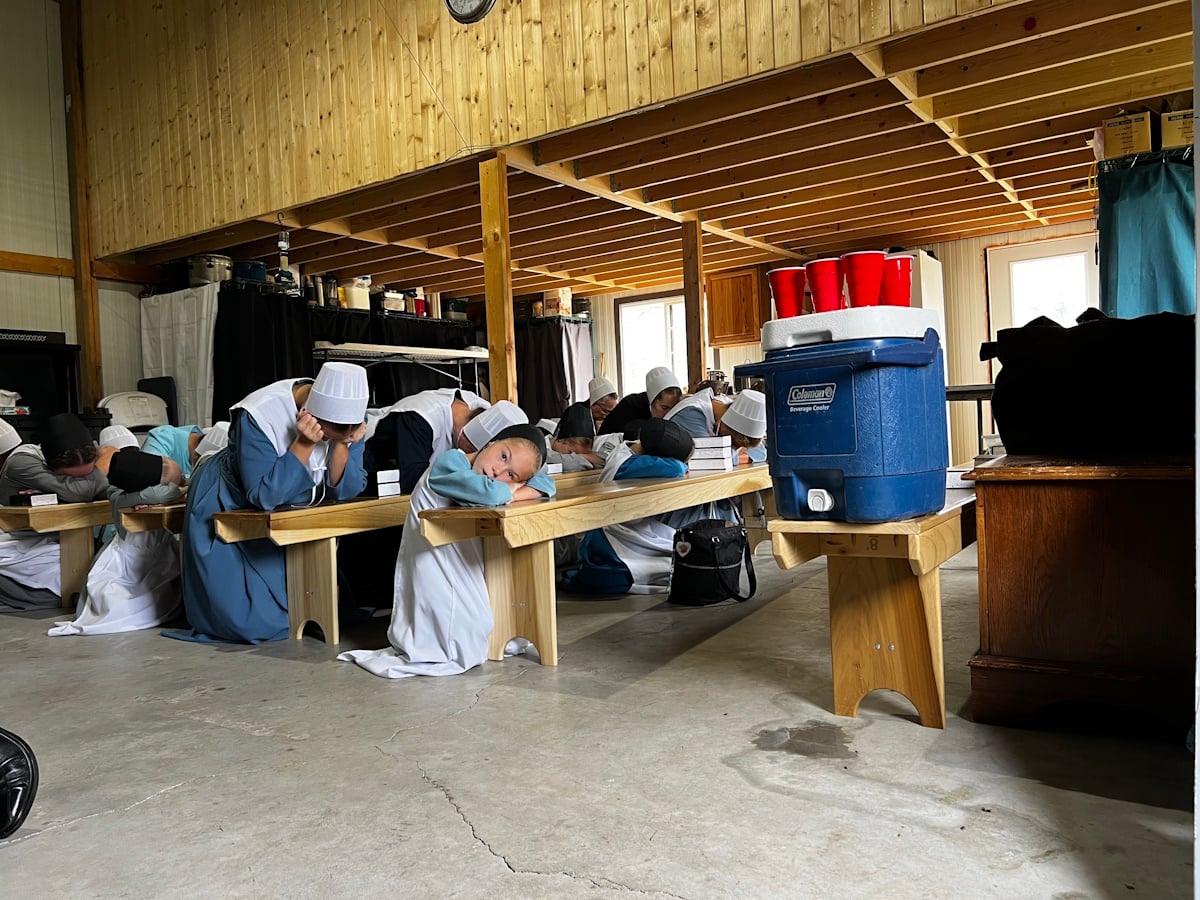
I noticed that these Michigan Amish are a good bit different in their clothing and Sunday observances than I’d seen elsewhere. True to form, men and women sat separately. But girls, still in school, wore black head coverings and white smocks over their dresses.
Three ministers brought the message, among them was the Dannebrog minister. This was part of the goodwill tour. Both groups could measure each other against a general standard. Both groups were focused on high morality. But even I could see the posturing.
I noticed that the Kilgore ministers used less scripture. They did not use the Ausbund, which is the typical Amish hymnal. They used another hymnal for the slow tune music. Their service was longer than I’d seen anywhere else. They observed more “silent” prayer and less kneeling prayer.
On Saturday, we spent the afternoon touring the area. I was literally driving a 15-passenger van, completely loaded, baha-style off-road through ranch fields. Gopher boroughs and the slick nature of superfine sand made for interesting navigation. We got stuck up to our hubcaps on a road. All the men had to man the bumpers and push.
That evening, we all gathered at the “headquarters,” a 1930s house that was the original HQ of the ranch. This was Reuben Miller’s place. I sat around a big, long table, as usual at family dinners, with Reuben and his wife, and James Swantz of Dannebrog, the minister. It was a time for the two to feel each other out on ministry, goals, and values. But it was an education for me.
I am aware of Old Order Amish, New Orders, and Swartzentrubers—and variations thereof. But Reuben regaled me about Danner Amish, Tampico Amish, Troyers, Seymour Amish, and just what Nebraska Amish really means.
These groups are usually isolated to regions. But I was surprised to realize that there are “Nebraska Amish” in places other than Nebraska. These are austere, like the Swartzentrubers.
After two days and staying late for the youth hymn sing, we started back for Dannebrog. Everyone was wiped out. Three and a half hours’ drive through some of the most sparsely populated and remote country in Nebraska.
One Amish young man stayed awake to talk. He has been one of the more subdued in that group. In three hours, I had a clearer picture of who he was.
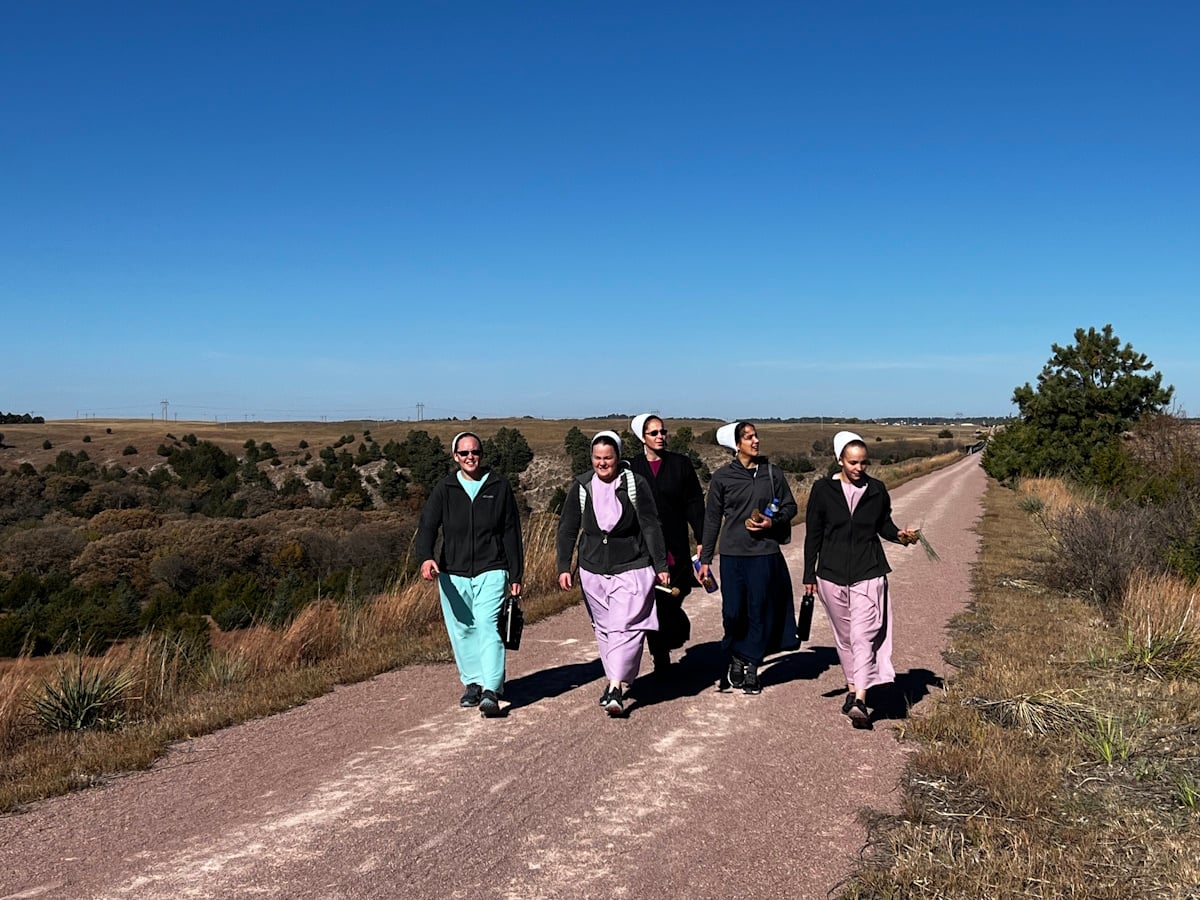
After he de-boarded, the minister offered some commentary that wasn’t bad. It just provided more perspective. This young man is a brand-new member of the Dannebrog group. There is yet an adjustment to both singlehood and a new Amish embodiment with a community that is just building. There is a lot that isn’t settled, which makes him a bit uneasy.
Timothy L. Price, a native of Nebraska, has been a publisher and author since 2005. His last two projects are truly unique: 100+ Words I’ve Not Lived Without, a mash-up between a memoir and a vocabulary book, and Anabaptism at 500, a book about the historical origins of the Amish. He spends about 1.5 months a year living with the Amish all over the United States. His website is: https://

reply
So this guy is depressed cause he doesn’t have a wife? I didn’t get that part. Sounds unique…wonder what will come of this community in the years to come. Hopefully, all will work out. I think it is a good sign that there are two newlyweds. So great when people get married it strengthens the church and Lord willingly adds more children to the group.
Economic opportunity?
I see that river, and the vast landscape and can only think of one thing-my kayak. I’ve been all over this nation, but in this rural area with all its fences on the remote plains, the flowing river seems like the ticket to see it all up front and close. What it would be to float this area and be part of the wilderness that these people see and call “the middle of nowhere”.
There is still a lot to be seen near this river. For a very long time some very strange to us animals came to drink there. Their bones are exposed by simple rainfall, and if you want to discover something really old, you may find it near the banks of a winding river. Spring would offer moderate temperatures and great clean air. Water levels would be ideal, and the flow would be a very fun ride.
-Now who want to join me in the adventure of a lifetime?
Paddling
There are many rivers in this area great for paddling! Dismal River and Niobrara are a couple of the more popular ones with outfitters. Tubing on the Niobrara is very popular and Valentines is kind of the de facto outdoor hq in the region. I haven’t been on the Niobrara for years but it’s beautiful – many waterfalls, springs and wildlife.
Watershed
In August I found myself in this exact area buying a truck. The sellers driveway was miles long. As long as it was out of the rust belt, I was all for it. The scenery was splendid. He was a guide and rented out cabins. Completely off grid, with no cell service, if I made a wrong turn I’d be lost for sure. His friend in town gave me directions.
There was a sign next to a creek instructing people to not swim or wade in the water..the silt was washed into the creek and it was soft enough to sink in and drown. After a decade of drought it had finally been a wet year. All that water had the area very green, something I did not expect.
It is a vast and lonely place. I can’t imagine too many people could make a go of it there.
Fascinating – sounds like a place I’d love to visit but maybe just a visit.
Reply
I’m in! You should look into St. Ignatius Montana. Flathead Lake and Placid Lake are really good spots for kayaking. This is a New Order Amish settlement, a very peaceful community.
Nebraska
When I think of Nebraska I think of Johnny Carson, William Jennings Bryan and Willa Cather, not necessarily in that order. It was interesting seeing a glimpse of Nebraska Amish–rather a far cry from the very settled, quaint Amish communities of Pennsylvania, some of which, at least in southeastern Pennsylvania date from before the American Revolution. I look forward to reading more about the Nebraska Amish communities. Thanks to Erik for an interesting article.
Glad you enjoyed it David but I need to pass the credit on to Tim – he did a really nice job with this one. You’re right it does give you a different perspective on what “Amish life” can be. These people must really have something of the pioneer spirit in them not only to start a new community but in such a remote place.