
The 7 States With Just A Single Amish Community (2026)

States like Pennsylvania, Ohio, and Wisconsin are part of the “Amish heartland” – each home to dozens of Amish communities, and tens of thousands of Amish people.
But seven U.S. states host exactly one Amish settlement each, according to 2026 figures from the Young Center.
While some are well-established, others are relatively new, reflecting a pioneering spirit not uncommon to the Amish.
Here’s a look at those seven states and communities, with locations, histories, and estimated populations:
1. Delaware

Settlement: Just west of Dover (Kent County)
Founded: 1915
Amish Population: 2,155
Delaware’s only Amish settlement was founded in 1915 by families from states as varied as Wisconsin, Ohio, Montana and Alabama. The Dover-area community now consists of around 15 separate church congregations (known to the Amish as “church districts”).
The buggies here, with their distinct rounded sides, are characteristic to this group. While farmland pressures and suburban expansion have caused some out-migration, the community remains strong, with many households working in woodworking, blacksmithing, buggy-making, greenhouses, and other trades.
2. Florida

Settlement: Pinecraft, Sarasota
Founded: 1927
Year-round Amish Population: 100
Pinecraft is Florida’s only Amish settlement and one of the most atypical in the entire country. Founded as a winter retreat in the 1920s, it has evolved into a permanent community with two church districts. The year-round Amish population is small, but balloons in the winter months, when Amish visitors arrive in droves.
Pinecraft is an unusual “urban” Amish community, with no farmers or buggies. Amish residents and visitors get around by bicycle or large adult tricycles. A fifteen-minute drive will bring you to beaches like Siesta Key, popular with Amish and Mennonite visitors and locals. More on the Pinecraft community.
3. Idaho
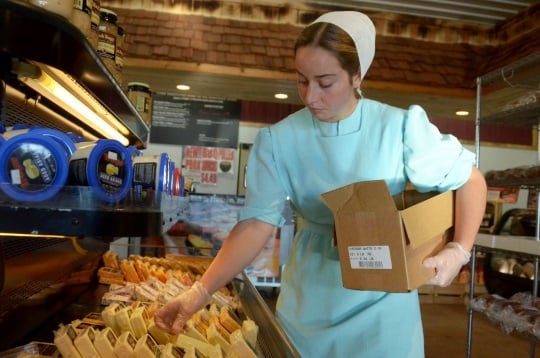
Settlement: Near Salmon (Lemhi County)
Founded: 2012
Amish Population: 125
Idaho’s only Amish community is located near the town of Salmon in Lemhi County. Established in 2012, this small settlement is situated in the eastern part of the state.
The area is known for its mountainous, beautiful scenery. The Amish-run Baker Country Market is popular with locals, providing baked goods, canned items, breakfast, sandwiches and more. The market burned down in early 2026, but was rebuilt and reopened less than six months later.
4. Texas

Settlement: Beeville (Bee County)
Founded: 1999
Amish Population: 60
The Beeville settlement in southern Texas was founded by families from Tennessee seeking in part to escape the humidity. Known for its dry climate and wide-open land, it remains small and is one of the most remote Amish settlements.
The heat and limited interaction with other Amish groups have likely kept this community modest in size. The Beeville Amish are known for their annual school benefit auctions, drawing outsiders to the area twice a year. More on the Amish in Texas.
5. New Mexico
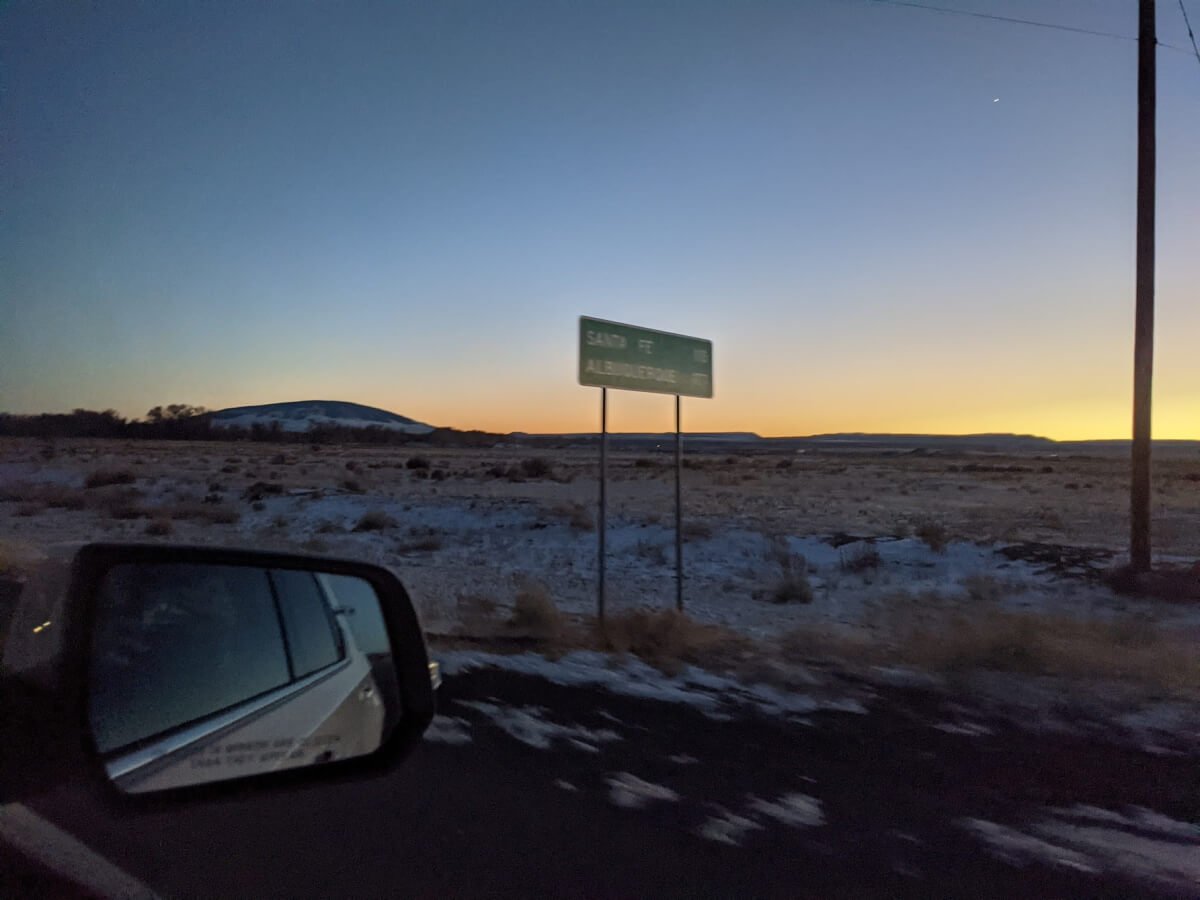
Settlement: Near Ortiz, CO (Rio Arriba County, NM)
Founded: 2020
Amish Population: 35
New Mexico’s only Amish settlement lies in the high-desert landscape near Ortiz, Colorado, just over the border in Rio Arriba County. The first Amish families arrived in 2020. With just a handful of households, it’s one of the smallest and most geographically isolated Amish communities in North America.
6. Mississippi

Settlement: Randolph (Pontotoc County)
Founded: 1993
Amish Population: 155
Located in the hills of northeastern Mississippi, the Randolph settlement was mainly established by Amish from the conservative Ethridge, Tennessee community. It has remained a small but steady presence in the state, with a single church district, and was long the only Amish settlement in the Deep South.
This is a highly traditional Swartzentruber Amish settlement. It may be small, but it is a nice community to visit to buy Amish-made goods and foods (like nut brittle), where businesses resemble those in its home community of Ethridge.
Mississippi may not stay on this list for long, though. In July, Amish families began moving into the Geeville community northwest of Baldwyn, in Prentiss County, about fifty miles from Randolph. This does not appear in the Young Center’s 2026 figures, perhaps because it has not grown large enough to qualify as a “settlement”, which is why we still have it here.
7. Alabama

Settlement: Clanton (Chilton County)
Founded: 2025
Amish Population: 20
Alabama is the newest state on this list. Amish families began settling in 2025 near Clanton in Chilton County, in the center of the state, roughly halfway between Birmingham and Montgomery.
The Amish tried settling in Alabama once before, at Bay Minette in the early 1900s, but that community only lasted about 18 years. That makes Clanton the first Amish settlement in Alabama in over a century, and only the second in the state’s history. It is still tiny, with a single church district and an estimated 20 people.
Will This List Continue To Grow – Or Shrink?
These single-settlement states across the U.S. demonstrate the tendency of Amish to settle well outside their traditional “heartland states”. And as the Amish population continues to grow, this list may or may not do the same. It has in fact grown from six to seven states since last year.
But if Mississippi is confirmed to have a full-fledged second community, for example, it will need to come off this list of single-community states (I did drop the “bonus” entry from last year’s list – the Canadian province of New Brunswick – after it gained a second settlement this year).
On the other hand, a group of Amish setting up in any of the 17 states where they, as of today, do not live means we’ll be adding another state to the tally.
Or, a state with just two settlements may lose one, and qualify for the next update. There are currently three states with just two Amish settlements.
See also:
The Beeville, Texas Amish community is also interesting because of the fact that all the families are related, it’s just one big family. The community was started by the bishop and some of his married sons. It now includes at least one married grandson. Also at least two of the Bishops sons married sisters and the parents of those sisters also reside there. I don’t know of any other communities that are literally just one big family.
Ya’ll are welcome in Alabama! Come for a visit and see how you like it here.
Interesting!
As an exAmish, I enjoy your facts about the Amish across the country.
Thanks Anna, glad you like it! This is a bit of a “nerd” topic, but those are often my favorites 🙂
Amische Siedlungen
Pennsylvania, Ohio und INDIANA waren immer die “Großen Drei,” Wisconsin stand immer nach Indiana. Eine kleine Randbemerkung nur
Yes that is true. I chose to highlight Wisconsin here in my example set because Indiana is typically mentioned with the other two, but my idea of “Amish heartland” goes beyond those three states.