
I Grew Up Riding in a Buggy — These Are the Amish Vehicles You Don’t See Every Day
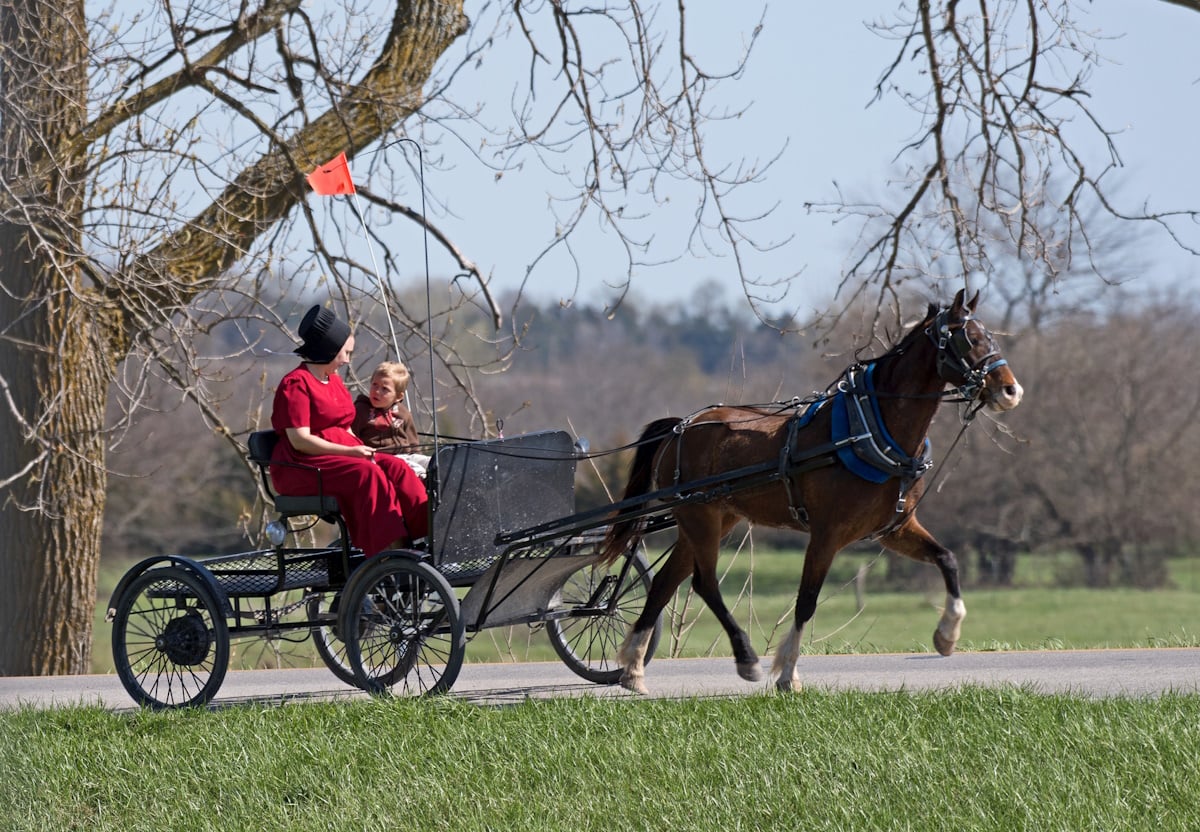
We’re back with Part 3, the final part of our conversation with Don Burke and Laura Graber on Amish horse-drawn transport in Jamesport, Missouri.
In Part 1, Don and Laura covered the smallest and largest vehicles on the road — from pony carts to draft horse wagons. In Part 2, they moved to the three most common buggy types: the standard enclosed buggy, the surrey, and the open-air hack buggy.
Here in Part 3, they get into some of the less-common vehicles you’ll spot on Jamesport’s roads — including one that Don has only ever seen a single example of in all his years visiting the community.
Don Burke: If you don’t mind, I would like to go back to our discussion of pony carts for a moment. These pictures look a lot like some of the pony carts.
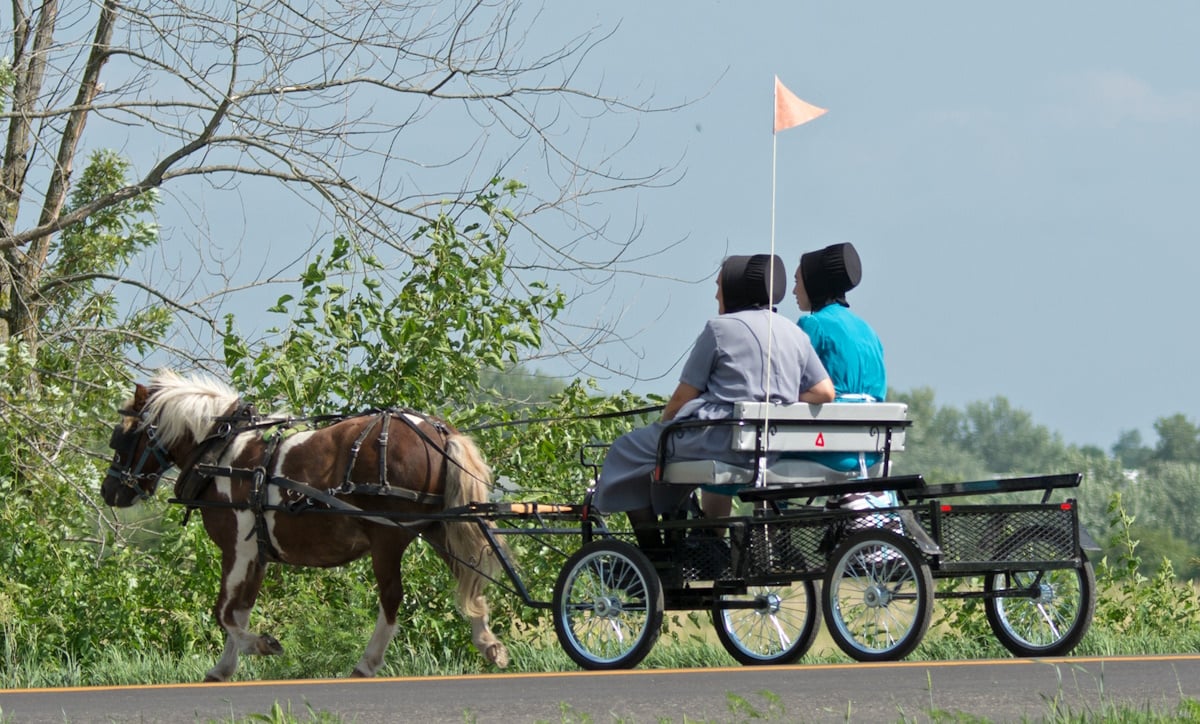
(Notice the similar bicycle-type wire-spoke wheels as well as the general frame structure.) But they have full-grown adults riding in them. Are they considered pony carts, too?
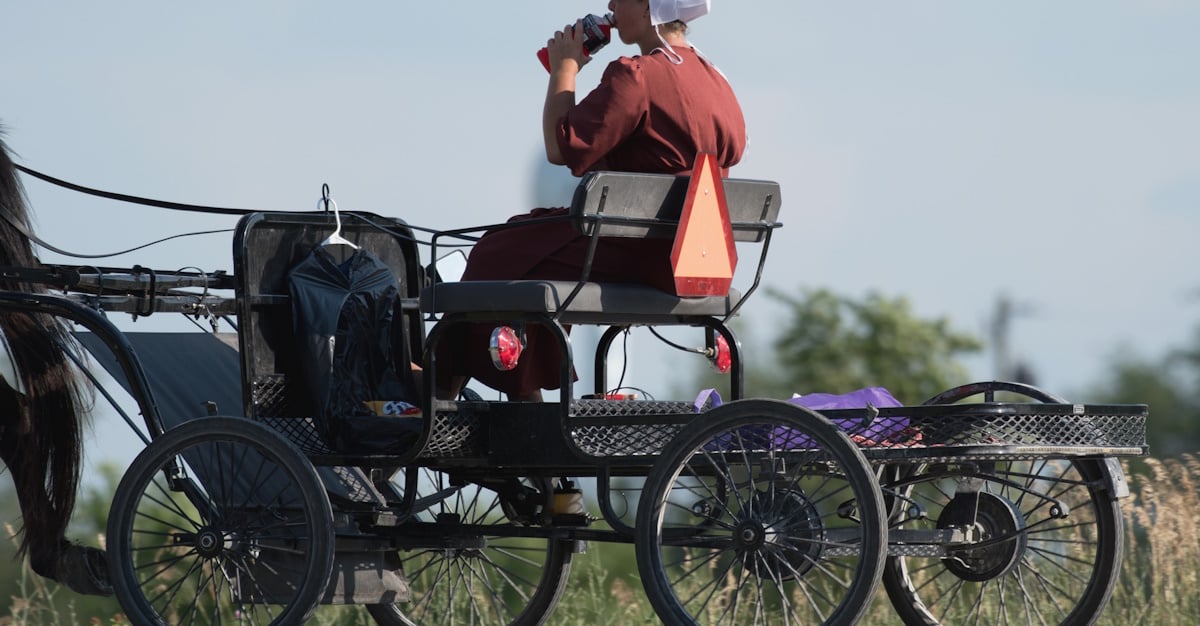
Laura Graber: Actually these are built more like a smaller version of a hack buggy instead of a pony cart. And they would be heavier than most pony carts.
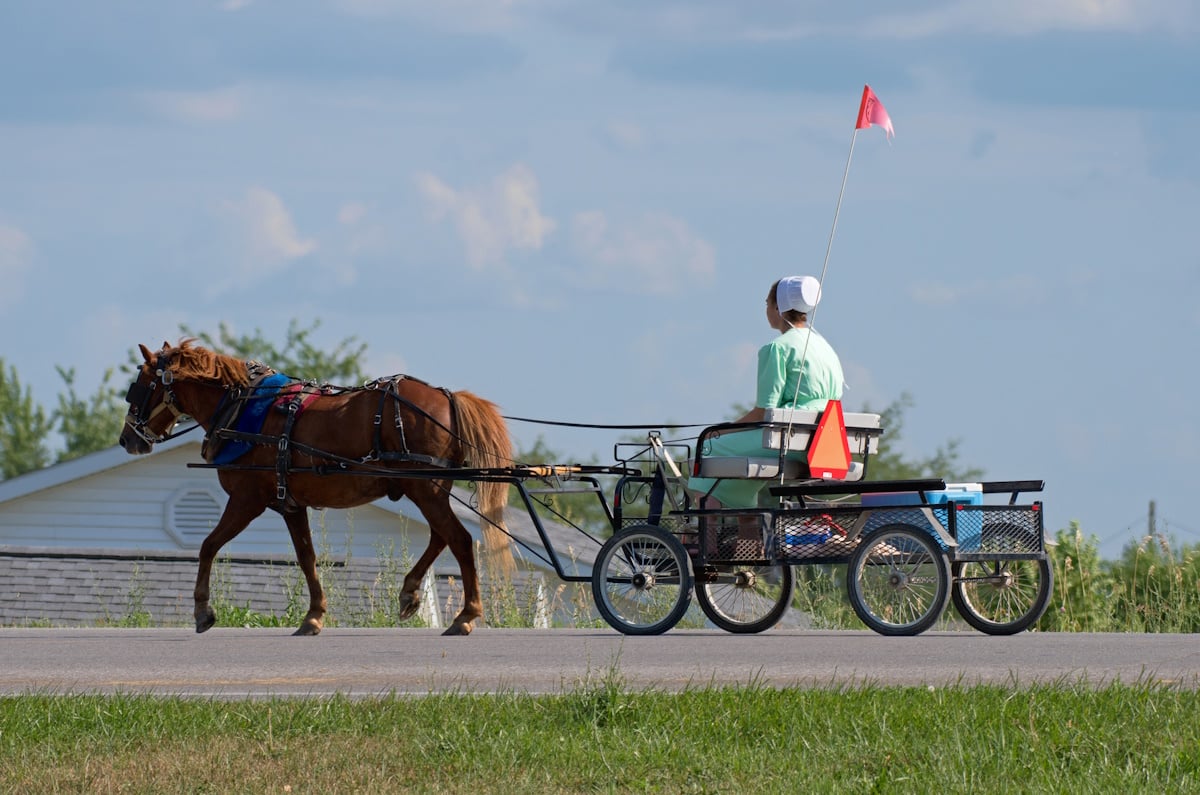
How to identify exactly where the line is between a pony cart and a small hack buggy, I can’t tell you. Most of these smaller hack buggies would require a larger “pony” to a small horse hitched to them, whereas most pony carts are drawn by an actual small pony.
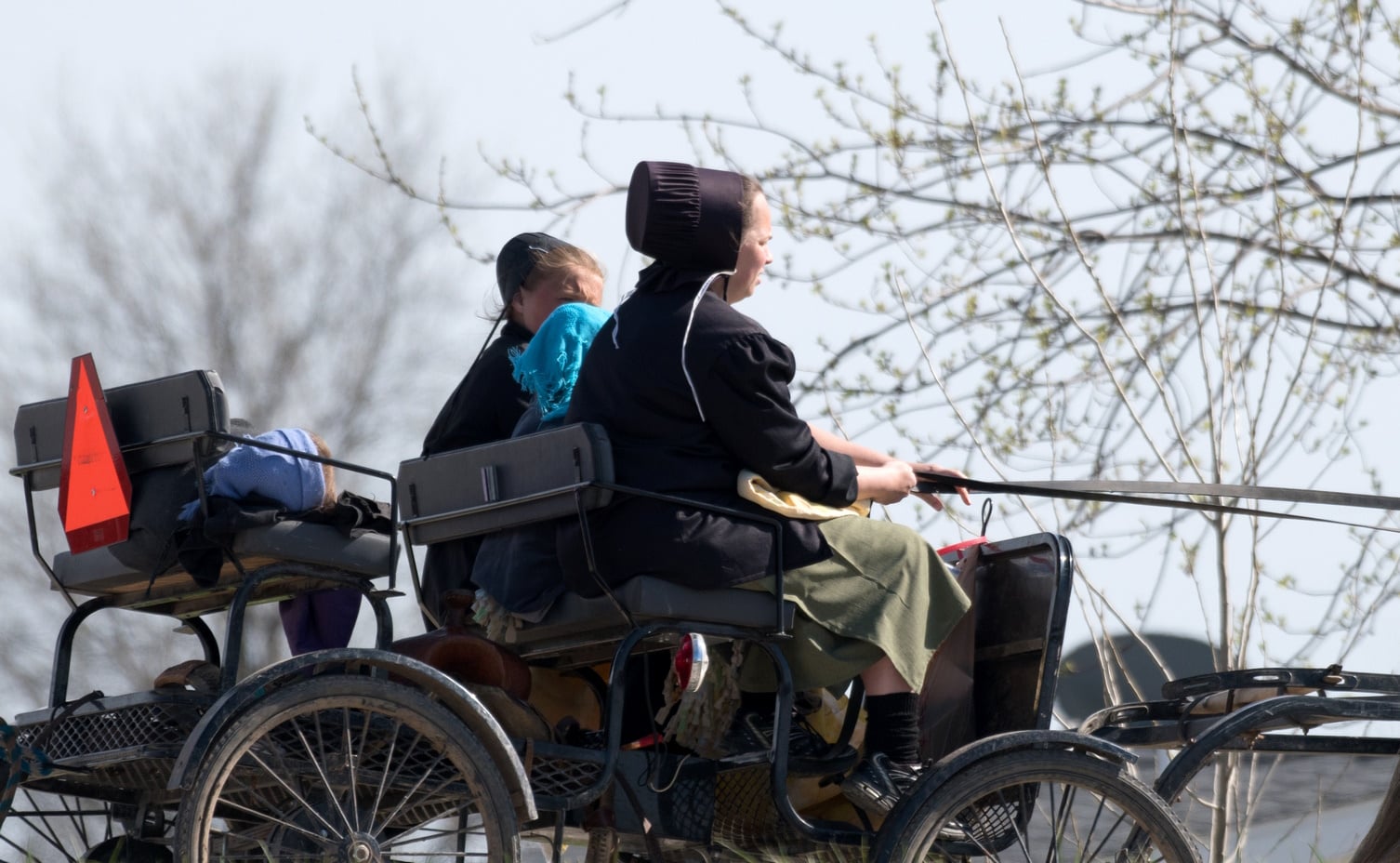
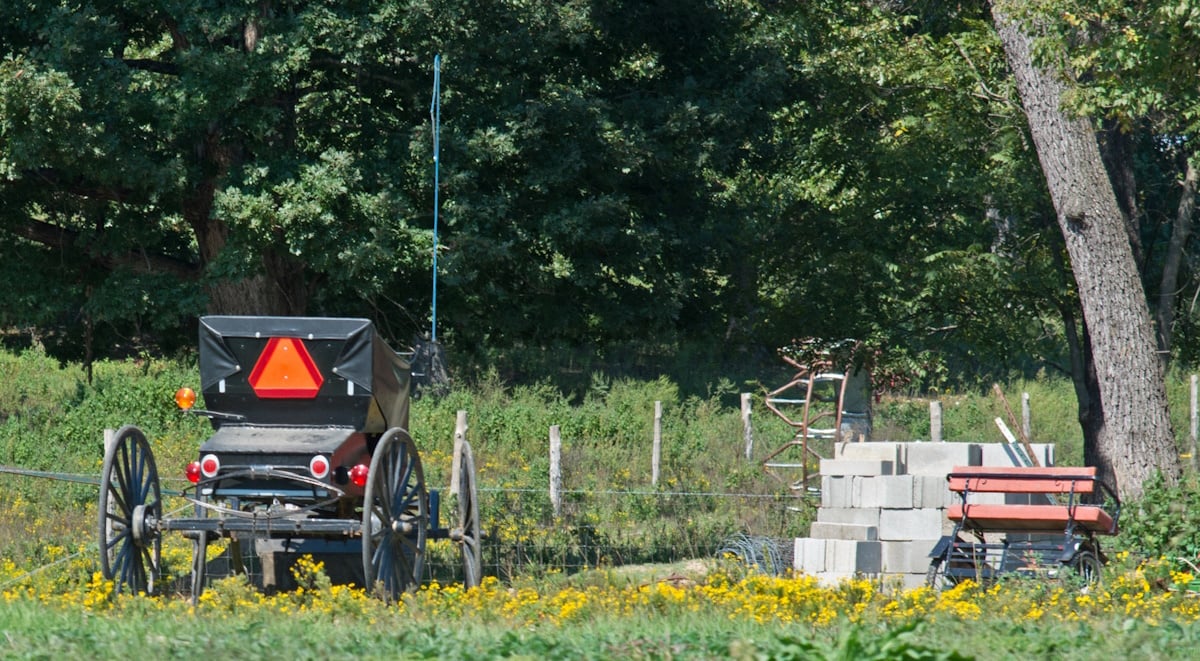
Don: Now to another open air option, this time an Amish vehicle that is missing not only the top but missing a couple of wheels as well. So does this two-wheel transportation have a special name or a unique purpose or advantage?
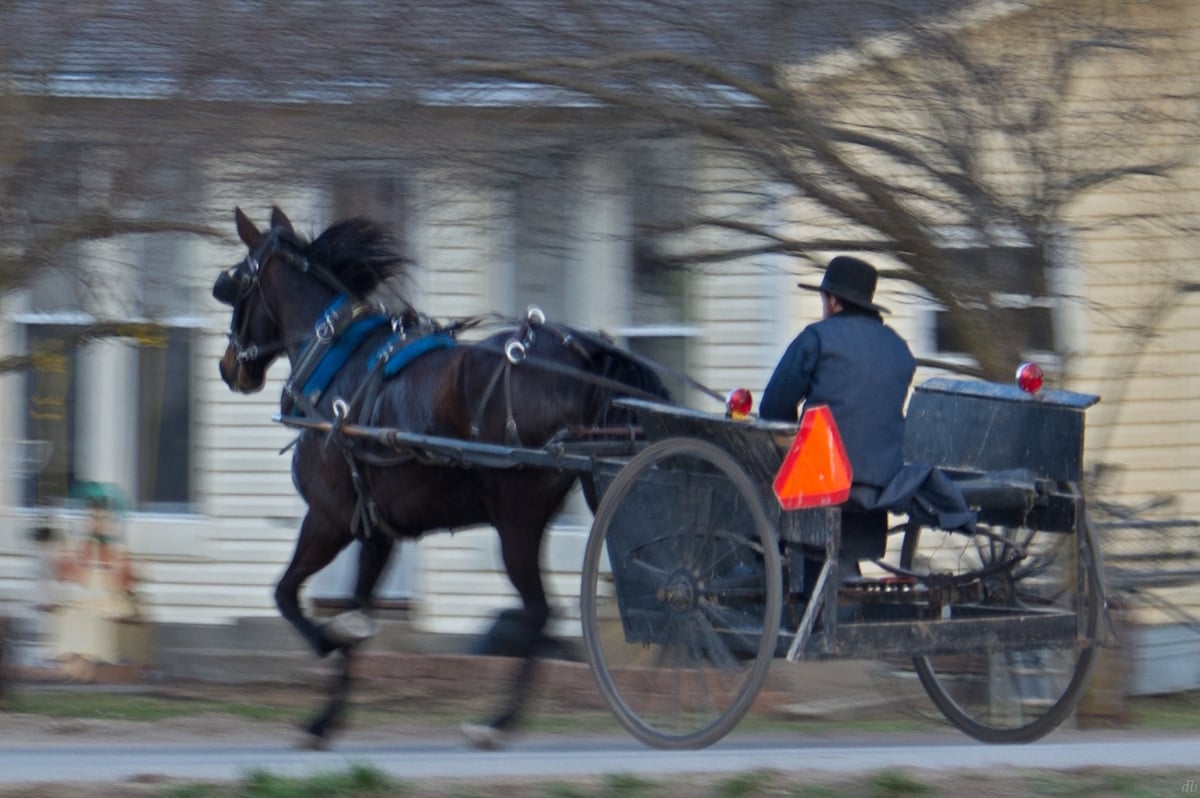
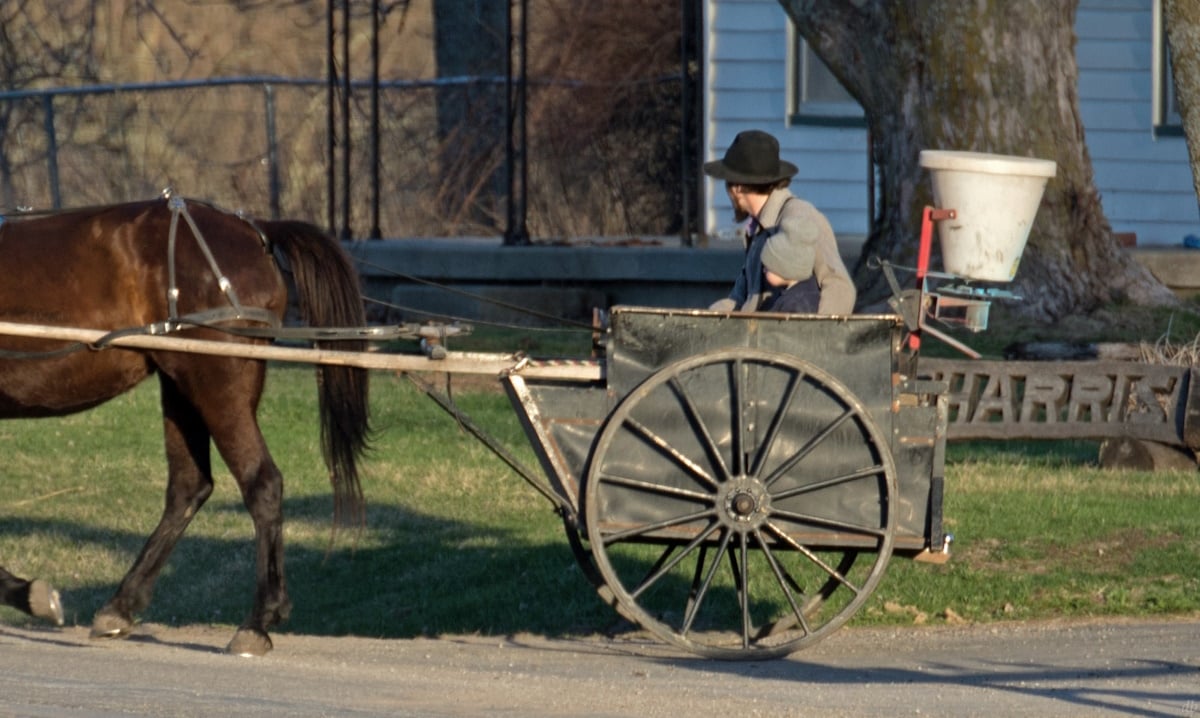
Laura: This is called a road cart. This is the lightest buggy form you will find, which makes it perfect for lots of small trips or running around.
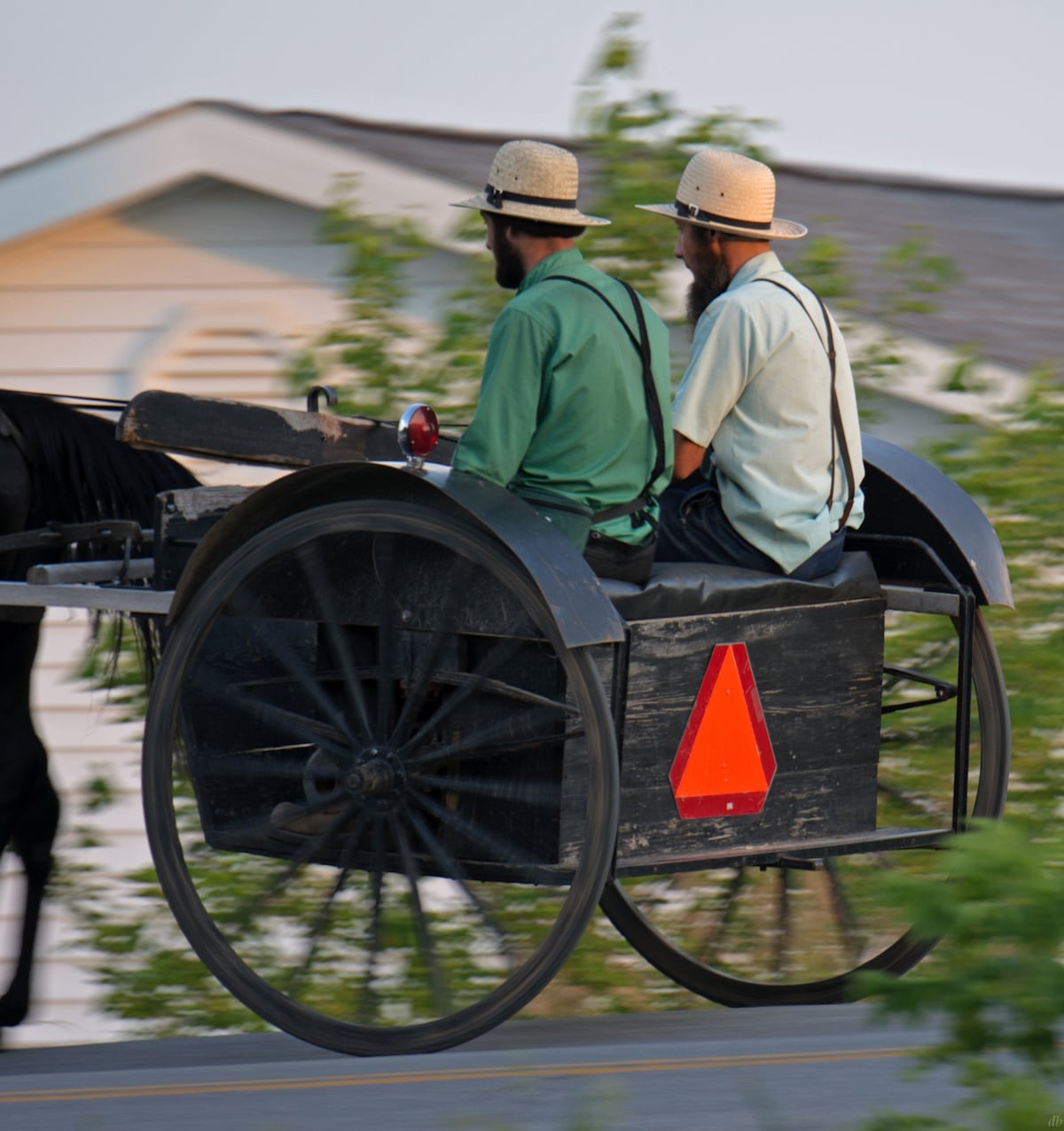
Picture the smaller farm truck that the English might drive everywhere, . . . road or field. This is the Amish version of that!
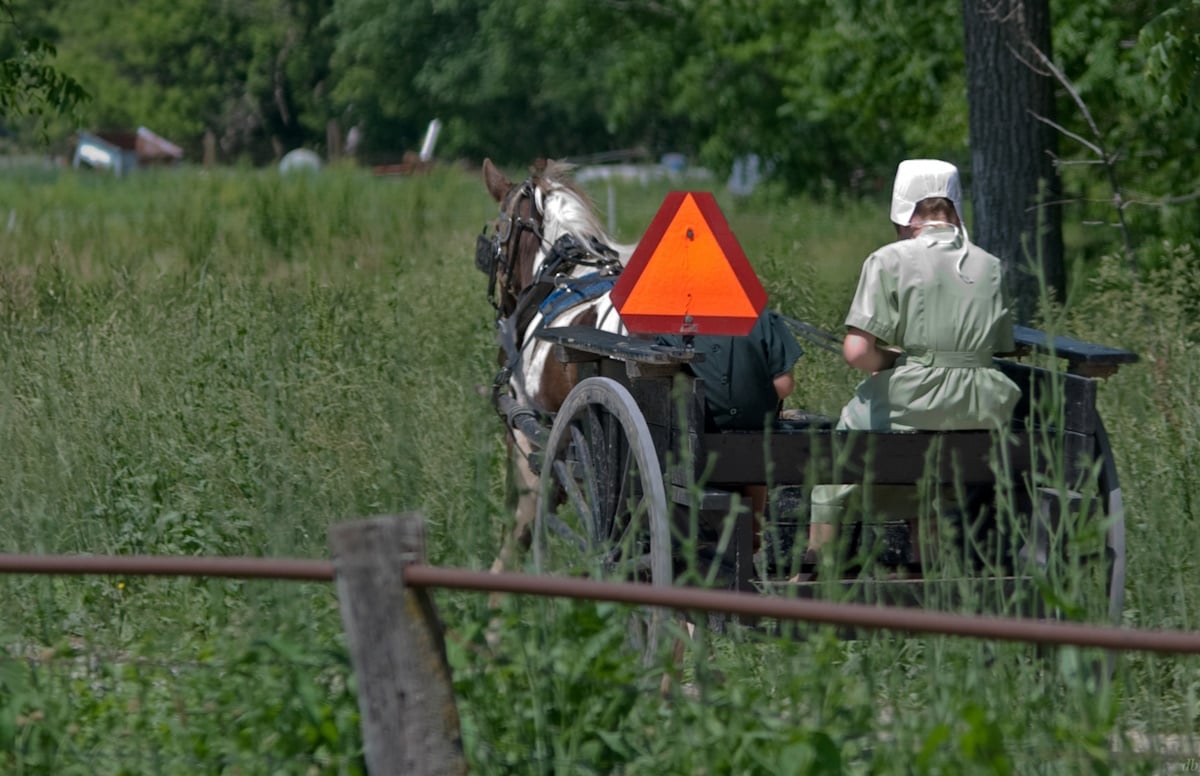
In the one photo you can see an attachment off the back – a road cart takes the place of pretty much anything. If you’re riding around in a road cart, you’re headed somewhere!
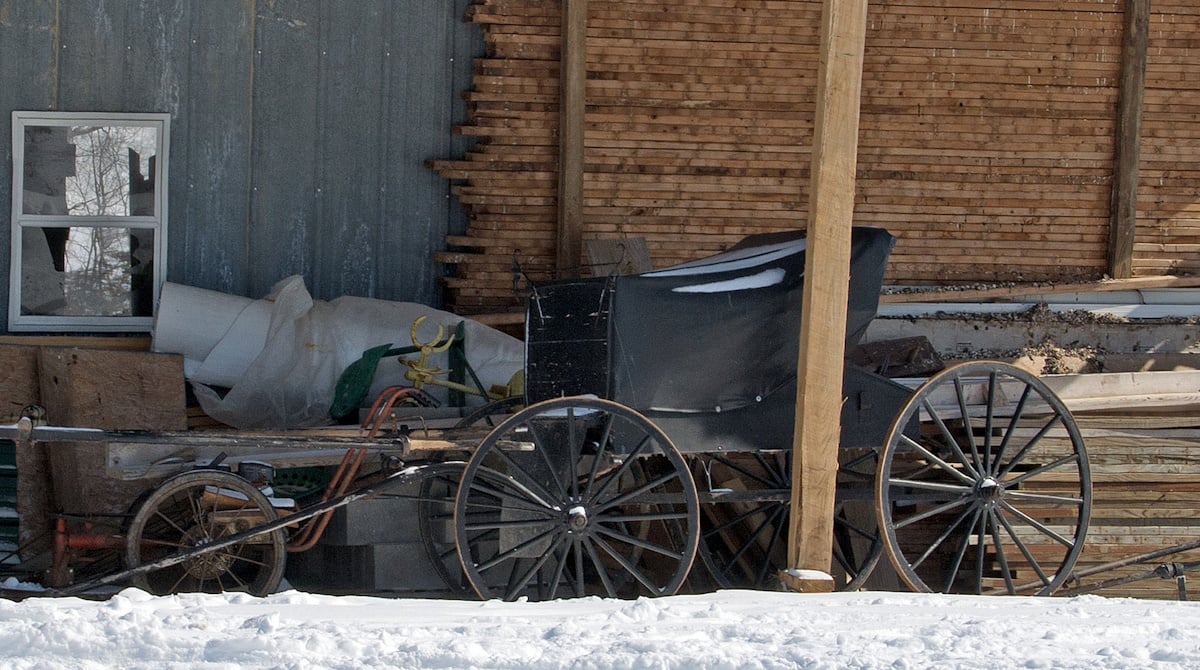
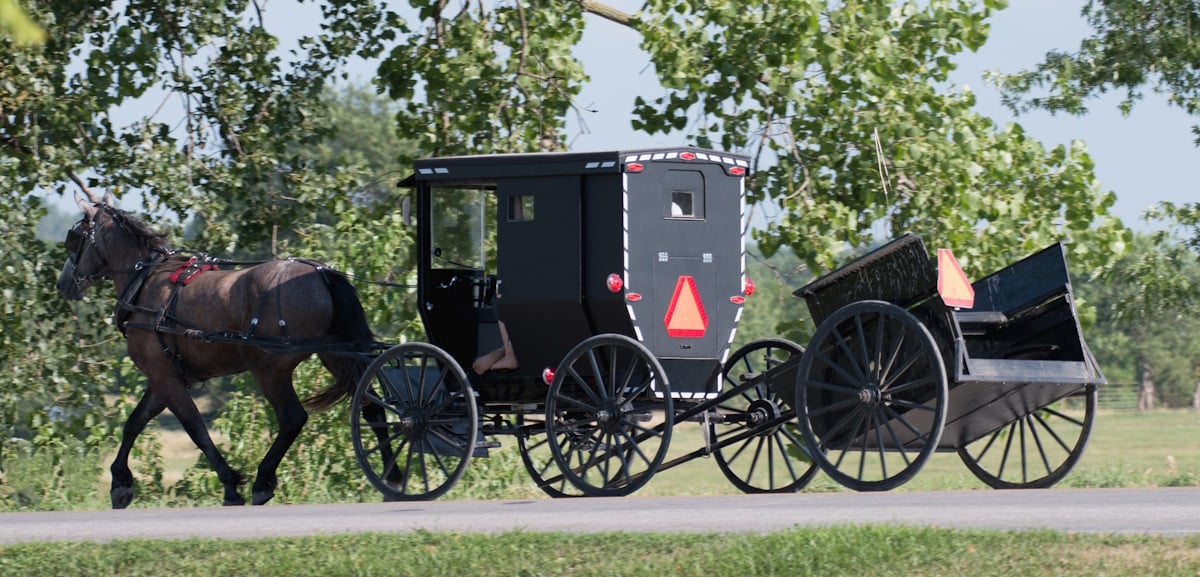
Don: Now we are getting to one of the rarest Amish rides I’ve seen around here – what I want to call an Amish pickup truck. So what is this vehicle really called, and why are there so few of them?
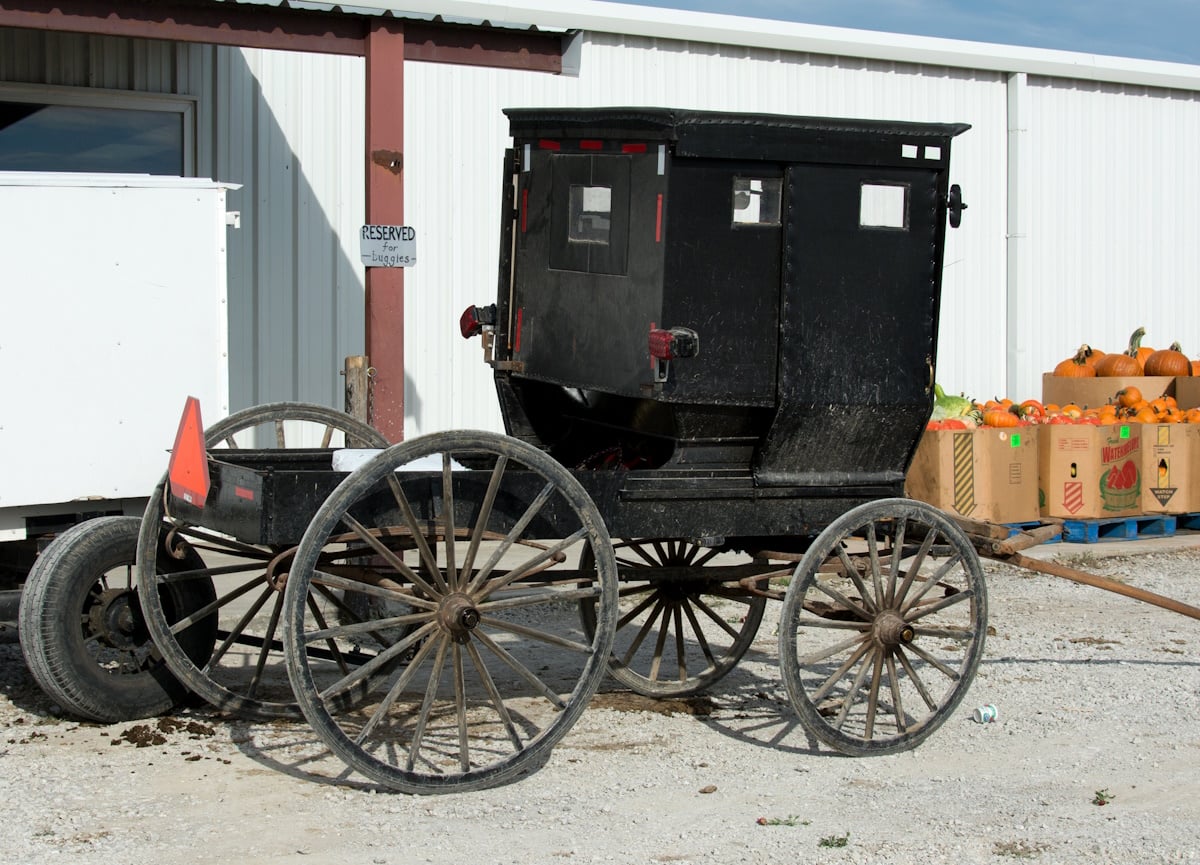
Laura: There is no name for this one. This is one you see very rarely. I’m assuming it is enclosed for protection from the weather, plus it has space to haul items. Honestly, I think it’s brilliant!
Don: Rarely, indeed. As best I can tell I have only seen one in Jamesport, although I have seen it multiple times. Why do you think this type of buggy is so rare?
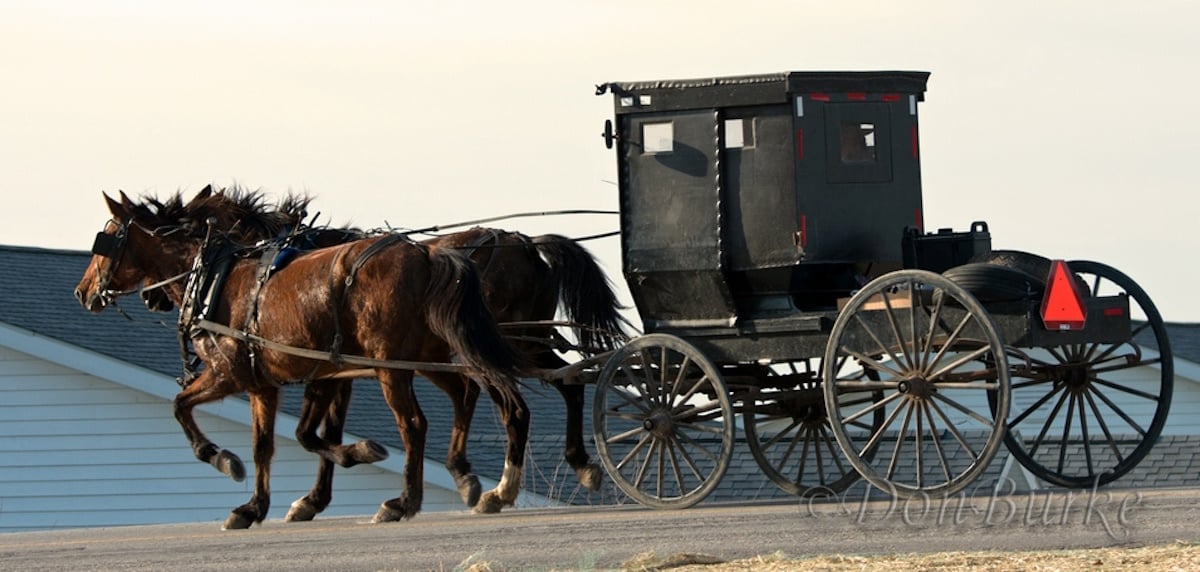
Laura: The local buggy maker doesn’t make these. You would have to create your own. That definitely puts a damper on seeing many of these around. I’m sure the fact of no one else having one keeps most people from building one. Or they simply do not have a use for this particular build.
Don: How neat! Living in the English world it’s hard to think in terms of “Hey, I have this neat design for a vehicle that has never been thought of before,” then you go out to your shop and a few short weeks later you are driving your unique design on the highway.
But I guess that’s just another way the Amish world is different. This seems to belong among the “contraptions” you mentioned earlier.
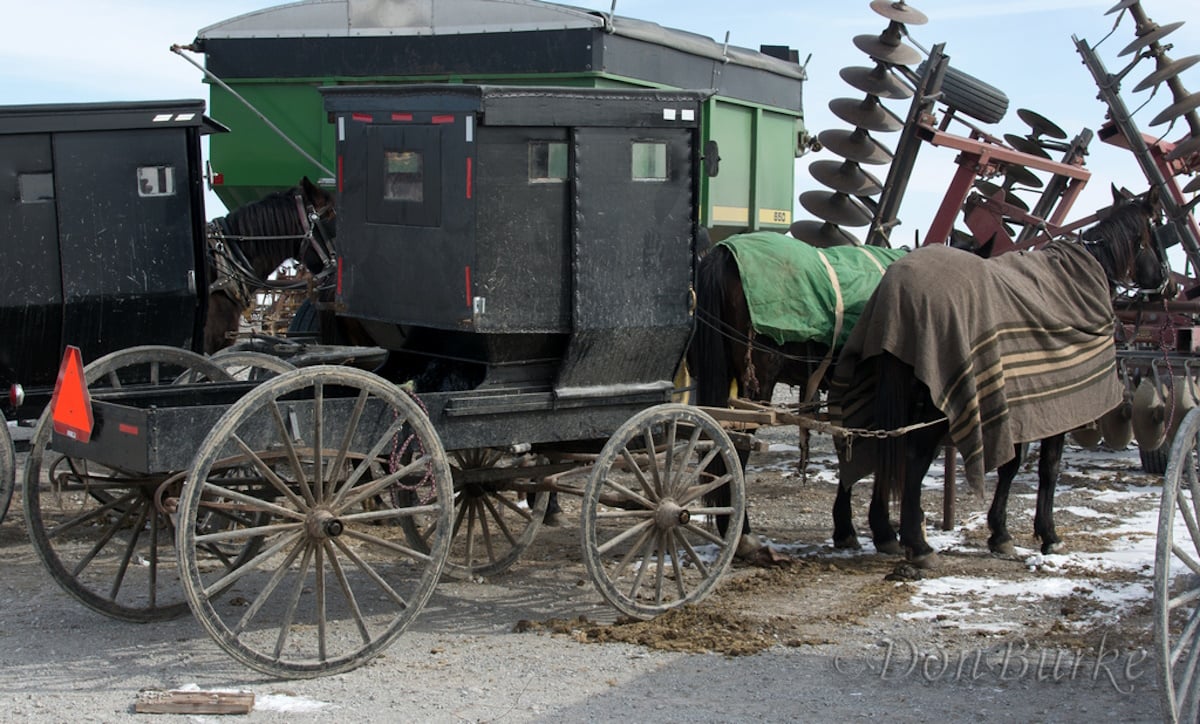
Don: Speaking of rare forms of transportation, before wrapping this up I’d like to take a moment to discuss a couple of other things I don’t see a lot of around here.
One buggy that I don’t recall seeing at all in Jamesport is what I have heard called a courting buggy. Are there any of these used here, and if not, is there a particular reason why?
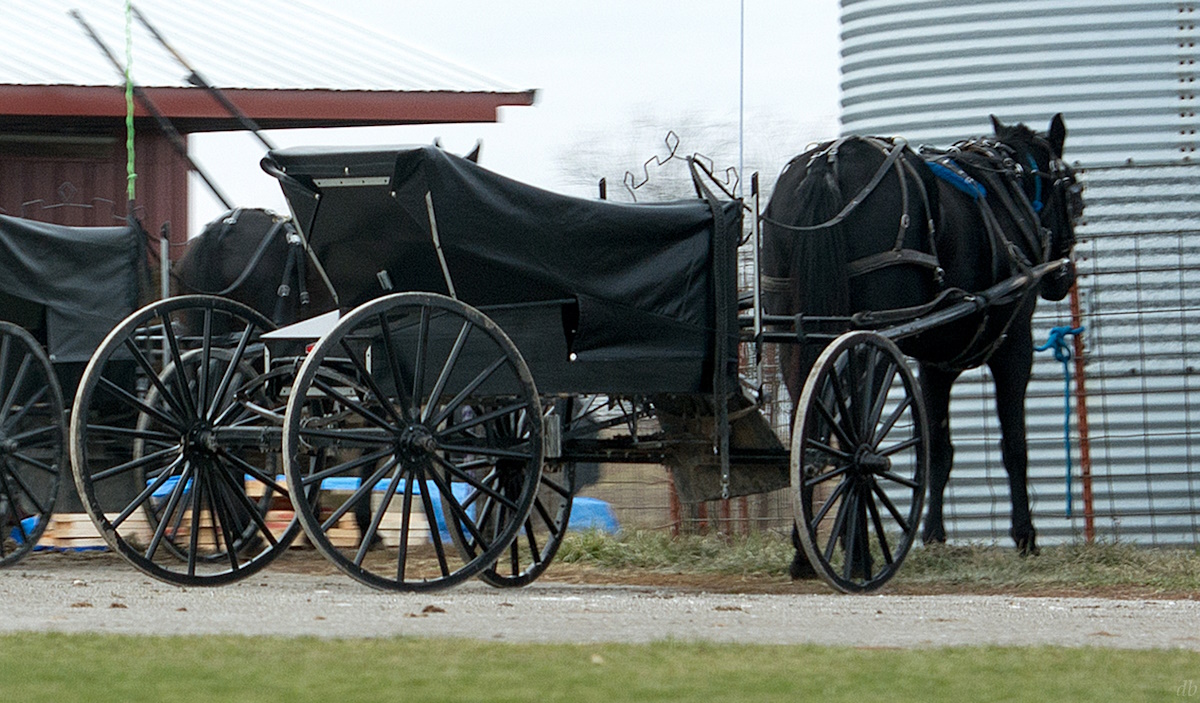
Laura: I have seen them on the road in other communities and wondered why anyone would have one. I’m sure they have a purpose I am not aware of, but basically I’m no help with this one!
Don: Another thing I’ve seen surprisingly little of is horseback riding – and not just in Jamesport, but in the whole of the Amish world.
It seems like for a people with horses as such a major part of their world, there are very few I’ve seen who saddle-up and ride. Is that a fair observation?
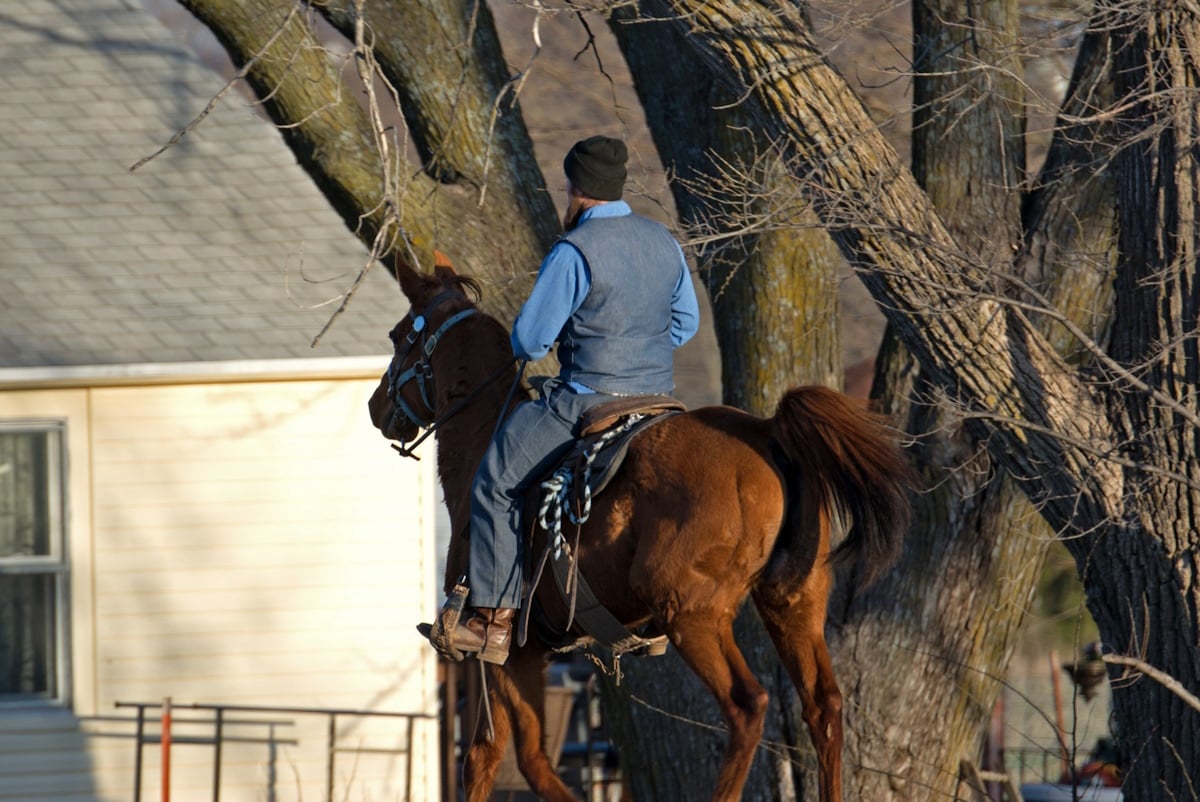
Laura: Actually, there is a lot of horseback riding done in Jamesport. Some people make a living by simply training horses to ride and then sell them.
Since these horses are largely inexperienced, they obviously will not take them out on a main road unless they are completely traffic safe, or if they possibly want to get the horse accustomed to traffic.
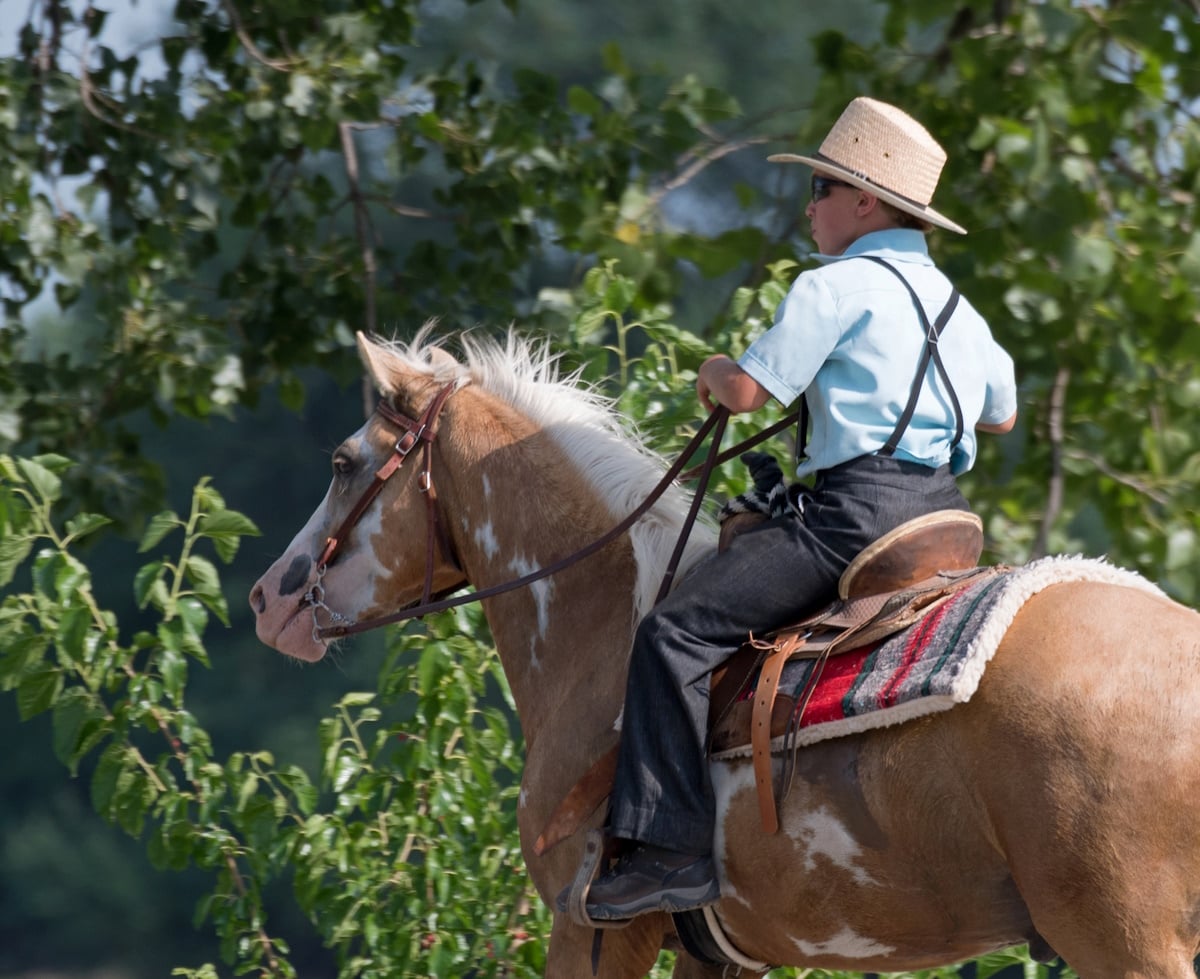
Now, as far as going to someone’s house to visit or run errands, a cart or buggy is preferred so you have space to carry items with you back and forth.
Most would go trail riding or riding on back roads as a group of friends. Riding is also used to help round up cows or go check on new calves, etc.
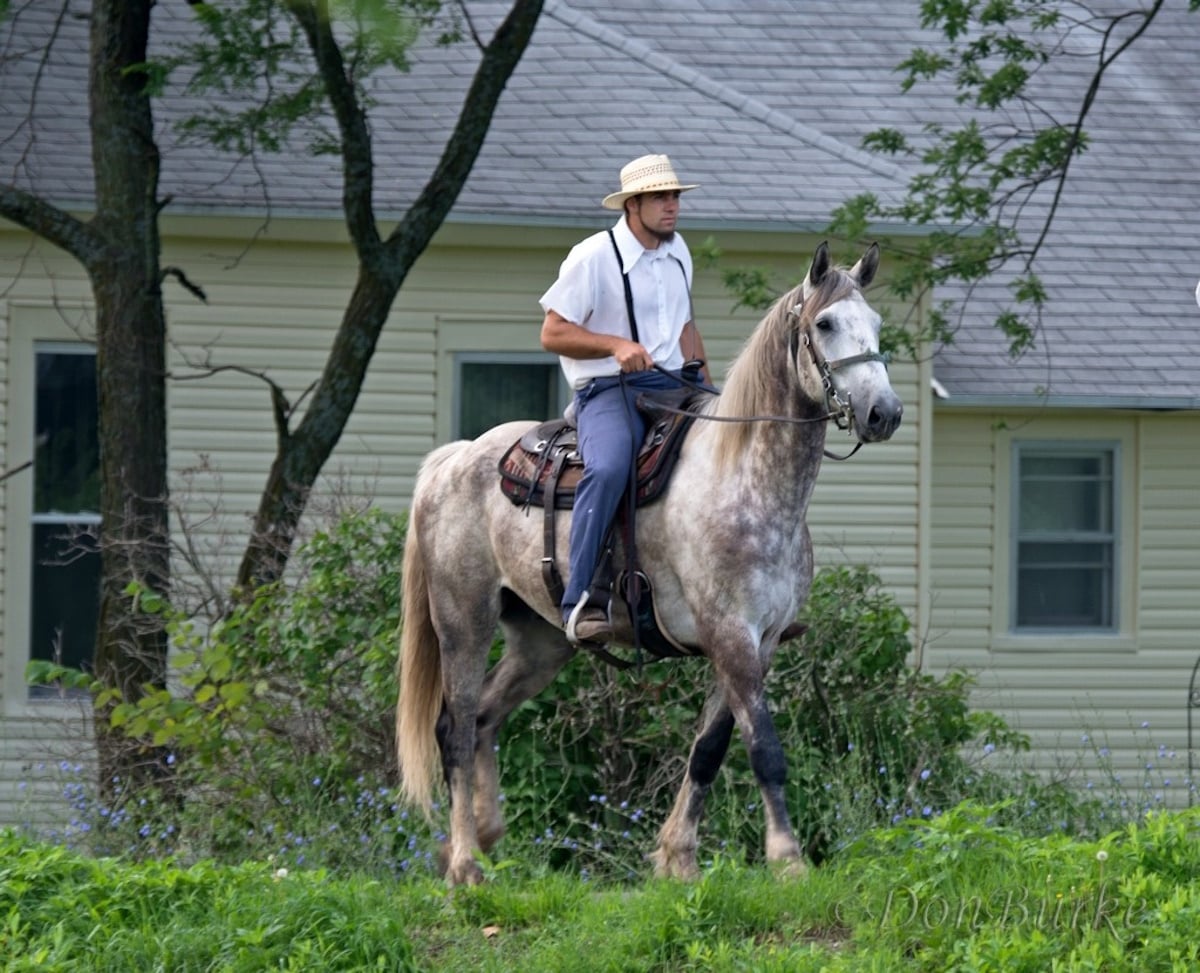
So to sum all that up, you are correct – on the main roads you will probably find few horses being ridden. On farms and back roads is where you would find them.
Don: Okay, that makes sense. Thanks for straightening that out for me.
Well, it’s about time to tie this up. Wow, we have covered a lot of different forms of Amish transportation. Are there other types that I’ve missed and need to keep an eye open for?
Laura: There is one that doesn’t exist anymore but was the essence of my childhood – the grand “box wagon.”
This was a wagon with sides all around it. We would pile it with firewood to haul to the house from the woods, go get a load of sawdust from the sawmill for bedding in our barn and all sorts of things. It was a big day when I could see over the sides of the box wagon!
But I don’t see them in Jamesport anymore. I don’t know if they even exist nowadays. Otherwise, I think you have done a great job in covering all the different aspects of transportation within the Amish culture!
Don: Thanks so much, Laura, for sharing your insights with us – I feel like I know so much more than I did when we started. So, any parting words before we call it a day?
Laura: Naturally, these are just my opinions and thoughts from my personal experience. I’m sure others might see or answer some of these differently. So thank you letting me be a part in this!
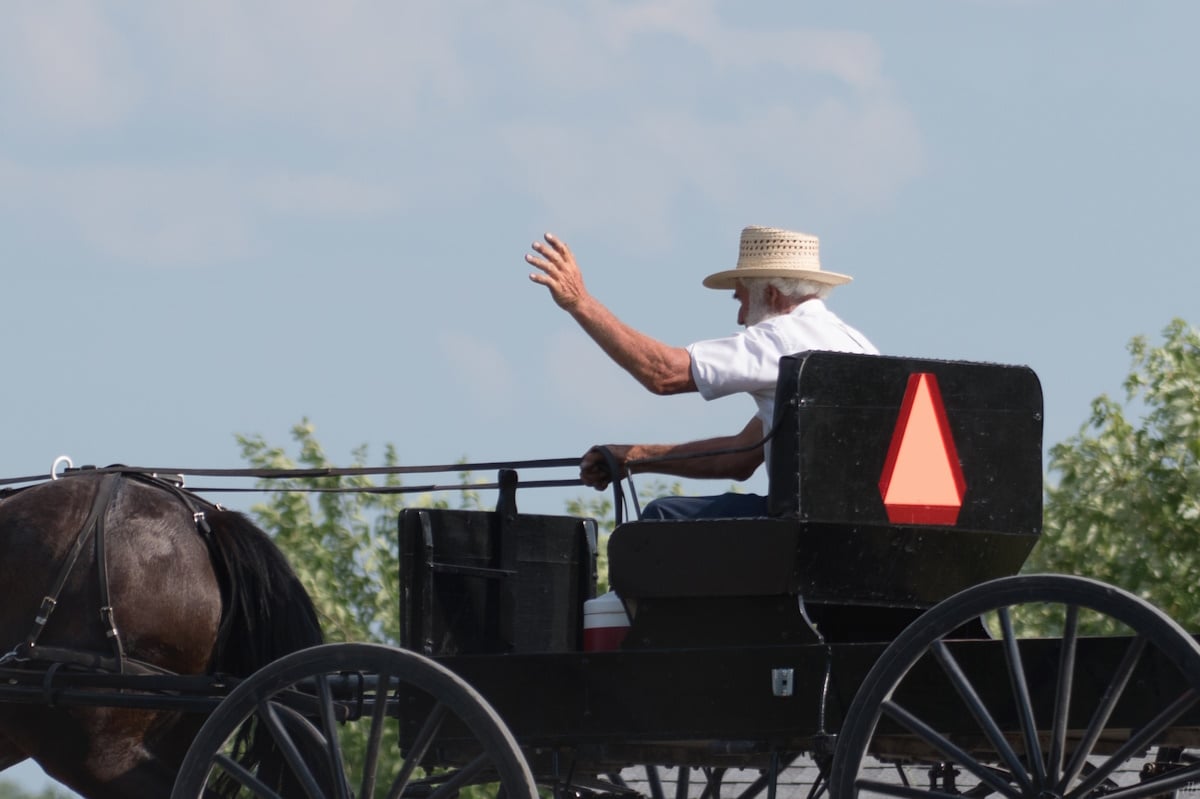
That’s all for now – but if you enjoyed this conversation between Don and Laura, make sure not to miss their discussion on what teaching in an Amish school is like – drawing on Laura’s experience as an Amish school teacher starting at age 16.



Amish Buggies
I never realized that the Amish had so many types of horse drawn buggies. They are a very resourceful God loving people
Horseback riding
Of the three pictures above with Amish riding horseback, it appears perhaps two of them at least are wearing cowboy boots. This is very unusual among conservative Mennonites such as the Eastern Mennonites whom I have heard preaching many times against wearing cowboy boots. They are considered worldly and fancy. The purpose of the cowboy boot is for they pointed toe to make it easy to slip into the stirrup of the saddle and the heel on the cowboy boot keeps the boot from slipping all the way through the stirrup. Among the Amish cowboy boots are considered worldly and not acceptable and this would be one reason it’s not popular for horseback riding since riding barefoot or with smooth soled shoes is not as safe or practical. Many Amish may choose to ride bareback or with a blanket or without a saddle, but again that’s not as safe or practical as using a buggy or cart. This might help to explain why you don’t see Amish riding horses frequently.