
Be Aware: Amish Wedding Season Is Happening Now
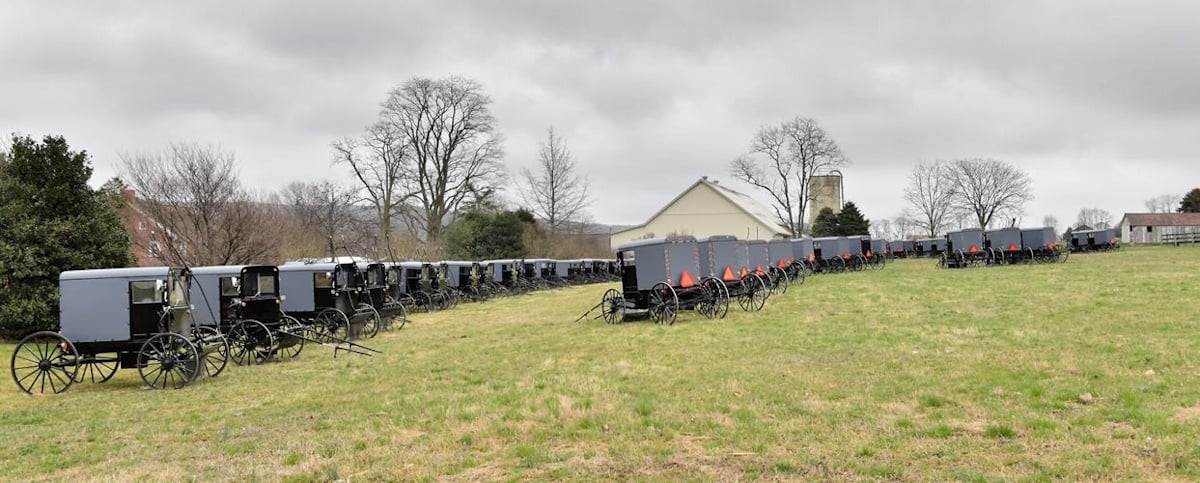
Officials in one Maryland county are getting a message out to the public – one that’s relevant not only for their part of the country, but for many others.
For safety’s sake, the community wants people to be aware of Amish wedding season, going on now in the Amish settlement at St. Mary’s County, MD.
The traditional Amish “wedding season” runs after the harvest, from October through November into early December.
Changing occupational patterns have meant that this reality no longer holds in some communities, where weddings are held in different seasons and even year-round.
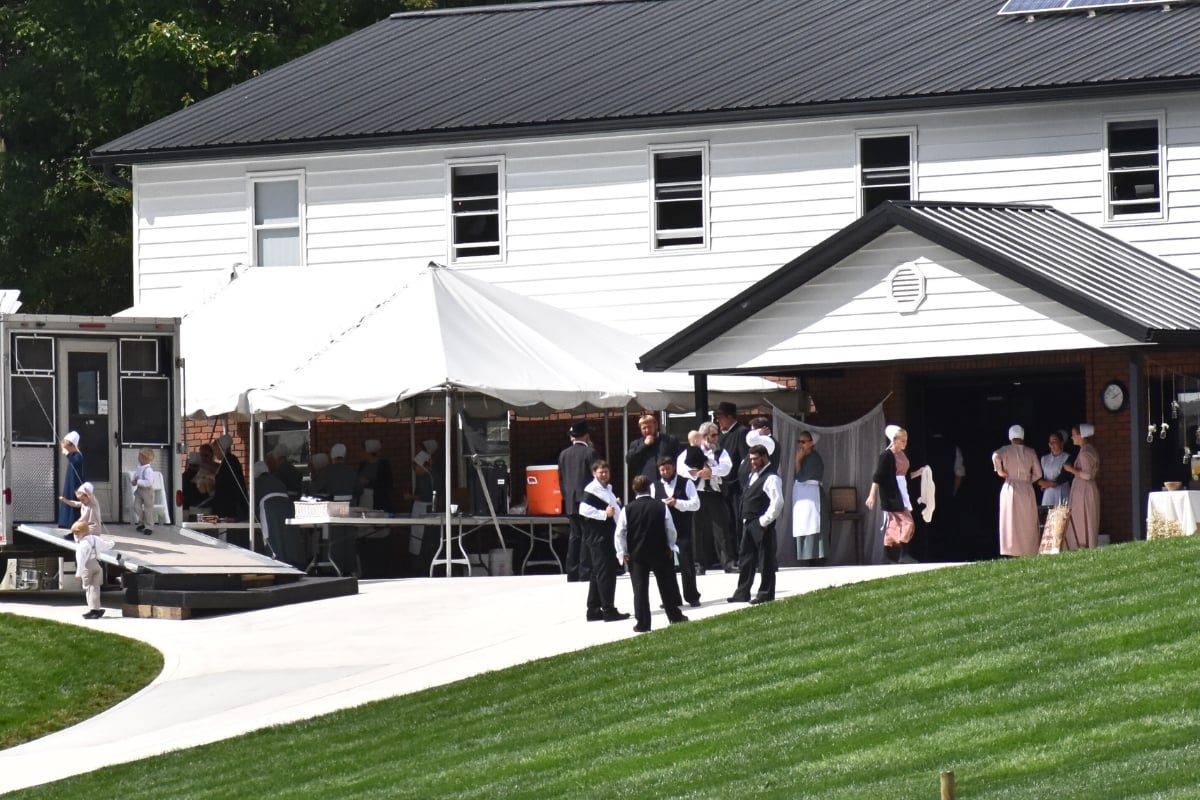
But it’s still largely the case in the St. Mary’s County Amish community – and in others like Lancaster County.
Local officials want car drivers to be aware of the likelihood of increased buggy traffic on the roads in their area. From the notice:
MECHANICSVILLE, Md. — With Amish wedding season underway across Northern St. Mary’s County, local officials and community leaders are urging motorists to use extra caution — especially on Tuesday and Thursday evenings, when celebrations most often occur and buggy traffic increases on rural roads.
The Amish wedding season typically runs from late October through December, after the fall harvest and before winter weather settles in. Because the season is brief, multiple weddings can be held the same day, drawing guests from across the community and keeping celebrations going into the late evening.
Heavy buggy travel is common on and around the following routes: Route 236/Thompson Corner Road, Route 6, Route 234, Ryceville Road, Trinity Church Road, Bowling Drive and Oliver Shop Road. Families — often with young children — are among those traveling to and from wedding homes.
They’re warning people to take the following precautions, most of which are standard and good practice when traveling through any Amish community.
I’ve bolded one point that is maybe not as often noted however – about slower traffic near hosting properties’ lanes:
Drivers are encouraged to slow down on curves and hills, allow extra following distance behind buggies, and pass only when it is legal and safe with a clear view of oncoming traffic.
Headlights should remain on low beam when approaching a buggy at night to avoid blinding horse and driver. Motorists should also anticipate slower-moving traffic near farm lanes where events are hosted.
Buggy operators use reflective tape, slow-moving vehicle triangles and lanterns, but visibility can still be limited on unlit roads. Increased patience and reduced speeds are the most effective ways to prevent crashes.

There is also this cultural note, which is relevant from the safety perspective as well:
Amish weddings are held at the bride’s family home and are day-long events. Guests often attend more than one celebration in a single day, further adding to evening road activity on the most commonly traveled routes.
As noted, not every Amish community follows this traditional autumn wedding season schedule anymore. For instance, in Holmes County, Ohio, where farming among Amish has generally declined, the most popular month for weddings was found to be May.
But a good number of them do. So if you live in an Amish-populated area, be aware that you might just be seeing a lot more buggies on the road for the next six weeks or so.

Reply
Hey Erik, only know a few Amish down there in the Mechanicsville area how conservative are they? From what I’ve seen down there the homes are very much in resemblance of Lancaster County Amish. Many of the surnames are also of Lancaster County. I believe this is a sister settlement of people from the southern and maybe some northern Lancaster County Amish churches.