
The Amish Now Live In Mexico: 5 Takeaways From The 2026 Amish Population Numbers

The new Amish population figures are just out from the Young Center, and as we always do, let’s have a look at what’s new in the data. I pulled out 5 noteworthy findings from the new info which we’ll take a look at one-by-one below.
But first, just to set the table: the Young Center puts this data out once per year, relying on a combination of sources and meticulous work to check and update information on the hundreds of Amish communities around the US and beyond. The release covers a number of things – including population totals, a top 12 settlements list, and a community-by-community list with founding dates.
It should be noted this info strictly concerns horse-and-buggy Amish groups. That would leave out a number of related or similar groups, such as Beachy Amish or Old Order Mennonites.
So let’s have a look at some of the things that jump out from the new information.
1. A New Amish Community In Mexico
The headline-getter here is the establishment of an Amish community in Mexico. The 2026 population profile page notes simply that “In 2025 a church under New Order Amish auspices formed in Campeche, Mexico.”
New Order Amish are a horse-and-buggy group too, despite the name which understandably confuses some people. As a new community this one understandably has quite a small population, of just an estimated 35 people.
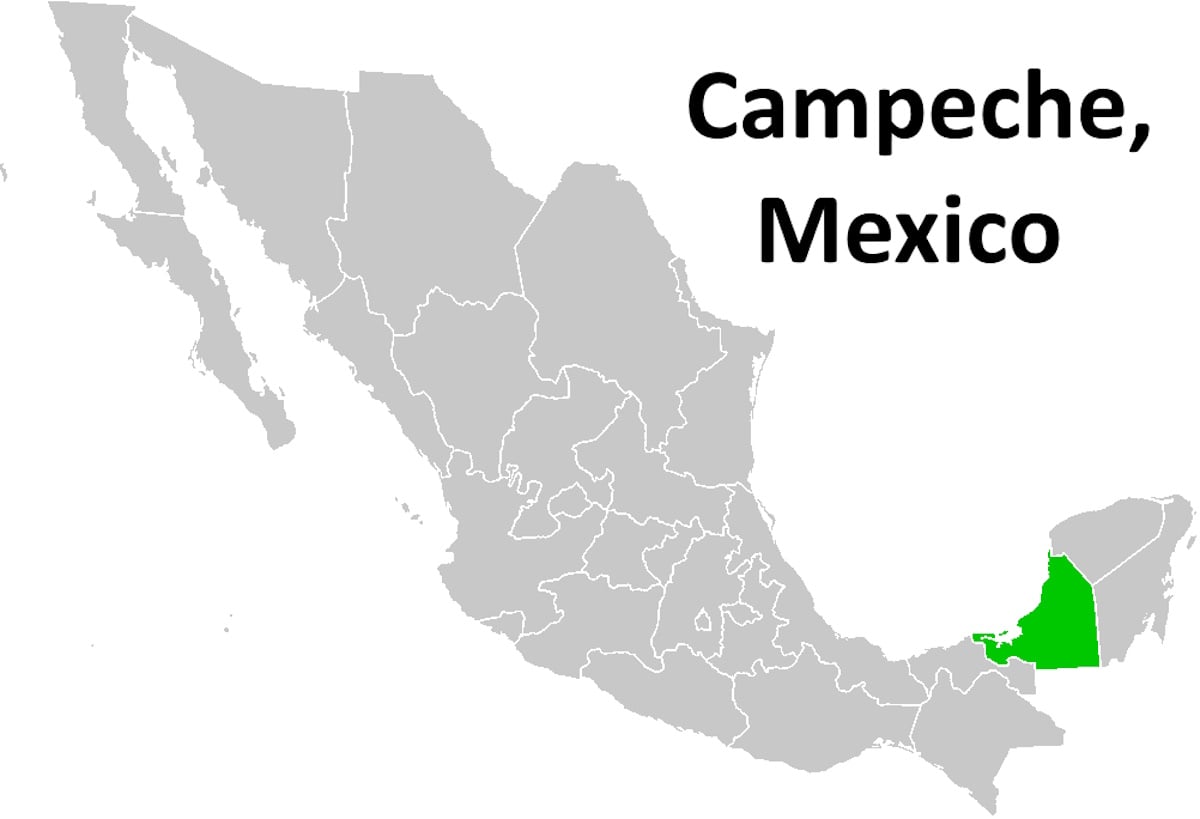
Right now I can’t tell you conclusively how this community originated, but I’ll note that Campeche state has a significant Plain Mennonite population. The communities in Bolivia and Argentina came about due to New Order Amish outreach efforts, with Mennonite communities affiliating with the Amish. It’s possible something similar happened here in Mexico too.
As it happens they aren’t the first Amish to do so. Back in the 1920s, a small Amish settlement existed in a place called “Paradise Valley” in the state of Nuevo León. That community was relatively close to the US border. This new settlement is located way down on the Yucatan Peninsula.
With their “return” to the country, this brings the total number of countries with horse-and-buggy Amish back up to four – the US, Canada, Bolivia, and Mexico. A settlement existed in Argentina but disbanded several years ago.
2. Total Population Passes 420,000 & Settlements Pass 700
Back in 2024, the Amish crossed the threshold number of 400,000 people. Now they pass another nice round number, 420,000 (the estimated total for the US and Canada is 421,200, or 421,340 including the small communities in Mexico and Bolivia).
This was a US and Canada increase of 10,245 people since last year. The Amish are known for their high growth rate, with a doubling rate of roughly every 20 years.
As for total settlements, they have reached 728 in total. That’s due to adding a whopping 43 new settlements – that is, new locations where there had been no Amish presence – in the past year. That far surpasses last year’s total of just nine.
Two years ago, the total was 46, so this is in that range. However, this year they also lost no previous settlements, which is a bit unusual, as you usually seem to have one or two disbanding each year.
It should be noted that a few of these new ones are from a prior year and only caught in the latest update – two communities in Ohio and one in Montana, from what I can tell. That’s to be expected when sourcing from written Amish communication appearing in correspondence newspapers, which isn’t always consistently reported. Still the trend it suggests is clear: the Amish continue to not only grow, but locate themselves in totally new areas.
This can have effects both positive and negative – on the plus side, economic rejuvenation, on the minus, road damage and safety issues, to give a couple examples, with local non-Amish responding accordingly. We have seen both sides come into play in recent stories out of Pennsylvania and Indiana.
3. Alabama Brings Amish State Count Up To 33
As we saw earlier this year, we’ve added a new entry to the list of Amish states. Alabama saw a new community formed last year, in Chilton County in the area of Clanton.
The state also has a history of Amish – but had not seen Amish residents in a very long time. This is the first time Amish have lived in Alabama in about 100 years.
Amish previously lived way down in the Gulf Coast area, in Baldwin County. Founded in 1906, this community existed for the better part of two decades, before going extinct in 1924 (its decline was briefly discussed in this post on a defunct Arizona community).
So nearly 100 years to the year, the Amish are back in ‘Bama. And the addition brings the total number of states with an Amish presence up to 33. I believe that is the highest it’s ever been.
4. Gap between Lancaster County and Holmes County grows larger
The two largest Amish settlements for many years have been Lancaster County, Pennsylvania and Holmes County, Ohio. At one time (prior to 2010), the Holmes County group was even considered larger.
For a number of years they were roughly the same size, with Lancaster County steadily moving ahead recently. Now the gap seems to be growing, with the communities even trending in different directions. Lancaster County went from 44,765 in 2025 to 45,575 people this year. Districts increased by 34, from 267 to 301.
In comparison, Holmes County actually saw a slight estimated population decrease, going from 39,040 to 38,775, gaining 10 church districts (increasing from 322 to 332). So the Lancaster County community has nearly 7,000 more Amish people than the Holmes settlement.
I’m not sure what the reasons for this might be. Lancaster County tends to start daughter or sister settlements fairly often. High land prices drive Amish into other states. It could be that Amish from Holmes County are leaving at a faster pace than they are from Lancaster County. It may also have to do with how the numbers are being counted; past years saw a correction for the typically larger-sized Lancaster church districts.
One important note here: In recent years, Lancaster County has undergone a good bit of disruption leading to several new church factions forming, some much more progressive-leaning than others. This is a new development in a community which, while having progressive and conservative sides, generally maintained a community-wide unity.
If the motor vehicle is adopted in any of these factions it could significantly reduce the total for Lancaster County, as they would no longer be considered Old Order, at least not in the horse-and-buggy sense.
5. A New York Community Enters The Top 12
The Young Center statistics also include a top 12 settlements list. As far as the settlements on it, changes are usually limited to communities sometimes swapping places year-to-year – and the #12 spot occasionally seeing a new community.
This year New York’s largest community has been judged the 12th largest in the nation, with the Swartzentruber settlement at Heuvelton (St. Lawrence County) taking that spot. It knocks out the Smicksburg, PA (Indiana County) settlement, which had occupied that spot for at least the last five years.
I hope to do a follow-up post after I’ve taken a further look at the numbers and new settlements. But for now I think these are the more interesting takeaways from the new set of numbers. Thanks again to the Young Center for their work on this. You can check out all the new numbers at the Amish Studies main page under the “Statistics” tab.

Campeche
Would be interesting to know more about the one in campeche, if it is of former old colony like in Bolivia and where in the state it is.
New order amish were involved in some kind of health outreach in the colonies in campeche, especially in the midwives field in la Nueva trinidad colony.
In Bolivia the new order amish use electricity from the grid, tractors with rubber wheels and have an actual church building.
I also wonder why they join the amish. Were they excomunicated by the old colony church?(for them to go to another colony they need a letter signed by their current bishop so they would be unable to move to another colony). Or is it a question of “morality”(on sundays the youth tenda to get together and drink alcohol sometimes)? In Bolivia these questions of morality led to the creation of 2 ultra conservative colonies(2010 and 2017) that reject all motors( sawmill powered by horses for example? and are affiliated with lower barton creek of belize.
Population Growth in Virginia and West Virginia
When I look at the figures, I best like the growth stories of West Virginia – whose population has almost doubled in just three years, to 1,185 – and that of Virginia, whose population has doubled in seven years, to 2605.
This year there are 6 states with a double digit growth rate year-on-year. Namely: West-Virginia (+31.7%), Vermont (+76,9%), Virginia, Nebraska, Wyoming, South Dakota.
Also worth to mention, Wisconsin ist likely to reach 30.000 next year and Missouri ist likely to reach 20.000 next year.
That the total population did not grow faster seems due to the slow growth of the three top states Pennsylvania, Ohio and Indiana with growth rates between 1 and 2%.
This report is not reliable in some areas. The slow growth in PA doesn’t seem reliable for several reasons. Firstly, because it is failing to depict the population dispersement out of Lancaster into Chester, Berks, and York counties. It also fails to accurately depict the Amish population in places like northern Maryland. There are hundreds (if not over a thousand) Amish now populating areas in the north eastern part of MD.
I would push back on most, though not all, of this. See my response to your other comment below.
Thanks for posting this. I always appreciate Amish America posting when the new statistics are released. I refer to them many times in my serving as a tour guide at Menno-Hof in Shipshewana when visitors ask me questions about Amish statistics in their home area. And thanks to all with the Young Center and other entities who faithfully compile these statistics year after year. I’m thinking it is a year round effort to keep up with all of the changes.
Some additional info
It’s not accurate. It still list only 1 Amish community in northern Maryland, near Ceilton. According to the latest report, the total Amish population in Maryland is 2,000. There are hundreds, if not thousands of Amish in northern Cecil county by now. Most having moved in over the past decade. The report fails to depict that.
The same is true for other nearby counties, including York, Chester, and Berks counties. I imagine the same is true happening other areas of the country. It’s good to have this report as it provides a general estimate, but it is not reliable for many areas experiencing large (recent) influxes like northern Maryland.
Not exactly...
I think they are accounting for the Amish in Cecil County – not the separate Cecilton-area settlement but the “Lancaster spillover” – as part of the Lancaster County settlement.
The designations used in this and last year’s settlement listing pdf for the Lancaster settlement indicate that (as well as accounting for Amish population in neighboring PA counties), in the descriptor they use: “Lancaster / Berks / Chester / Cecil MD”.
See: https://groups.etown.edu/amishstudies/files/2025/06/Amish-Pop-2025_by-state-and-county.pdf (Or https://groups.etown.edu/amishstudies/files/2026/09/Amish-Pop-2026_by-state-and-county.pdf)
As far as I know, they are well aware of these Lancaster County-settlement Amish living outside county borders, especially the Chester County people which have long lived in those Lancaster-adjacent areas (but the newer-addition Berks County residents as well).
As for the York County people previously attached in these listings to the Lancaster settlement, they started considering that a separate settlement two years ago. And it is listed separately in the county/state listings, noted here: https://amishamerica.com/2024-amish-population-passes-four-hundred-thousand/
*Note – that’s not referring to the smaller York County Glen Rock settlement, which has been considere a separate settlement since its founding about a decade ago.
So I don’t believe your *general* claim is accurate.
However, for the state population totals listed at https://groups.etown.edu/amishstudies/amish-population-2026/ , it appears that the total figure for Maryland in fact is *not* including the Amish in Maryland you are referencing.
That is, those who are considered part of the greater Lancaster County settlement but living across state lines in Maryland (though, the numbers don’t quite add up for me when summing what’s presented here, though it’s close at around 2,000: https://groups.etown.edu/amishstudies/files/2026/09/Amish-Pop-2026_by-state-and-county.pdf )
So yes, the total given for Amish technically living within state borders of Maryland appears to be leaving those people out, even if they are included in the greater Lancaster County settlement figure given in the state and county list.
My Maryland Amish guide does have a separate section on these Lancaster County-origin Amish living in Cecil County here: https://amishamerica.com/maryland-amish/#lancaster-spillover