School Board Member: The Amish Weren’t “Used” To Vote Down School Budget – They Simply “Did the Math”

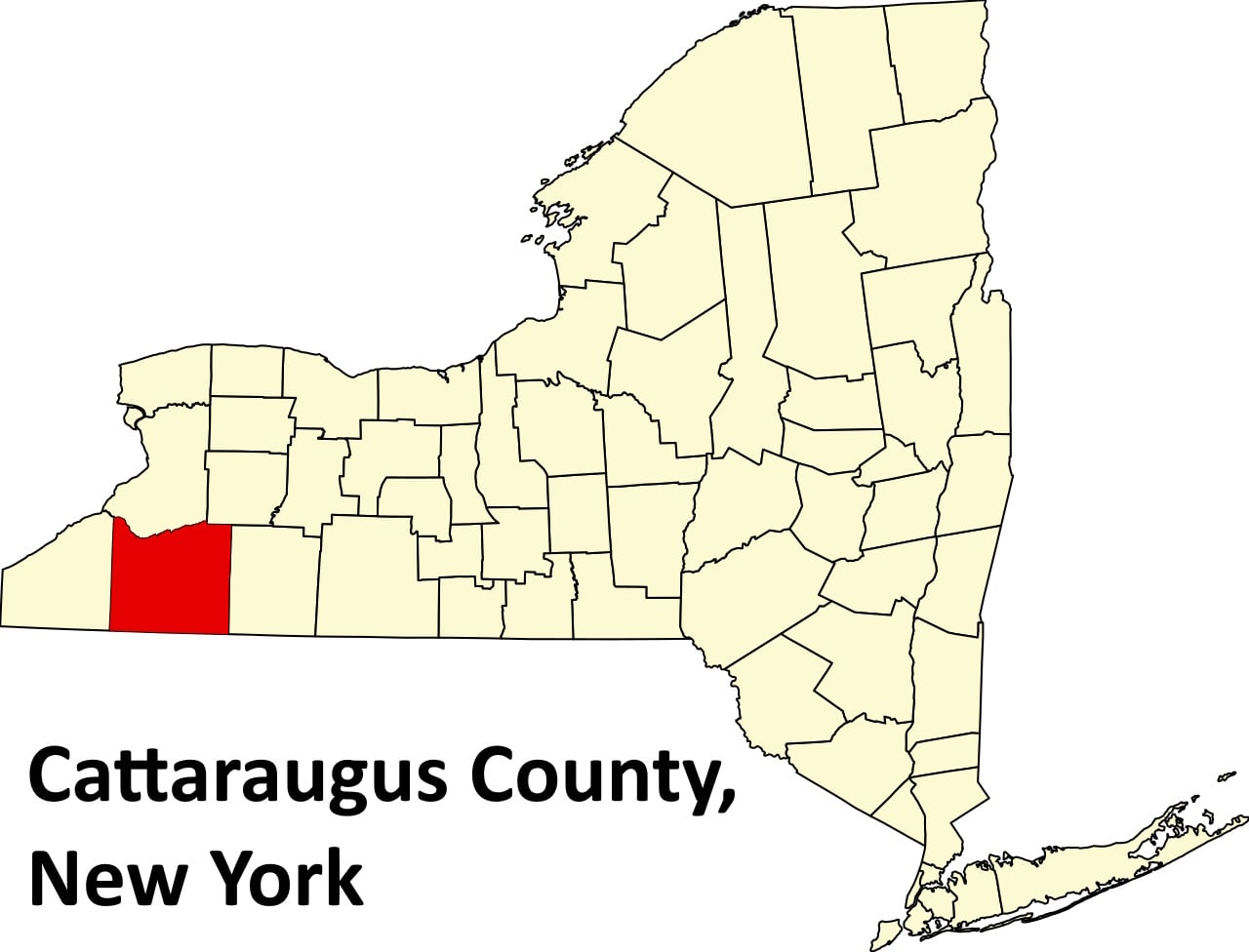
Last week we heard from the school superintendent of Randolph Central Schools in Cattaraugus County, New York, who placed blame for a local budget’s failure to pass on both the Amish, and those he claimed “used” the Amish to “flood the vote”.
In that post I noted that those Amish living in the district, and thus having every right to vote, were likely motivated by the budget’s proposed 40% increase in the property tax levy.
Now we’ve heard from two key people – including a member of the board who was against the budget and says that the Amish were not “used” – and a local veterinarian who says he was one of those who informed the Amish of the vote.
To recap: following the May 19 vote in which the district’s proposed budget was defeated 313-191, Superintendent Kaine Kelly made headlines by suggesting that the Amish had been “trucked in” and “used” by a handful of budget opponents to swing the outcome.
As I noted in that post, the framing seemed off — given that the Amish in the district faced such a dramatic increase in their property tax levy (not to mention a proposed 19% spending increase over the current budget), they had plenty of reason to show up on their own.
People in the community are pushing back on the superintendent’s framing, including a member of the school board.
School Board Member Speaks Out
David Adams has been a member of the Randolph Central School Board for twenty years. He wrote an opinion piece in the Jamestown, NY Post-Journal this week, and didn’t mince words.
His central point: the Amish weren’t manipulated. They read the district’s own budget materials and responded to what they found.
“After receiving Randolph’s Budget Newsletter asking for an increase of $2.50 per thousand, clearly, they did the math to realize that equals a 40% tax increase to them!
They must have decided to have their voices heard. Randolph’s annual tax increase has been staying in the 2-3% increase for many years, which is what New York State recommends school districts to shoot for.”
That’s a different picture than the superintendent’s version, which cast the Amish as passive actors – even “outsiders” – who were steered toward the polls by a handful of opponents.
Adams suggests they grasped the situation well enough by themselves after reading the newsletter, and made independent decisions to vote. Two very different pictures.
Adams: Superintendent’s Words Were “Insulting” to Amish Residents’ Rights
One of Kelly’s more loaded phrases was “trucked in” — language that implies the Amish were imported from somewhere, rather than being local residents exercising a right to vote. Adams addressed that directly, as reported in the Buffalo News:
Referring to Kelly’s comments about a few budget dissidents “trucking in” Amish to sway the vote, Adams said he was disappointed because the superintendent’s words were “insulting” to Amish voting rights. The board member had no problem with residents lending a helping hand to get people to the polls.
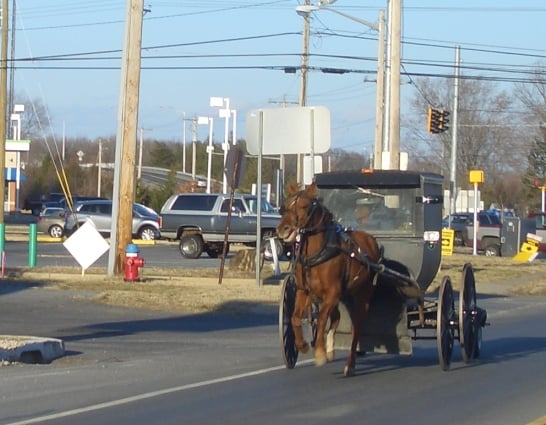
As I noted in the original post, the Amish regularly use hired drivers — also known as Amish taxis — for longer-distance travel and situations where a buggy isn’t practical.
Though the Amish generally participate in voting at lower rates than non-Amish, when they do wish to vote, being driven to a polling location is not unheard of.

Adams cast the idea of the Amish being driven as an example of community members helping one another:
“I wish any voter in the district could count on a neighbor, friend or relative to give them a ride to the polls if they were elderly, disabled or motorless.”
Adams also addressed the fact, also covered previously, that the Amish pay school property taxes, but generally don’t see direct benefit from that in the form of education for their children.
That’s because most Amish do not send their children to public schools (there are some notable exceptions to that, such as in the large communities in Holmes County, Ohio, and northern Indiana), but rather fund and run their own private or parochial schools.

Adams also suggested that the number of Amish who came to vote was not in the “hundreds”, as Kelly claimed – though the total number of voters, 504, was well above the average for such votes in the previous several years (just 208 voters).
Superintendent Kelly’s Case
For his part, Kelly said that, as stated in the Buffalo News piece, he had “worked hard to show district residents that, even with the projected increase, tax rates would remain below pre-pandemic levels and keep the district’s rates among the lowest in the region.”
And while the 40% increase is significant, the rate would still be markedly below what it was prior to the pandemic.
I’m not going to try to get into the nitty-gritty of it here, but that seems to be in large part due to a reassessment of the value of state park lands within the district in 2020-21 “and beyond”, causing an abrupt drop in the tax rate.
You can see it illustrated in a chart at the Buffalo News article linked above, which shows a dramatic drop in the rate happening around 2020, of around 20%. And then, further declines totaling another 20-25% over the next several years.
So considering that, it appears he may have a reasonable case to argue for increases (leaving aside admittedly important questions of what the money is actually being used for) just on a comparison basis.
But it seems that trying to do such a large increase in one fell swoop, as one local person we’ll hear from next suggests, is a big part of the problem.
The Man Who Believes He Was The Target
Also speaking to The Buffalo News this week: John Inkley, a veterinarian who farms a few miles outside of town, and who appears to be among the “couple of people” Kelly was referring to in his original remarks. The paper reports that Inkley “believes he was the target” of Kelly’s comments.
As a farm owner, Inkley presumably has a significant financial interest in seeing the budget voted down. But did he do what the superintendent seemed to suggest (eg “trucked in” the Amish to vote?). From the Buffalo News:
So did Inkley really haul hundreds of Amish to the voting site? He says he did not.
“I didn’t go and incite any sort of uprising,” he said. “In fact, I just educated people about what they should have gotten in the mail.”
Still, the veterinarian is proud of the impact and the perception he was singled out by the superintendent, because he believes he represents the community’s taxpayers.
“I’d wear that like a badge of honor, because yeah, I am representing 90% of the tax of the landowners around here,” Inkley said.
Inkley was among those wondering why the budget hadn’t been increased incrementally over the past several years. And on the upcoming June 16 revote, he made clear he has no intention of stepping back:
“They’re going to try to pass the exact same budget with the expectation they’re going to rally their troops and just bully this through. If they think that the turnout for the Amish was something the last time…”
The vote failed the first time around, and generated media coverage in no small part due to superintendent Kelly’s comments. Now, I suppose that the publicity in this case could motivate voters on both sides of the issue.
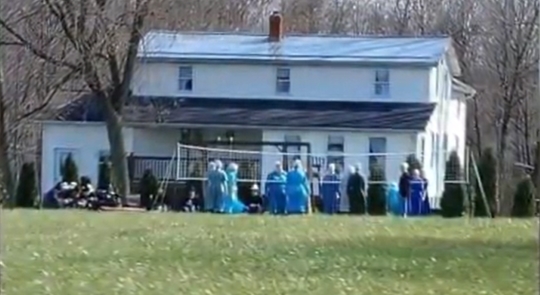
On the Amish side of things, the “Amish grapevine” will go to work to spread word of this issue, and I suspect will encourage some who didn’t vote the first time to consider doing so this next time around.
Based on that alone, I wouldn’t be surprised if the turnout next month well surpasses 500 people – with a lot of Amish voters no doubt showing up again, whether they end up being “trucked in,” or get there by other means.

Where are the non-Amish voters?
Since ALL property owners (Amish or not) would be affected by a 40% increase in taxes, it seems they would behooved to also rally against the free-spending “progressive” politicians attempting to bully this ludicrous increased burden on their constituents. If “trucking in” voters who lack transportation is necessary to defeat this, then let those truckers roll!
I wholeheartedly agree. Forty percent is outrageous and English schools are not much more than DEI indoctrination centers. How much do they actually learn besides that. The teacher’s unions are nothing BUT progressives. They would double the taxes if they could get away with it.