Amish Instagram Influencer “Melanskia” Isn’t Real — But 300,000 People Follow Her Health Advice
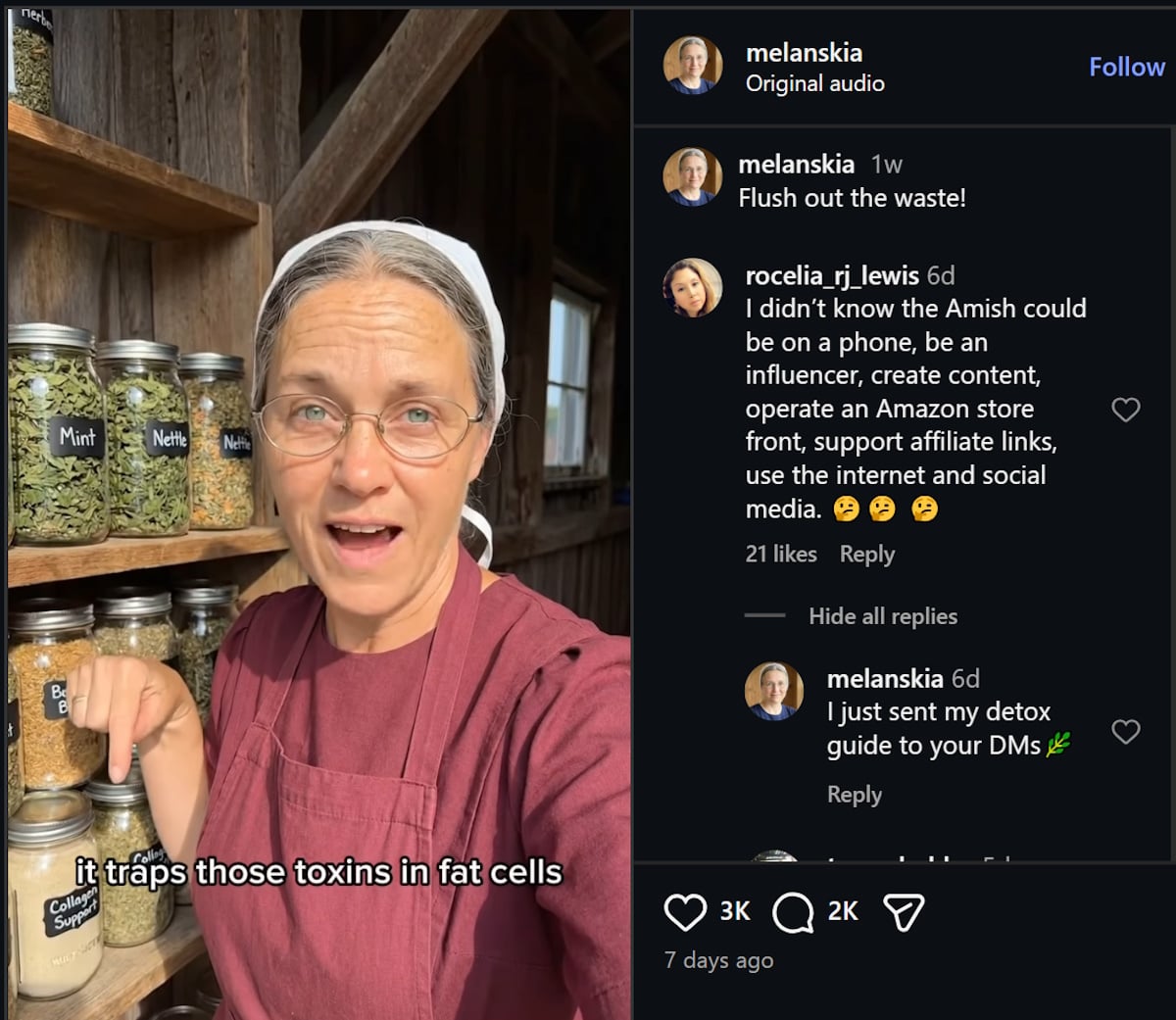
The Amish woman you see in the above Instagram screen-grab is not real. But you’d be forgiven for thinking that she is. That’s how effective AI video-generation has gotten in a relatively fast time.
Some profitable businesses have been created around AI personas. “Melanskia” is one of them. An article in the New York Times sheds some light on who is behind Melanskia. From the NYT:
Melanskia is not your typical Amish woman. She boasts more than 300,000 followers on Instagram and warns them about the perils of store-bought foods. She touts the benefits of removing “industrial waste” from the liver with a drink mix her followers can buy on Amazon.
With her modest white hair-covering and wire-rim spectacles, Melanskia is earnest, charming and quite convincing. She is also not real.
She is one of a handful of synthetic influencers created with artificial intelligence who are promoting an untested dietary supplement, called Modern Antidote, which sells for just under $50 a jar. There is no disclosure on her account that everything about her is A.I.-generated.
Behind Melanskia is a genuine human being, Josemaria Silvestrini, who is part of a growing vanguard of entrepreneurs taking advantage of rapid advances in A.I. to promote their brands using people who don’t actually exist.
Silvestrini is a 28-year-old businessman based in Beijing. His company Modern Antidote has sold about 1,000 jars of health powder so far, thanks to both Melanskia and a network of online promoters.
Here’s more on what they’re selling:
A chemistry major at Williams College, Mr. Silvestrini said he developed a recipe centered around sulforaphane, an antioxidant found in broccoli and kale, and hired a lab in California to help manufacture it at scale.
Mr. Silvestrini used A.I. to design the supplement’s logo, packaging and website, saving him tens of thousands of dollars and months of development time compared with his first entrepreneurial endeavor, a wellness drink.
As soon as he can afford to, he said, he plans to conduct a clinical study of his product to see if it has any effect on microplastics in the body, as he claims. “I want to put my money where my mouth is,” he said.
That is an interesting quote, to say the least. The Modern Antidote website seems to lack any Amish branding, which makes sense, since as the article notes, Melanskia is just one of a number of online accounts promoting it.
If you watch a few Melanskia videos, it is uncanny how real she seems – from the voice to the mannerisms. There is still a bit of a “hint of the AI” around her (and note the wedding band she wears), but it’s very minimal. You can view the latest Melanskia video here, to see what I mean:
View this post on Instagram
There are some comments in the videos labeling this to be “AI”, but many more than seem to be engaging as if she were a real person.
So I can see why Melanskia videos seem to have people convinced, or questioning why an Amish person is on social media rather than whether she is actually real. For example:
I didn’t know the Amish could be on a phone, be an influencer, create content, operate an Amazon store front, support affiliate links, use the internet and social media.
That testifies to how effective the technology has gotten.
The Amish Are Natural Pitchmen For “Natural” Products
It’s easy to see why an Amish avatar would be used to promote a health product. The Amish are associated with concepts around the idea of “natural living” and “health” (leaving how accurate that depiction might be aside).
The “wisdom of the Amish” is a marketable concept ripe to be packaged along with a scientific-sounding health and wellness product. And Melanskia is not the first on this corner, by any means.
For one there are a number of Amish-themed AI-based YouTube channels in this same vein, not to mention other examples which well predate the current technological era, such as this health product.
I think we can expect to only see more of this, and Melanskia is evidence that it is already at a level that it is effectively undetectable for the average viewer. In addition to Modern Antidote, she also promotes a cookbook and natural home cleaning guide.
Just one other comment. The name choice here makes me scratch my head. “Melanskia” sounds more like a Slavic-flavored, invented name, than it does an Amish one. Maybe being a bit odd there was the point.



Anything for diabetes
AI
Hi Eric! TY for this very interesting blah blah blah. I had my doubts right from start as I have been following the Amish for a long time. So glad to see this for what it is. FAKE. TY again.
Regards Marty R .
Thank you Marty, yes I’ve seen some kinda dodgy videos on YouTube made at least partially with AI, but this is the most convincing AI Amish I’ve seen, and I guess it’s only going to get more powerful.
ignorant
I’ll never understand why so many seemingly normal people believe the Amish have the answers. I lived with the Old Order Amish. Great people but they are not well educated and are easily influenced and taken advantage of by many outsiders. Therefore, never believe they know anything about nutrition or other aspects of a healthy lifestyle. They don’t. Wake up.
When AI Pretends to Be Amish
I’ve actually seen this account on TikTok before. It’s a little unsettling how easily AI can fool people now — and how someone halfway across the world can create something that looks so believable.
One small example: the idea that Amish people never buy store-bought bread isn’t really accurate. In my area, they jokingly call store-bought bread “lazy bread.” Many families do bake their own, but they also live very full, busy lives like the rest of us, and sometimes convenience wins.
I’ve learned a lot about natural health from my Amish neighbors over the years. One Amish friend even helped me find a simple remedy for a condition my son was dealing with — something I was just about ready to take him to the doctor for.
There is definitely wisdom in many Amish traditions, but it’s important that those stories come from real people and real experiences, not something generated by AI.
100% Agree
Knowledge is best coming from actual people who’ve learned something.
Advertising should be honest
This is straightforward dishonesty in the advertising of a commercial product and I hope regulation catches up with it quickly. A constructed false endorsement that people are supposed to believe is a real recommendation by a real person is in essence a scam, and this type of thing is creating immense distrust in genuine content in a way that’s making real communication very hard.
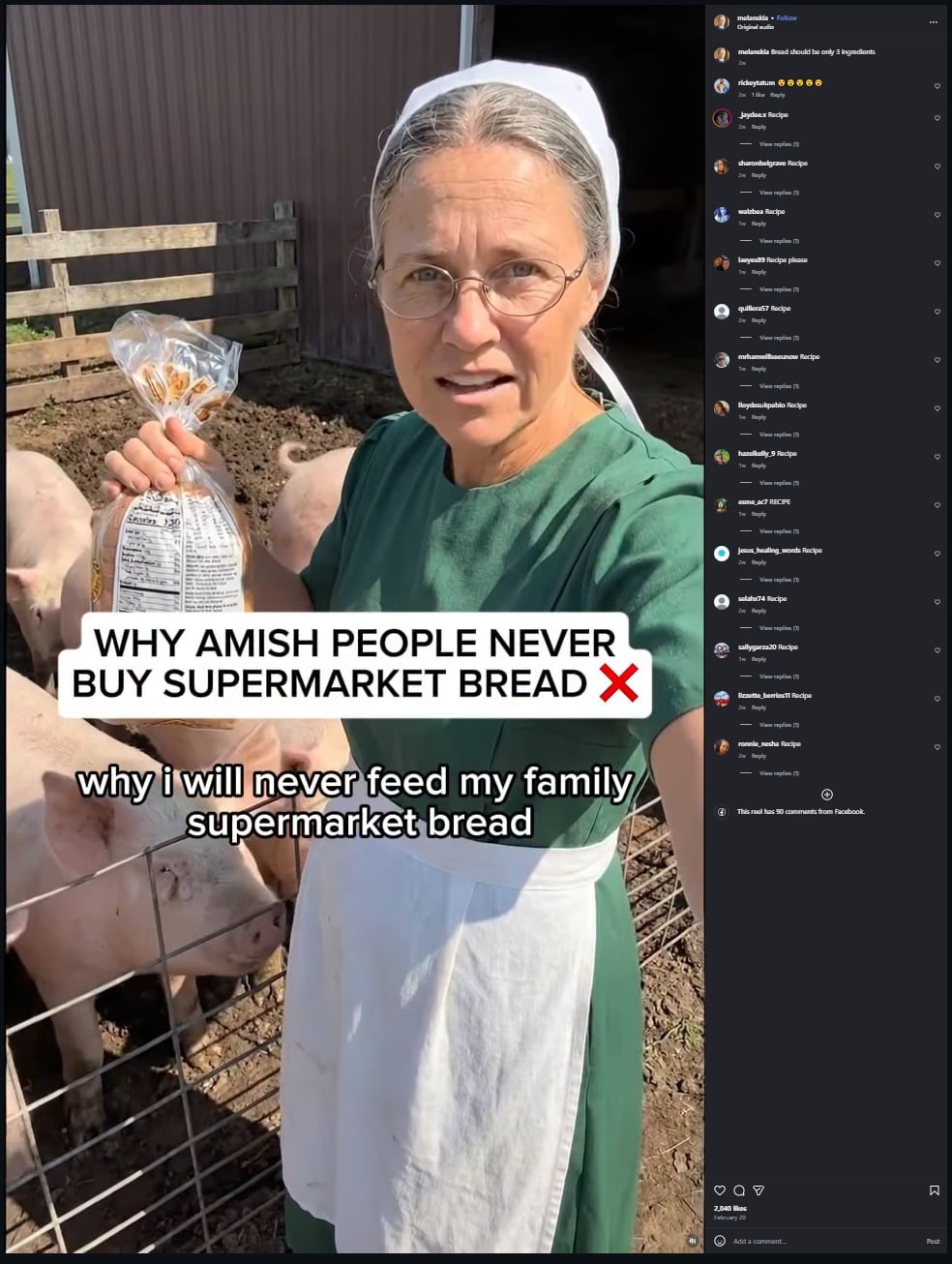
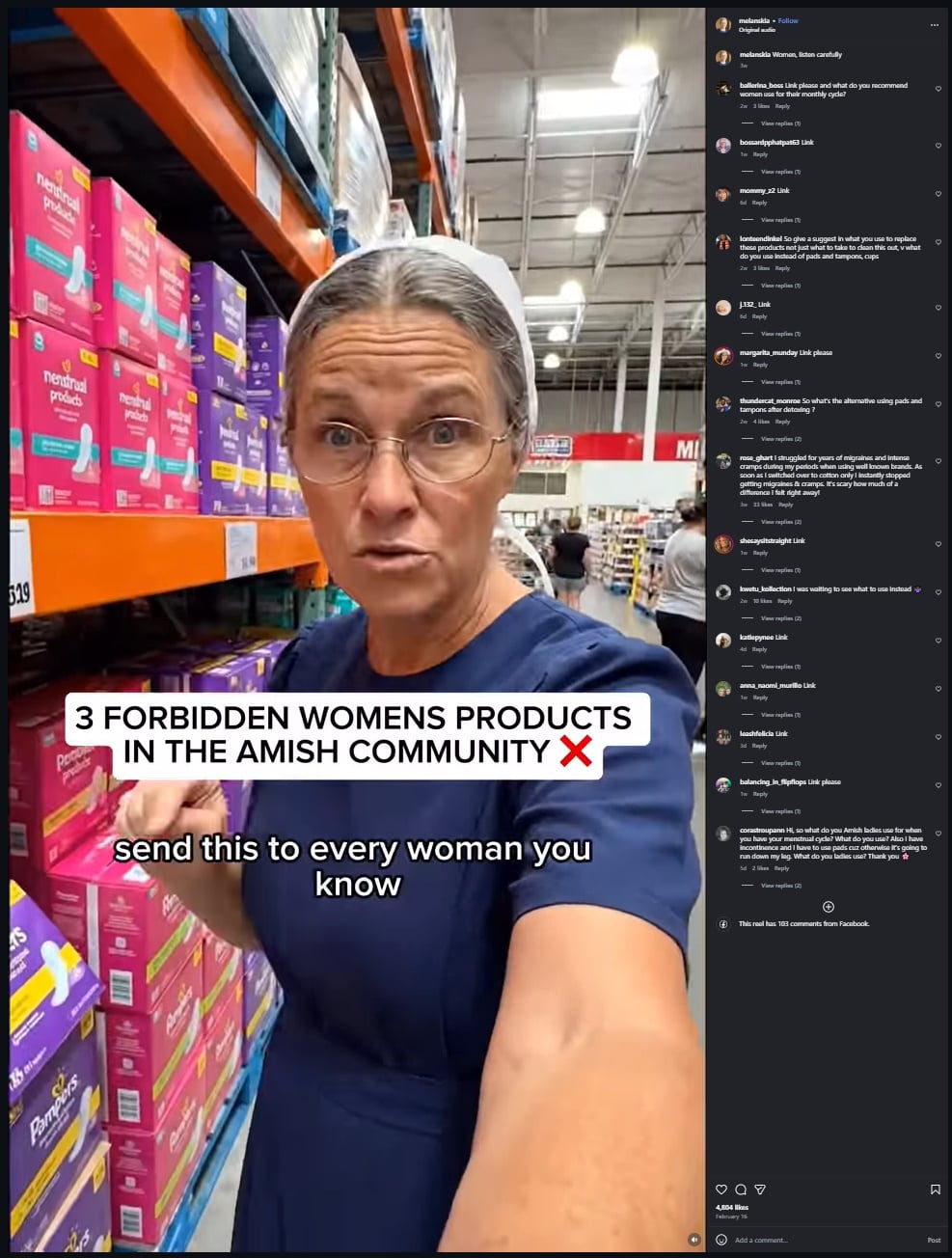
There are a few AI tells, such as the lack of definition in the curtain on the first picture, the odd position of the arm (no space for the elbow between her and the shelf), the hands and fingers aren’t quite right (it’s not just she’s wearing a ring, but the ring isn’t sitting in a natural way on her finger, and she doesn’t seem to be holding the burger with her thumb in a plausible way in that picture), the pig’s face is wrong, and the kitchen and supermarket backgrounds a bit distorted. But it is scarily little. There’s nothing obviously wrong with the lighting, which is one of the major things I’m used to looking for.
“Melanskia”
Really?? That’s the best name the guy could come up with?? (sigh) Oh, how I miss “precedented” times. lol. I’m 56 years old and the more I see of this “new era” we’re living in, the more I miss MY generation. (1980s) Lmao.
So not convincing
She may look Amish, but her voice sounds generic American. She sounds nothing like an Amish woman.