
Rumspringa Reality: Five Amish Youth “Spill The Beans”
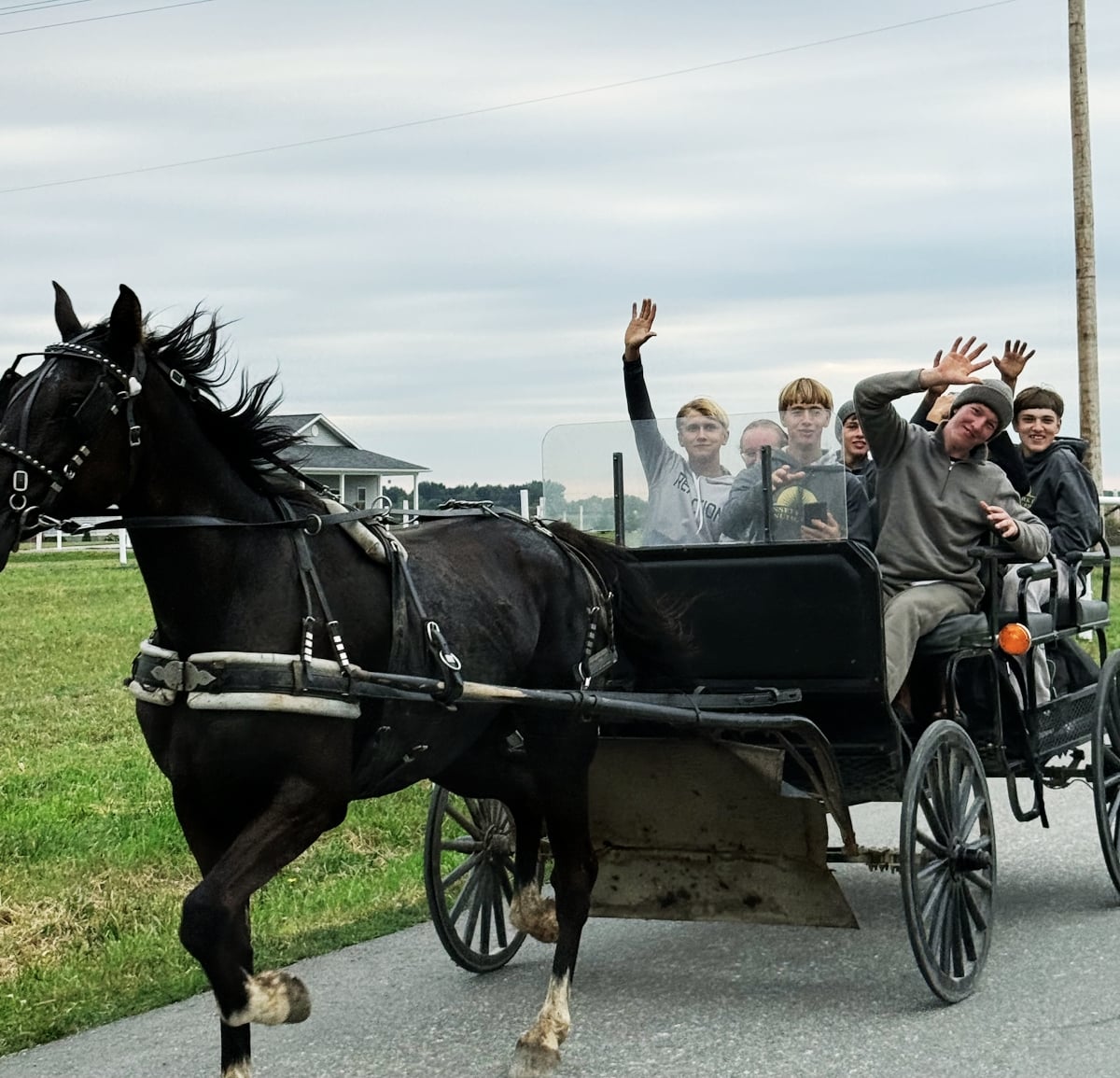
And by “spill the beans”, that doesn’t exactly mean they share all the juicy details people might imagine.
It’s more about sharing the reality that not all Amish youth (or even most of them) have the wild growing-up period that has taken hold in the popular imagination, thanks to TV and other media.
Laura Pitcher of the UK’s Dazed magazine interviewed five Amish youth in Danville, Ohio about their running-around experience for a new article (link at bottom).
As one Amish man she speaks to explains, “It sounds juicy…but it’s really a minority group that would actually do the things portrayed.”
That’s not to say that some don’t have a wild time of it. The experience varies by community and by person. Not unlike non-Amish youth, in a way. Some communities are more notorious for their youth behavior, others have a reputation for not tolerating it.

What you get in this piece I think reflects the different experiences and mentalities among Amish youth – a group that, it’s good to keep in mind, currently includes tens of thousands of individuals, living in hundreds of different Amish communities.
And to speak in generalities for a moment: it’s good to keep in mind that the labels put on Amish groups don’t necessarily align with that they might suggest to our ears.
For example, the New Order Amish are often called “progressive” or “liberal”, but tend to have some of the best-behaved Amish youth, emphasizing “clean” courtship and frowning on alcohol use.
By the same token, some of the more materially restrictive Amish groups have well-earned reputations, even traditions, for partying among their youth.
And on a more individual level, it’s also good to keep in mind that the young people are at different levels of maturity, even if they are close to the same age (all interviewees for this piece are in the 18-20 age range).
What The Youth Have To Say
So in the article, we get a variety of responses to the questions about technology, activities, getting baptized, and the like.
For instance, one of the youth, 18-year-old Marty, unabashedly talks about drinking alcohol and partying: “Get drunk and go eat somewhere. That’s the plan for the day.”
Others express spiritual concerns. “I’m excited to live a holy life for our eternal reward,” says 19-year-old Jon. Twenty-year-old Rose explains that “Our standards just help us to remain together and have the same values,” which I think is well and simply put.
Here are a few longer excerpts that caught my eye:
The more friendly type
This first one is from Jon, age 19, who makes a subtle but important point in the last line of this quote:
What people don’t realise is that there are a lot of different types of Amish. In our culture, we allow technology. We’re allowed cellphones.
We’re supposed to remain more internet-free but are allowed to deal with non-Amish [people] and have electricity and business-related technology like computers, if it’s not for personal use.
Don’t take this the wrong way, but we are more of a friendly, outgoing type of Amish.
I found that last simple line interesting in the awareness it shows – it reflects that a) there are different types of Amish, b) the Amish themselves are well aware of the differences (better than most outsiders I would say), and c) they are aware of how they are seen to interact with outsiders.

How to decide
James, age 19, is asked a simple question, but one that I don’t think I’ve seen asked before (and I don’t recall asking the same of my Rumspringa-age acquaintances, but will certainly do so now): “How are you deciding if you want to get baptised?”
James’ reply doesn’t really reveal much, but I think if you ask enough youth this question, you might eventually get some interesting answers:
I am just going to take it one step at a time and see how it goes. I’m enjoying [rumspringa]. It’s whatever you decide. Most of the time, it’s about when to get baptised, but it’s not the same [for everyone].
Knowing what you stand for
Finally, here’s 20-year-old Rose, reflecting on the values of her community, and how they relate to others:
We all want to work together. Our standards just help us to remain together and have the same values. We are taught to work from when we are small children.
You always interact with other people, and so you can have a good influence on everyone you meet. It keeps you more focused on your personal life as you know what you stand for.
Check out the full article here for the whole thing, as well as photos of the youth. Interestingly, some of them posed for their shots wearing designer clothing (I suppose provided by the magazine).



Soul searching
What I think is that since all people are born with a sin nature, we all have similar tendencies. At one point some of us get saved and become Christians, both in and out of the Amish communities. You can be raised in it but not born into it, at one point we all have to decide if we want to belong to Jesus. And it is not the same thing as ‘joining a church’ or even such a community. We come to Jesus for this. The difficulty inside I would think, of such a community is everything seems uniform and regulated, handed to you like a stack of clothes without any selection, variety, or real choices. This would feel ‘forced,’ causing some to rebel such as youth. One wants to feel that their decision is sincere, genuine, and real from themselves, not something someone else picked out for them. The difficulty I see outside is that it is hard to find Christians who actually are sincere and not ‘soiled by the world’ which is getting worse by the minute. They don’t even know that there are some like me who refrain from all ‘that stuff’ and it should be so. As for the difference in cultural ways, I think now the Amish are to be envied and with what is going on in the world, tell the young ones to stay ‘right where they are’ and don’t go exploring the world and different ways of life. That is just my best advice. Blessings!