
Inside an Amish Ice Harvest: A Rare Look at a Timeless Tradition
How do the Amish keep their food cold? That can vary, based on the community. But for Amish in some places – including one tiny New England community – the answer is good old-fashioned ice.
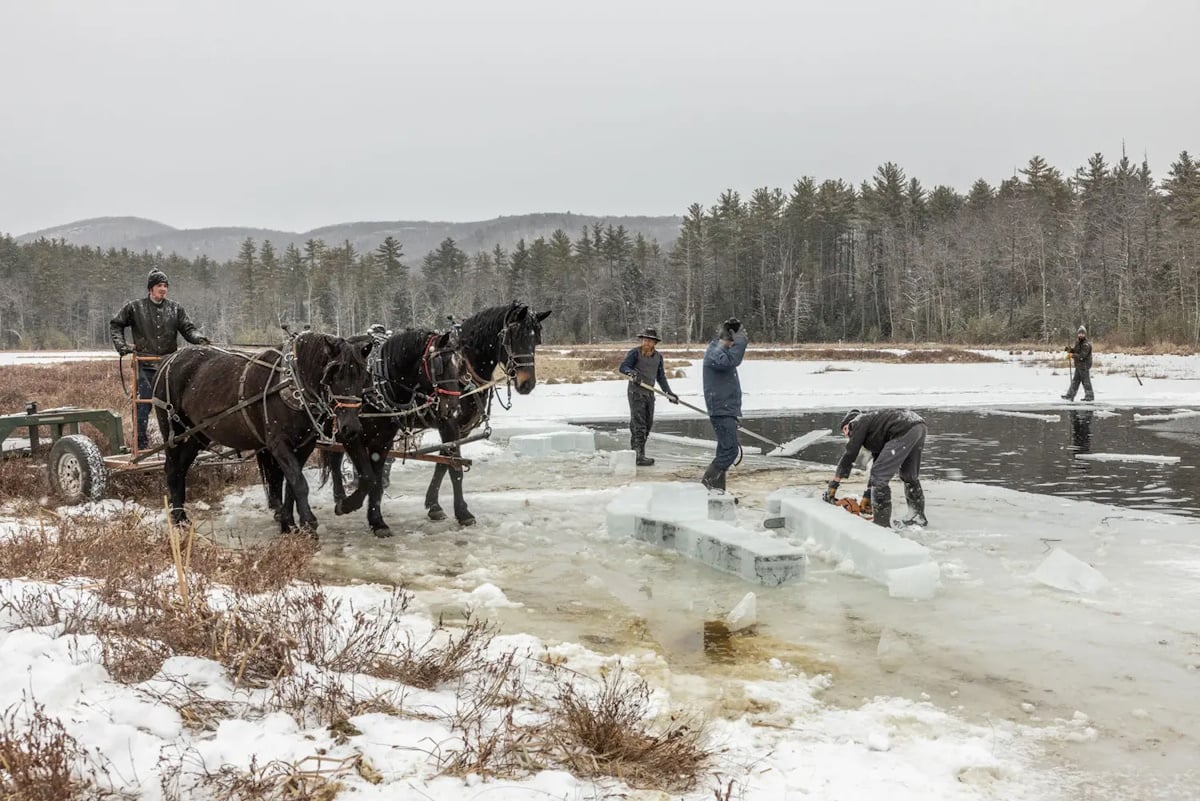
A just-released piece in Down East Magazine explores the ice harvesting tradition in the young Amish settlement at Hiram, Maine (Oxford County). What really makes the piece are the excellent photos accompanying the text (both by Greta Rybus).
Rybus, it seems, became aware of the natural ice cooling tradition from patronizing a local Amish store, where ice is used for refrigeration of products like eggs.
Harvesting ice is an annual event that takes place when the conditions are just right. She describes how the process of collecting the large blocks unfolds each year:
Around December, our Amish neighbors start monitoring the pond, cutting a small hole in the ice to gauge its thickness. When it reaches about a foot, the time is right to call a work bee, when Amish families come together to tackle a big project.
The ice harvest, like other things that need doing in the community, is organized by the Work Bee Coordinator. “Individuals tell him about projects that need to be accomplished, and he looks at the different needs and prioritizes them,” one community member told me. “Then he announces a work bee at a certain location, and as much as we can, we all gather and help each other with the work.”
And on the nitty-gritty of how the job gets done:
In thick boots and hand-sewn coats, a group of men head out past the scrub brush and snaggly trees that line the edges of the swampy shore. Where the ice is wide and unbroken, they use a metal frame fitted with a chainsaw to slide across the ice and cut long strips.
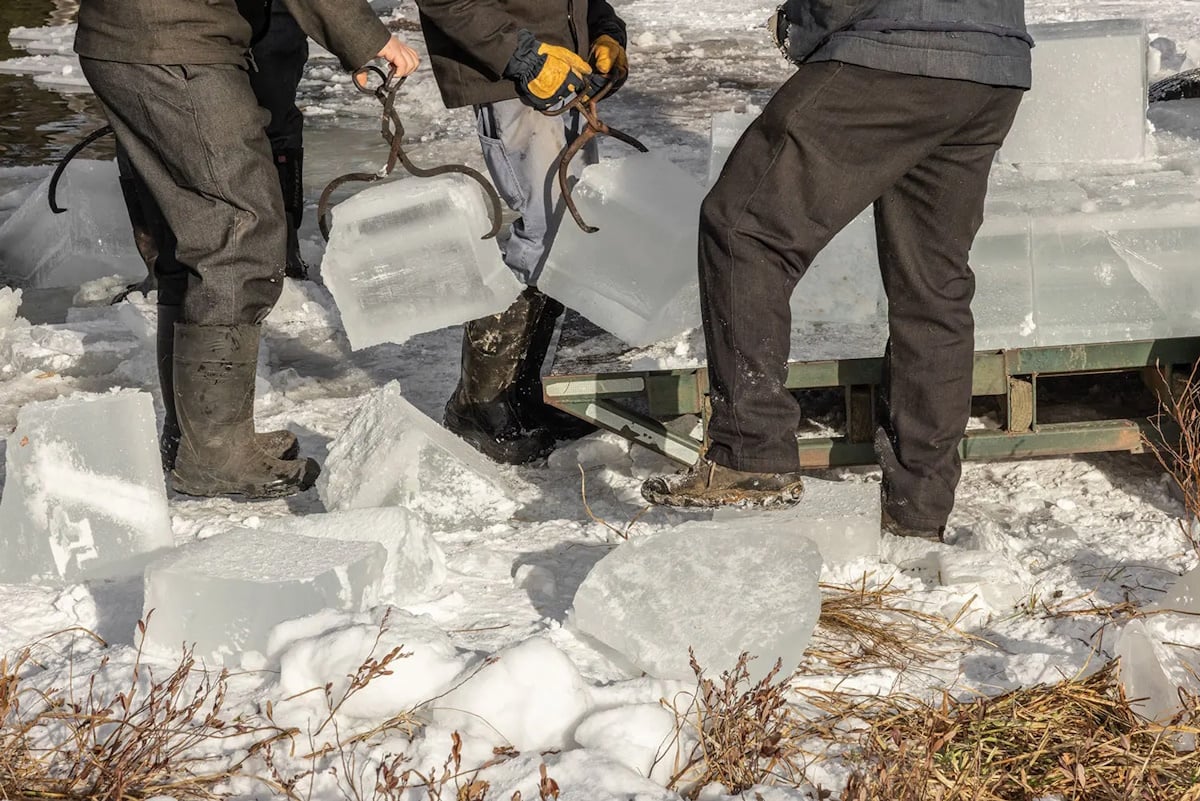
Then, with spiked poles and metal tongs, they hoist the ice in sections roughly 10 feet by one foot, setting them on the solid surface of the pond and cutting them into 12-inch blocks.
Rybus notes that there are just eight families in this community, and they team up over two days to accomplish the job. She also added this interesting detail on how the ice gets allocated and sometimes re-distributed:
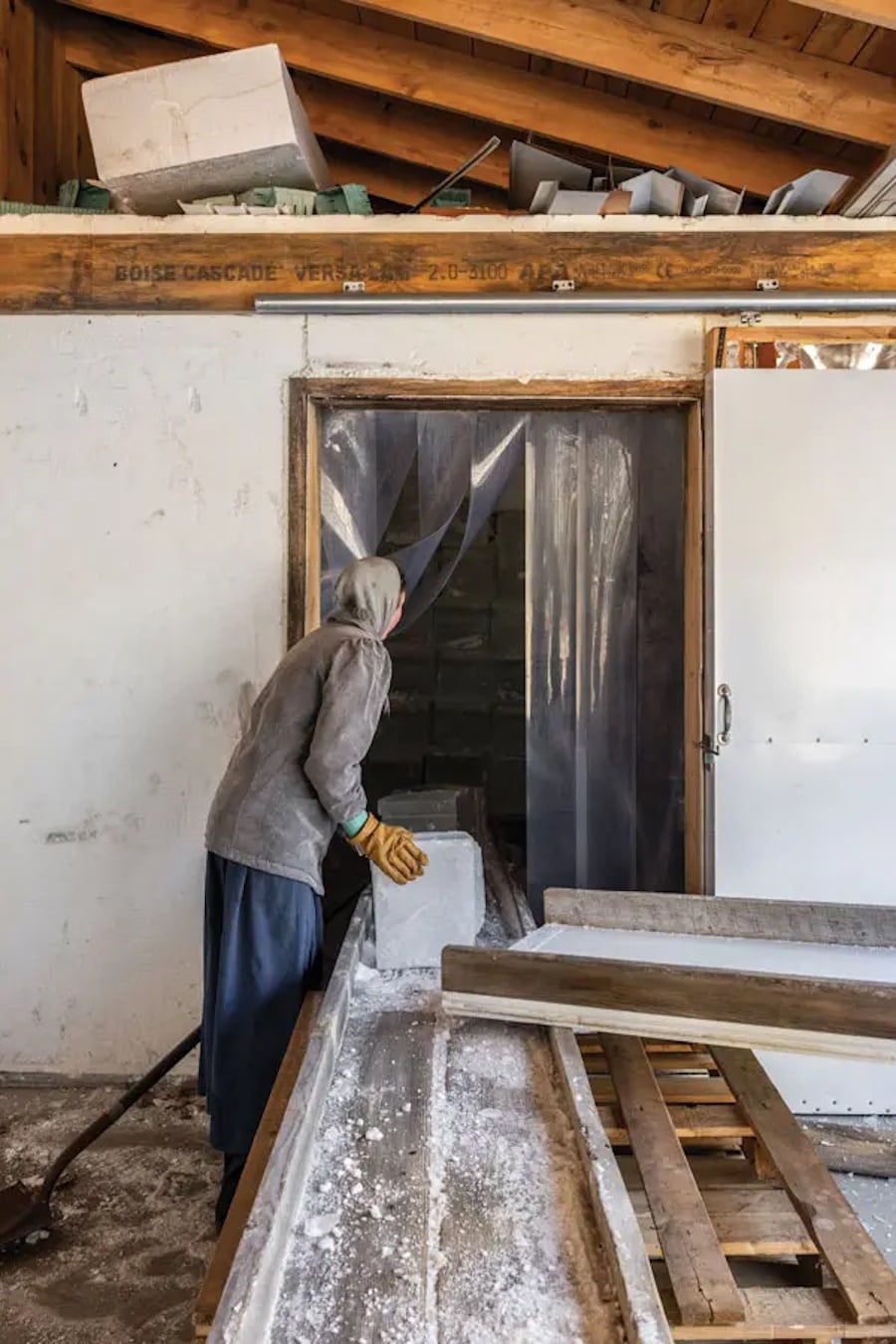
She helped him set up ramps to slide the ice off the wagons and into the cold storage at the market. Subsequent loads went to the families’ homes, where most have small icehouses or electric refrigerators outfitted to accommodate ice. Packed tight, the ice should last most of the year. If one ice house or cooler runs out, ice will be reallocated from another.
There is also this quote, from an anonymous Amish person, giving insight into the motives of the community: “In the very beginning, when God created the world, He said, it is not good that man lives alone. That aspect goes into community life, church life. God intended that people come together and work together.”
Rybus has a total of 11 photos of the occasion. Check them all out, and the full story, here.






Eggs
“Ice is used for refrigeration of products like eggs.”. Just recently I read where it’s better not to refrigerate eggs. Indeed one of the best ways to preserve eggs is to cover them with Vaseline and keep them at room temperature or cool and dark, maybe turning them occasionally.
Also the article mentions using electric refrigerators with the ice placed in them and it should be noted these are probably modified electric refrigerators that are not operating on electricity.
Harvesting Ice
Wait a minute: “Electric refrigerators outfitted to accommodate ice”?? Is anyone else noticing the irony here?? A homesteader acquaintance of mine once told me eggs can sit on a kitchen counter for up to a month if slathered with mineral oil. i.e, Refrigeration isn’t always necessary. Sure . . . milk, butter, cheese, etc. But eggs??
To refrigerate or not
If eggs are left unwashed after collecting, they do not need refrigeration. That sometimes requires ignoring chicken doo-doo. And washing the eggs right before using.
However, in a store setting customers may not go for that, or, I don’t know regulations there. Maybe eggs must be washed before selling in a store.
I am lucky enough to purchase farm fresh eggs down the road. They are never washed before I purchase them, doo-doo and all.