Harvest in Lancaster County (21 Photos)
Corn, pumpkins, and tobacco feature in today’s harvest photos, taken by reader Ed at various times and places in Lancaster County.
Enjoy, and thank you Ed.


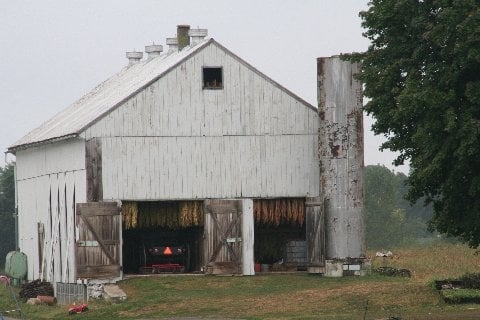


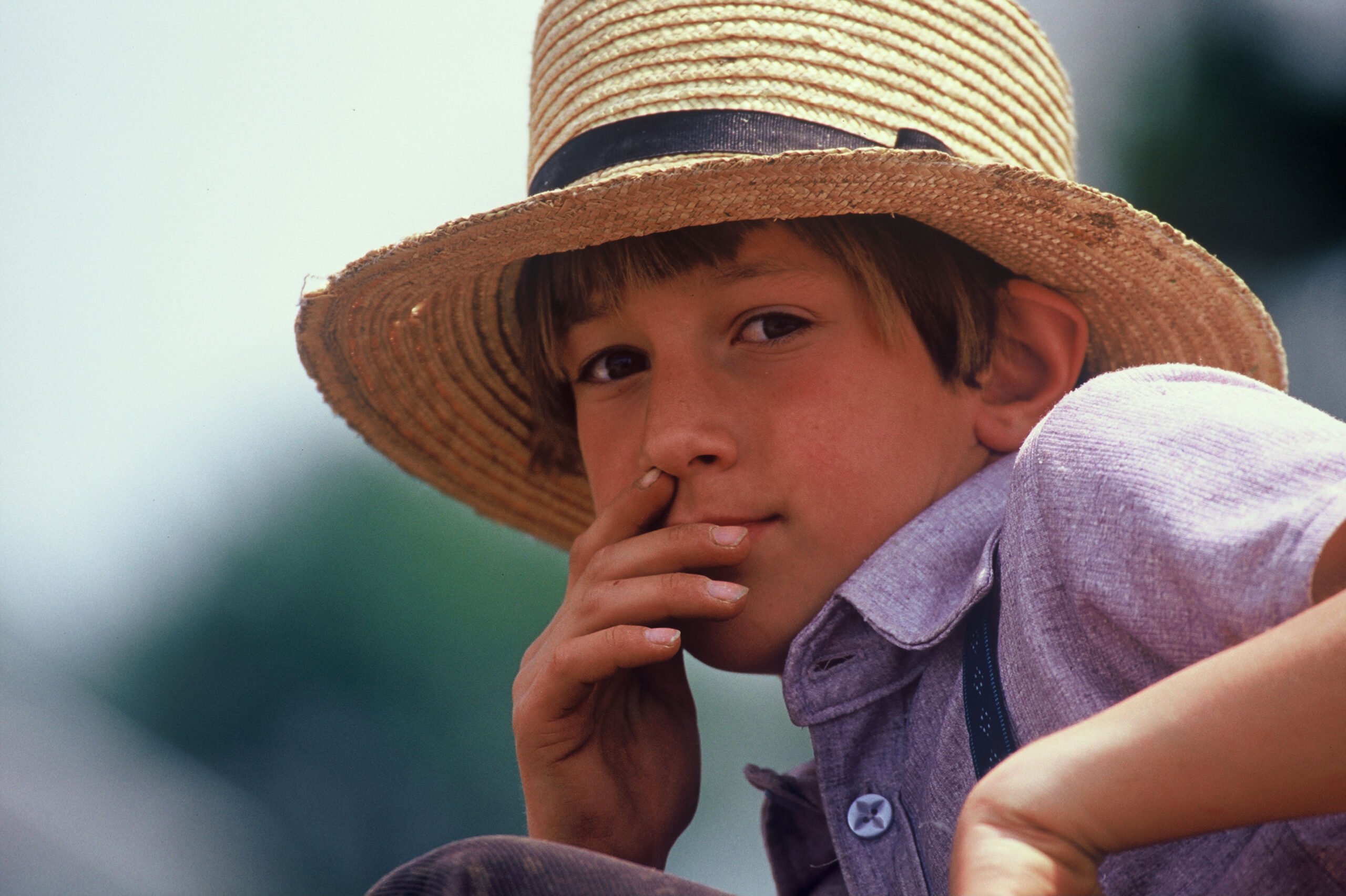

Corn, pumpkins, and tobacco feature in today’s harvest photos, taken by reader Ed at various times and places in Lancaster County.
Enjoy, and thank you Ed.
Similar Posts
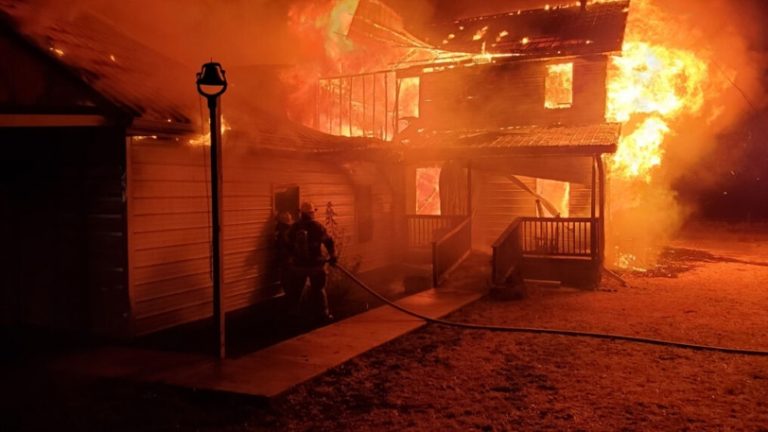
This happened December 23rd. From WZTV: WEAKLEY COUNTY, Tenn. (WZTV) — An 8-year-old boy was killed a house fire in an Amish community in Weakley County, Tenn. on Wednesday. Jason Arnold, Battalion Chief at McKenzie Fire and Rescue, said crews responded to the blaze just after 11 p.m. and arrived to find a home along Blaylock Road completely engulfed in flames. A neighbor reported hearing…

Randy Evans writes about the passing of Titus Wagler, of Bloomfield, Iowa. Titus was brother to Ira Wagler, and son to David Wagler, both well-known writers with Amish roots. From Randy’s recent column “Never put off what you might regret”: This lesson arrived the week before Christmas when I spotted a small obituary in the Bloomfield Democrat. Seven succinct paragraphs informed readers of the death…
As we’ve seen in his previous posts, Indiana Amishman Merlyn Yoder is an enthusiast of the Ausbund, the centuries-old hymnal Amish sing from in church. Merlyn also has a love for beekeeping. In today’s post, Merlyn describes an ideal visit to the hive, and imagines what it would be like if the bees he keeps had voices of their own. I love Merlyn’s creativity and sense of…
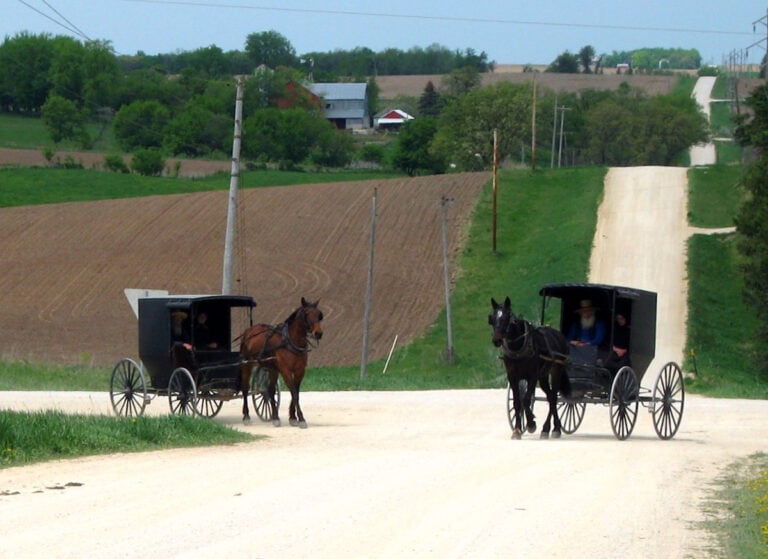
Just a tragic and sad story. A 7-month-old Amish girl has died after a pony kicked her in the head during a wagon ride at a home near Harmony, Minnesota. A relative of the girl reached out to let me know about it. The girl is not identified as Amish in the report, but based on what I’ve been told I can confirm this would…
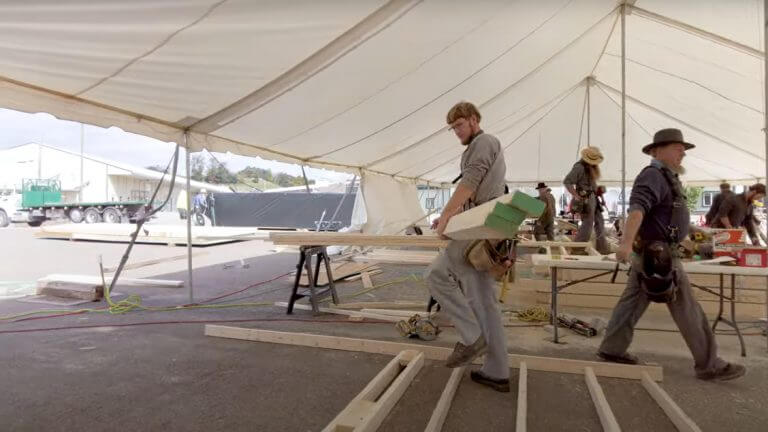
This is a neat video showing volunteers putting together pre-built homes right in the heart of Holmes County, Ohio – Charm, to be precise – but destined for families struck by disaster hours away, in West Virginia and Dayton, Ohio. Amish have traveled to the sites of disasters to help clean up and reconstruct for decades now. But this effort via Mennonite Disaster Service expands…

Do you know who’s under the weather in your community, who just had a baby, or where to get a good deal on a sewing machine? If you were Amish and received the church newsletter, you’d have all this information at your fingertips. While wider-audience papers like the Budget and Die Botschaft have multi-state and national reach, papers such as the Lancaster Gemeinde Brief (covering Lancaster…
29 Comments
Wonderful pictures, and thanks to Ed for sharing. I’ve enjoyed
traveling around Amish settlements in Orange, Lawrence and Daviess
Counties, Indiana, the past few weeks observing the harvesting of
different crops. It’s interesting observing differences in these
communities — some grow tobacco, some don’t due to their church
rules. The Daviess County Amish use more modern farm machinery than do the Swartzentruber Amish in Orange and Lawrence Counties.
The Orange County group still does a lot of threshing. I think some of the most beautiful sights in Amish country are during harvest time in the fall.
Fantastic pictures they are great, can you tell me why on some pictures, the corn or wheat, is grown in round shapes and is left with large big grass centres ? I don’t think i have seen this kind of farming back in the uk.
I just love the picture with the ponies eating pumpkins, i had ponies and i guess i would nether thought to give them pumpkins, i guess they can eat them!!. Thanks Ed for these pictures.
Farming on the contour
Andrea: the curves you see in these pictures are because the farmer planted his crops along the contour lines of the field. This is done primarily for erosion control.
It was widely practiced in the US starting in the 1930’s in response to severe wind erosion called “sheet erosion” when large fields were all plowed out at the same time without regard to the slope of the land. When the soil got dry (as in a drought) and a brisk wind would kick up there would be massive dust storms as the wind picked up the dry soil and moved it hundreds and sometimes thousands of miles away. If you will Google the term “Dust Bowl” you can read about it and see some dramatic pictures from that era. Some of these same techniques can be used to minimize erosion caused by water runoff, too. That is probably why it was done in the fields you see pictured here.
Farming on the contour, planting wind breaks of drought resistant trees, skip row farming, planting alternating strips of different crops and rotating crops that were planted in the various fields being farmed were some of the methods used to combat the sheet erosion problem. These were tremendously successful measures and within just a few years, with the help of some timely rain, the problem was greatly reduced. The problem has not resurfaced on a large scale since that time, but with the move to the massive farm equipment used on the plains in the Midwestern part of the US many of these practices have been abandoned. It remains to be seen if this is a wise idea or not.
Thanks oldkat, thats a wonderful lot of information that i had no idea about. Great thanks, learn’t something new today. 🙂
Beautiful photos! Thanks so much!
Really beautiful pictures. Enjoyed seeing them all. My favorite is the horses.
Great pictures, they remind me of the significant differences in Amish communities. Most of the mid west Amish would not grow tobacco and in the Kalona community they would not grow pumpkins used for Jack-o-lanterns because of their connection with Halloween.
I agree
These are some wonderful photos. Someday I am going to be in a position to take photos like these.
Lovely
Is there anything better than Autumn in Amish Country?
Harvest in Lancaster Co
THANKS for sharing these wonderful pictures! We too, have just returned from the Northeast, driving through Ohio, Pennsylvania, and Indiana, Tennessee, seeing the many fields of Corn, and many Amish farms along the way! This is definitely a busy time of year for them! Beautiful countryside! I did take some photos but taken from the car window most times, they were not as good as these! BUT, none the less, have preserved fine memories of the upper Northeast — so different from Florida farms!
SharonR
Beautiful pictures!!
Brings back fond memories!! I do not miss cropping tobacco though, messy stuff to handle and work with. Always wore clothing that were about to be discarded because the tar seldom washed completely out. Thanks for sharing these!!
Great shots! Thanks for sharing Ed!
Identify something for me
In the next to the last picture, does anyone know what those little tee pees are? I saw some last week in Lancaster.
Thanks! and really enjoyed the pictures!
Kate
I believe those are tobacco (leaves/stalks), cut and stacked to be gathered (also in photos 10 & 17). In photo 16 you can see the leaves hung to dry from the barn rafters, and in photo 18 slats in the sides of the barn are opened to increase air flow.
Thank you, Ed!
Those are some gorgeous photos! I love seeing the horses (are those in the first first few photos Percherons?). What do I know, growing up in the city! 😉
Speaking of horses, the last photo (horses alongside the wagon) makes me nervous for them! 🙁 It looks dangerous, being on a road with cars driving by. Could someone comment/explain…why are they situated like that?
Alice Mary
Four abreast
Alice Mary: he is hitched four abreast for some reason. If you look closely you will see the second team directly in front of the wagon. Possibly when he was in the field he needed the power of the four animals. Doubtful that he does going home on the pavement, especially since the wagon does not appear to be loaded. At least not fully loaded. The hitch would be offset to the left like that in the field so the equipment, probably a corn picker, would run IN the rows; while the hitch (the animals) would be BESIDE the rows.
I suspect that when he hitched to the wagon he just used the same double trees /eveners (the part that connects the animals to the equipment being used) that he was using in the field on the wagon pole (tongue) and it results in that strange offset. That is NOT the typical way to drive four head on the highway. Usually a highway hitch would be four-up or two in front of two. There would be one team on pole (wheelers), with an animal on either side of the pole and a second team (leaders)hitched to the very front of the pole. However, to do that would require different lines (reins) than what he is using and possibly different double trees than what he is using. Just a guess again, but if he didn’t have those things with him it might have been easier to hitch and go as he was already rigged up. I probably would have put one team on the wagon and tied the other team to the back of it to go out on the road, but I don’t know the circumstances surrounding this picture so I am not second guessing him in any way. It does look a little odd though. Good catch, I didn’t notice it the first time through.
I learn somethin' every day...
I appreciate your detailed explanation, OldKat. I’m pretty sure I understand it now. Yeah, “two in front of two” (or two in front and two behind the wagon) would seem better to me—safer, at least, on the highway. I just hope I never encounter such a thing while driving (my car, that is). I’d be very worried about freaking out the poor horses! I’m afraid that driving a car in Amish territory would bring on my early demise, due to stress! 😉
Thanks again for the clarification! 🙂
Alice Mary
thank you
What beautiful pictures. These are really stunning. Thank you for posting. I’m in Texas and it’s still in the 90s, so any reminder of fall is especially appreciated!
Autumn is my favorite season! Beautiful pictures, Ed. Thanks for sharing!
In MN, we are having a rather dreary day, so this was most welcome!
Thanks for sharing all the wonderful pictures with us. I just came home from being in Berlin, OH. It was a wonderful trip and so much to see. I loved being in the Amish community and seeing the horse and buggies, the Amish people and their beautiful farms. I want to go back many more times if possible.
Harvest in Lancaster Co.
Agree with Juanita Cook, 100% — going through Amish Communities and towns, brings one a sense of peace away from the hustle and bustle of big city life — Wish I could travel there more often, myself!
SharonR
Great pictures, Ed. Thanks for sharing!
Harvest in Lancaster County
Great photos Ed. Thank you for sharing them with us. I have enjoyed all of your wonderful photos and comments regarding the Amish. Keep them coming.
Thank you!
Harvest in Lancaster
Oh, this was wonderful to see! Like a taste of home. I’m very much missing Lancaster and Pennsylvania after seeing this! I love autumn in Lancaster! Many thank for sharing, Ed… and thank you, Erik! :o)
Thank you for the :60 vacation <
Harvest In Lancaster County
My most favorite place on earth, each and every season … and so excited that it will be our retirement destination home in a few more years!!!
Request to Ed!
Ed, we would like permission to share some of your photos at the YOKE webzine. Our next issue is on “Harvest.” We are a Christian on-line magazine. Our web address is http://www.theyoke.org. I can be reached at magdalenaperks@gmail.com, or you can reach our editor at brotherlarry@theyoke.org. Thank you!
Beautiful!
Thank you for sharing! Some pics would make nice Thanksgiving decor!
Lancaster county
I miss Lancaster very much. It was a pity that I did not go around and stayed for a short time there in June.