
An Amish Thanksgiving (Part 3): Thankful Hands

This is the final part of a three-part Thanksgiving series exploring how the Amish express gratitude—not through words, but through action. Author and Amish taxi driver Haley Straw shares a story which revealed to her how her Amish friends understand – and demonstrate – gratitude.
And if you missed it, check out part 1 (“How The Amish Say Thank You”) here and part 2 (“The Amish Table of Thanksgiving”) here. Finally, for my part, I want to send a special Thanksgiving thank-you to all you readers – and I wish you a wonderful Thanksgiving full of blessings, good food, and time well-spent with loved ones.
Thankful Hands
A frantic phone call, an unplanned Thanksgiving trip, and a van full of Amish travelers taught me more about grateful living than any holiday speech ever could
There’s a certain rhythm to the days leading up to Thanksgiving in Amish country. You can almost feel it in the air—woodstoves burning a little hotter, kitchens buzzing, little ones running errands between the house and barn, and parents working shoulder to shoulder without ever announcing that they’re “busy.”

It’s simply what they do.
Work is acknowledged quietly.
Gratitude is shown by doing.
And love is poured out through hands, not words.
I learned this again the year the Glick family called me in a panic, hoping to find a last-minute driver. I had just returned from a trip to Ohio when the call came, that familiar “may-awe” “may-awe” “may-awe” sound, my phone’s ringtone— a peacock’s call. I had that ringtone set for the Amish because it catches my attention and demands that I respond.
On the other end was Elmer, his voice stuttering and hopeful.
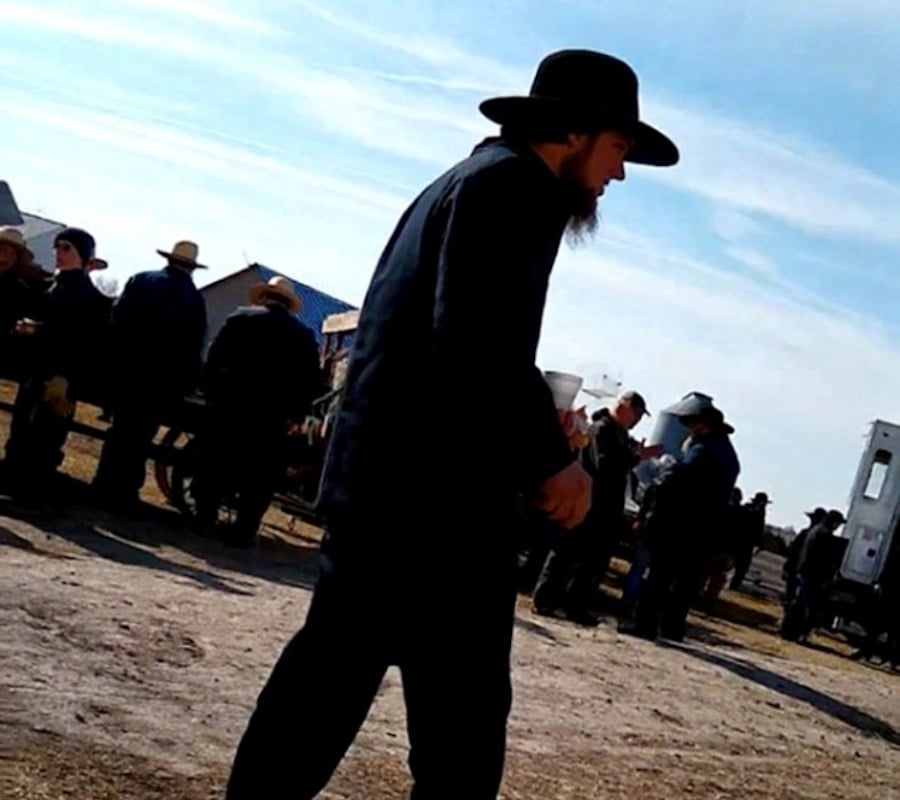
“Can you take us to Clark, Missouri, on Wednesday evening… and bring the scholars back early Friday morning in time for school? We’d like to spend Thanksgiving with family.”
School.
Of course. I had already learned something about the very low-order Amish that still amazes me: They do not let their children miss class. Not for holidays. Not for family gatherings. And especially not for travel under any circumstances.
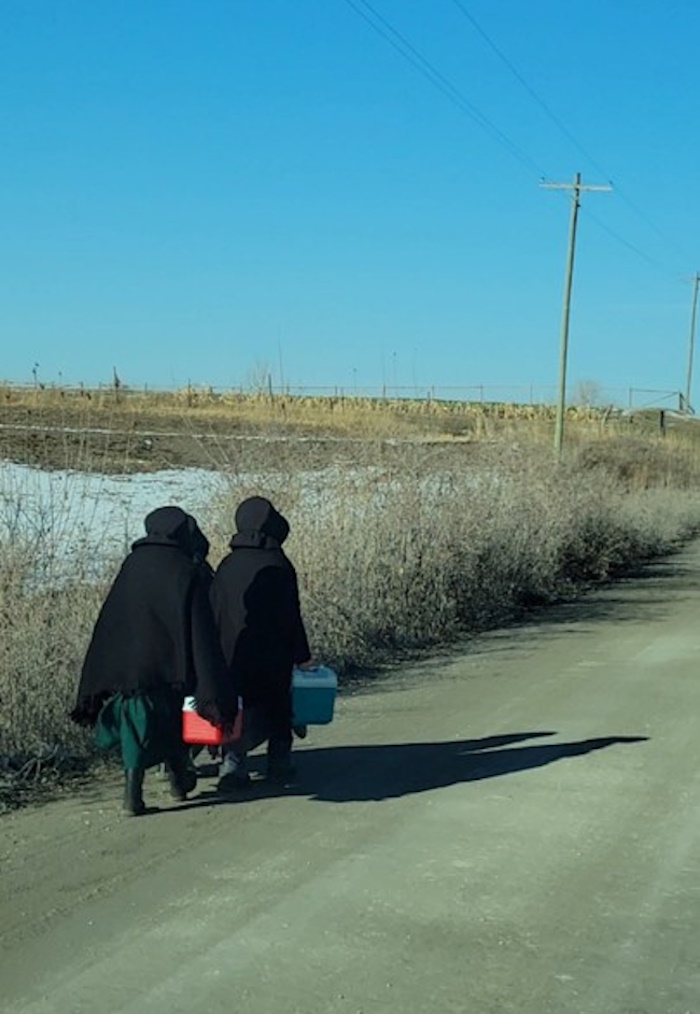
School is considered essential for lessons in discipline, duty, and community just as much as for learning reading, writing, and arithmetic.
I explained I’d already committed to a trip to Wisconsin, but if he couldn’t find anyone else, I could take them up on Tuesday and return to pick them up Saturday.
He understood, so he let the matter go and continued combing his list of phone numbers to see if he missed one.
Two weeks later, after six straight days of hauling, bone tired and famished, at an auction with my sons in the frigid cold, the phone rang.
I answered near breathlessly with a weak, “Hello.”
It was Elmer Glick again.

“Did I hear a sigh in your voice?” he asked bluntly.
I laughed a little. “No, no. How can I help you?”
“Do you have plans for today?”
I forced myself to cheerfully respond, “No, what can I help you with?”
“Now, did I detect a sigh in your response?”
Quickly, with emphasis, “No, no,” I assured him, perhaps trying to convince myself as well.
His wife had come up with a solution: Drive the whole family to Clark that very afternoon and then return Monday morning with just the schoolchildren so they wouldn’t miss class.
It meant giving up the rest of the afternoon with my sons and the nap I had hoped for. But I said yes, because I knew how important the Thanksgiving trip was to his family, who hardly traveled. And they were grateful, but not in the loud, effusive way we English tend to be.

Their gratitude was shown in the way they excitedly prepared.
They made sure someone would take care of their many animals—horses, sheep, dogs, and cats—while they were away.
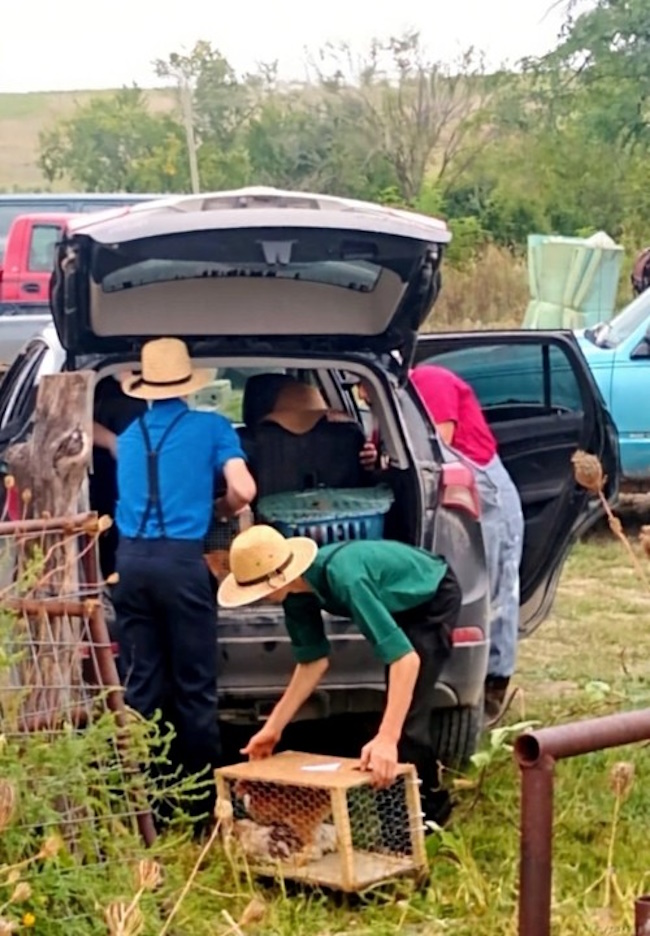
They packed food so they wouldn’t burden their relatives, who did not know they were coming.
They showed up excited, not entitled.
They worked together—each child doing something without being asked.
By the time I arrived at their farm, no one was packed. Not even a little.

This is also very typical of the Amish. Elmer asked if I had a cargo box for all the food they wanted to bring along so their relatives wouldn’t have to feed thirteen extra mouths. We fetched the cargo box from the community’s milk house a few miles away. Upon returning to Elmer’s, no one was ready.
What had they been doing the whole time we were gone? I wondered.
And I really needed the restroom. When I asked to use it, Elmer looked startled.
“All we have is the outhouse—are you sure you’re okay with that?”
He had no idea how many outhouses I’d already used on my travels.

Inside, I found two empty toilet paper rolls and a box of newspaper sheets—not comfortable, but my only option, and workable.
“Contentment is not getting what we want, but being satisfied with what we have,” the old Amish saying goes. Standing in that outhouse, I understood it freshly.
Finally packed and van loaded, we were ready to go. They had their 15-year-old son sit up front with me; typically the man of the house takes shotgun. Henry was prone to car sickness and would be most comfortable in the front seat, where the ride is smoother and the air fresher.

Along the dark, hilly, curvy rural Missouri roads that night, I asked if it was okay for me to play instrumental Christmas music quietly to help me pass the time and stay awake.
Elmer said he’d prefer I not. Curious, I asked him why.
He explained that while instruments themselves are not evil, certain sounds produced by instruments draw the mind away from God.
“Better to not start something,” he said gently, “than to want it more.”
It struck me in that moment:
Gratitude to the Amish is:
Choosing simplicity.
Choosing discipline.
Choosing not to chase the things that pull you off center.
We reached Clark late that night, and, as always, even though we showed up on their doorstep with 14 people unannounced, their family absorbed us like a quilt—finding beds, warming up food, lighting lanterns, welcoming us with no fuss.

And in those small midnight gestures, I saw the heart of Amish Thanksgiving.
Not a table overflowing with dishes.
Not speeches or long prayers.
Not a holiday built on ceremony.
But hands working without complaint.
Hands offering warmth.
Hands opening doors.
Hands serving one another because to them, work itself is worship.
“Those who let God provide will always be satisfied.”
Another proverb lived out right there in that warm welcome.
A Thanksgiving Thought for You
This season, if you want to feel more grounded—more grateful—try this small Amish-inspired practice:
Write down three things you’re thankful for that you can do with your hands this week.
Not what you have.
Not what you wish for.
But what you can create, mend, touch, offer, or carry.
Gratitude doesn’t always need words.
Sometimes it’s as simple as showing up—packing the van, loading the cargo box, doing what needs to be done.
And sometimes, it’s letting your hands say the thank-you your voice never does.
Haley Straw is a barefoot Amish taxi driver turned accidental author, living tucked between the cornfields and her Amish neighbors in rural Missouri. She never planned on writing books, but after enough unusual rides, odd requests, and unforgettable moments, she couldn’t help herself. Now she shares her stories — and a few surprises — at haleystraw.com, where you’ll also find her books and free Amish-inspired goodies.



Too much talk
Isn’t there a proverb that says in the multitude of words that wantest not sin?
Miss Haley Straw or someone at the end of the story wrote: “a barefoot Amish taxi driver”. I hope not. The way it is written the taxi driver is barefoot and she hauls the Amish, because we know she is not Amish and barefoot. As a former long distance truck driver I know the laws for those who are driving for money or pay and commercial operators are not allowed to drive barefoot. There is a good reason for this because if you need to press on the brake pedal very hard and you are barefoot and there is a thorn on the brake pedal or a piece of gravel or something Sharp you’ll really hurt yourself pressing on the brake pedal with a bare foot. This is why you must be wearing shoes with good solid soles or sandals.
If she meant that she only goes barefoot at home then it was written improperly in that sentence above.
When she asked Elmer Glick if she could play some music softly and help her stay awake and pass the time while driving and he refused, I would ask the reader to think who he was putting first– himself and the allegedly spiritual values he wanted to uphold or did he put the entire family and driver at risk of falling asleep while driving if it got too quiet in the van? If certain Amish think it is serious sin to listen to the radio or maybe instrumental music without verbal lyrics, then perhaps they should not be in that vehicle anyway. It just came across to me as a reader that the Amish man was imposing his personal preferences on the driver who was helping him and that was not an expression of thankfulness for returning the appreciation for what she was doing for them. Surely the Amish occasionally hear music if they go shopping at Walmart or other public places and that is no different than voluntarily choosing the ride in a van rather than take their horse and buggy on a trip across the country or simply do without the visitation. And yes I did practice what I preach by taking a 3-week horse and buggy trip when I lived with the Amish near Seymour Missouri back in the 1980s. I preached perfection because the Bible says to be ye perfect as the father in heaven is perfect. We know we will never be perfect but that must be our goal. The strait and narrow path is also a lonely path.
Haley Straw, Part 3 . . .
Hi, Leon. Could you clarify your meaning when you say, “Too much talk”?? My comment disappeared from this site & I’m not sure if you meant me, or if you meant something else. Not mad at you or anything, just would like to know for sure. Thank you. Kelly
rules of the road
Hi Leon,
I appreciate you taking the time to share your thoughts—especially from the perspective of someone who’s spent so many miles on the road. You’re right that commercial drivers have to be mindful of safety. For clarity, I tend to kick off my shoes the moment I’m out of the van, and I take off my shoes while waiting for the Amish. The Amish tease me endlessly for it, because most drivers don’t do that—and many of them enjoy going barefoot at home as well. It’s become one of those lighthearted things we laugh about together.
About the music: every Amish community—and every Amish family—is different. Some are comfortable with soft instrumental audio, and some, like the family in this story, prefer silence. Early on, before I learned to bring along a headphone, I simply honored whatever their preference was. These days, if I need something to keep me alert, I’ll slip in one earbud so I can listen quietly while still keeping my other ear on the road and the needs of my passengers.
At the end of the day, these rides are a partnership. They trust me to get them home safely, and I do my best to respect the traditions and comforts they bring with them. It’s part of what makes this work meaningful to me.
Reply
She literally said that he said that it isn’t evil or a sin. There are just things that they should be aware of and not focusing on things that distract us from God. What does “Perfection” have to do with the article? Also, do you really think a police officer is going to pull her over and then say “Hey I need to look at your feet and make sure you have shoes on? If you don’t you’re gonna be charged with reckless driving.” Don’t think so. Why does there always have to be that one person who tries to cause a problem when the person is sharing experiences with the audience for their entertainment?
Reply
Yes, I’ve had the same experiences, and I’ve felt the same warmth from the bishop’s family, who I’ll be moving in with this January. I’ve noticed that the Amish usually express their feelings quietly—they rarely show excitement or happiness with words, but instead through steady actions of kindness, hospitality, and respect.
That’s why I was honestly caught off guard when he said he was excited to have me over and that he was really looking forward to it. To make the visit easier, he even had one of his truck drivers come pick me up. They invited me to spend the night at their home so we could get to know each other better and so I could meet their son, making sure everything went smoothly before I move in. It all showed how genuinely welcoming and thoughtful they are.
And I just want to say this—I think you should put out a devotional. Truly. You have a gift for writing in a way that brings peace and comfort, and it shows in everything you share. I’m sure you probably get tired of reading my long comments, but I honestly believe a devotional written by you would be a big seller.
God bless you and your family and children enjoy your holidays and continue to be an inspiration and help those around you!
A quiet life is not an empty one -Amish Proverb
Warm Fuzzies
Daniel, you response warms my heart – thank you SO much! I write for people like you, people who understand kindness and the beauty in the simple things.
So, when you move in with the bishop, will you still be able to read Amish America, or will you no longer have access to the internet?
I’ll take your suggestion to heart and appreciate it. Devotions of a Barefoot Amish Taxi Driver – I could see it now – that is an idea I haven’t considered. Thank you! I’d love to hear more of your story – perhaps a devotions book would be something you could write after living among the Amish, too. The world could use more inspiration.
I’m actually writing cookbooks right now – something I never thought I’d do because I’m known for burning food, not cooking it.
May God shower you with many blessings as well as you enter the Amish world.
Warmely, Haley
Reply
Hi Haley,
I saw your response last night, but I was honestly too tired to think straight! Thank you again for everything you shared.
I’m not sure how often I’ll be able to read Amish America once I’m there. Edwin—the bishop—has several computers for his business, but none of them have internet. I might be able to use the computers at the library in Walnut Creek or maybe at Charm Pizza Co., but since I’ll be working from around 6 a.m. to 4 or 5 p.m., I don’t know how often I’ll make it there.
I’ll be joining a more progressive Old Order Amish community in Holmes County, Ohio, so the rules won’t be quite as strict as the ones in your area. I’ve thought about writing a book about my journey, but with how busy I’ll be, I’m not sure how that would go. I do really love the title you came up with for your devotional, though. And as for the cookbook—you’re definitely not the first lady I’ve heard say she can’t cook but still wrote a cookbook!
May God bless you and your family as well. If you’d ever want to talk, I can share the phone number I’ll be using—it’s Edwin’s phone, since I don’t have one of my own. I’d never ask for your number, of course; that would feel strange. But if you ever felt comfortable calling, I’d be glad to share more of my story.