
Amish Mothers Face Riskier Births After A Hospital in Maine Closed Its Maternity Unit

Amish mothers in Aroostook County, Maine are among those who now face increased risks following the closure of a local hospital’s maternity unit – one of 11 to shut down in the past decade in the state.
It’s true that many Amish mothers do give birth at home, with the help of midwives – often Amish women themselves, but also often not.
That doesn’t mean they don’t need hospital care – for potentially difficult births, as well as often for first-born children, to take two examples. Not to mention, a midwife needs to have access to a doctor/hospital services should an emergency or complication arise that she cannot handle.
Houlton Regional Hospital in Aroostook County – the second-largest county east of the Mississippi – shut down its Labor and Delivery Unit in May of 2025.
And that’s part of a trend in the state. A series of closures in recent years has left half of the state’s 34 hospitals without obstetric services. From Houlton it is a drive of an hour to an hour-and-a-half to properly-equipped hospitals in Presque Isle or Bangor.

There is more than one cause, but it seems at the root of the problem is that a generally declining number of births have made it too expensive in some places to justify maintaining full-fledged maternity units.
How it’s impacted Amish mothers in Maine
The story in the Maine Monitor draws attention to the plight of all women in the region, drilling down on specific examples, including the Amish community.
After announcing its maternity ward closure, Houlton hospital staff met with representatives from other Maine hospitals as well as the state’s emergency services to discuss how to handle emergency births, which the hospital had still planned to take on (though as a story in the article suggests, it appears they have not been reliable at that).
That’s when the topic of births in the Amish community arose. One health care professional seemed to believe the Amish would be able to handle things themselves:
They raised concerns about the costs of transferring high-risk patients and gaps in EMS training. They also questioned how some populations, such as the region’s Amish families, who tend to use horses and buggies for travel, would reach hospitals now at least an hour away by car.
According to the meeting minutes, the chief nursing officer said the Amish community was “very tight-knit” and had “developed connections in the community with people who can get them where they need to go.”
However, someone who would know – an actual Amish midwife from the community – objected to that idea:
But Alta Kauffmann, an Amish midwife, questioned this. While most Amish women do not give birth in a hospital, one to two a month typically require hospital assistance, she told The Monitor.
Non-Amish neighbors often helped bring emergency cases to the hospital in Houlton, she said, but those informal arrangements might not be reliable during time-sensitive emergencies.
“It’s true that we’re close knit, but when we need help outside the community, we need it,” Kaufmann said.
“What are we going to do? Where are we going to go when we have an emergency? Are we going to push our way into the hospital and hope that they know what to do — or risk going a lot farther?”
“It’s just a very insecure feeling, because we have no backup plan,” she said.
That is interesting because I think it’s a bit of idealization of the Amish that leads to believing that they will simply handle things themselves.
To be fair, it is rooted in real and important aspects of Amish culture – the practice of mutual aid in the form of a community bearing the burden of a family’s health care bills, or more visual and symbolic events like the barn raising.

So in the chief nursing officer’s defense, there is a lot of truth to the Amish being “tight-knit” and figuring things out for themselves. But Alta Kaufmann delivers some reality – that there are limits to how far that can go.
Amish midwives have had to adapt
A physician named Dr. Rose Fuchs also gives practical examples of how the closure has forced Amish midwives to adapt:
Since the closure, Fuchs said she has seen an increase in the number of patients interested in giving birth at home, as well as patients choosing to be induced to avoid an emergency.
She has also had to assist Amish midwives with more complex cases. In one, a patient had a liver condition that required consistent treatment; another involved a blood issue that could have been fatal.
“Normally they wouldn’t have come to me,” she said, explaining that they would have gone to an OB-GYN at Houlton. “But instead they’re seeing if I can handle it.”
She was able to treat the liver condition with medication and lab monitoring, she said. The other case was too complex, but she was able to get the mother into Northern Light Eastern Maine Medical Center in Bangor, though she said it was a slow process given how busy its staff had become.
“Everything is well that ends well. Those children are all born now and still living and fine,” Fuchs said. “But talk about stress for those of us who take care of these patients.”
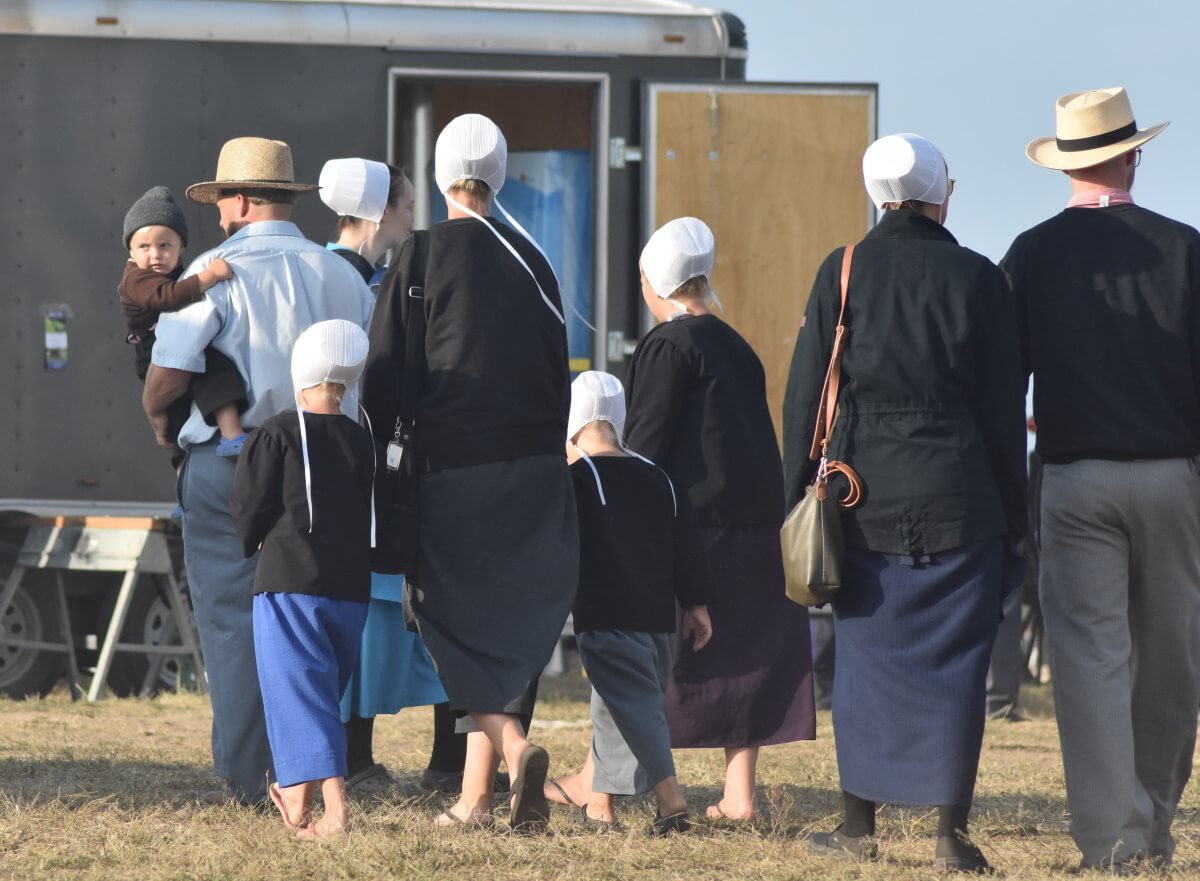
This story draws important attention to several things. One is the idea that the Amish are not independent of the rest of society. They rely on “the rest of us” for many services including health care and transport.
When disruptions happen affecting service industry professionals, they are not necessarily sheltered from that.
Maine is certainly not the most heavily-Amish-populated state, but it has experienced significant growth in its Amish population in recent years.
Massive Aroostook County is home to four separate Amish settlements and over 700 Amish people. Of course the Amish aren’t the only ones affected. They are but a small portion of the mothers in the region that must deal with this challenge – one that’s certainly not unique to Maine.






Hospitals in Maine
My daughter has works at the hospital in Caribou, Maine. She is about to graduate nursing school with a specialty in maternity. This hospital has grown and has hired many people from closed hospitals. Their maternity department is staying open. She has met many Amish in the area she lives in.
Idea
There was a time when all folks had to deal with this because no one had modern medical care like today. But I don’t blame anyone for wanting access to this at a time like that. We never know when an emergency will come up in childbirth. One idea popped into my head just now. What if the Amish in each state take an inventory of how many hospitals there have care for childbirth and where they are. Then, locate Amish communities nearby that are willing to help. If there are no such hospitals in one state, then look at the nearest ones in the next state. These Amish communities can set up a temporary lodging for the pregnant women and families. Sometime before the due date, like a month or more, they can go there and stay with them. Then when it’s time, they can get to the hospital quicker. If it still is a distance away, maybe they can stay the last week or a few days in a hotel near the hospital and make a relaxing vacation trip out of it. Not to forget, we can always pray as well! I hope this helps the Amish and their sweet babies! : )
Maternity units
Many rural hospitals throughout the country are closing their maternity units because cost and lack of doctors and nurses to run them. I live in nebraska and we have had a number of hospital Maternity units close because insurance is not paying enough. Yes I know the amish don’t have insurance and pay cash for the services. Still the country is shocked every time a whole hospital or a unit has to close.
Two aspects...
The Amish aspect: The “tight-knit” aspect of Amish Culture is often overstated and interpreted negatively. As a group, they are in fact resilient and independent. But it’s not fair to suggest they reject (for example) modern health care. They live with it from a thoughtful distance. The same could be said of cars and technology. They participate in modernity thoughtfully, based primarily on its impact on the community, with consideration for the individual.
The Healthcare aspect: The healthcare mess doesn’t just apply to the Amish. It also doesn’t apply only to pregnancy, although birth is an important part. (I live in Maine, and most of my providers are an hour away in a fast vehicle.) The conglomerates that provide health care are driven by efficiency and cost control. Contrary to their rhetoric, decisions are not driven by impact on communities and individuals. They have public relations people to handle that.
The Amish and Englisch don’t.