Amish Breeder Who Killed 4 Unsold Puppies Gets 7 Years Probation, No Jail Time
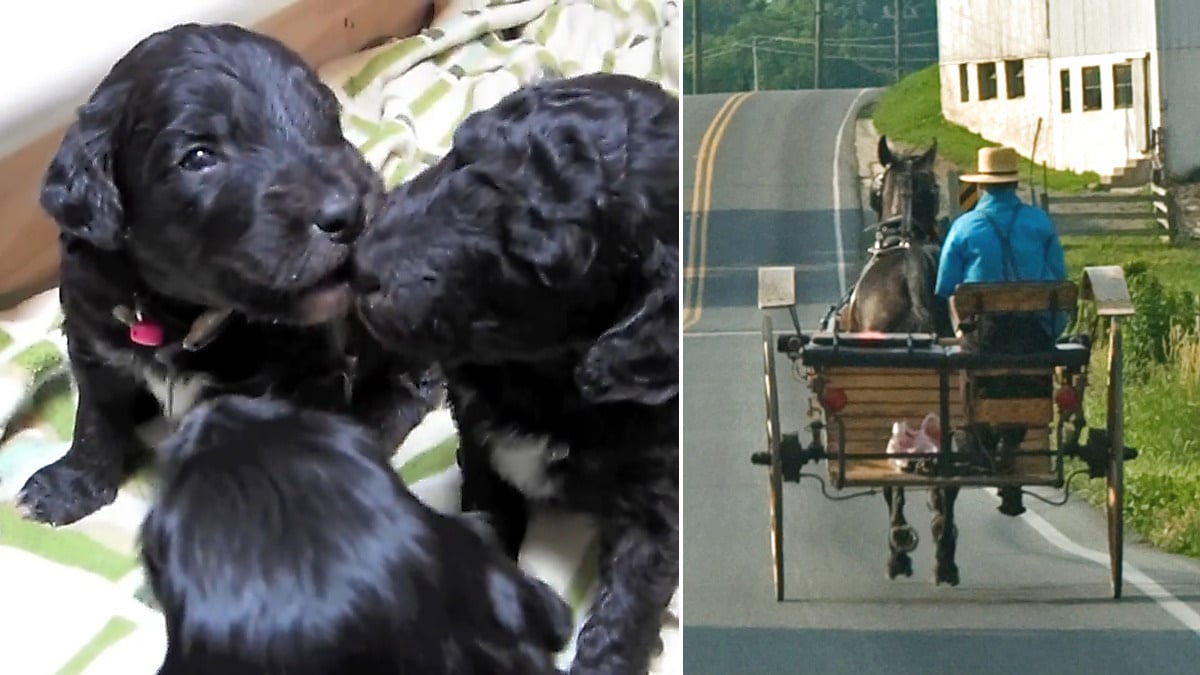
A Lancaster County Amish dog breeder who killed four unsold Sheepadoodle puppies in 2023 has been sentenced to seven years of probation, and no jail time.
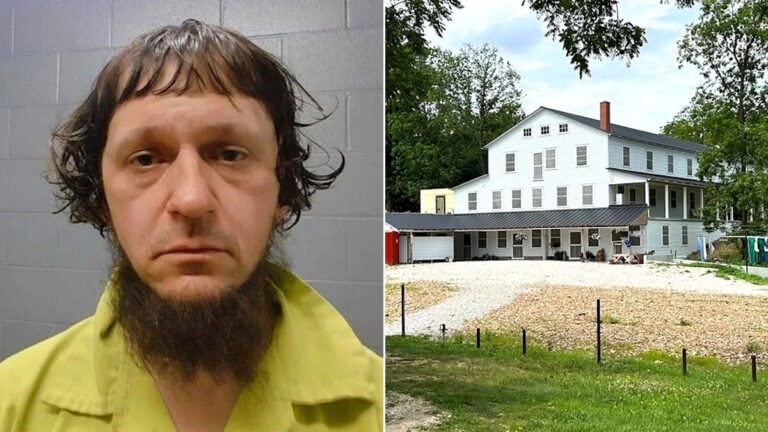
John S. Stoltzfus Jr., 48, of New Holland, pleaded guilty on September 24 to four felony counts of aggravated cruelty to animals and four misdemeanor counts of cruelty to animals, CBS 21 reports.
As noted in our first post on this back in July, the case dates to October 2023, when Stoltzfus called Greenfield Puppies, the site listing his dogs, and asked to have four black Sheepadoodles he’d listed taken offline.
According to police, he said “black puppies are not selling” and that he had put them to sleep himself, without a veterinarian. The website manager reported it, and police came to visit Stoltzfus two days later. The Amishman was charged with four counts of aggravated cruelty to animals.
Previously, the defense had pushed to get him into a diversionary program, which is a track that allows first-time non-violent offenders to avoid prosecution and, typically, have the charges withdrawn.
The Lancaster County District Attorney’s office rejected that twice. His attorney, Robert Barnes, then claimed that the office was waging a “legal war on the Amish.”
He also seemed to suggest, unjustifiably in my view, that what Stoltzfus did as a commercial dog breeder killing four designer animals that weren’t selling was something “that’s been their tradition for centuries.”
The Sentence – And How Stoltzfus Killed The Dogs Is Finally Revealed
Stoltzfus, as mentioned, received seven years’ probation. Along with probation, Stoltzfus must give up his dogs, and is barred from working in the care of animals. The Pennsylvania SPCA removed three dogs from his property. He is allowed to keep farm animals such as horses and cows, plus one farm dog or cat if it is neutered, according to CBS 21.
At the plea hearing, Lancaster County Judge Thomas Sponaugle encouraged Stoltzfus to walk the perimeter of Lancaster County Prison, a few blocks from the courthouse, according to PennLive. The judge told him that would be his view from a cell if he came back to court on another animal abuse matter.
The guilty plea leaves Stoltzfus with a felony record, which the defense had sought to avoid through the Accelerated Rehabilitative Disposition (ARD) program. Under ARD, charges are typically withdrawn once the program’s requirements are met, and a ban on owning dogs is limited to two years.
Skip this next part if you’d rather not learn how Stoltzfus killed his dogs.
Previously, the defense had maintained that “Stoltzfus humanely, painlessly and instantaneously euthanized the puppies in a manner consistent with Pennsylvania law,” though declining to ever describe how, exactly. That information was revealed in this latest court appearance. Defense attorney Bradford Geyer said that Stoltzfus took the puppies on a walk and shot them.
Lawyer Says Religious Freedoms “Under Attack”
Geyer, who was co-counsel with Robert Barnes when the case was in the news in July, told CBS 21 that Stoltzfus is extremely remorseful and did not know what he did was illegal.
Geyer’s argument is that Stoltzfus saw no difference between putting down a dog and putting down any other animal on the farm, something many farmers, Amish or not, handle themselves. From CBS 21:
“Had he known that there’s a different set of laws that apply to dogs [than] in all other areas of animal husbandry, he never would have done it,” Geyer said.
Geyer said it’s an issue of accessibility when it comes to making sure Amish residents, many of whom don’t use the Internet, are aware of all laws and ordinances related to animal care.
Pennsylvania law does draw a line between dogs and other farm animals, though. As noted in our July post, dogs and other small domestic animals can only be euthanized by a licensed veterinarian or licensed technician.
Geyer also returned to the “legal war on the Amish”-style framing: “This is really where their religious freedoms are, quite frankly, under attack,” he said.
He suggested Pennsylvania publish its rules on raising dogs in Pennsylvania Dutch and send them to members of the Amish community.
On the one hand, I would say that is not a terrible idea. That said, the vast majority of Amish would understand them just fine in English, assuming they’re not too heavy on the legalese. If they are, then translating into Pennsylvania Dutch might not help.
While PA Dutch is the primary language for most Amish, they are bilingual if not trilingual. All Amish children are taught in English in school, Amish people do business and interact with outsiders in English regularly, and they primarily use English, not Pennsylvania Dutch, for written communication. Indeed, written Pennsylvania Dutch is still rather an oddity, despite some efforts to produce writings in the primarily oral language.
That noted, PA Dutch interpreters have previously been used in specific legal and medical cases, but those are in live-translation situations such as court cases or when working with young children. And there are some Amish communities where English skills are more lacking. But those tend to be the more isolated and traditional groups, not the Lancaster County Amish or most communities in the state.
Nicole Wilson, director of animal law enforcement at the Pennsylvania SPCA, said a lack of education is not an excuse in this case. Stoltzfus previously held a kennel license, and kennel license holders are given full copies of the regulations, she said.
So if Stoltzfus had the rules in English, given what I’ve noted above, you’d think he’d have been able to read them, assuming again they are not written with overly dense legal jargon that the average American would have difficulty understanding.
I suspect that raising the possibility of ignorance on Stoltzfus’ part, and suggesting it’s a language issue, could also serve as a red herring here.
Whether more outreach to Amish breeders happens (or to dog breeders in general for that matter, let’s remember that there are a lot of non-Amish breeders out there too) – that remains to be seen. District Attorney Heather Adams said she agrees more outreach is needed, though it sounds like there are no funds for it on the county side.
The Pennsylvania SPCA says it is looking for new owners for the dogs seized from Stoltzfus.