
Amish Murder Case: Ruth Miller Waives Right To Jury Trial; Judge Will Deliver Verdict As Early As Next Tuesday
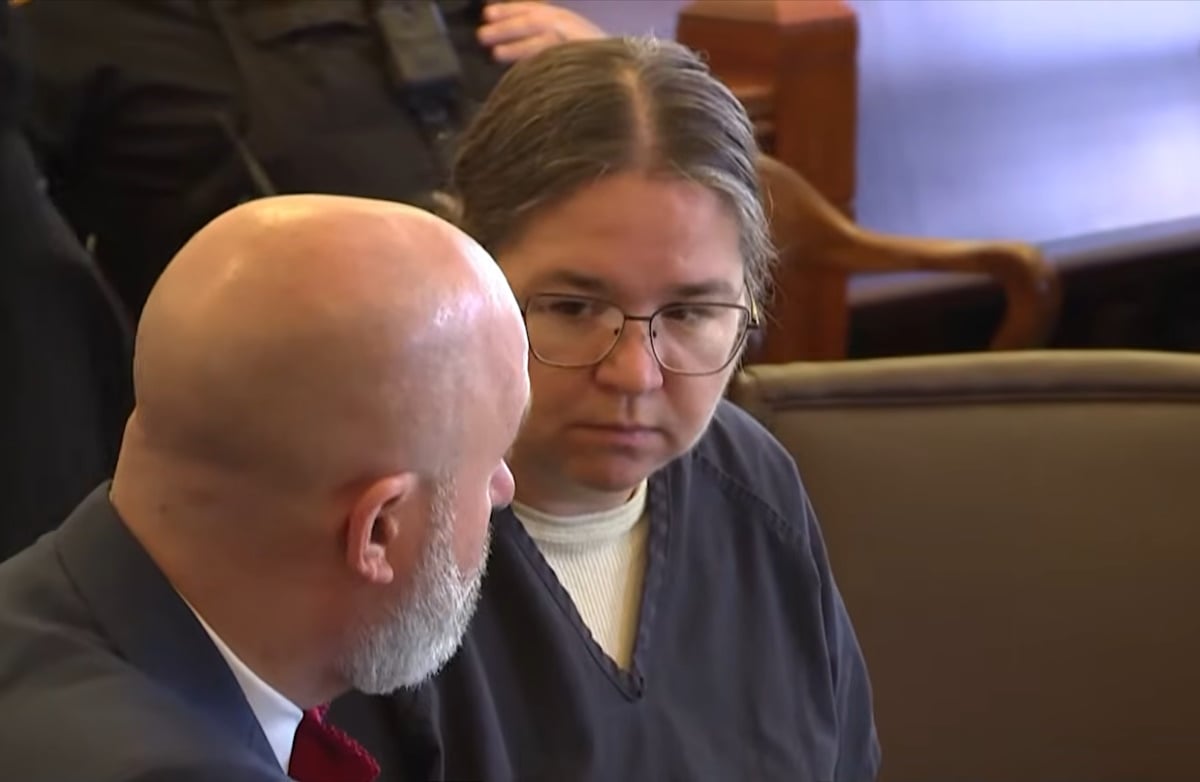
I just finished watching the pre-trial hearing in the Ruth Miller case, intended to be the final hearing before her trial, which had been scheduled for March 4th.
The big news from this is that Ruth has waived her right to a jury trial, instead opting for a bench trial.
That means the judge in the case, Tuscarawas County Judge Michael Ernest, will review the pieces of evidence (exhibits) and deliver a verdict (more on what those pieces of evidence are, below).
Another key thing here is that the three mental health evaluations all concluded that her mental health state was such that she was “not guilty by reason of insanity,” as Ruth Miller’s attorney Ian Friedman summarizes it.
It appears to me the main question at this point – after reviewing the hearing footage (and again, not a lawyer) – is whether Judge Ernest will accept the stipulation of “not guilty by reason of insanity” after reviewing the exhibits.
The Five Exhibits
The hearing was relatively brief, lasting less than 15 minutes. After the judge’s opening remarks about wanting to meet with the attorneys to understand which way things are going before trial, he explained that he has been informed that both sides have informed him that he should expect a bench trial.
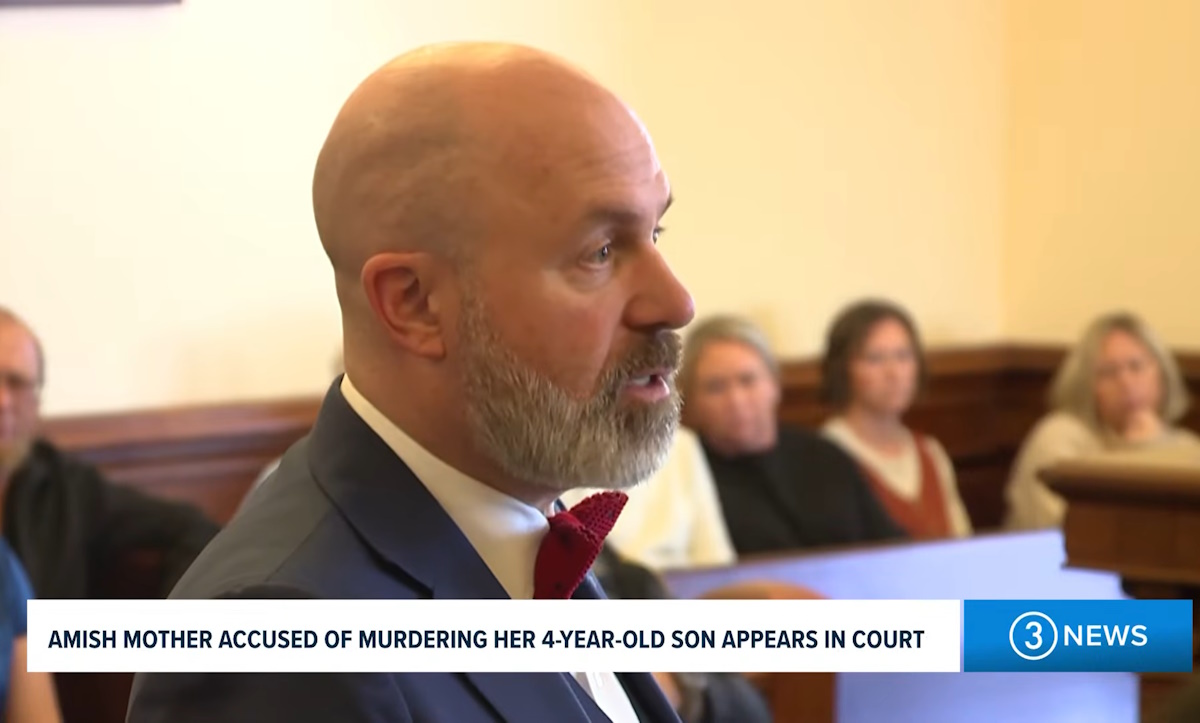
The attorney for Ruth Miller, Ian Friedman, then confirmed that he is correct that there will be a waiver of jury trial. He then briefly reviews the five exhibits that the judge will be taking into consideration. They are:
- “Mostly made up of discovery, police reports and the like”
- Mental status evaluation by Dr. Hrinko (report called for by District 9)
- Mental status evaluation by Dr. Hatters-Friedman (called for by the defense, Attorney Friedman notes there is no relation to the doctor)
- Mental status evaluation by Dr. Marett (engaged by the State of Ohio)
- Zip drive containing statements that were made by Ruth Miller to Captain Fisher on the date of the incident.
Friedman notes that the three mental health reports “all concluded and opined that Ruth Miller was not guilty by reason of insanity at the time of the conduct in this case and could not appreciate the wrongfulness of her conduct at this time”.
The Attorneys Agree
Attorney Friedman further states [italics added]:
“Attorney Grant and I are not calling certain witnesses for the bench trial, as we’ll be relying upon your evaluation of the records that are being submitted to you, that if you accept the stipulation by the parties that the hearing with Ruth Miller was in fact, just for brevity’s sake, NGRI [not guilty by reason of insanity)] at the time, we will then move on to placement hearing at the time that your Honor has set.”
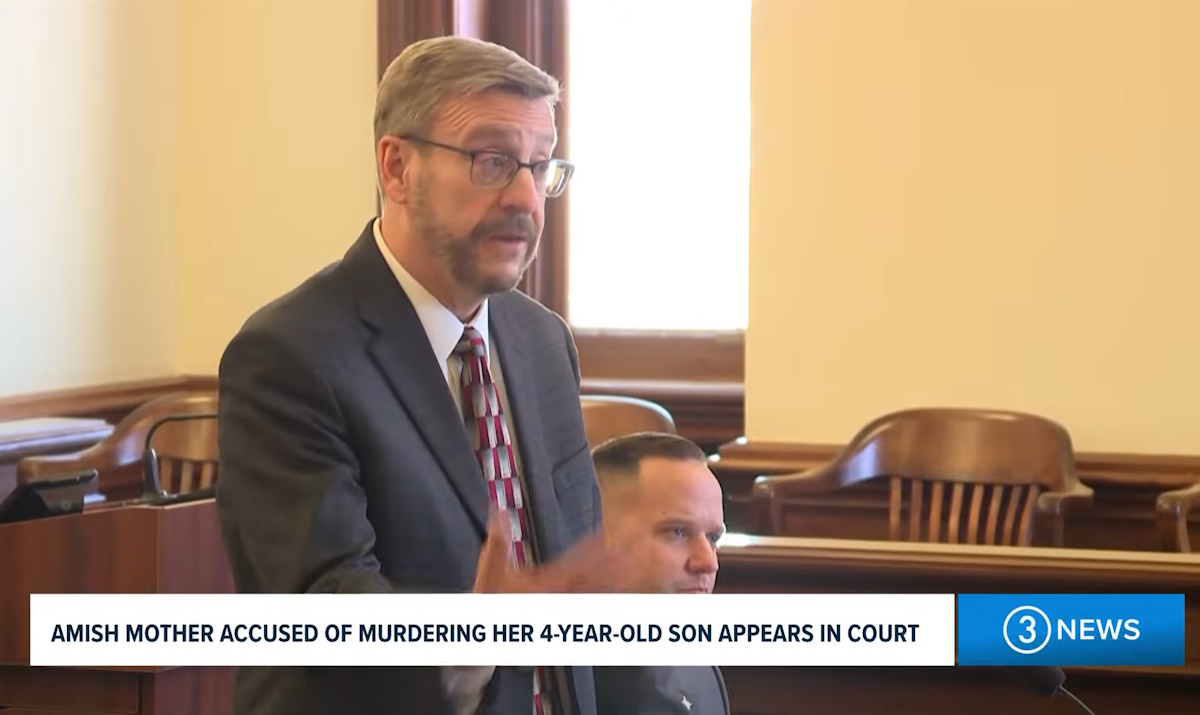
The attorney representing the State of Ohio (I believe the aforementioned Attorney Grant, as a prior attorney has apparently left the case) then notes that Friedman “did accurately depict our discussions”.
He adds the following in agreement, and explaining why they have decided to submit the case to the judge for a non-jury trial:
“Given the findings, that all three opined for various reasons that Mrs. Miller did not appreciate the wrongfulness of her conduct, and was suffering from a severe mental illness or defect at the time of the offense, given that, we have decided to submit this case to you, for a non-jury trial, for you to review this matter and make an appropriate finding.”
Essentially it seems that given that all three experts – one each for the defense, prosecution, and the court – found Ruth Miller to be suffering from a severe mental condition at the time of the actions that led to her son’s death, in acknowledgement of this both sides have decided to turn over the case to the judge (with Ruth’s decision to waive a jury trial, of course).
Why A Bench Trial?
There can be multiple reasons for opting for a bench trial, and again I’m not going to try to pose as a legal expert here.
But in essence it seems that since the key facts in the case are not disputed (both sides agree Ruth Miller was responsible for the offense), and since there is no dispute about her mental state based on the experts’ evaluations, then it is deemed best for a judge to, in theory, non-emotionally review the exhibits in the case, see if he agrees with the mental illness stipulation, and deliver a decision.
Other benefits of a bench trial (again, based on my basic research) is a faster conclusion of the case and more predictable application of the law.
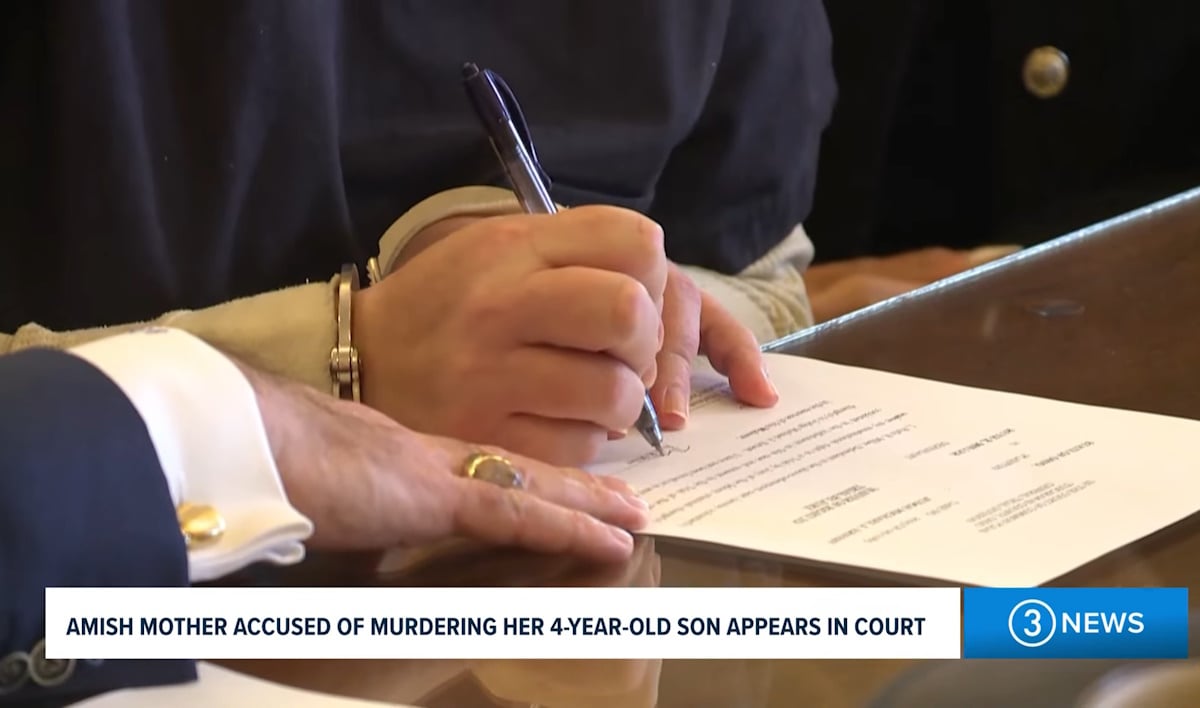
Ruth Miller Officially Waives Her Right To Jury Trial
Judge Ernest then explained to Ruth what it would entail if she were to waive her right to a jury trial, and that she had an “absolute right” to such a trial.
He went on to briefly explain the jury selection process, their deliberation at the end of the case and the need for all 12 jurors to be unanimous in a guilty verdict.
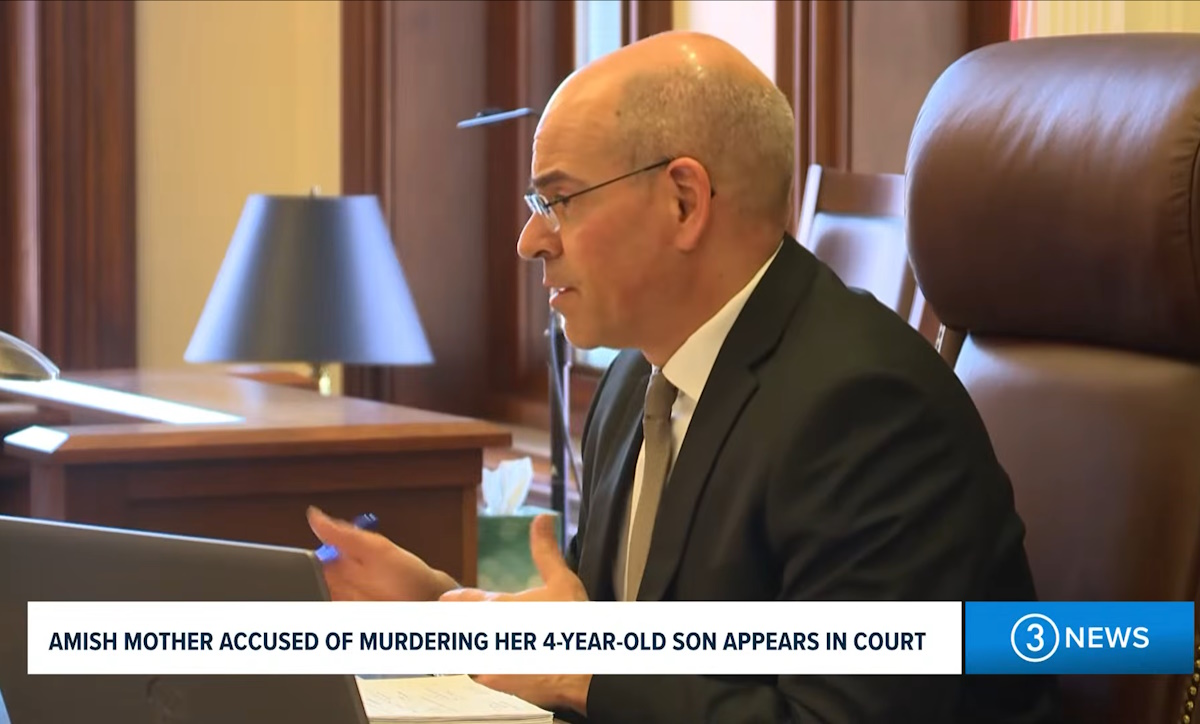
He noted that it is key is that one makes the decision to waive this right “knowingly, intelligently, and voluntarily.”
He then asked a series of related questions, essentially asking if Ruth has had an opportunity to discuss the matter and if it was her intention to waive the right to a jury trial. Ruth simply replied “yes” to each.
Amish Observers In Court – and When To Expect A Decision
Just two additional notes. There were at least two, and perhaps several Amish people in attendance this time. In prior appearances I had not noticed anyone of visibly Amish or Plain background in the courtroom.
And as to when a decision will come in, attorney Friedman asked for confirmation that they should expect a verdict Tuesday (March 10). This is where there’s a bit of a question.
It sounds like the judge says “exactly”, but then the footage seems to skip, to the judge explaining that:
“…I have not seen what your expert has generated, or what the State of Ohio has generated in this case. I heard what they said, so it’s not going to be a surprise as far as their conclusion, I heart Attorney Friedman. So I’m anticipating where this is going, but I want to actually read it.”
So that sounds like it may be as early as Tuesday, but that the judge is not fully committing to that given that he has not reviewed certain of the exhibits yet. That’s how I interpret that exchange, again noting the odd skip in the footage.






Ruth Miller Requests Bench Trial
Erik, what do YOU think will happen in this case?? How do you think the judge will rule?? Do you know what his record (convictions vs. acquittals) has been like over the years?? Just curious . . .
Hi KD, well you may well have seen the verdict. I saw you asked this and I meant to reply but got distracted, and was reminded today when the decision came down.
I didn’t know anything about the judge’s record, but the entire feel I had from watching the pre-trial hearing was that the judge would likely go with the three experts’ evaluation and agree with the not guilty by insanity judgment. The feel of watching the proceedings was that both the defense and prosecution were on the same page, or about as on the same page as a defense and prosecution can be.And I don’t know how much it factors in but from the start the judge has struck me as an empathetic person, though I trust he ruled objectively. So all things considered, today’s verdict I don’t think was really a surprise for those following the case.