
Amish Volleyball Has Gotten Bigger Than You Thought – 4 Takeaways From A New Report
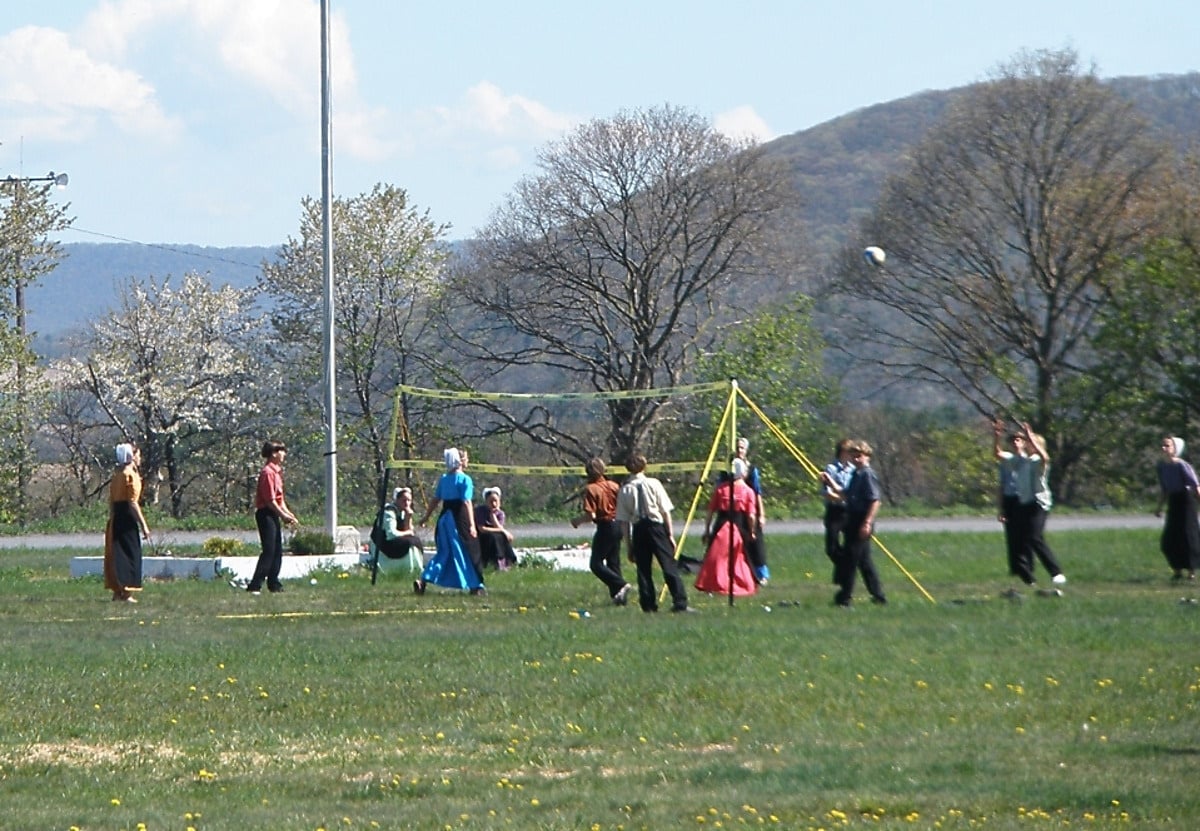
The Philadelphia Inquirer ran a long piece over the weekend on competitive Amish volleyball, reported from a tournament at Intercourse Community Park in Lancaster County, Pennsylvania back in June. I spoke to reporter Jason Nark on the Amish sports topic; his full report is here.
A few things stood out to me – here are four.
1. Volleyball Holds A Special Function In Amish Culture
Volleyball is the game you’ll most often see at Amish youth gatherings, at least in Lancaster County and communities like it.
Part of the reason is simple: girls can easily play volleyball too. It makes it a sport for easy socializing and interaction between the sexes. More on why that’s important in a minute. As to the growth of competitive volleyball as seen most obviously in these tournaments, Nark got different answers:
The Amish in Pennsylvania, for reasons few could fully explain, love competitive volleyball. Some simply shrugged their shoulders when asked why.
Others said they play volleyball because previous generations played too, a skill they learned just by watching, much the same as shoeing buggy horses or baking whoopie pies.
“I guess it’s just part of our culture,” said Ray Beiler, the tournament’s organizer. ”Competition-wise, though, it’s slow-pitch and volleyball, but volleyball is probably the biggest.”
But traditionally, a big part of the function of youth group gatherings is as a venue to find a special someone who eventually becomes a marriage partner.
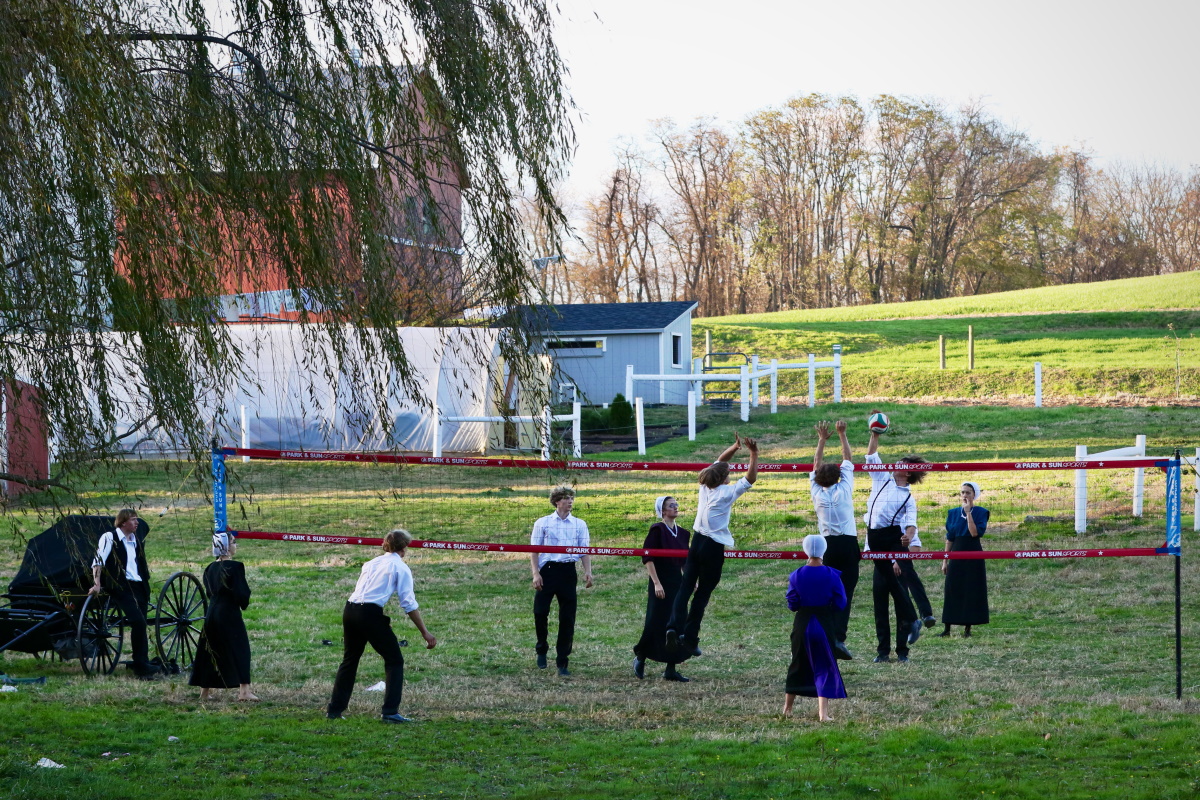
Volleyball is a game that provides for that interaction. Guys get a chance to show off in front of the girls. Good-natured ribbing comes from all sides. Everyone shakes hands and congratulates on a good game afterwards. To give you the flavor, here’s an excerpt from my post on watching Amish youth play volleyball at a Sunday gathering:
Teams are mixed, with boys and girls on both sides. Some were at or near age 16, and you had others ranging into their 20s. Volleyball may begin in the afternoon and carry on after the supper meal, which takes place around 5.
This isn’t just your everyday tame volleyball game—there is an intensity to make big plays with dives and flying spikes common.
Shortly after arriving, I witnessed a young man leap, sail towards the net and bring his arm down like a mallet on the ball—spiking it directly into the face of a girl on the other team and sending the ball careening off into the out-of-bounds area.
She was surprisingly unfazed by the force of the impact and continued on with a laugh.
There is a bit of a competitive spirit, with some minor “trash talk” happening, though mild compared to non-Amish standards, and done all in fun. What you hear a lot more often are encouraging words—“Good effort”, “shake it off”.
In essence it’s a sport well-rooted and widely accepted in many communities – so to see it grow to this level in arguably the most progressive large Amish settlement is not really a surprise.
2. It’s Bigger Than You Might Think
When it comes to the tournaments, this isn’t a few kids batting a ball around a backyard. The tournament drew hundreds of players, some from the state next-door, and a few thousand spectators for the Saturday night final:
On this beautiful afternoon in late June, the coed competitors were among the hundreds of young Amish players from Pennsylvania, Ohio, and other states who converged on Intercourse Community Park, about 60 miles west of Philadelphia, in Lancaster County, for the annual volleyball tournament.
Hundreds gathered around the courts in lawn chairs to watch, including Amish men with long beards beside “English” children in sneakers and sports jerseys.
There are real trophies to be won, described as “tall trophies housed in an exhibition room, with silver and gold volleyballs fastened to the tops,” along with – maybe – bragging rights. It might strike you as odd to hear about “bragging” in an Amish context, but it’s done in fun, and not all Amish are as outwardly humble as others.
3. Some Players Are Good Enough To Go Further – And Choose Not To
Some of these kids can really play. And in another culture, that might have them thinking along different lines.
Organizer Ray Beiler told the Inquirer that a college coach attended a tournament and remarked that a number of the players could compete beyond it.
Steven Nolt of the Young Center for Anabaptist and Pietist Studies at Elizabethtown College addressed what pursuing that would involve:
…Nolt said it’s unlikely that even the most talented volleyball players would pursue the sport more competitively.
“It would be hard to imagine,” Nolt said. “They’d be making a choice not to join the Amish.”
There might be the occasional person that is drawn away from an Amish life because of sports. We’ve seen some examples of former Amish people who have done just that – a man named Melvin Byler, mentioned in the Inquirer piece, left to pursue rodeo. But it’s pretty rare. Rare enough that it’s not really a community concern, from what I can tell.
4. Pickleball Has Arrived On The Scene
One of the newer games showing up in Amish Country is pickleball. The Inquirer notes it’s caught on fast. It appeared at the volleyball event, and has made inroads in the community:
Chris Haley oversaw the pickleball tournament at the Intercourse Heritage Days, where there are new courts.
He said the Amish quickly took up that sport, too, and some have makeshift courts at their house.
“They are talented and determined,” Haley said.
Pickleball’s just one of many sports seen among the Amish, though. The Amish play a wide range of sports, and what you’ll see depends a lot on the community.
Basketball turns up in communities in Indiana, or in Geauga County, Ohio – where there’s even an annual Amish-vs-Yankee charity game. Soccer has become popular at some Amish schools as a cold-weather game (I had a chance to join in a game with Lancaster schoolchildren some time ago).
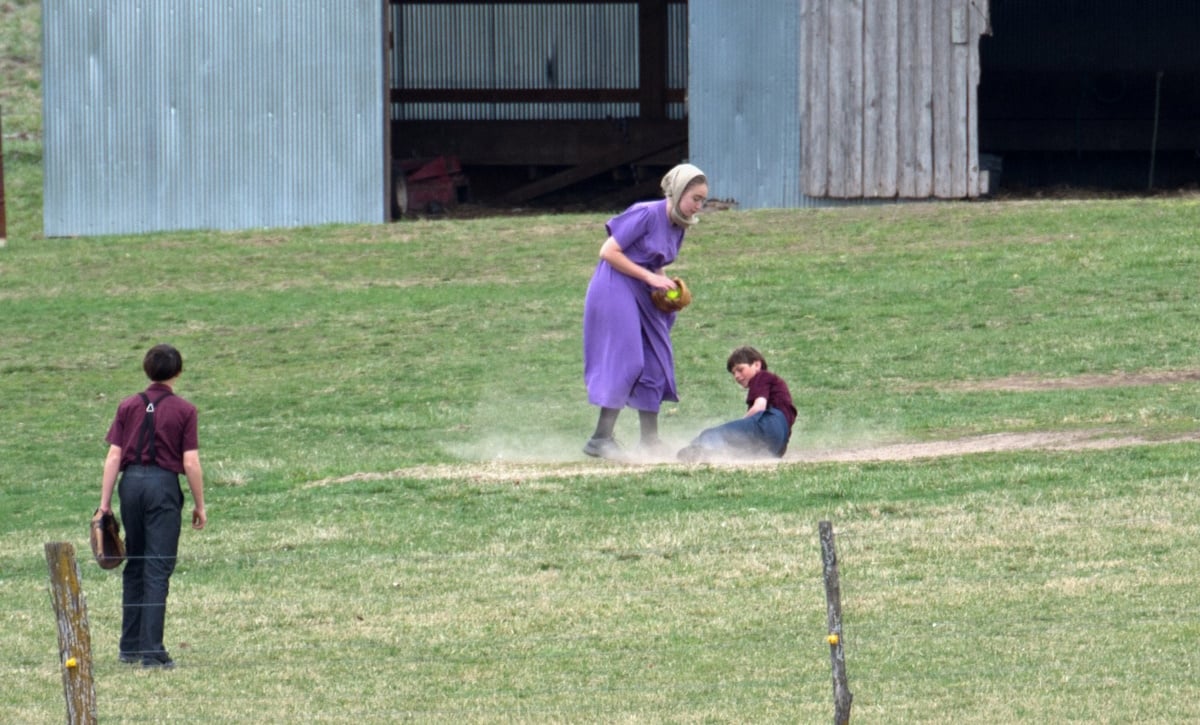
Softball is a classic which remains common in a lot of places (even among some Amish adults). Add those to other newer sports like spikeball and can jam, on top of traditional pastimes like cornerball.
This Inquirer piece is really about Lancaster County and communities like it. That’s where these big tournaments happen. You’ll see far less of this in smaller conservative settlements, for obvious reasons of scale, and tradition. Sports in general tend to be more common in progressive communities.

Memories of Volleyball
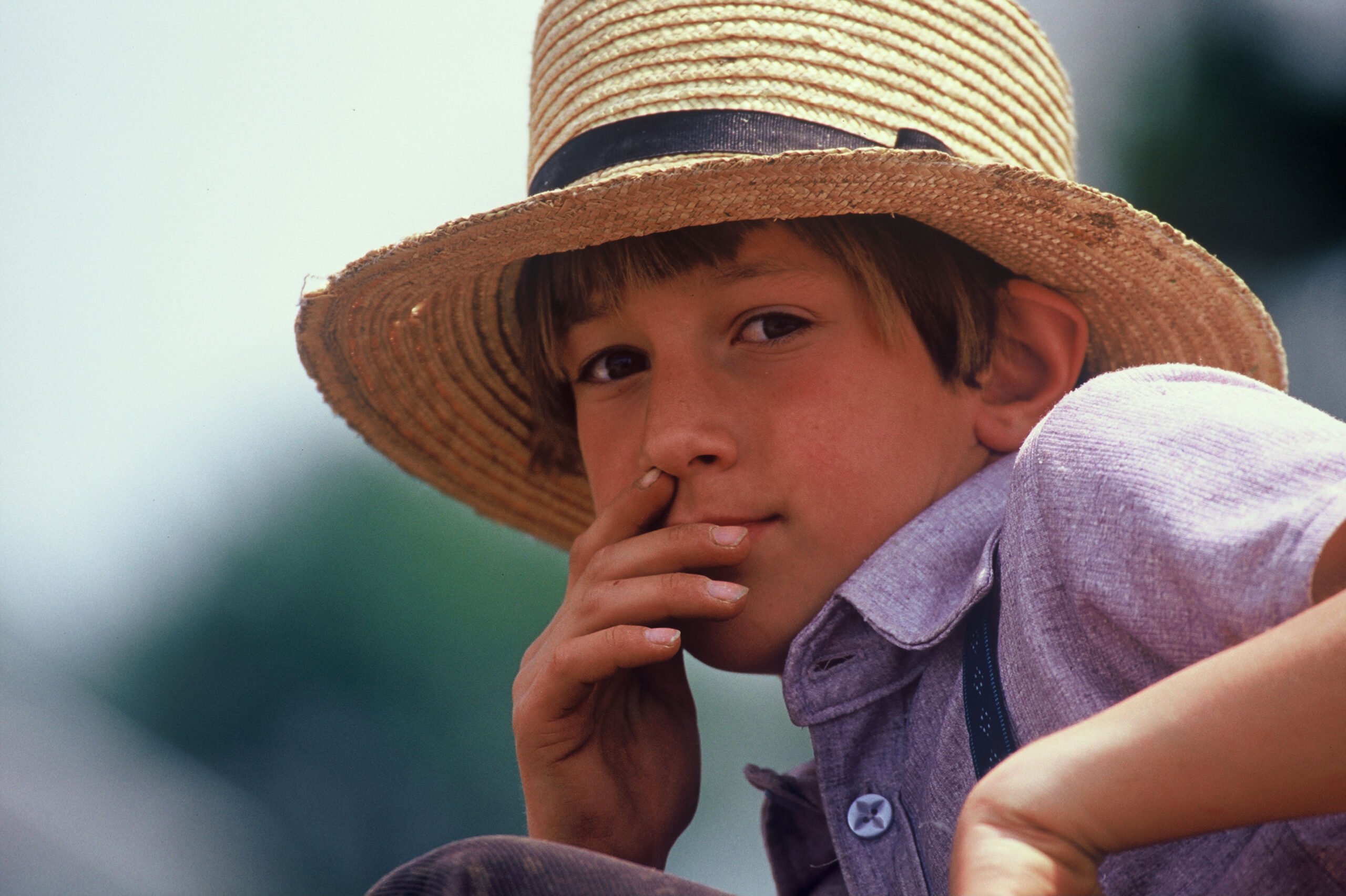
Volleyball was the prevailing sport at the youth suppers and singing. But I was clumsy. I still helped. But it seemed I could not get a girlfriend until I quit volleyball,and pitched quoits instead. It seemed I always tripped and fell in front of the girl I was trying to impress
Sport und Zugehörigkeit
In der Nicht-Amischen Gesellschaft wird Sport oft ein Mittel, andere bzw Nichtfähige auszuschließen. Als Autist wurde ich persönlich oft unter den Letzten, die von den Teams in der Schule gewählt wurden.
Ich kann mir vorstellen, das kommt aber unter den Amischen wohl viel seltener vor, und das betrachte ich als einen wahren Segen!
“It’s only a game” hieß es, wenn ich als kleines Kind ausgelacht und verhöhnt wurde. Tja, die Mitschüler dagegen schienen die gute Botschaft nie erhalten zu haben! Sobald ich meinen Abschluss gemacht hatte und das Zeugnis in derHand hielt, blickte ich nie zurück. Hoffentlich bleiben Sport und Zugehörigkeit unter den Amischen in dieser Hinsicht getrennt: Sport dient der Kameraderie, Zugehörigkeit soll halt unantastbar verbleiben.