
This Amish Shop Went From One Hay Wagon In 1994 To 22,000 Square Feet
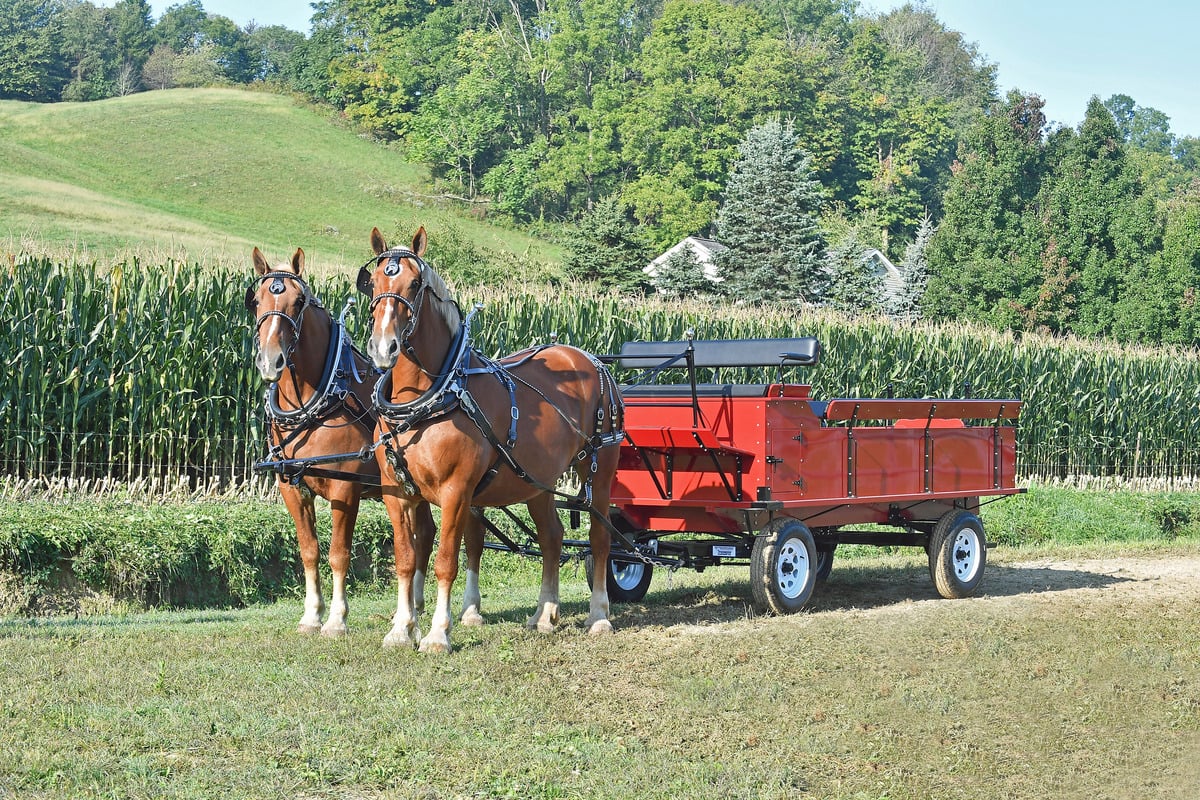
In today’s guest post, Fred Hendricks shares a closer look at Weaver Wagons, an Ohio Amish-owned wagon and carriage business.
Ervin Weaver could not have envisioned the success of this venture when he built the first wagon in 1994 – simple, but quality flatbed to haul hay.
Ervin and his family operated a medium sized dairy farm along with other livestock near Dalton, Ohio. The proximity of their farm to former Pioneer Equipment allowed him to work at Pioneer until his oldest sons were able to be employed.
Soon after building the first wagon bed, Ervin struck a business relationship with Pioneer. Through this arrangement, Pioneer began selling Weaver Farm Wagons on Pioneer manufactured running gear. This worked well as Pioneer customers were eager to buy a completed wagon instead of building their own.
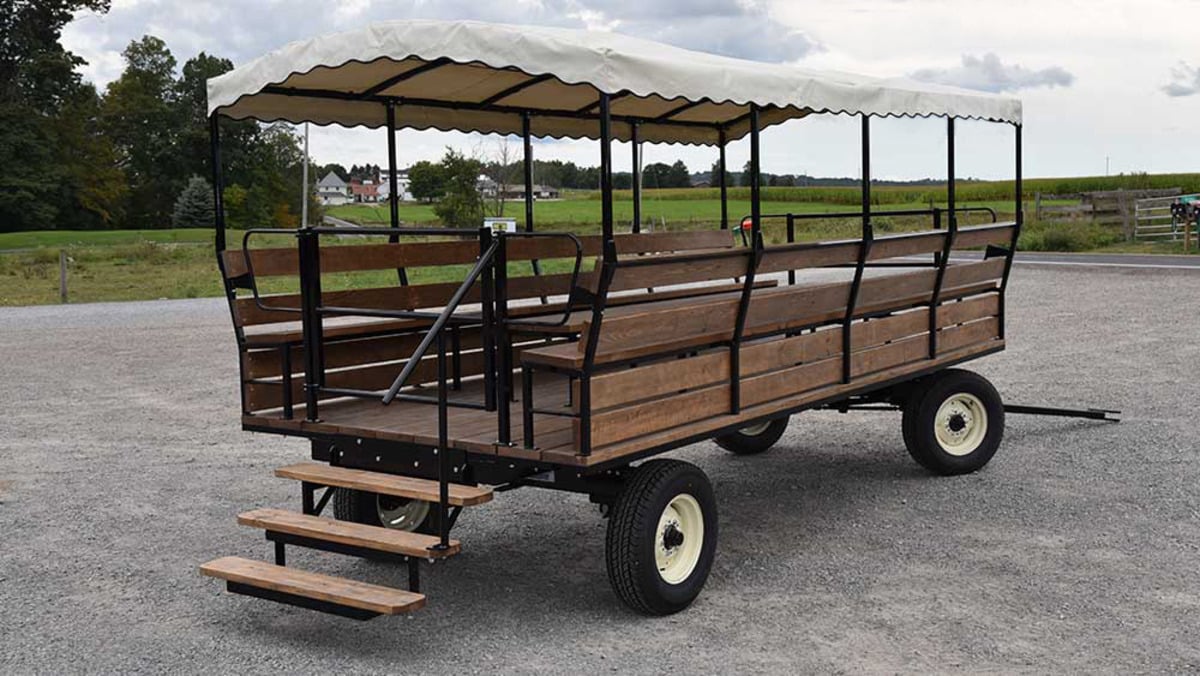
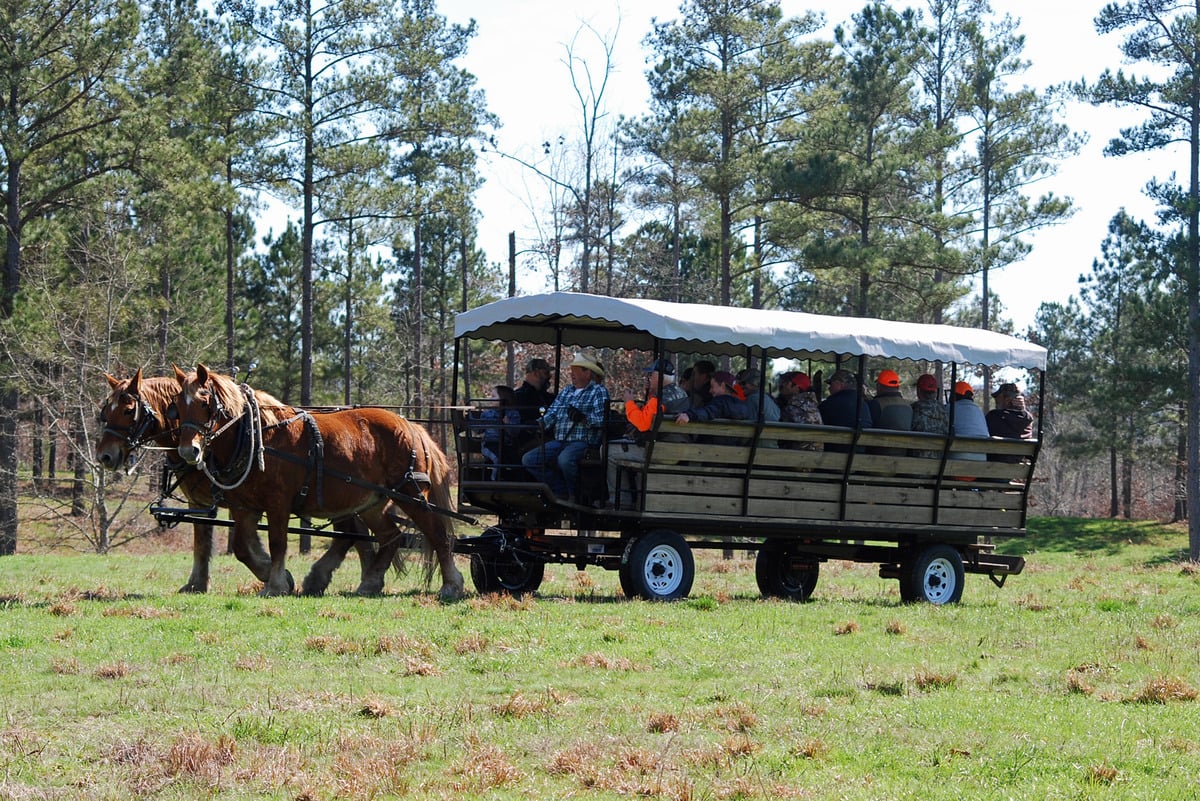
The Weaver Farm Wagon market matured because of Pioneer’s expanded growth. This increased business provided the opportunity for Ervin’s sons to assist in the new venture. The product line increased to include Hitch Wagons, Parade & Trail Wagons, Farm Wagons, People Haulers and more. A popular item among their offering are wagons to haul tables and benches for the greater Plain Community.
In January 2014, Ervin passed the business onto his sons, Emery, and Vernon. “We were excited when Dad offered the business to Vernon and me. With this transition, we changed the name from Weaver Farm Wagons to Weaver Wagons & Custom Designs, LLC,” Emery stated. Under the new ownership manufacturing facilities and restoration capabilities have expanded. In addition, new products along with complimentary services were added.
Growing Up Building Wagons
“Dad was in construction for fifteen years before he purchased the dairy farm. And then, he worked at Pioneer Equipment several years prior to taking over the farming operation full-time. Dad’s experience in construction helped in making the first hay wagon. More importantly, he was a natural at building high quality, durable items,” Emery says.
Emery added, “I was ten years old when Dad started the business as a sideline to farming. I grew up building wagons and it was something I always enjoyed. Working for Dad was the only full-time job I ever had. Vernon was employed full-time at Pioneer Equipment for fifteen years. He then came home to provide help in the farm shop. Vernon and I were fortunate to work alongside Dad and learn from his gifted skills.”
Inside the Shop
The Weaver brothers have divided responsibilities in critical aspects of the business. However, they start each day with a brief meeting to be sure everything is coordinated while maintaining the work schedule.
Emery oversees the folding top building and sewing department. He also supervises the final assembly of the wagons along with the paint department. In addition, Emery handles all aspects of marketing, sales, and business administration.
Vernon is the shop foreman along with being a master metal machinist. His work and oversight includes manufacturing wagon gears and parts. Stainless steel has become an integral metal component that Vernon supervises. Equipment to polish stainless steel was installed to replace chrome plated metal. “Stainless steel eliminates rust and corrosion that often results with chrome. The appearance of polished stainless steel is every bit as good,” Vernon said.
The distinctive look of Weaver Wagons is accomplished using poplar wood on the natural finished wagons. PVC material is used for the painted ones to reduce the chances of cracking. To reduce cracking, PVC material is applied to the surfaces prior to painting. “Our employees add a complex eight-step painting process,” Emery says.
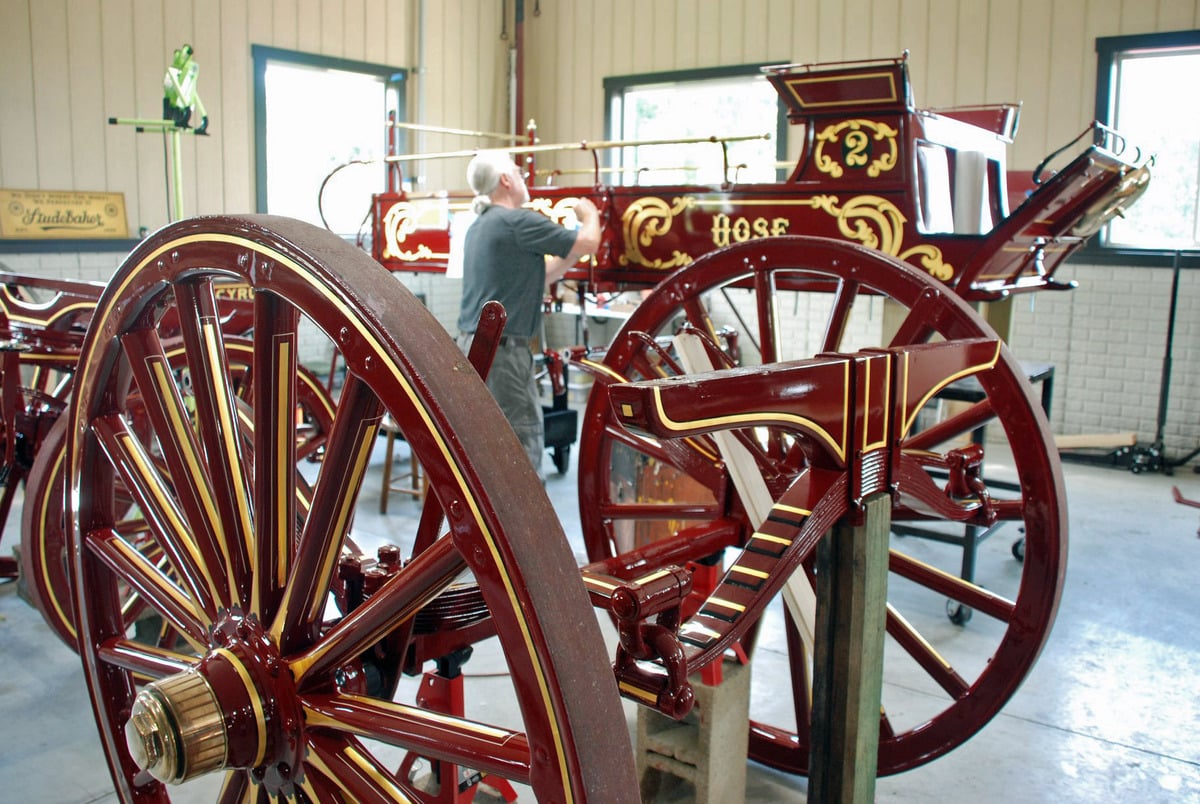
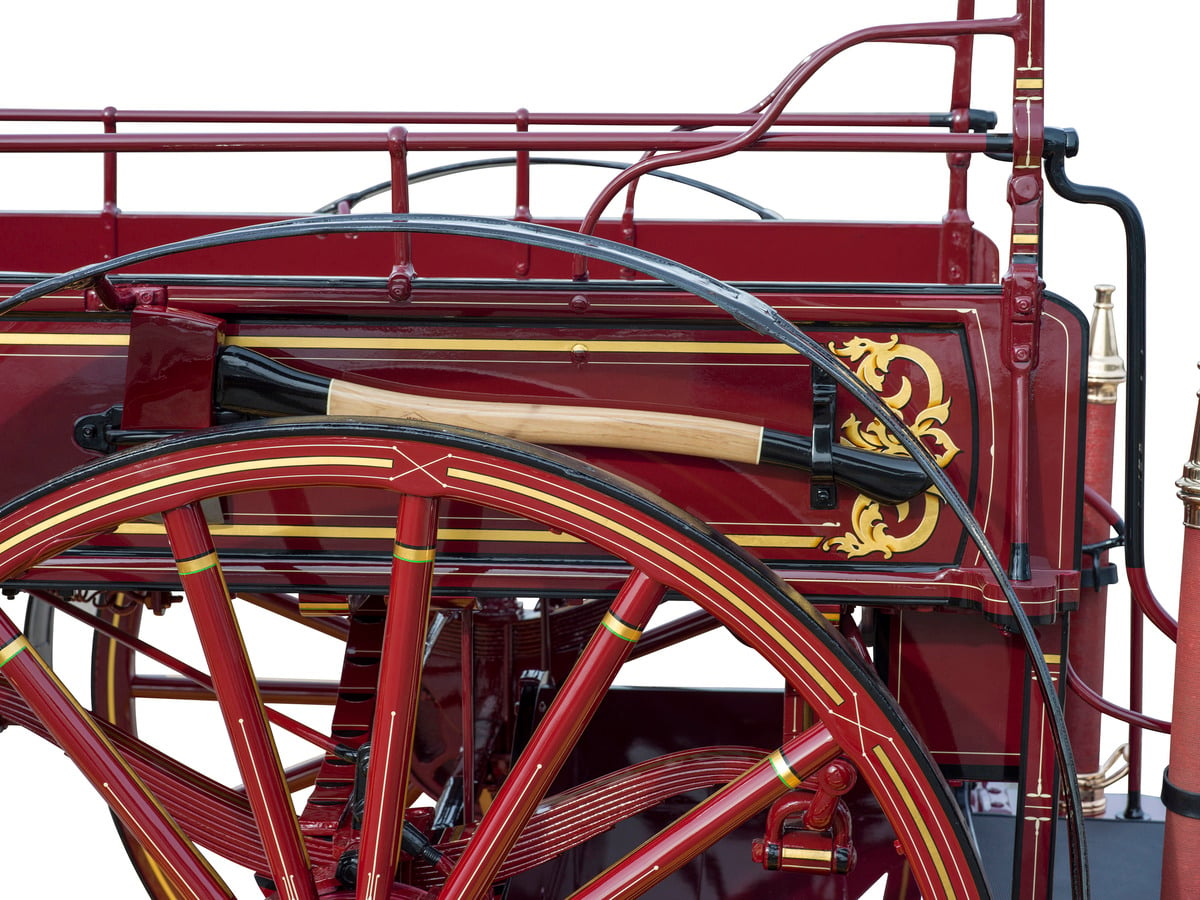
He continued, “An option is then offered for vinyl graphics that are completed in-house. Or Wayne Troyer, a freelance artist, hand-paints the pin-striping to achieve a finished product.” With the expert paint process, Weaver Wagons appear to be made from metal.
Restoration Services
While horse-drawn wagons are built to last, deterioration of both wood and metal will result with age and usage. Acquiring a quality replacement wagon can be prohibitive in cost.
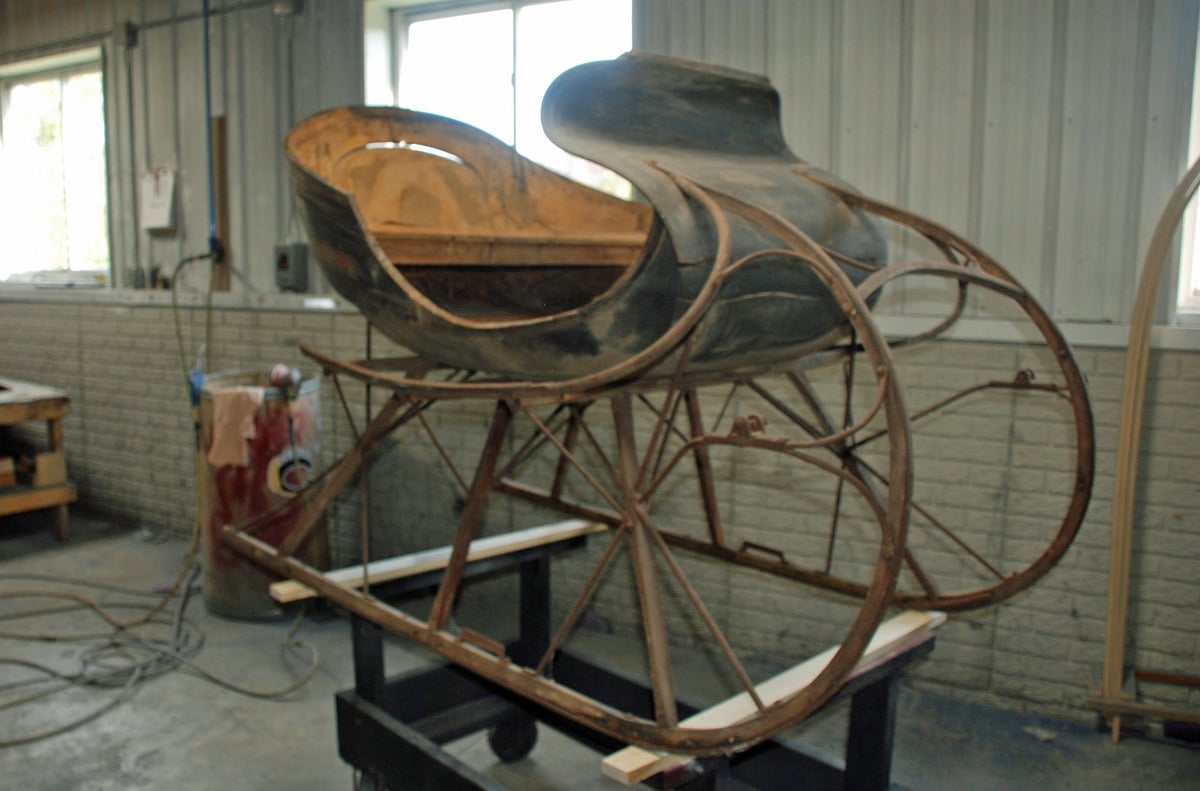
Restoration has become an important component of the Weaver Wagon business. Emery explained, “We strive to provide a short turnaround time when we agree to a restoration project. We’ve had jobs come to us because other shops required a few years lead time. Our dedicated team of employees can complete a job in a few months, or a year depending on the associated challenges.”
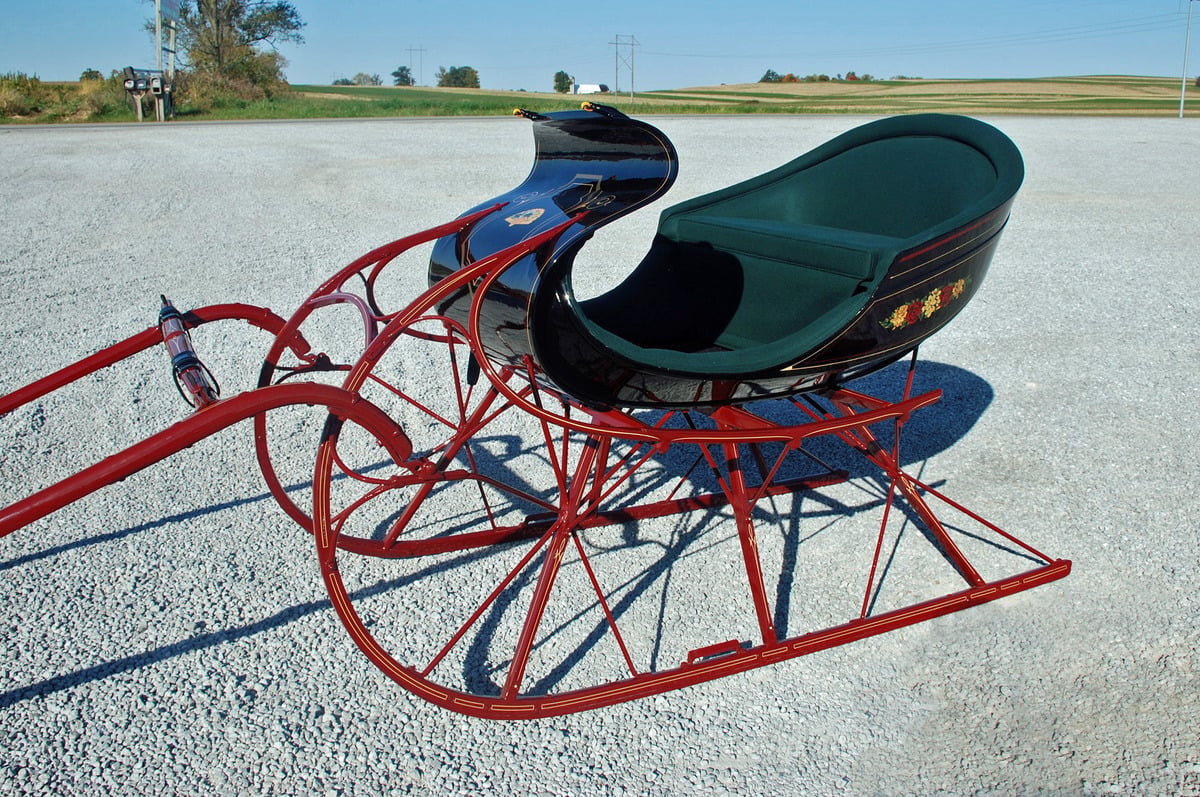
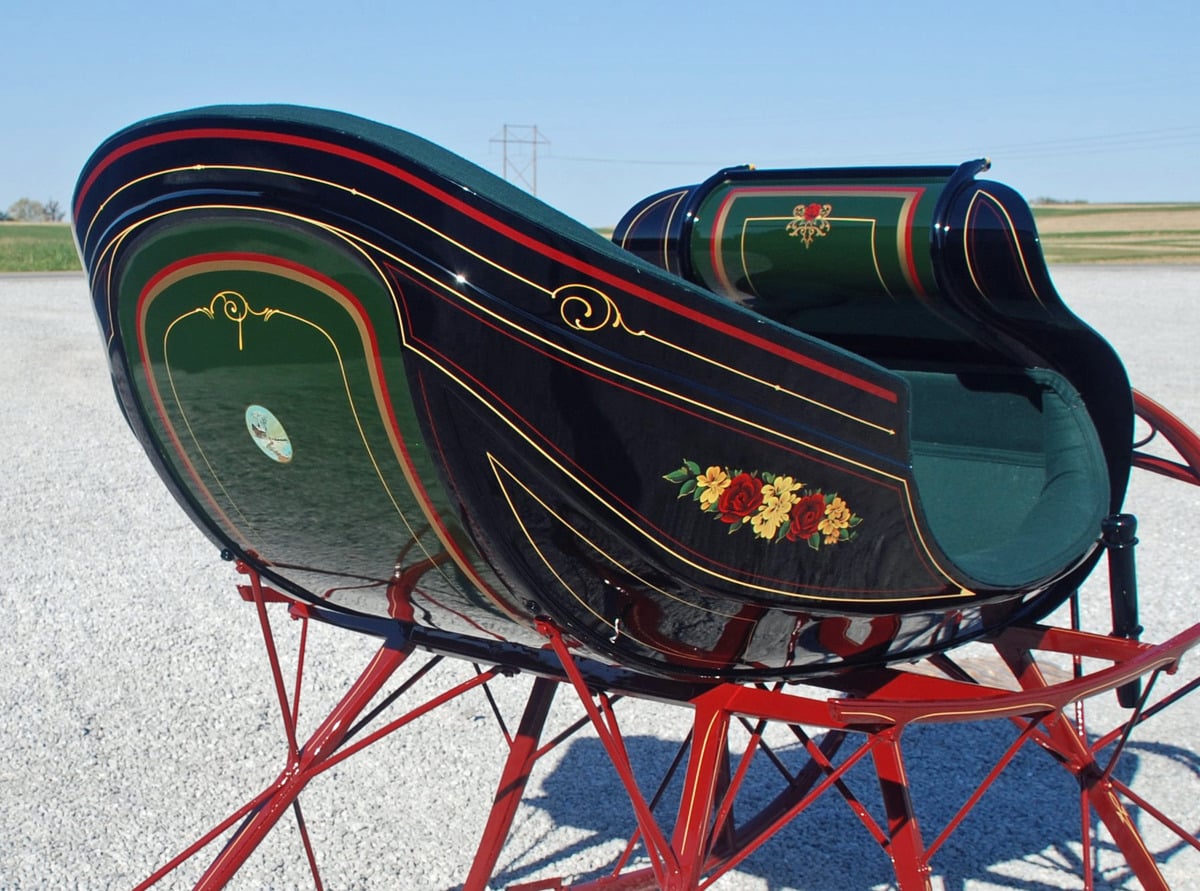
The qualified team at Weaver Wagons has restored numerous hitch wagons. “As with many of our restored hitch wagons, we update by adding stainless steel hardware. Restored wagons will usually receive expert hand-painted pin-striping treatment. We have restored a variety of horse-drawn units including show carts, sleighs, Vis-à-Vis, antique firefighting equipment, and many more,” Emery related.
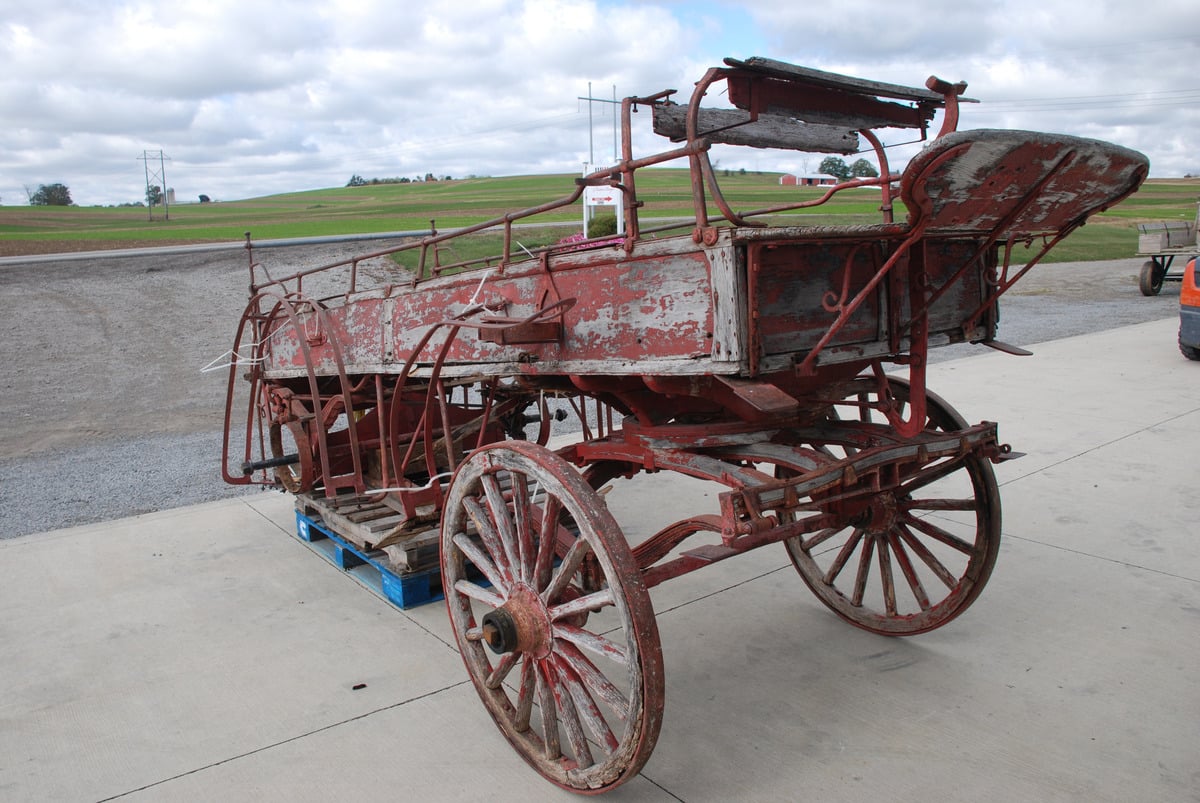
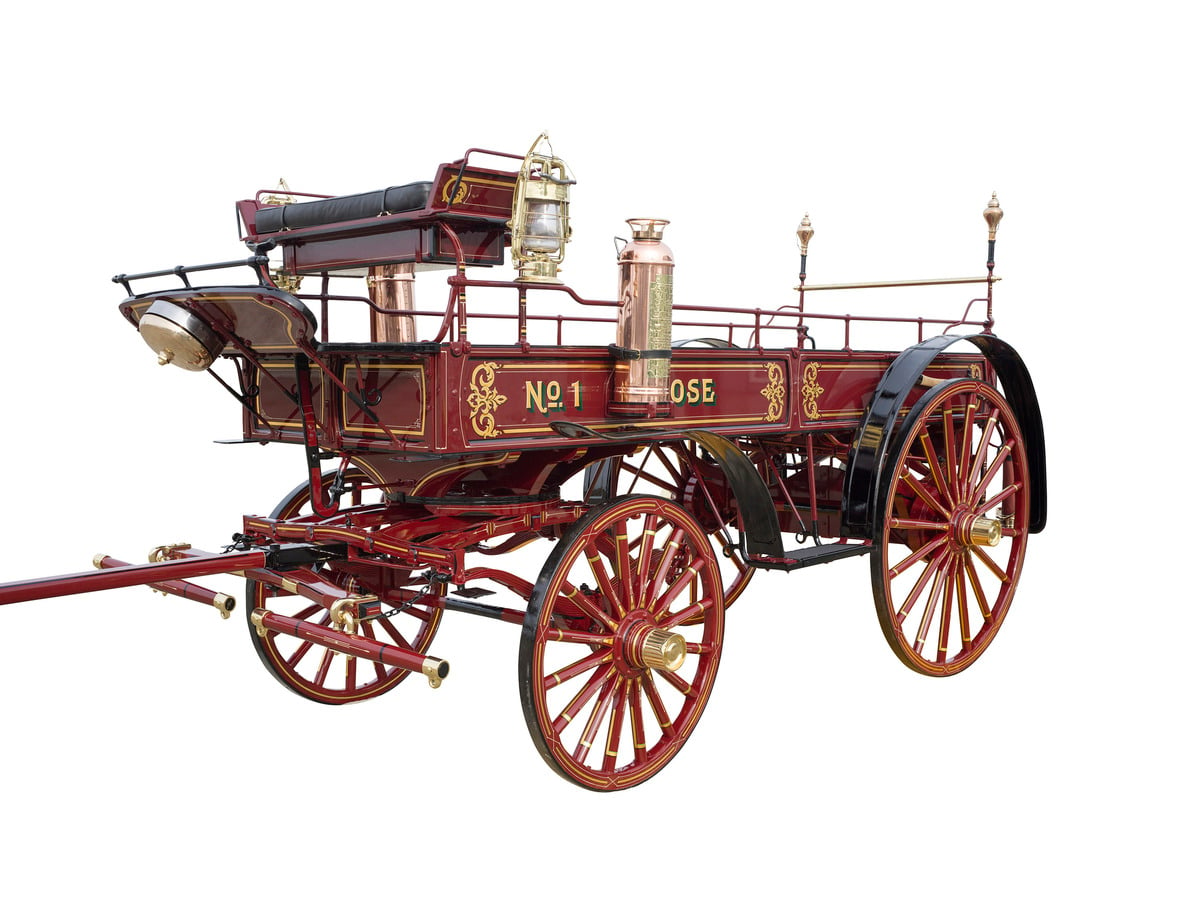
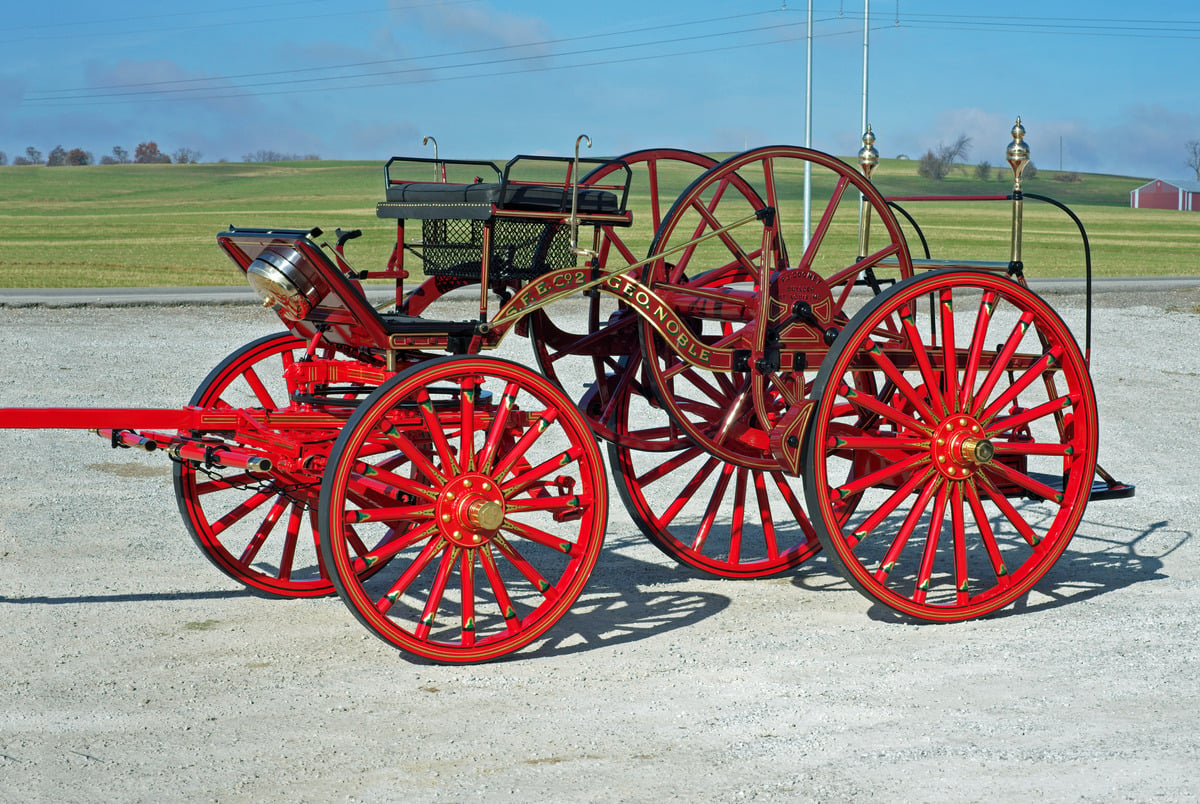
When queried about a unique restoration challenge, Emery remarked, “A very unusual item we restored was a horse-drawn aerial ladder wagon used in the early 1900s to fight fires. Tom Doyle, owner of The Little Wiz Fire and Historic Medina Museum in Medina, Ohio, delivered the wagon in very bad shape. Tom asked that it be restored to original condition, if possible.”
Emery detailed the process, “We first had to envision how the aerial ladder looked when it was new. We then set about making updates that included all new wood. The remaining parts that were not replaced were sandblasted. Next, our eight-step painting process was applied. And finally, Wayne Troyer spent three weeks hand-painting the pin-striping. Once the job was completed, we had exceeded the owner’s expectations.”
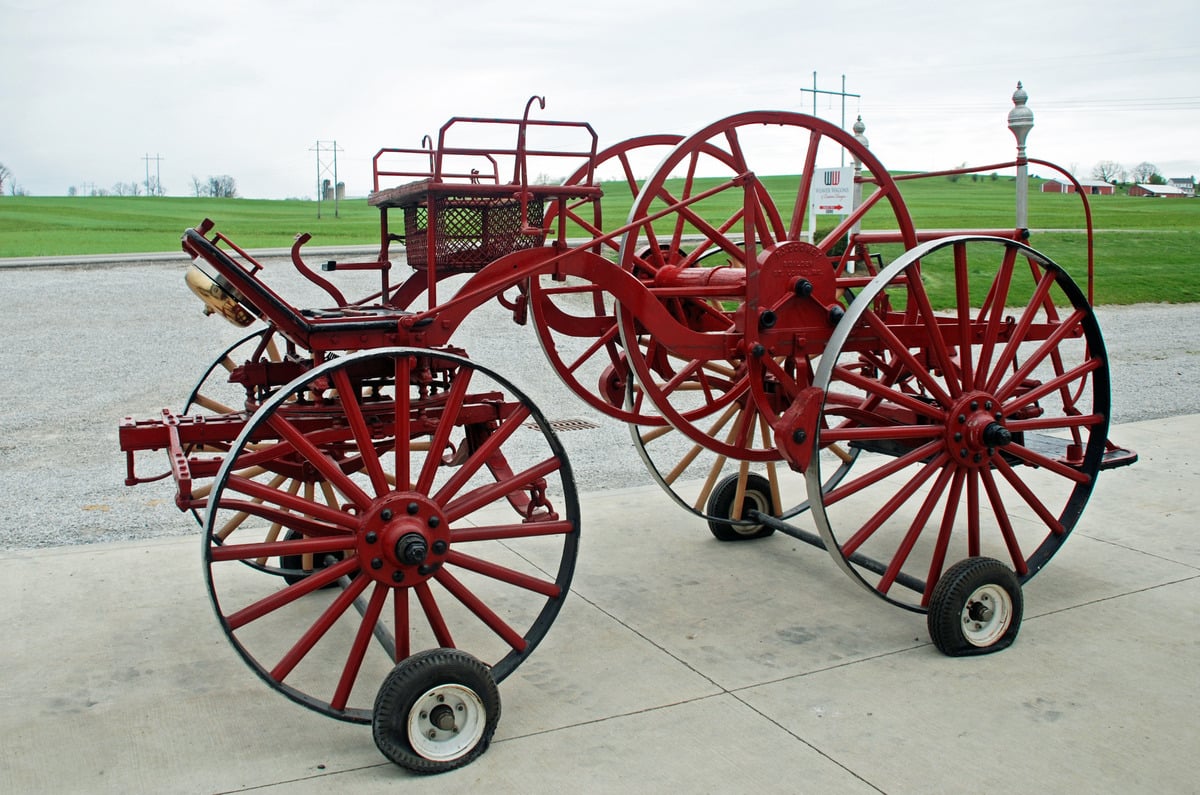
Another unique item was the Cooney hose cart. “This project came in from the Fire Fighter’s Museum of Dallas, Texas. This piece dates to the late eighteen hundreds. The cart could carry 1,000 feet of firefighting hose. We also restored the museum’s 1884 Ahrens steam pumper,” Emery said.
The Family and the Shops
The Weaver Wagon business is situated in the heart of Ohio’s most heavily populated Amish community. Although the Weaver family has lived in Wayne County, Ohio for several generations, they do not have record as to whether their ancestors were part of the first Amish settlement in Pennsylvania or members of a group that settled directly in Ohio.
During the early years, the manufacturing facilities were located on the farm that Ervin Weaver first acquired. Due to restricted space, painting was limited to a nice day when they could paint outdoors. They would roll out a large tarp in the front lawn where the painting was done.
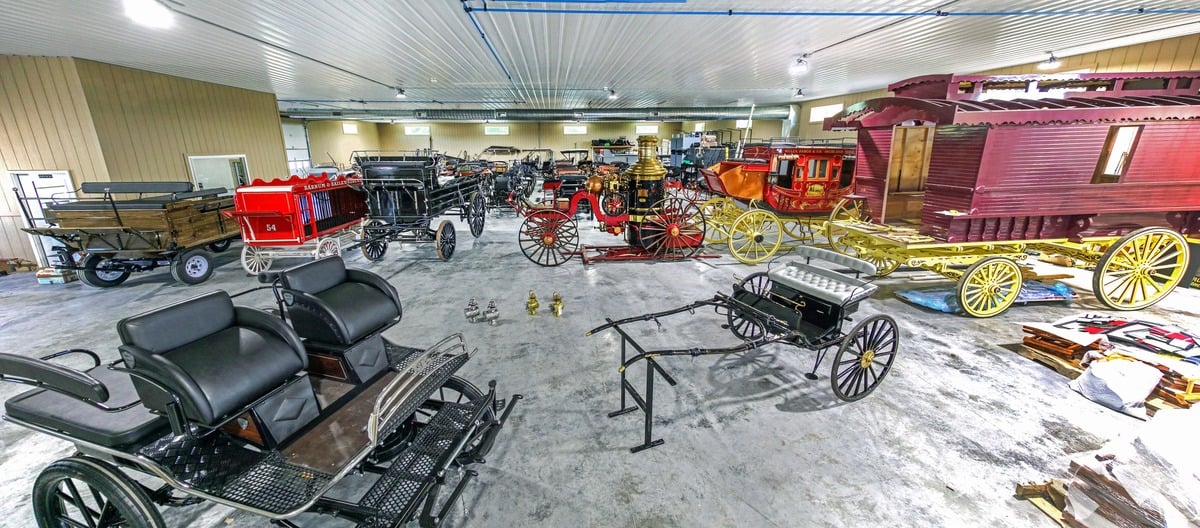
In 2016, an 11,000 square foot shop was built off the farm along the main highway. Although this additional space has resulted in more efficient production, an additional building of similar size was completed in 2022. Now, both facilities are near capacity.
New Products
New products are always under consideration at Weaver Wagons. “When we receive repeated requests for a particular product, we test the market to determine if it’s feasible. Or we simply brainstorm an idea on what we think people could use and don’t know it until they see it. Once the new design is built, they are hitched, and field tested. We want to make sure everything works properly before it’s made available for marketing.”
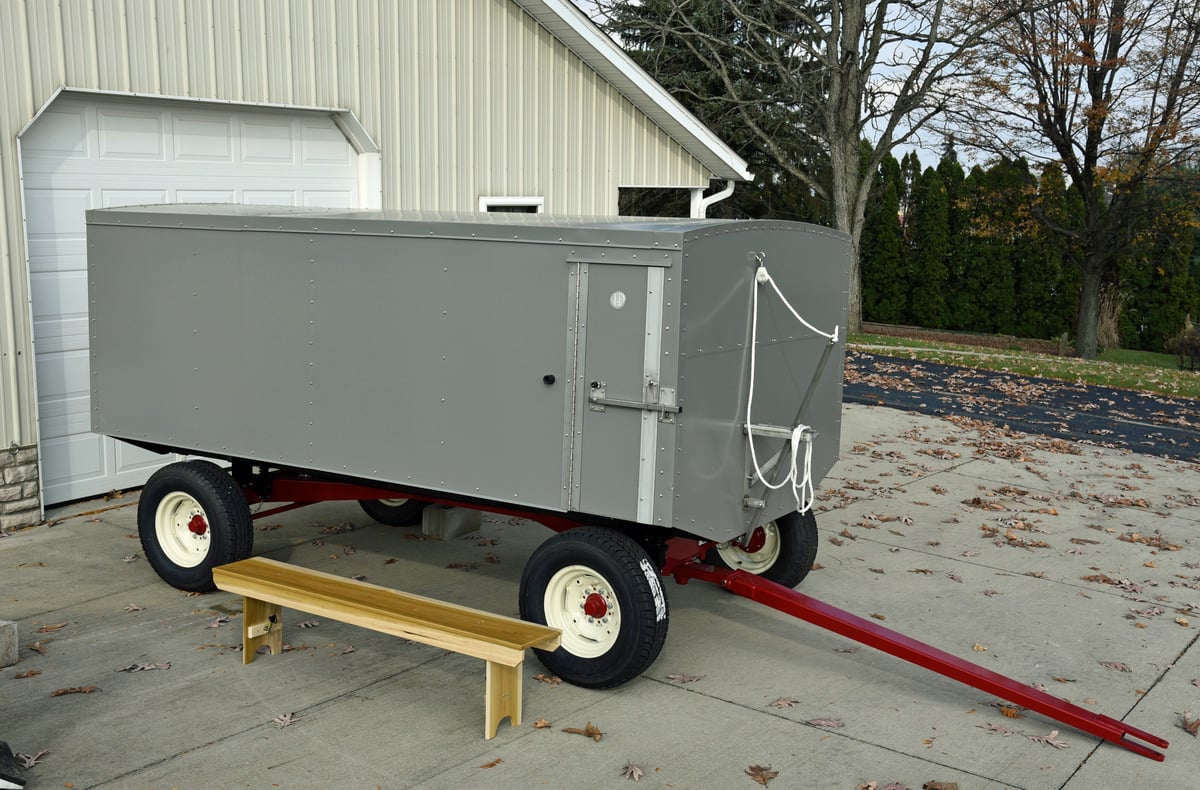
An example of a new product was the Conestoga Camping Wagon. “This wagon is suitable for campgrounds and private lakes. They are often rented by campground owners like a cabin. Or they may be owned and used as a personal wagon,” Emery said.
Weaver Wagons are now building wagon running gears. This product line was acquired through the Pioneer Equipment Liquidation Sale. They are equipped to stock all the sizes previously available through Pioneer.
In 2021, Weaver Wagons acquired the 1904 Singer Sewing machine Model 67-1 when Woodlyn Coach shut down. This machine was made specifically to build fenders and dashes for cars and carriages.
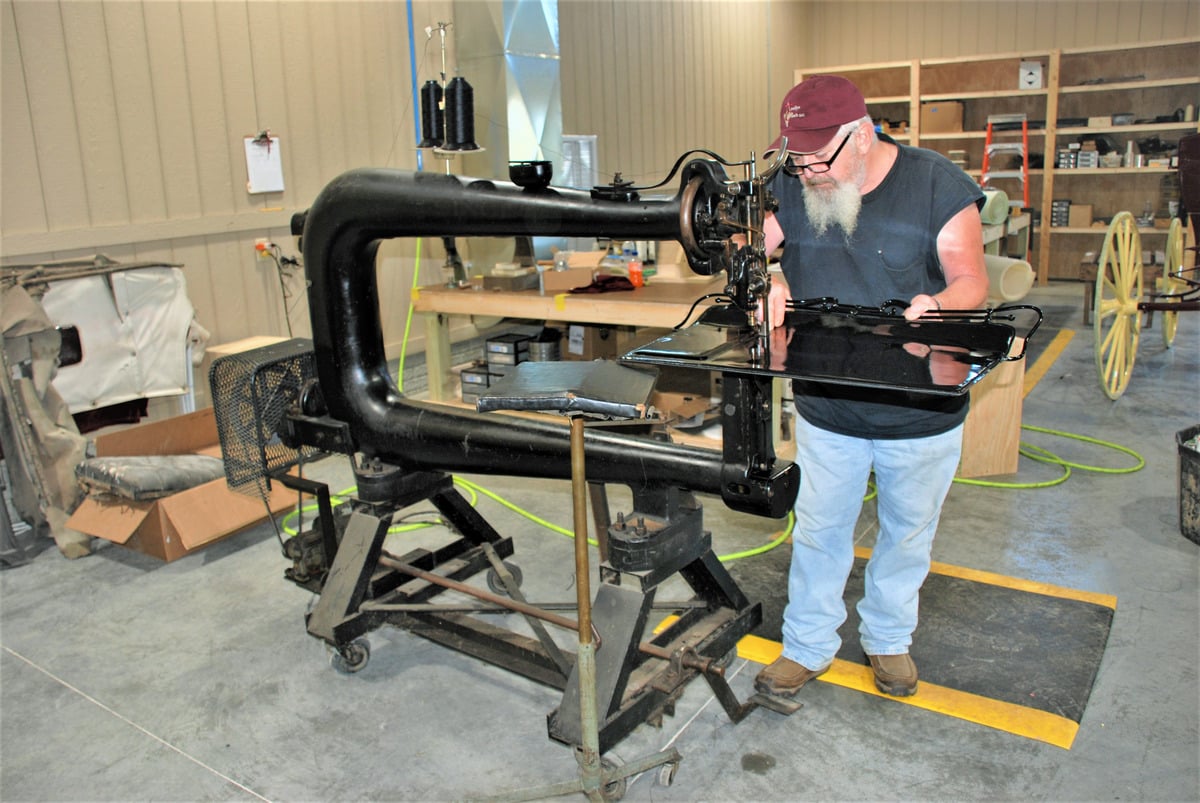
Emery noted, “We are fortunate to have the former employee at Woodlyn working for us. He is familiar with the sewing machine and its capabilities. He also has extensive experience making folding tops and fine button upholstery. Consequently, we’ve added these special features to our line of service.”
Adding the Carriage Line
The Lord works in ways unbeknownst to us. Through a step of kindness, Emery and Vernon became owners of a new business selling World Class Carriages. “In 2019, I received a phone call from Texas requesting assistance in locating an inflatable tube for a carriage tire. Through a series of phone calls, I located the innertube from Bob Cook, owner of Hunter Creek Farm, a World Class Carriage dealer in North Carolina.”
“This congenial eighty year old gentleman was very accommodating. In fact, we exchanged information about our respective businesses. Out of the blue, Bob asked if we would be interested in buying his business. Naturally, that took us by surprise. It was a product line that we had not considered. After considerable thought and prayer, we felt led to acquire the business opportunity. Through this process, I was reminded of the importance of taking time by helping someone. As a result, the Lord blessed us,” Emery shared.
Emery indicated the expanded carriage business broadened Weaver Wagons customer base. With the carriage line, they can serve the horse and pony trainers, light driving, along with competitive drivers.
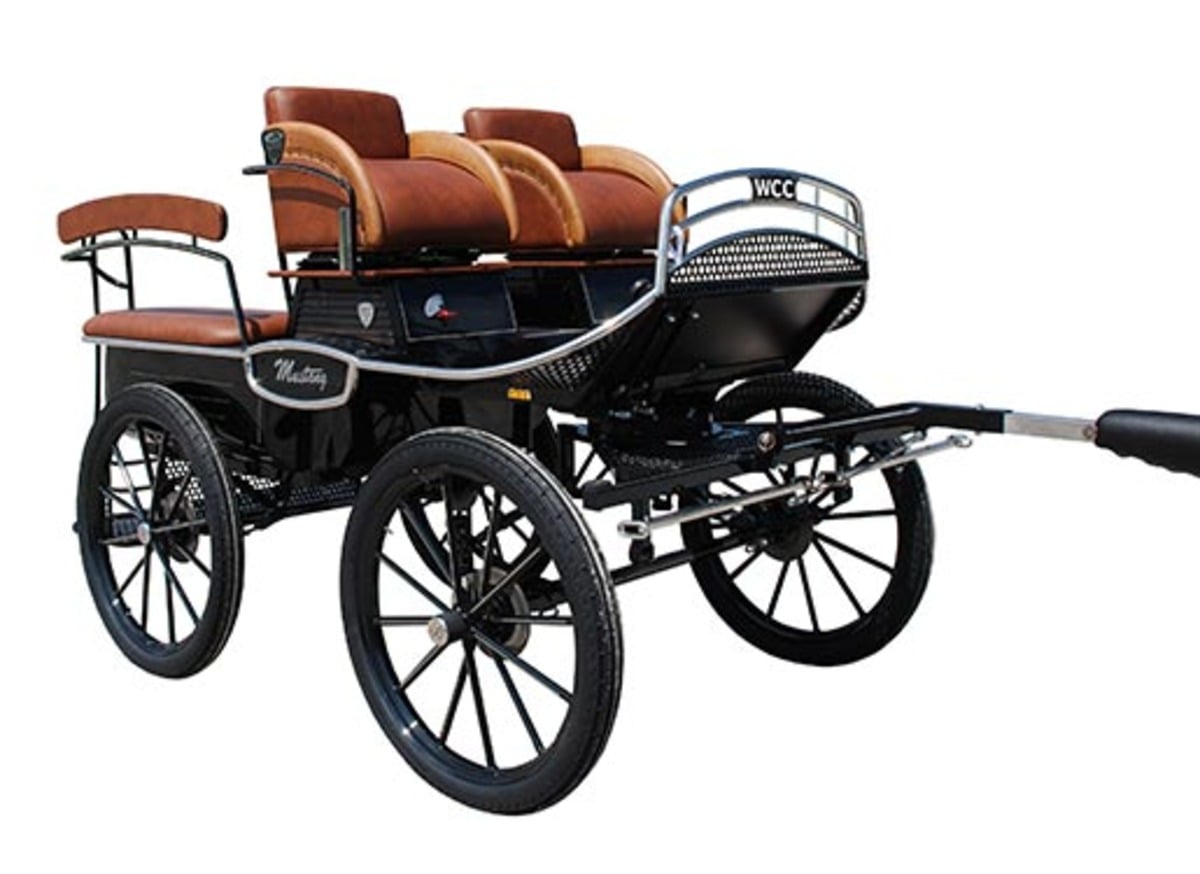
“The two leading countries building classy high-end carriages are China and Poland. China’s strength is fabricating carriages but they lack expertise in design. Poland on the other hand, does design and manufacturing quite well. Both sources have proven to be good quality products,” Emery says.
“Our goal is to build relationships with each of our customers. It is very satisfying to see a customer express pleasure in seeing their old piece restored to a condition that is better than original,” Emery said.
To learn more about Weaver Wagons, reference their website: https://www.weaverwagons.com. Or you may contact them by Phone: 330.857.7811 or E-Mail: weaverwagons@gmail.com.
About the author: Freelance writer Fred Hendricks of Mansfield, Ohio, covers a vast array of subjects. You may contact Fred at fwhendricks@gmail.com. This article was originally published in Plain Communities Business Exchange (PCBE) and is being reprinted with permission. For subscription information to PCBE, phone: 717.362.1118 or visit www.pcbe.us.


Wagon bodies
I remember the first wagon bodies they built for Pioneer. Plain wood, with a clear coat finish. I had one of their bodies on a Pioneer pony running gear. The four hydraulic brakes were wonderful for training fresh horses. Also the rear steps were great for elderly passengers.
It was a great addition to our stable. I’m glad to see them hook up with World Class Carriages. It puts them on a whole new level of carriages.
Best of Luck to them, from the retired owners of Midwest Cart and Harness.
Beautiful
What beautiful work. I really enjoy stories about businesses that are successful because they provide a great product and have world class customer service. The attention to detail is amazing. Great Amish craftsmanship. God bless them.