
Building This New Amish School Will Cost $160,000
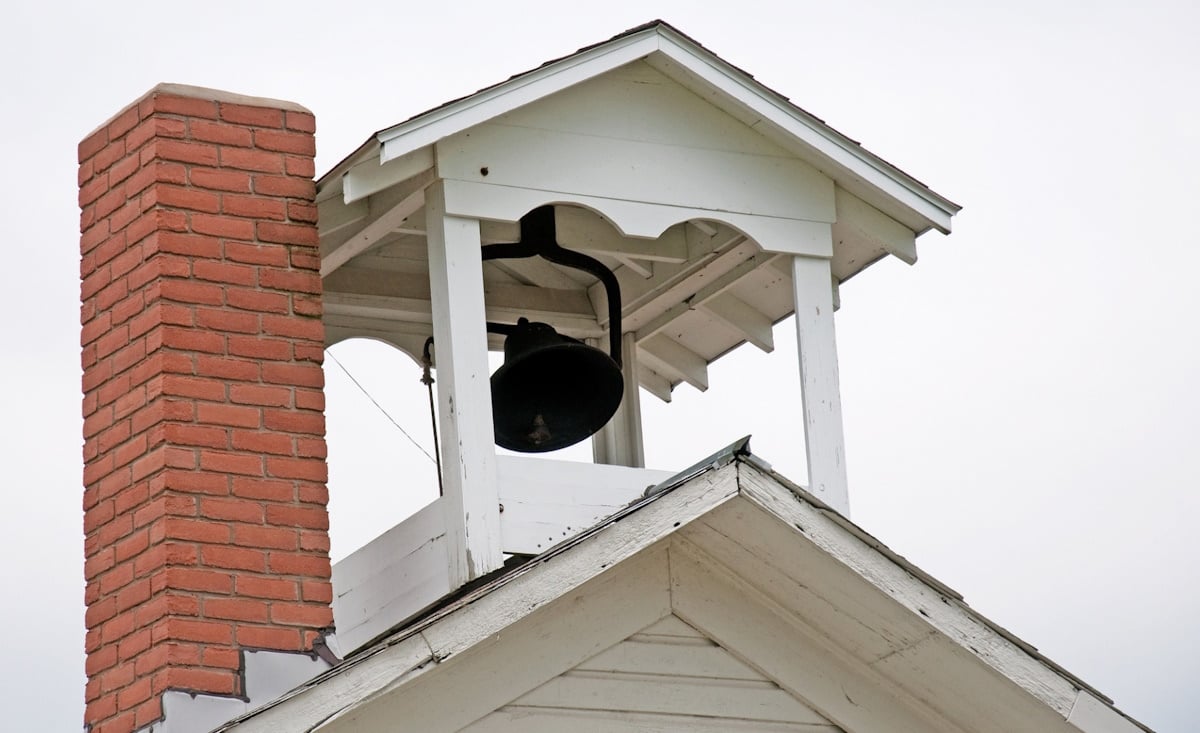
Amish schools in one Ohio community are all full – so the community is planning a new one.
This brief report by Shawn Digity in the Zanesville Times Recorder reveals some details about what goes into building an Amish school – in this case in an Amish community in Muskingum County, OH.
For one, the cost of building a new Amish school? In this case, an estimated $160,000.
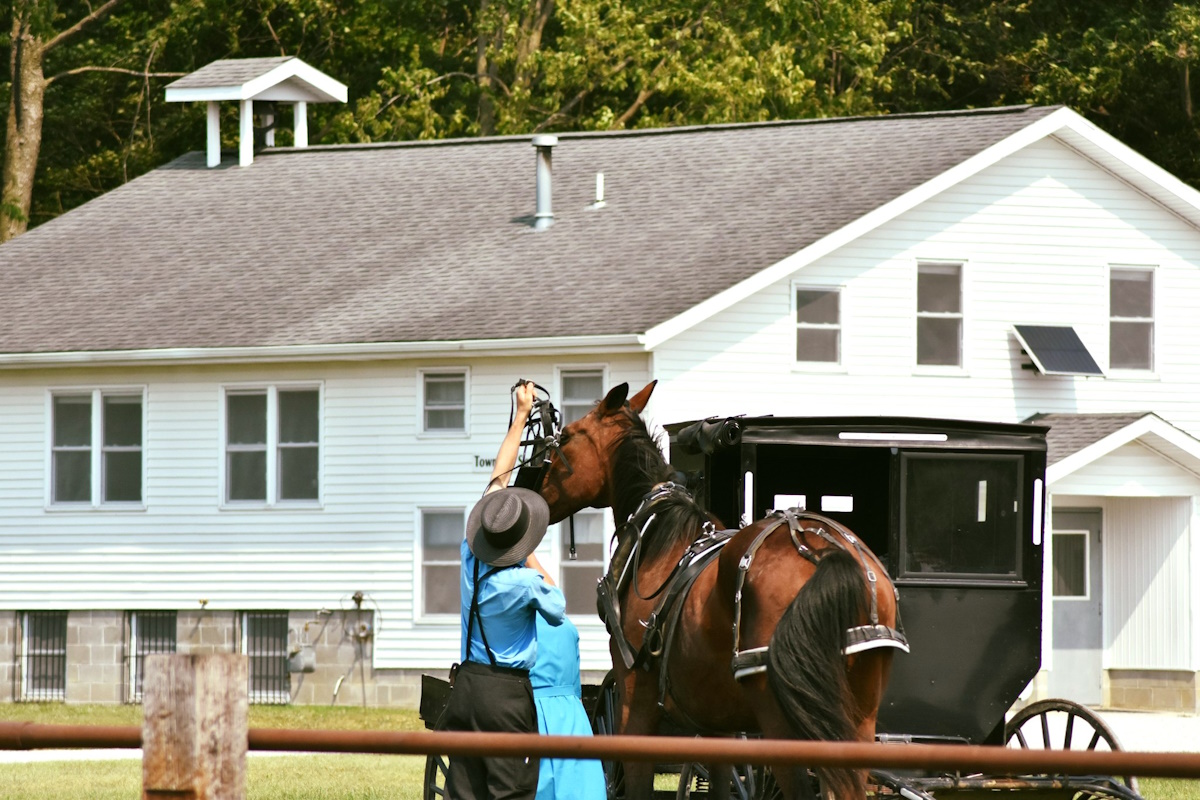
That cost is probably going to vary a good bit by community, with the plainest Amish schools likely coming in a good bit cheaper than that.
For example, the school in the above photo by Jim Halverson is going to be a lot more expensive to build than the one you see here:
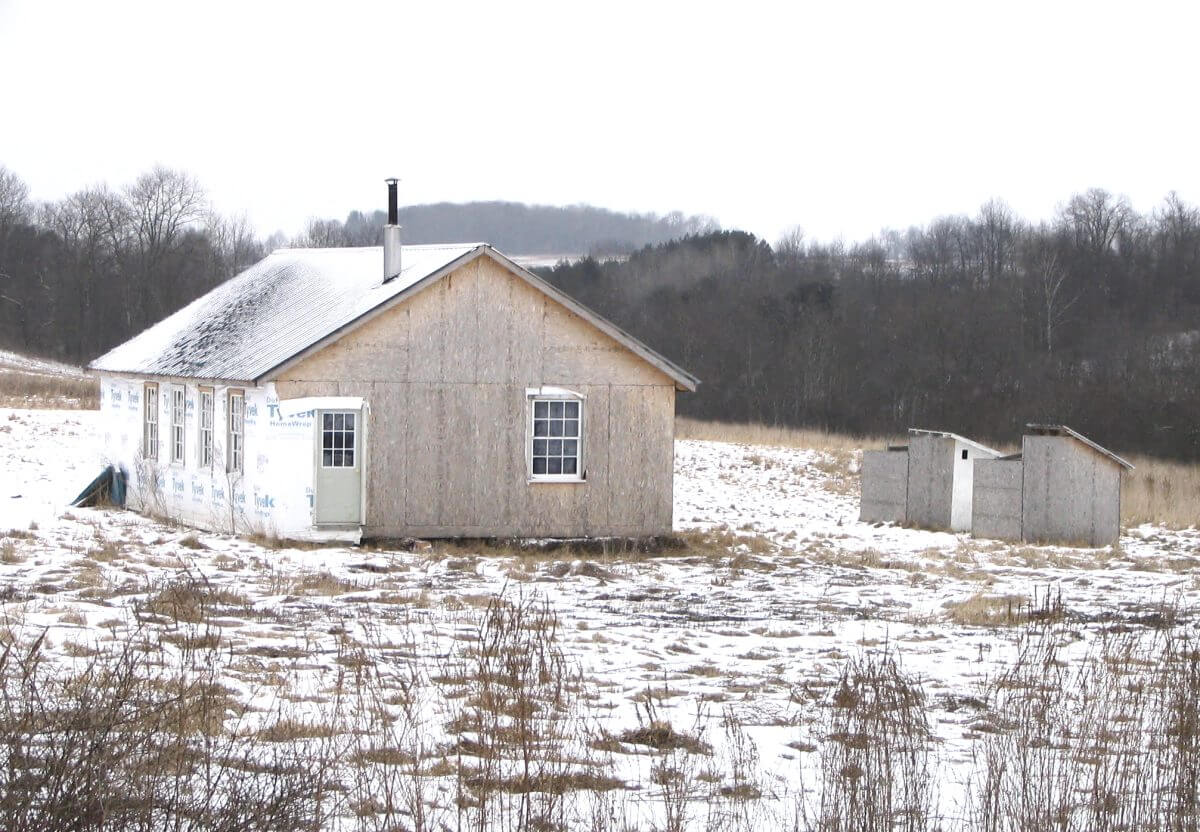
Some Amish communities simply build nicer schools than others. That can reflects both the wealth levels of individual communities, and how progressive they are.
In some communities they build with more expensive materials, like brick, for example, with nicer facilities and larger spaces. In other places, a school is much closer to a bare-bones, strictly functional structure.
And an Amish school reflects its community values in ways beyond appearance as well (that also includes school curriculum and teacher qualifications; see Karen Johnson-Weiner’s Train Up a Child: Old Order Amish and Mennonite Schools for more).
Not A One-Room School
A man named Roman Hostetler is the general contractor for this project. I assume he is from the Amish community. Here’s the general layout of the school:
Wagyu Valley School will be one story with two rooms and approximately 3,350 square feet.
One room will be a play area and the second a traditional classroom, Hostetler shared.
It will serve students ages six through 14 and will have two teachers.
You may have noticed “two rooms” in the description. We traditionally think of an Amish school as a one-room schoolhouse. And it is often the case that all eight grades are taught in one room. In this instance, the second room is a play area.
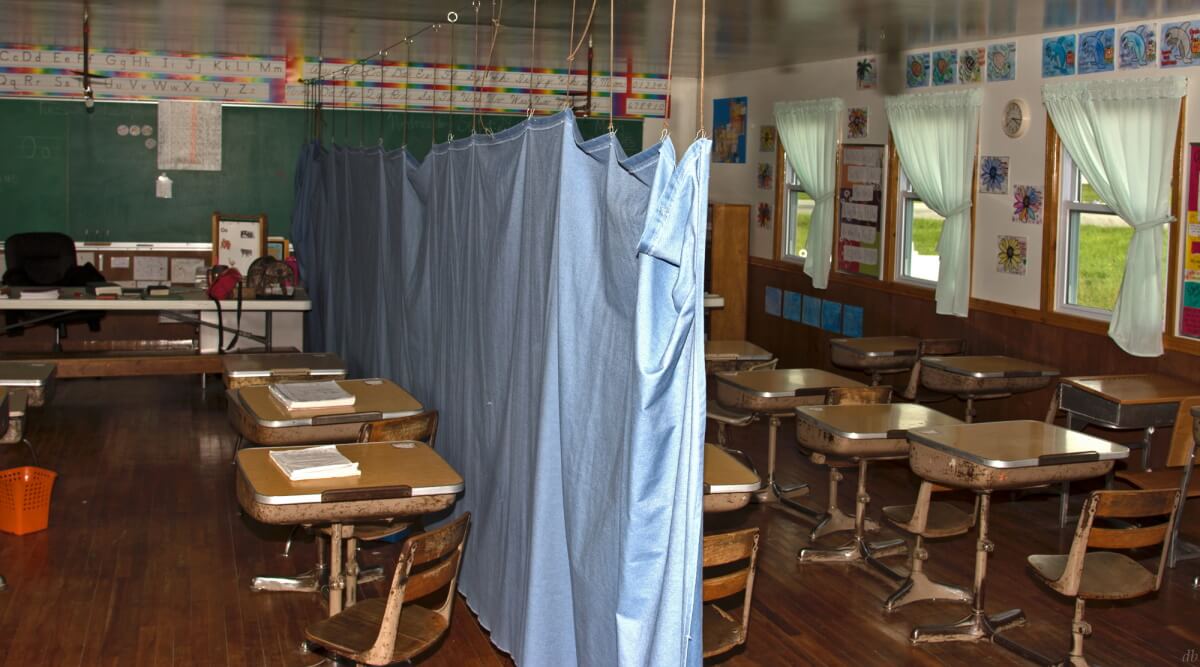
But in some cases they may have two rooms, where the younger children are taught in one, and the older half in another. In some schools, they use a curtain divider to achieve a similar purpose, like you see here:
Accomplishing a project like this involves more than just a construction company – the community chips in:
It will be built by Amish craftsmen, all with their own skilled labor specialties like framing and blockwork.
By the time it is completed, Hostetler estimates 50 to 60 Amish community members will have contributed.
“The whole community helps,” he added.
That wide participation reflects the idea that it is a community investment and shared interest. In a similar spirit, schools are typically built on a piece of land sectioned off of a church member’s farm or property.
The Amish community in Muskingum County, founded in 1997, is an estimated 525 people in size as of the most recent numbers. Construction on the school is slated to start in March or April, with hopes to have it ready by the start of August for the new school year.
For more, see:
- Inside An Amish Schoolhouse (21 Photos)
- Building A New Amish School (9 Photos)
- 5 Things Amish Schoolchildren Learn (Besides Book Subjects)
- 15 Ways Amish Schools Differ From Public Schools
- Why do Amish children only go to school through 8th grade?



Amish School To Be Built
Wow!! The school with the Tyvek wrap looks like it could blow over in a brisk wind. Holy Mackerel Cow! I was under the (obviously mistaken) impression that Amish schools usually follow a certain “set” way of being built/finished out. Who knew??
Amish schools
I wonder if any of the Amish groups find old one-room schoolhouses and decide to refurbish them to suit themselves. Some former one-room schoolhouses are made of brick, hence rather sturdily built; nearly all surviving one-room schoolhouses are found in rural areas and many have been repurposed into homes, among other uses. Anyway, just curious about this and hope others posting might know more about it.