
Amish Birder Spots Rare Sage Thrasher For First Time Ever In Ohio
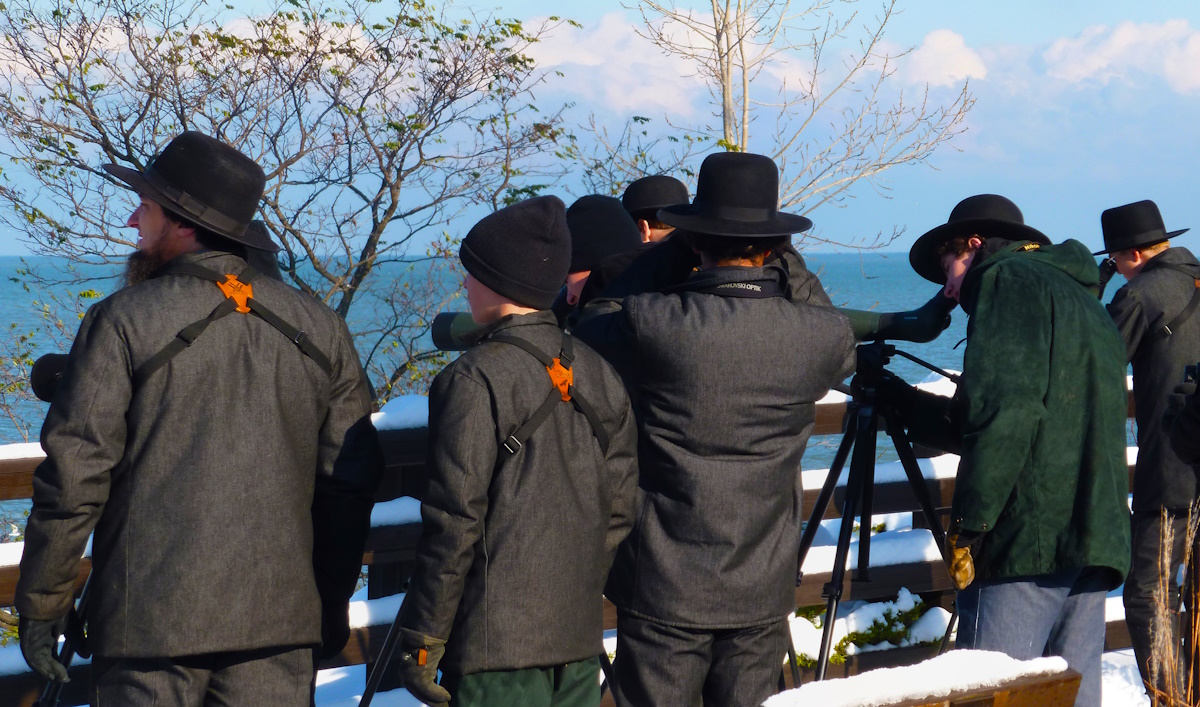
If you’re a birder in Ohio, this might qualify as the most exciting thing you’ve heard all week. I’m not a birder, but I still find this story neat – for a few reasons.
First, what is a sage thrasher? What was it doing all the way in Ohio, when its habitat is much further west (think Colorado, Utah, Wyoming)?
And what is it about the Amish that make them “darn good” birders, as Columbus Dispatch columnist Jim McCormac describes them?
James Yoder’s Momentous Day
First, the intro to the story, via the Columbus Dispatch:
Sunday, March 15 was a momentous day for James Yoder. He and his family were taking an afternoon stroll on their rural Coshocton County property when an odd-looking bird alit atop a fence post.
Yoder’s first thought was that it was a northern mockingbird – a common species in much of Ohio – but in the next moment, he knew that identification was wrong.
He whipped out his binoculars, got a good look at the feathered mystery and had the shock of his birding life.
It was a sage thrasher! Yoder recognized the bird from his previous experiences in Colorado, where he had seen this species.
He had serendipitously discovered a first state record for Ohio, and a bird sure to stir masses of birders into action.
Yoder got the word out, and soon hundreds of birders were “flocking” (har-har) to his property to try to catch a glimpse of the rare sighting.
What is the Sage Thrasher?
McCormac explains what this bird is, and how it got its name:
The sage thrasher is well-named, nesting in western sagebrush country. It breeds across much of the western U.S., with the core population in Colorado, Nevada, Utah, and Wyoming.
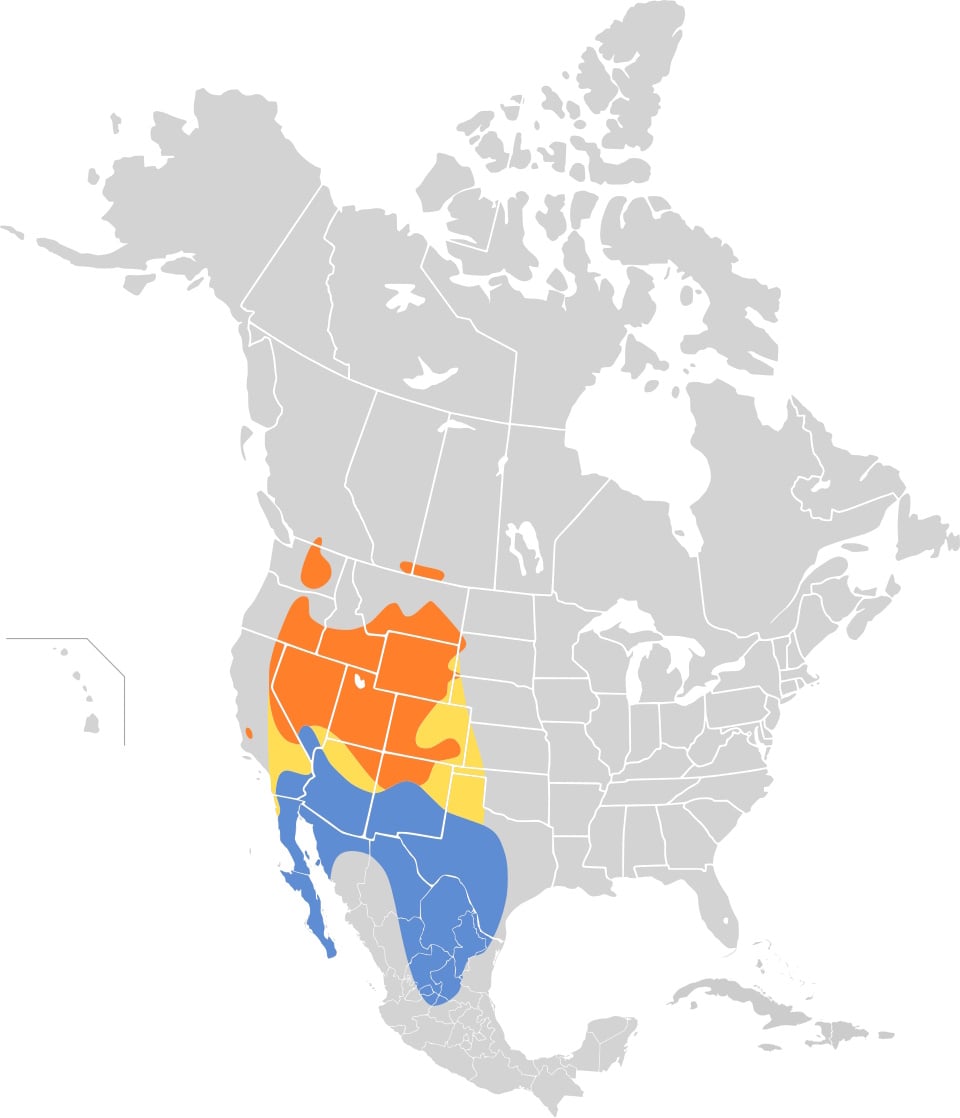
There are 15 species of thrashers, but only one, the brown thrasher, is normally found in Ohio. It breeds statewide and is one of the largest thrasher species. The sage thrasher is the smallest species of thrasher.
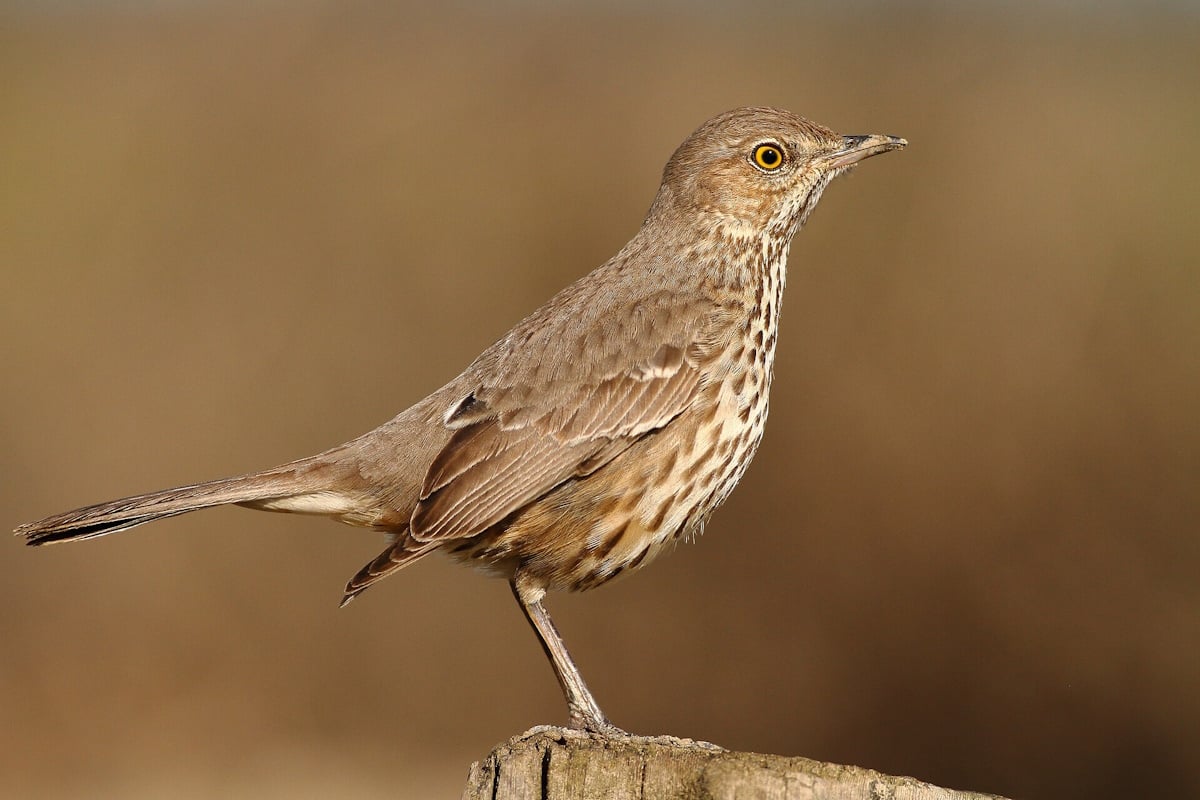
While subjective, one might argue that the sage thrasher might be the least distinguished of its group in the aesthetics department. What it might lack in showiness is compensated for in song.
I’d say he’s right – it’s a fairly unremarkable-looking bird:
But how about that song…
Male sage thrashers deliver a long complicated lyrical masterpiece interspersed with imitative sampling of other birds’ songs. One of these arias might go on for several minutes.
Unfortunately, no one has heard the Ohio bird sing, and it may be a female. The sexes look essentially alike and probably cannot be reliably separated in the field. Unless it sings, which only males are known to do.
Well, that is a more interesting story than I expected. So how did the bird get all the way out to Coshocton County, Ohio – well over 1,000 miles from its core habitat? McCormac does not have the answer to that, but does have an idea:
Why would a bird of western sagebrush habitats be in Ohio? Who knows, but some speculate that recent strong westerly winds may have blown it eastward. Maybe so, but it was the only sage thrasher to blow into the eastern U.S. this winter.
The species has been seen in neighboring states – Indiana and Michigan. But as noted this is the first recorded sighting in the Buckeye State.
What Makes The Amish “Darn Good” Birders?
Finally, McCormac has a few ideas as to why the Amish tend to spot a lot of rare birds:
Many Amish are birders and darn good ones.
Robert Hershberger discovered a rock wren at his place of business near Mt. Hope in 2014. This was one of only four Ohio records. Hershberger runs Time & Optics, the largest optics dealer in the state, and it’s the place to get binoculars and scopes.
Birders often wonder why a disproportionate number of rare birds appear in the Holmes County region. Amish land use practices are a big factor − their agriculture is far more eco-friendly than the industrial agriculture that dominates much of Ohio.
But the biggest reason, in my opinion, is the large concentration of highly skilled birders that spend large amounts of time in the field.
So in McCormac’s view, it’s a question of the sheer number of birders in the area – and also the amount of time they spend at it.
If you’re living a typical Amish lifestyle, generally speaking you’re probably spending a lot less time in front of a screen and proportionately more time doing outdoors activities – birding being one of the more popular outdoor pastimes among Amish in some communities.
It seems the environment of Amish Country in Ohio has something to do with it as well. Small farming, and what he calls “eco-friendly” agriculture – compared to large-scale industrial farming – I would assume creates habitats more friendly to a diverse array of bird species.
To add a little more to that, I’ll circle back to this 2019 interview we did with David McConnell and Marilyn Loveless on their book Nature & The Environment in Amish Life:
Birding has caught on in many Amish communities in the past couple of decades, and parents may promote it as a healthy pastime for their sons who they see as too focused on competitive sports or “running around” with peers.
Amish birders tend to go “all out” when they are in the field, and they’ve gained a reputation among non-Amish birders for spotting and reporting rarities at a very high rate.
…
For a variety of reasons, birding got started in the Holmes County settlement and remains very strong there, but birding hotlines run by Amish are also popping up in Indiana, Pennsylvania, and elsewhere.
So there’s a bit on both Amish birding, and a charming little bird that’s not supposed to be in Ohio – but, at least for awhile, is. I can’t say I was planning on learning anything about the sage thrasher today, but I don’t mind that I did!





New Bird Spotted In Ohio
With the picture you provided for us, one wonders how the Sage Thrasher got its name. lol. I seem to remember as a young girl my grandparents explaining that-for the most part-when it comes to birds, it’s the male of the species that have the most vivid colors. But how exciting for Mr. Yoder being the first to spot it outside its normal habitat. Thanks for a lovely story, Erik. Have a blessed day everyone.