
Old Order Mennonite School Fined $10,000 For Filling In Manure Pit — While Ignoring County Rules
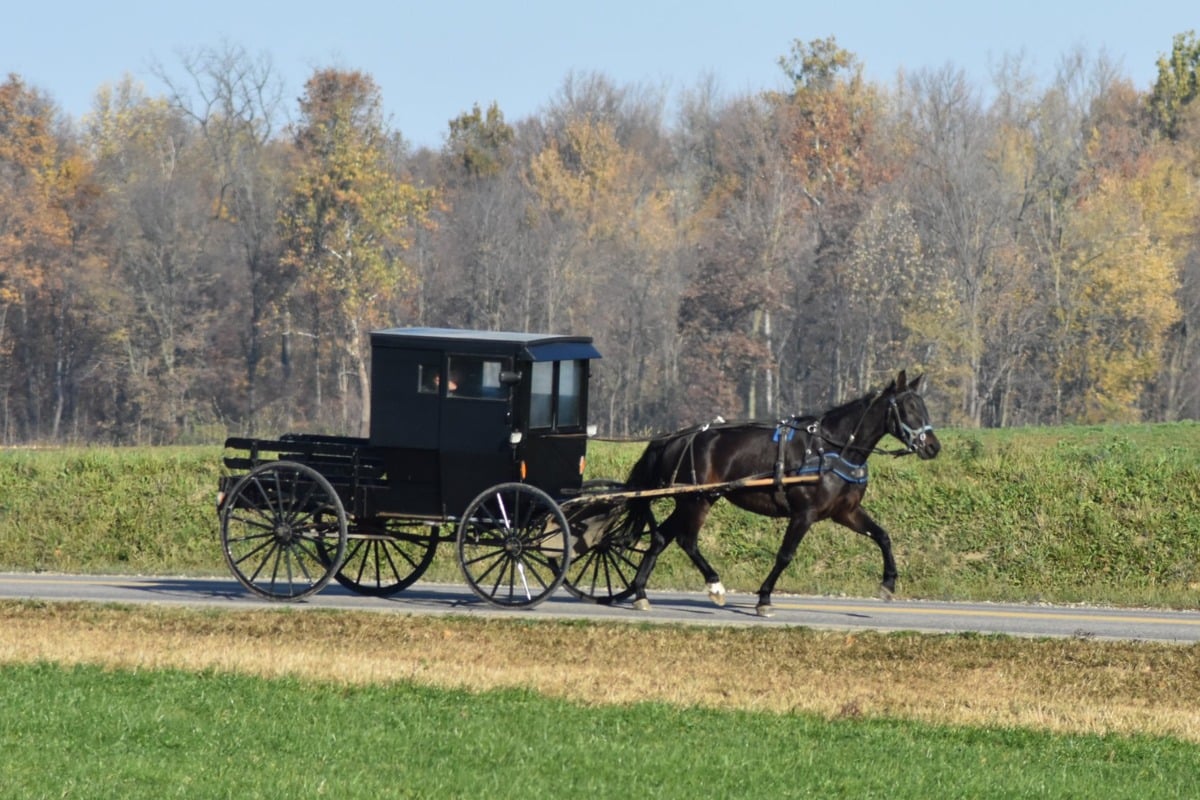
An Old Order Mennonite school in Elkhart County, Indiana has been hit with a $10,000 fine — over the way ground was prepared for the new school, and a baseball field.
The project, which was carried out this summer and fall, disturbed somewhere between 4 and 7 acres. Part of that work involved draining and filling in a former manure pit on the property. The idea there, according to those involved, was for safety reasons. That seems wise, especially with manure pits presenting a real danger for children.
But that’s where the bulk of the problems came in – due to those running the project failing to follow regulations designed to prevent pollution.
The Elkhart County Stormwater Board voted 3-1 on Monday, November 23 to impose the $10,000 fine, plus attorney fees, according to InkFreeNews. That might seem like a big amount – but what they potentially faced was a lot bigger (more on that below).
A Former Manure Pit, Drained And Filled
The site is along County Road 36 near Yellow Creek. This would be the Wakarusa-area Old Order Mennonite community, a horse-and-buggy group lying in close proximity to the Nappanee Amish settlement (more on that below).
Under county rules, any project that disturbs an acre or more needs a stormwater pollution prevention plan. This project didn’t have one.
County staff also found sediment and manure deposited along CR 36, and were concerned that runoff was reaching Yellow Creek, a “county-regulated drain.” Staff said material did get into the creek, though the hearing did not establish how much environmental damage may have resulted.
Property owner Laurel Nissley told the board the pit was already there when he bought the land around 2000 or 2001. It was emptied around 2005 or 2006 and later became a stocked fish pond. As he put it:
“Yes, it was an old manure pit, but by pumping it all the way down, it filled up with rainwater and then we actually put fish in it,” Nissley said.
“We Knew Better”
Part of the problem here it seems was that the size of the project was underestimated. And once it grew, no one stopped to re-assess what was needed. Building contractor Jeryl Martin acknowledged this to some extent:
School representatives testified the initial project was expected to disturb less than an acre but expanded as excavation, site leveling and the filling of the pond required additional work.
Martin acknowledged the project should have been handled differently once the extent of the disturbance became apparent.
“We knew better, right? And we asked for forgiveness,” Martin said.
The county received a complaint in August; staff then inspected on August 25 and issued a stop-work order. The Mennonite side complied soon after: silt fencing was put in place in September, and the required stormwater plan was submitted in early October, with the stop-work order being lifted soon after.
The Fine Could Have Been Nearly 6 Figures
Under the county’s enforcement schedule, the fine could have totaled $96,000. That would be $2,500 a day for 26 days, plus $1,000 a day for 31 days.
The board instead settled on $10,000. According to members, they agreed to that reduction due to the school’s cooperation after the stop-work order, the corrective work that followed, and in consideration of the financial burden a larger fine would place on the Mennonite community.
The board also dropped the property owners, the excavator, and the contractor from the enforcement action. That leaves the school, as an unincorporated association, solely responsible.
The Old Order Mennonites Of Wakarusa
Wakarusa lies just north of Nappanee in Elkhart County, and is home to a small horse-and-buggy Old Order Mennonite community (see our Indiana Amish guide). The Old Order Mennonites here are known as the Indiana Groffdale Conference, part of the largest of the horse-and-buggy Mennonite groups.
When contributor Jim Halverson visited the area in 2020 for a horse auction, he noted that the Old Order Mennonites here rotate church services among three area meetinghouses. One of them is the Yellow Creek meetinghouse. This photo taken by Jim gives some historical background on the Yellow Creek community.

As the marker notes, Mennonites began settling the Yellow Creek area way back in 1845. That would have been just a few years after the Nappanee Amish settlement was founded.
Unlike most Amish, Old Order Mennonites traditionally use meetinghouses. They built the first one, a log structure, in 1849, and then several more over the next 100+ years. Here’s a photo of the current meetinghouse:

You can read more about Old Order Mennonites in our post on their population across North America.