Sun Glare Caused Amish Buggy Crash Which Ejected 5 — A Hazard That’s Worse This Time Of Year
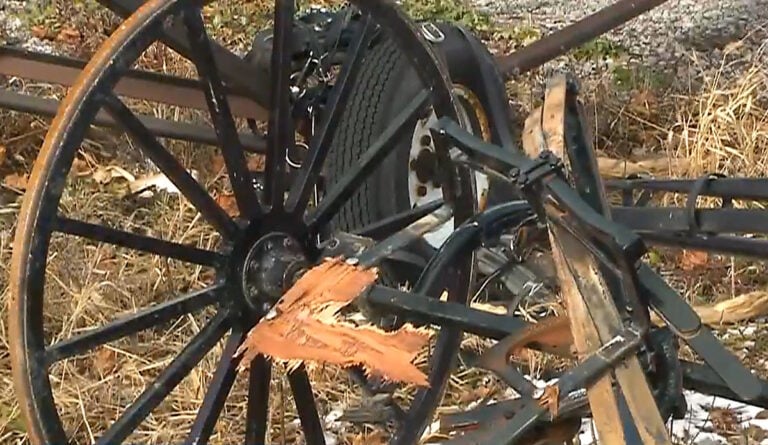
Pennsylvania State Police say sun glare caused a driver to rear-end an Amish buggy in Northumberland County, Pennsylvania last month, ejecting all 5 people in the buggy, and injuring 2 young children. No charges were filed.
Low sun is a hazard on any road where buggies travel, and late fall into winter is when it is at its worst (more on that below). State police released their findings on November 16, as reported with an accident recap by The News-Item:
WASHINGTON TOWNSHIP — Pennsylvania State Police determined that sun glare caused the operator of a Ford Edge to strike the back of a horse and buggy on Schwaben Creek Road at 5:19 p.m. Oct. 13.
Trooper Blake Prestash said in a news release issued Monday that a 4-year-old male and a 6-year-old female were injured when they were ejected from the buggy.
One child was flown to a hospital while the other was taken by an ambulance, fire chief staff said at the scene.
The trooper said in the release that Reuben Miller, 41, of Herndon, a 13-year-old male and a 10-year-old female were also thrown from the buggy, but were uninjured.
No updates have been published since then on the condition of the people involved.

Why Sun Glare Is Worse This Time Of Year
The Virginia Department of Transportation says the glare effect is strongest from mid-to-late October through the winter months, because sunrise and sunset occur so close to the hours when people are commuting.
That gets more pronounced once the clocks change. Since we “fell back” on November 1, the drive home in the evening now falls closer to sunset.
PennDOT lists sun glare among its fall driving hazards, and Virginia’s transportation department has put out its own sun glare advice. Tapping both sources, here are 9 tips for safer driving as far as sun glare goes:
- Know when the sun rises and sets where you drive, and expect glare around those times.
- If you can, leave a few minutes earlier or later. Even a small shift changes where the sun sits in relation to the road.
- Slow down when you are heading into a stretch where the sun is sitting just above the pavement.
- Leave more room between you and the vehicle ahead.
- Avoid sudden braking or swerving, since the driver behind you may be dealing with the same glare.
- Keep the windshield clean, inside and out. Streaks make glare worse.
- Use your sun visor, and keep it clear of clutter so it works when you need it.
- Keep sunglasses within reach. Polarized lenses help cut glare.
- Drive with your headlights on so other drivers can see you.
Glare has played a part in other buggy crashes we’ve covered here. Earlier this year in Schuyler County, Missouri, a minivan driver who was blinded by sun glare rear-ended a buggy and injured its Amish driver. In Gladwin County, Michigan, the sheriff’s office said glare likely played a part in a September 2025 crash that put a 70-year-old Amish man in the hospital.
About A Mile From Last Year’s Fatal Crash
If the county name rings a bell, you might be recalling another crash here from last year – one with a tragic outcome. Last September, a car rear-ended a buggy on Route 225, about a mile west of this October 2026 crash, in a nighttime incident.
Two Amish children, ages 9 and 7, were killed, while their parents and a 3-year-old brother were seriously hurt. The driver told police he believed he had fallen asleep at the wheel. The community rallied to support the family in the days after.
Both crashes happened in the Dornsife-area Amish settlement, a community of around 600 people founded in the early 1990s.