Q & A with Elam Stoltzfus, Co-Author of Amish Family Records of Lancaster County, Pennsylvania: Fraktur & Needlework—1800 to 1900s
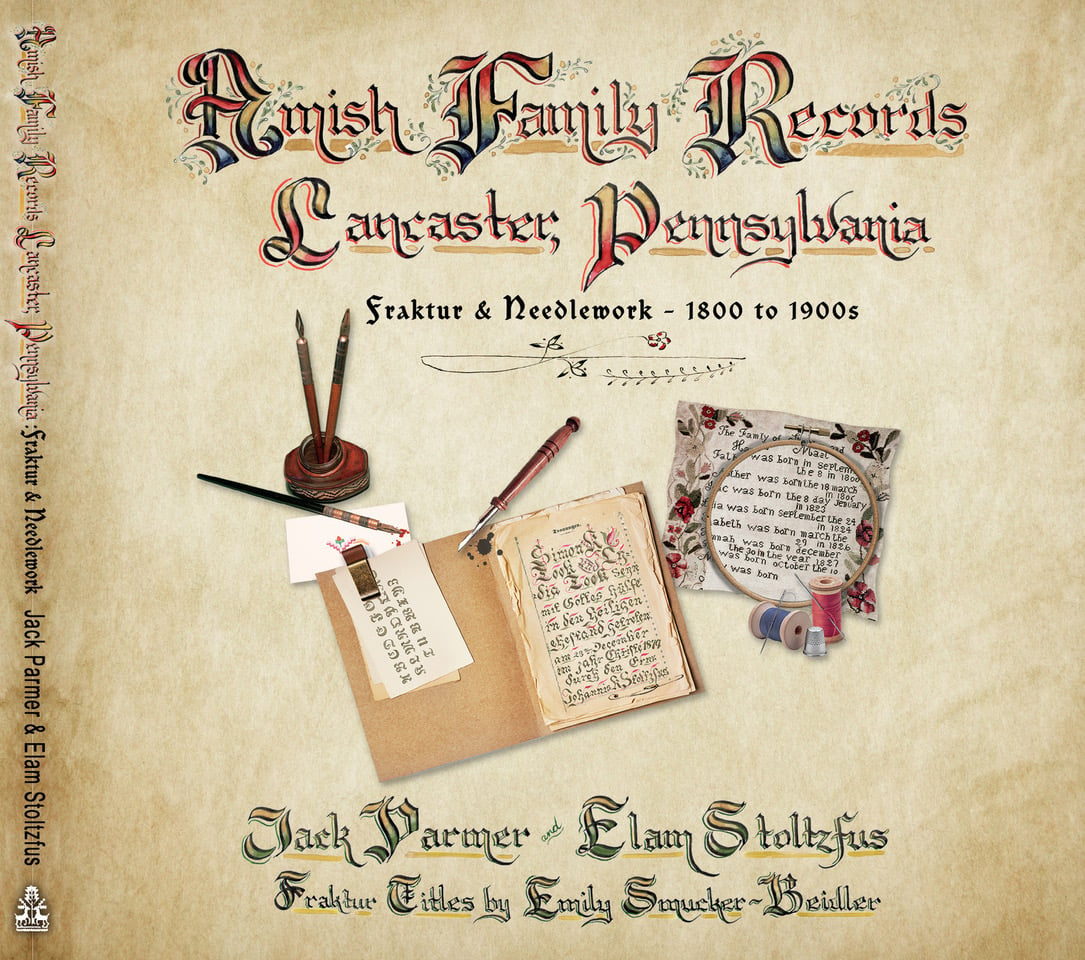
A newly-released book collects 123 fraktur pieces and needlework family records from Amish families in Lancaster County, Pennsylvania, spanning the 1800s.
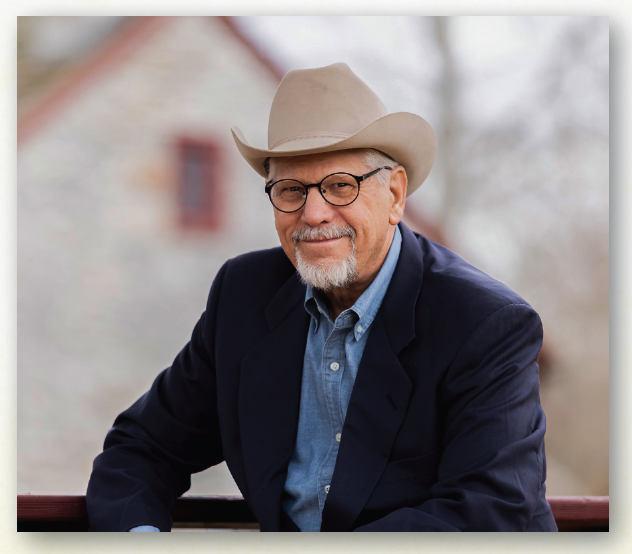
It’s the result of nearly three decades of collecting by the late Jack Parmer, with genealogical research and text by Elam Stoltzfus — who joins us today to share more on it.
Here’s how publisher Masthof Press describes the book:
Amish Family Records of Lancaster County, Pennsylvania is a masterful collaboration that preserves centuries of heritage through a stunning collection of 123 rare family records, bookplates, and ornate fraktur artwork.
Rooted in Jack Parmer’s thirty-year curation and brought to life by Elam Stoltzfus’s meticulous genealogical research, the book features exquisite illustrations by artist Emily Smucker‑Beidler and insights from the Nicholas Stoltzfus Homestead.
Spanning the 18th and 19th centuries, these recovered archives offer scholars and descendants a profound window into the religious life and artistic expressions of the Amish community.
This collection serves as a vital bridge to ancestral roots, celebrating the enduring stories and “ink, color, and careful stitch” of Pennsylvania’s Amish rich cultural history.
I asked some questions of Elam about the book, the family record illustration tradition among the Amish, and his own family’s place in the story.
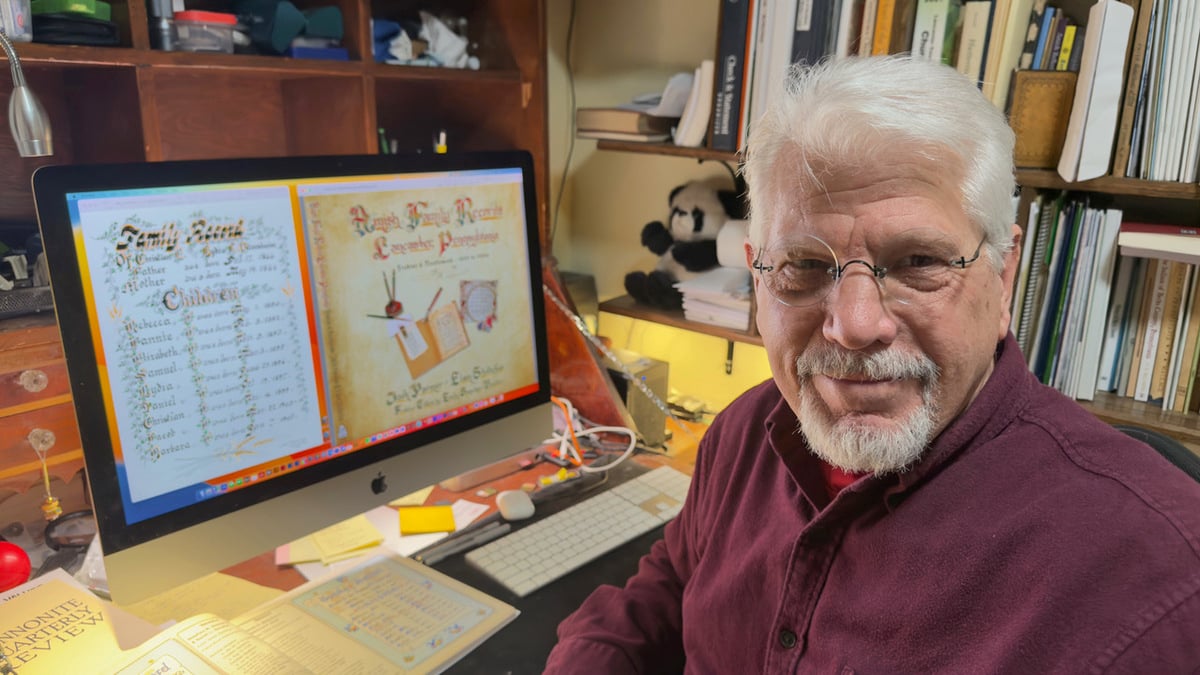
What follows is a combination of Elam’s answers to my questions, plus a few excerpts from the book, including the acknowledgments and a tribute to the late Jack Parmer (by Elam’s son Nic Stoltzfus), whose collection made the book possible.
Elam Stoltzfus on Amish Family Records of Lancaster County, Pennsylvania: Fraktur & Needlework—1800 to 1900s
Amish America: Can you tell us about fraktur artwork? What was its purpose?
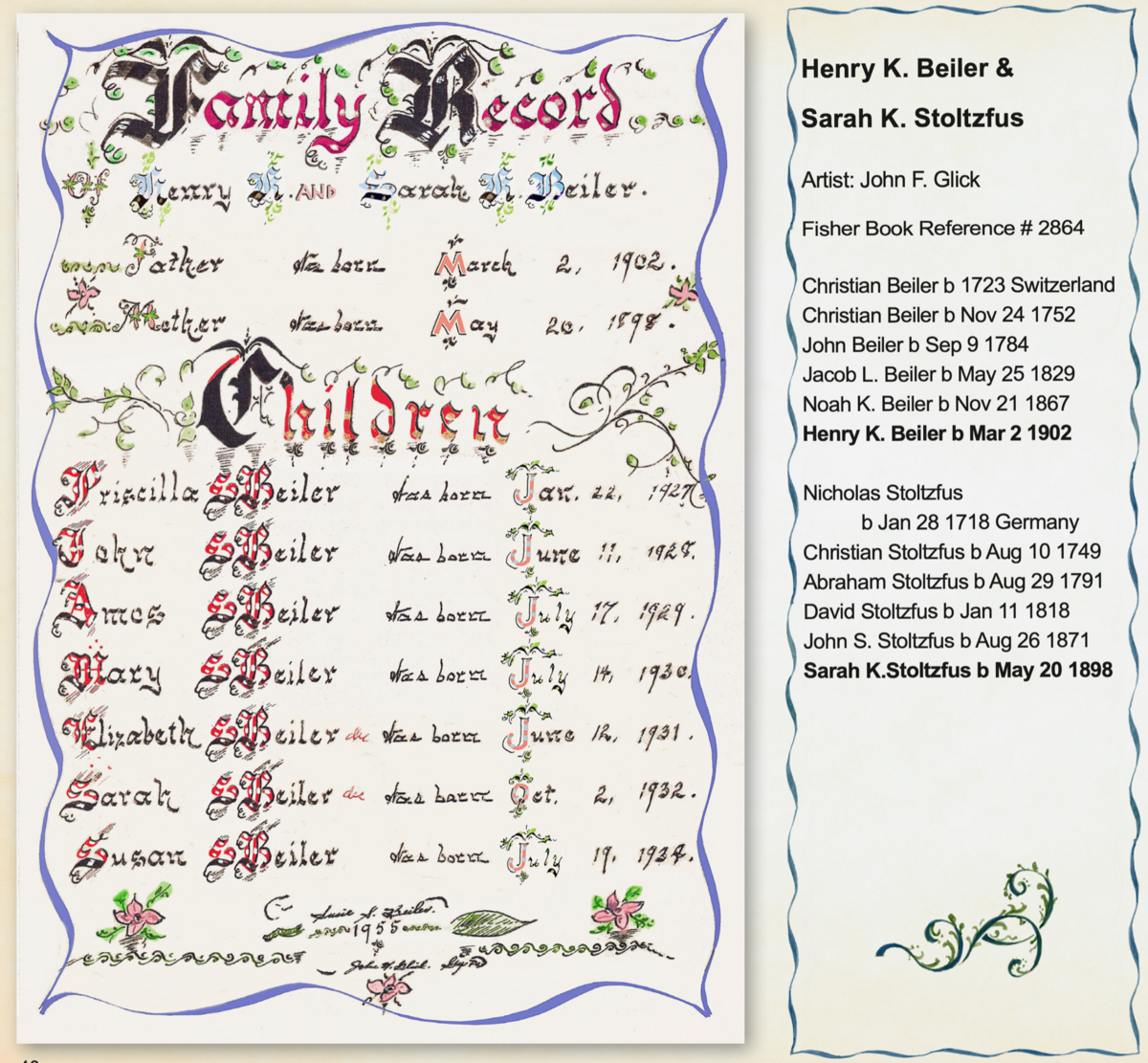
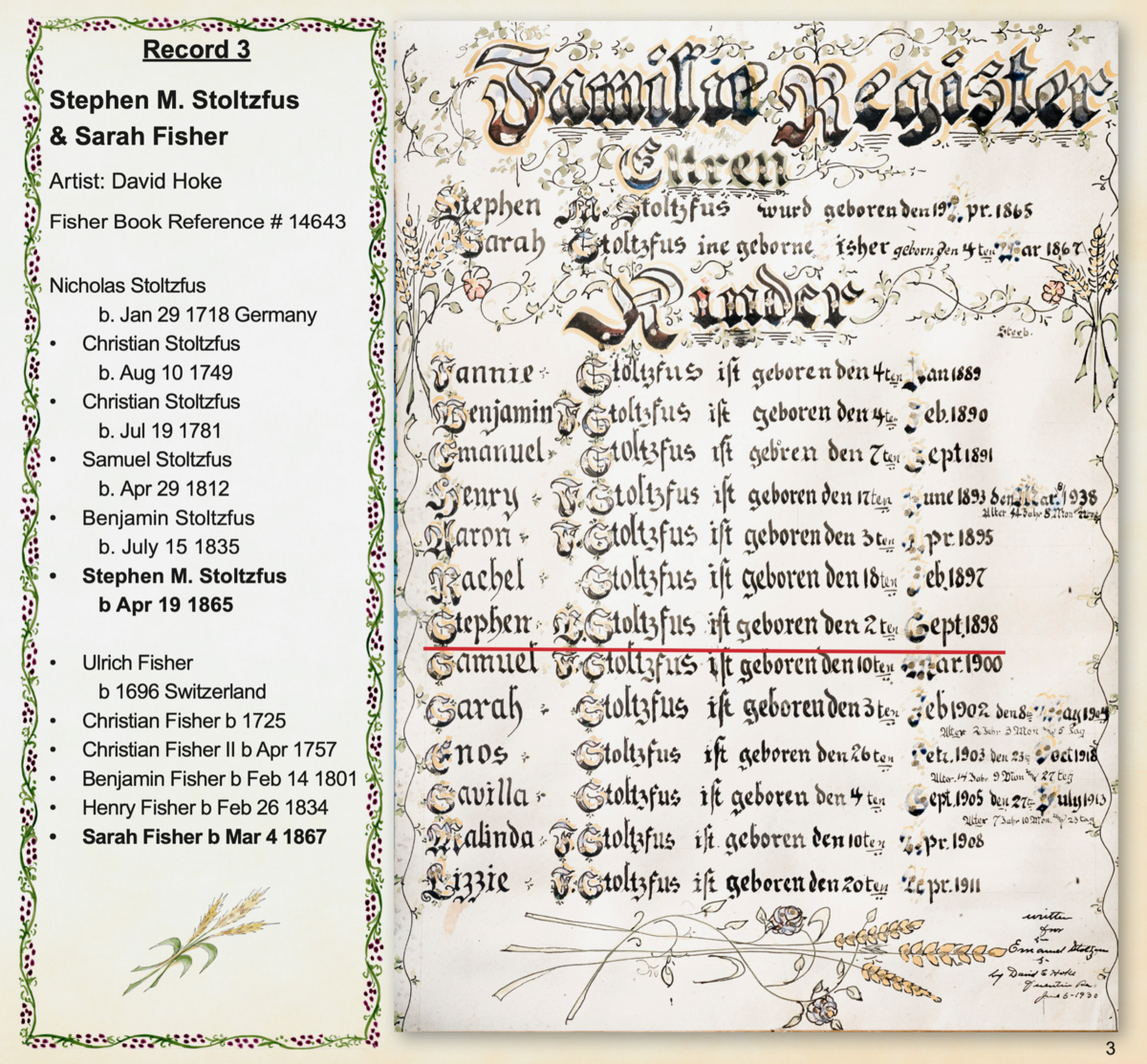
Elam Stoltzfus: In Amish homes across Pennsylvania, family history was often written by hand. Fraktur—pages of careful script framed with painted borders and simple motifs—marked the mile-stones of family life: births, baptisms, marriages, and family lines. In rural places where official records were scarce, fraktur became both practical and meaningful.
Many of these works were made by artists who never signed their names. Some were local schoolteachers or ministers with skill in lettering; others were traveling artists who moved from farm to farm offering their services. Whether anonymous or known, their work reflected Amish values: fraktur was local, handmade, and personal, created within the community rather than purchased from outside printers.
Can you tell us about the needlework tradition, and who was typically creating these pieces?
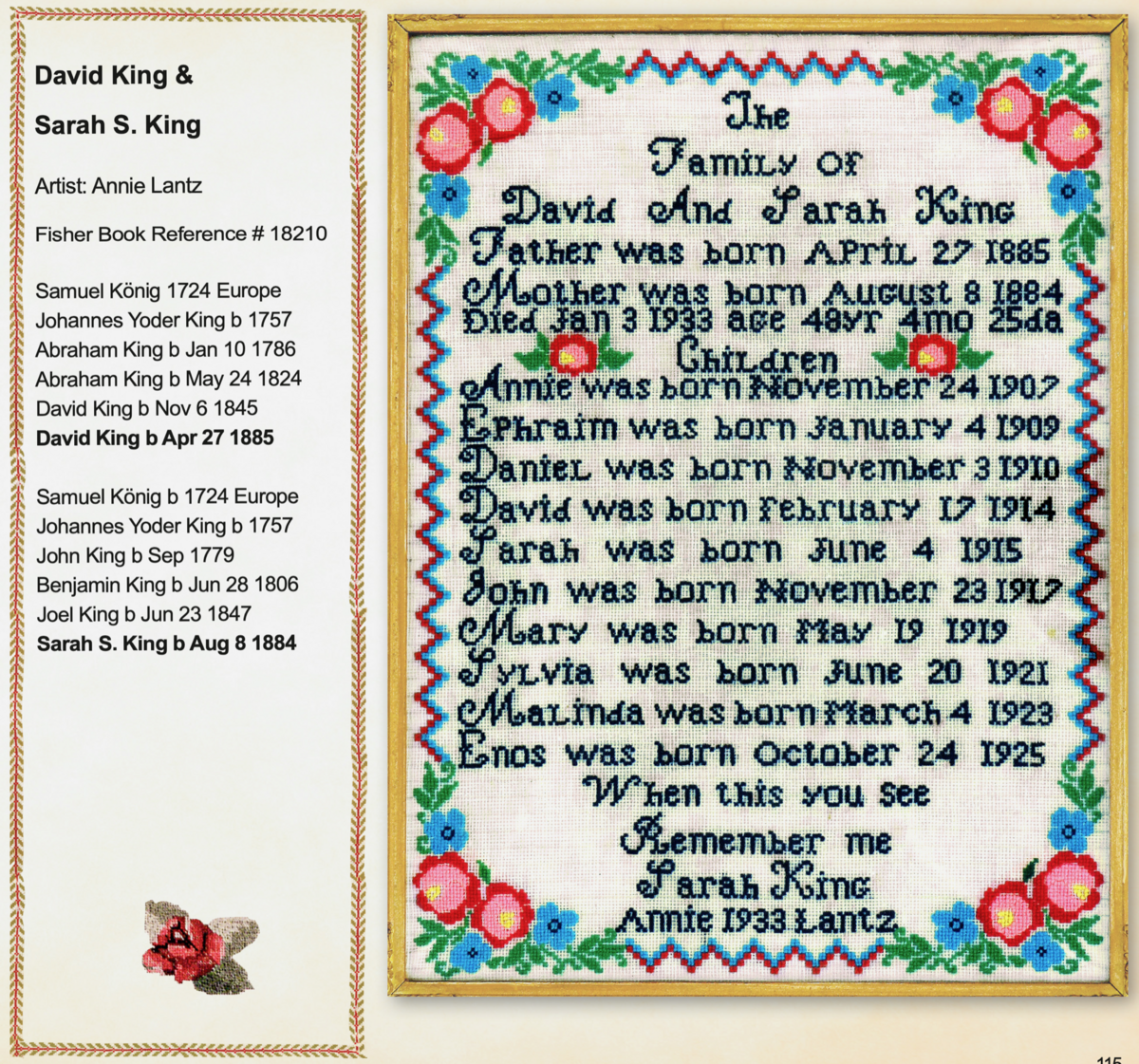
Elam Stoltzfus: In nineteenth century Lancaster County, Amish families recorded their history in more than one medium. Alongside the familiar paper fraktur, with its handwritten birth records and family registers, there was another tradition: “fraktur in cloth.” These embroidered samplers, made with silk and linen thread on a linen ground, served the same purpose as their paper counterparts: to keep family information close at hand and to pass it from one generation to the next.
Needlework was a practical skill taught in schools and at home, and most Amish girls learned it as part of their everyday upbringing. Within that setting, family record samplers became a natural extension of the skills they were already practicing. While samplers from southeastern Pennsylvania often featured elaborate decoration, Amish pieces developed a quieter, more geometric style that reflected the community’s sense of order and restraint.
These stitched records fit naturally within the larger world of Amish fiber arts. Quilting, embroidery, and other forms of needlework have long been part of Amish domestic life, and the same care that went into piecing a quilt or hemming a garment could be turned toward preserving family history.
Did fraktur and needlework overlap? Were they done by the same people?
These are two distinct styles of art, usually not by the same artist. What they do have in common is the genealogy list of family names and birth dates.
How did these traditions change over time?
By the mid nineteenth century, printed certificates and official documents became more available, and hand drawn records grew less common. Even so, the practice did not disappear. Into the twentieth and twenty first centuries, Amish artists continue to produce fraktur—sometimes repeating older motifs, sometimes adapting them—so the tradition remains part of everyday life.
You share a surname with many of the families in these records. Is there a personal genealogical thread through this project for you?
I was born in 1957 in Lancaster County, Pennsylvania. I grew up in the next county over, Chester County, on a dairy farm on Yoder Road. Our Old Order Amish home was simple: bare walls, save for a few mottoes and calendars handed out by local feed mills and hardware stores. The only splash of color came from the painted flowers on our brown Ebersole chairs. Those chairs were sturdy and familiar, and nearly every Amish home in Lancaster County had them. We did not think much about decorations or fancy things. We were busy milking cows and tending the farm.
Then, when I was seven, a piece of art arrived at our home.
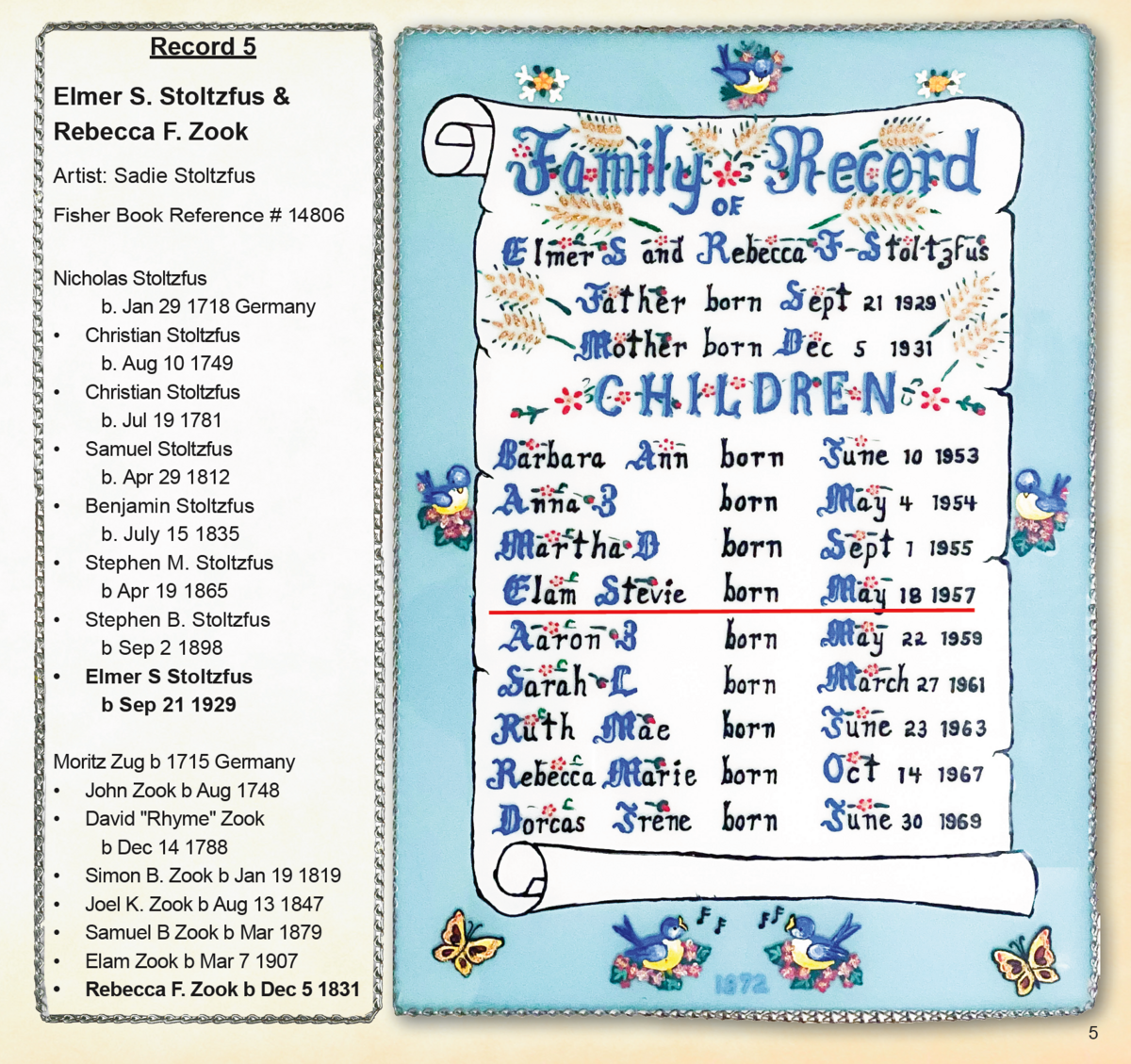
One afternoon I wandered into the shtupp (the sitting room known in German as the “stube”) and was mesmerized by what I saw. It was a painting on a pane of glass. Bluebirds and butterflies, their wings dusted with glitter, danced around the edges in delicate detail. In the center were eight names, painted in elegant script. The first two names were my grandparents, Stephen B. and Sarah L. Stoltzfus. The next five names were my aunts and uncles. The last name was my father, Elmer. Beside each name was a birth date.
Dad’s sister Sadie had painted this family tree as a gift. A few years later she made another one for Dad. That one had his name, my mother’s name, the names of my seven sisters and one brother, and my name. These family trees reminded me every day of who I was and where I came from. These twin panes of painted glass brightened the wall of our home and were treasured as heirlooms of our heritage.
As I grew older, life took me away from the farm and from the world I grew up in. I joined a gospel band, traveled across America for a while, and later settled in Tallahassee, Florida. I married Esther Yoder, studied media production at Florida State University, and together we raised two children. For almost forty years, Florida was home.
But the pull of Pennsylvania never left me. When we were in our sixties, Esther and I moved up north. We settled in Berks County, which borders Lancaster and Chester Counties, to serve as caretakers of the homestead of my immigrant ancestor.
Serving as caretaker of the Historic Nicholas Stoltzfus Homestead brought me even closer to my roots. I met with Amish historians and learned more about the people who came before us. I began to see our family not only as one branch on a tree, but as part of a much larger forest. More than seventy immigrant families left Europe in the 1700s and found a home in Penn’s Woods. We are part of that story.
When you are a caretaker, people often stop by to talk about their own family history. They bring old records and books that tell where they came from. One day someone brought me a hand stitched family tree of my great-great-great-grandparents, Stephen and Hannah (Miller) Mast.
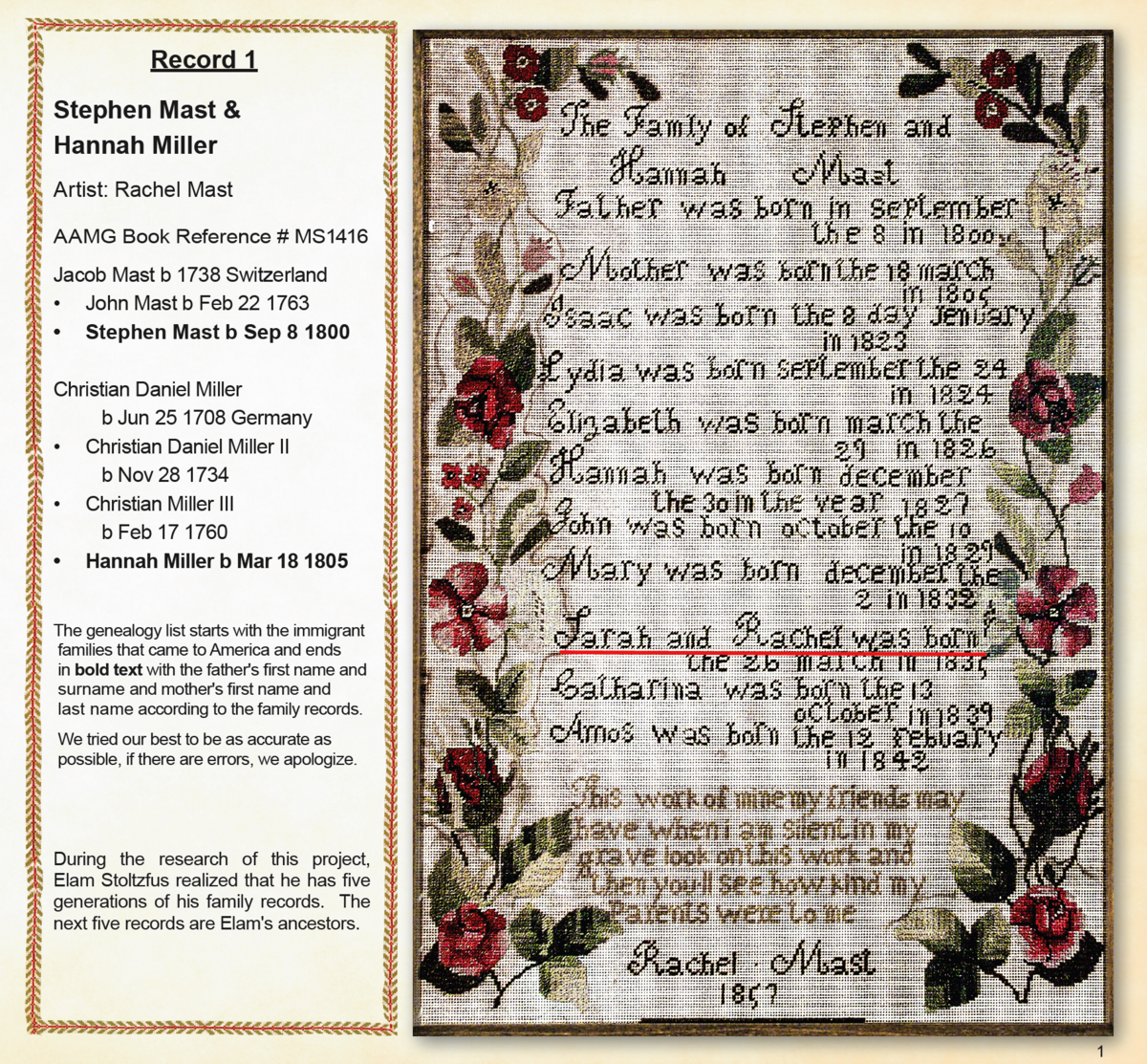
Stephen and Hannah had ten children, seven of them girls. Three of the girls married Stoltzfus boys, and I am descended from all three couples. There is a story about two of the girls, Rachel, who stitched the family record, and her twin sister Sarah.
My son Nic tells the story in his memoir, In the Footsteps of My Stoltzfus Family: A Genealogy Memoir:
“Sarah and Rachel Mast were twin sisters who lived back in the 1800s in the Conestoga Valley. Not only were they twins, but they were also identical. They looked so much alike that, in order for people to tell them apart, the sisters tied their apron strings on opposite sides. Even in later years, their own family had trouble picking out who was who…When they were young women, Sarah dated John U. Stoltzfus and Rachel dated John’s cousin Benjamin Stoltzfus. One day, the twins decided to play a trick on their boyfriends and switched with each other when they went on a date. The funny thing was, according family to legend, the switch stuck—Sarah married Benjamin, and Rachel married John U.; this was the opposite of who they originally started out with!”
Here is the twist: My father is descended from Sarah, and my mother is descended from Rachel. I guess you could say I am living proof of a successful prank!
After Rachel married and had a few children, she took an interest in her family history. When she was thirty-two years old, she stitched her parents’ family record on a square piece of cloth. The year was 1857, one hundred years before I was born.
Fast-forward to 2025. I am sixty eight years old, and I made my own family record using a computer and an ink jet printer. Fraktur, needlepoint, painted glass, digital design. Yes, the tools have changed over time, but each carries the same purpose: they are heirlooms of heritage.
I hope this inspires you to delve into your ancestry and discover ways to artfully tell your family’s story for futures to come.
What else should readers know about the book and topic?
Creating this book has been a collaborative effort rooted in curiosity, patience, and shared commitment. For nearly 30 years, Jack Parmer devoted himself to gathering family records, bookplates, and fraktur artwork. His collection became the foundation of this project, and I am deeply grateful for the care he invested in preserving these pieces of our Amish family history.
When I joined the project, Jack’s health was declining, and many of his digital files seemed lost on an aging computer. Thanks to a skilled technician, those files were recovered—revealing a remarkable archive of images and notes that made this book possible. Working alongside Jack’s wife, Loa, and daughters, Julie and Jeralyn, has been a privilege. Their trust and dedication helped guide every decision as we shaped Jack’s decades of work into a cohesive story.
This project grew out of my research on the Ausbund for Plain Values magazine, which led me to Aaron Petersheim and, ultimately, to Jack. Aaron also introduced me to Chris Lapp, and together we spent meaningful afternoons with Jack, surrounded by the materials that inspired this book.
I am grateful as well to Emily Smucker-Beidler, an accomplished fraktur artist whose generous spirit and careful hand brought beauty and continuity across the book. My son, Nic, contributed editorial guidance and several articles that strengthened the narrative. Special thanks also to Isaac Beiler for reviewing early drafts and to the Pequea Bruderschaft Library for their invaluable research support.
Finally, I extend heartfelt appreciation to the families who shared their private records with the Nicholas Stoltzfus Homestead throughout 2025 and 2026, making possible the year long exhibit of more than a dozen family documents in the historic stone house.
Our hope is that this book serves as a lasting tribute to the families and artists featured in the following pages and to the man who spent a lifetime preserving their records.
About Jack Parmer, whose collection made this book possible
This book would not exist without Jack Parmer, who spent nearly thirty years gathering the family records that fill its pages. Jack passed away in 2025. Elam’s son Nic Stoltzfus wrote the following tribute to him.
John A. “Jack” Parmer (1931–2025) spent his entire life in Lancaster County, Pennsylvania. His story is one of curiosity, steady work, and a deep respect for the history of the people around him. Born in Brownstown to Aaron Rutter Parmer and Margie W. (Hoover) Parmer, Jack grew up with an interest in the religious and cultural traditions of the Anabaptist communities nearby. That early connection later shaped his fascination with the fraktur artwork found in Amish and Mennonite Bibles, hymnals, and family records.
Jack studied at Rensselaer Polytechnic Institute, the University of Pennsylvania, and Elizabethtown College, where he earned a B.S. in Biology in 1973. He spent most of his career at Berkley Products in Akron, Pennsylvania. He began as a paint chemist and eventually became company president.
After retiring, Jack poured his energy into the things he loved. He sang in local choirs, enjoyed photography, and volunteered with historical groups across the county. He helped raise funds for the Historical Society of the Cocalico Valley. He supported the effort to build a barn at the Nicholas Stoltzfus Homestead. He cleaned old cemeteries, including the Rutter Family Cemetery, with Amish volunteers. He also created software to help catalog artifacts at Ephrata Cloister, where he was recognized as Pennsylvania’s Volunteer of the Year for his work in cultural preservation.
On a personal note, I saw firsthand how careful and forward thinking Jack was. He saved meeting minutes, newsletters, photographs, and flyers from the early days of the Nicholas Stoltzfus Homestead Preservation Committee. Those records became essential when I later wrote the Stoltzfus family coffee table book.
Jack’s work with Pennsylvania German fraktur was steady and thoughtful. Over many years, he built friendships within the Amish community and earned enough trust to photograph privately held records. He and his wife, Loa, spent countless hours at auctions and antique shops searching for pieces that might add to the story he was building. Between 1995 and 2005, Jack gathered and digitally preserved a remarkable collection of fraktur that spans about a century of artistic tradition. His efforts were more than simple documentation. They were a way of caring for the past and making sure these pieces would not be forgotten.
Jack’s work gives readers a window into a world where faith, family, and creativity meet on the page. Every line of ink and every stitch of needlework carries a story, and Jack made it possible for those stories to be seen again.
— Nic Stoltzfus is the author of German Lutherans to Pennsylvania Amish: The Stoltzfus Family Story. He served as caretaker of the Nicholas Stoltzfus Homestead from 2018 to 2020, living in the two story bank barn that Jack helped envision and support.
Where to get the book
Amish Family Records of Lancaster County, Pennsylvania: Fraktur & Needlework—1800 to 1900s is available at masthof.com among others.
Thank You
I love the art of Fraktur and am excited about this publication, thank you for alerting us to it:)
On my way to order my copy!