
Amish Father: County Threatened To Take My Children Over Outhouse Permits
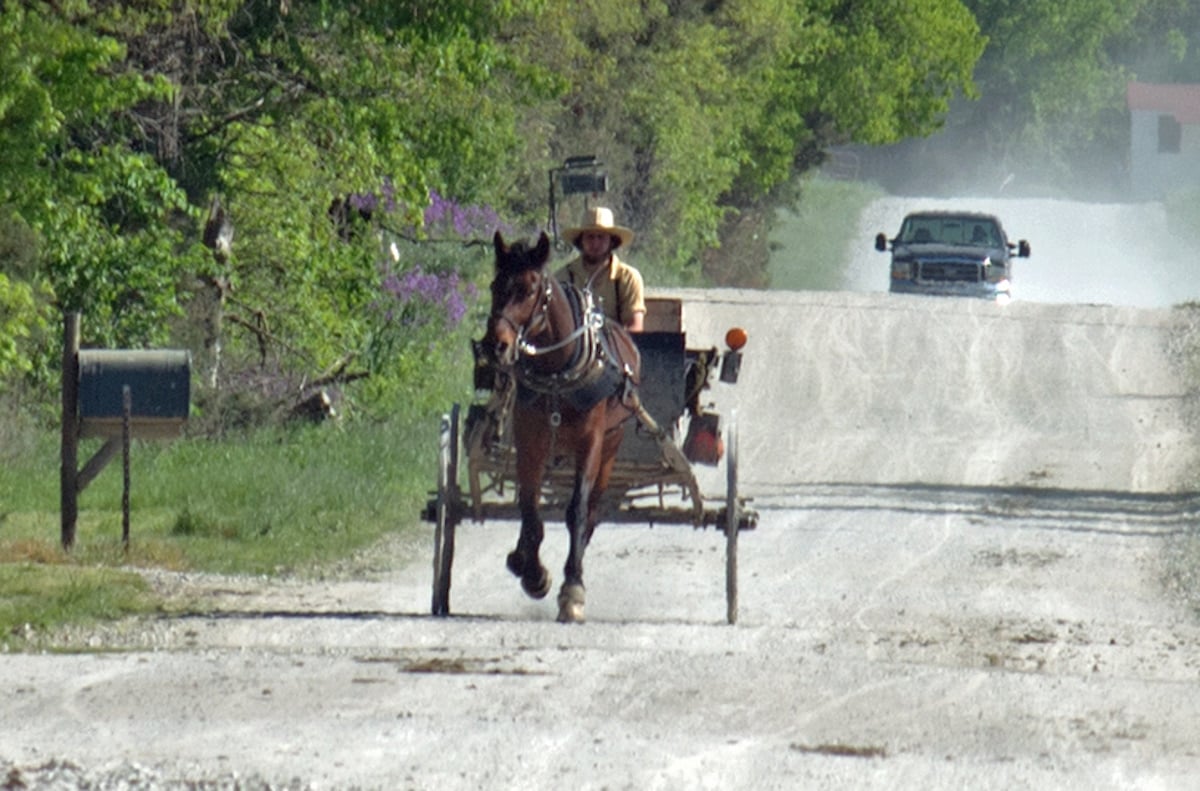
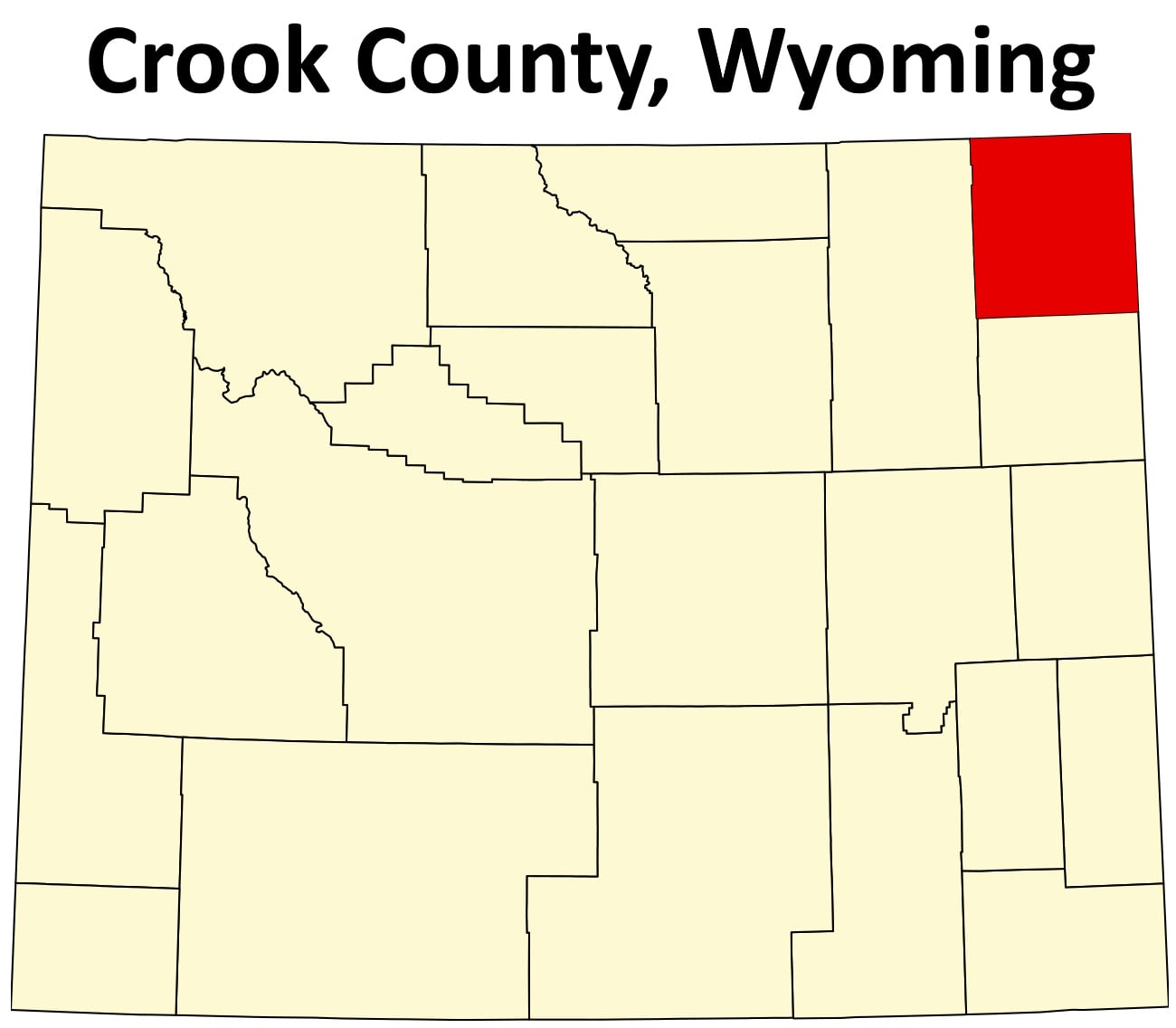
The county, for its part, “vehemently den[ies]” that claim, according to new reporting at Cowboy State Daily. The issue is one we looked at last week in the Amish community at Hulett, Wyoming.
A non-Amish rancher claimed that Crook County officials were driving Amish families away due to how it was handling a dispute over Amish use of outhouses. The man in question claimed that the county had threatened the Amish with $30,000 daily fines.
Now we hear from one of the Amish people at the center of the case, a man named Abe Yoder, who sold his home and moved to a community in Iowa, where this issue is not an active problem.
Yoder called in from a community phone to speak with the paper for the piece – and he had a lot to say.
Taking Children? New Claims Add Further Layers To the Story
The new report adds multiple new layers to the story. Here’s the gist of the new reporting:
Yoder told Cowboy State Daily the county had threatened to fine him $10,000 per day per outhouse on his land that did not have a permit, threatened to take away his children, and asked him to sign a contract giving county officials permission to inspect the outhouses at any time.
County officials told Cowboy State Daily they did invoke financial incentive to get Yoder to comply with county regulations.
They also point to a blanket clause on all county paperwork that asks for permission to inspect property.
But they vehemently deny anyone threatened to take away his children.
“There was no such thing,” said Caleb Peters, Crook County wastewater treatment specialist.
Yoder seems to think there was a threat:
He said officials leaned on a 2025 high-profile case in Massachusetts in which the children of Isael Rivera and Ruth Encarnacion were taken into custody by the state after a pediatrician reported the family for medical neglect because they refused to vaccinate their 9-month-old due to religious beliefs.
Those children remain in the care of the Massachusetts DCF and the case is ongoing.
“They used that case to threaten us,” Yoder said.
Here’s the response to that claim from the county – by Crook County commission chair Fred Devish and county wastewater treatment specialist Caleb Peters:
Devish said to that claim, “I laugh out loud. That is ridiculous. No. No. There’s no taking children away. Good Lord.”
Peters likewise strongly disagreed.
“We indicated in all our letters that it is a safety violation that could cause harm to family and neighbors,” he said. “But it had nothing to do with anything about his kids.”
Those are denials of sorts. But if you look closely at what’s being denied in these quotes, Devish seems to be rejecting actually taking the children away.
Peters’ flat “there was no such thing” in the opening excerpt I quoted is answering that same charge – the threat to take the kids – not the narrower thing Yoder describes.
And Peters’ other comment here talks about the safety violation being indicated in their letters, while suggesting the question of kids had nothing to do with that.
However, the way things are stated in this report*, no one is saying spot-on-the-nose that “we never brought up that Massachusetts case.”
In contrast, regarding other claims of Yoder’s (about it being a “money grab” – see below, and claims of trespassing), they are more concrete and direct in their denials.
What may have happened is that someone told Yoder of this past Massachusetts precedent and let him draw his own conclusions. Another alternative is that Abe Yoder invented this part of the story and is lying.
Do the officials believe that Yoder invented this idea on his own? If so, it would be good to state that to the reporter.
If no one ever mentioned the Massachusetts case, it would be good to make that crystal-clear. Lacking that, I remain skeptical that they never introduced this idea to Yoder in some fashion.
*This all assumes, of course, that the report quoted Devish and Peters accurately, and did not leave out key details.
The Other Aspects
Yoder, for his part, describes himself as “sovereign”, which, to be frank, I usually read as meaning “someone who doesn’t need to follow all the rules they don’t like”.
Part of his objection it seems was to paying a $200 fee for a permit for each outhouse in question (one for his home and two more on his property that served the school).
He says that he had lived on the land for 10 years and had never been required to get a permit: “It was never a problem…Now, they come out and pounce upon me.”
But rather than being a “money grab”, as Yoder’s side described it, officials say the $200 is intended to pay for the county’s time and effort in inspecting the property and handling paperwork.
The “sovereignty” objection comes up here, captured well in this excerpt:
The issue largely boiled down to filling out paperwork, Devish added.
But it’s paperwork Yoder was not willing to sign.
Pomerenke told Cowboy State Daily that Yoder didn’t want to sign paperwork because under his sovereignty he didn’t need to.
He recounted a similar struggle that his own Amish grandfather experienced a half-century ago in Wisconsin. His grandfather was fined $75 a day for having non-conforming outhouses and ultimately landed in jail.
“He wouldn’t pay because he didn’t think it was a valid law,” Yoder said.
Yoder cited the 14th Amendment in his defense, casting the actions of the county as violating it: “In my way of looking at it, they threatened my life by threatening to take my children away. They threatened to take my property by putting a lien against it. This is unconstitutional.”
He also claims officials trespassed on this property when they came to inspect the outhouses.
A Community Rift
There’s more to the story than this, and Kate Meadows has done a really nice job reporting it, so I recommend reading the whole thing at the link above.
I’ll just leave with comments from Yoder on the community he left behind – it seems the issue has left something of a rift:
For Yoder, the biggest disappointment is not that he felt strong-armed by the county. It’s that his own people backed down when county government came knocking.
“Had the community stood together, they could have easily won the whole thing,” he said. “We didn’t have enough unity to go to court.”
Pomerenke said Yoder didn’t have the support of his whole community because the Amish are peace-loving people.
“They go along to get along,” he said.
Yoder’s concern now, he said, is that because others relented and applied for permits, the county will ask for more of them.
“If we would know how to work together and stand against these things then we wouldn’t be in bondage,” he said.
Yoder now sounds like he’s happy at his new settlement in Iowa, where they once faced the issue but “stood together” and defeated it in court.
And for their part, Devish says that they were just doing their job, and are “not trying to drive the Amish away.”
This is probably one of those stories where those who weren’t involved will never know 100% what really happened.
It appears that most of the Amish in this community went along with the requirements, and that only two of the community’s families, one of them being Yoder’s, refused to comply.
So it doesn’t sound like the Hulett settlement will be going away as a whole, and the rift, to the extent that it exists, has a lot more people on one side of it than on the other.



Sounds like that Crook County has some dishonest progressives in power. County officials are conveniently talking about paperwork but Yoder is likely discussing what was said to him in person.
I am sorry the Amish have to deal with over zealous government officials. Our laws are supposed to be for the good of everyone, but they can & do overstep, even when dealing with us “English” people. Besides that, I think the problem sometimes is ignorance on the part of the government representative who is supposed to know their job, or rudeness, or prejudice for various reasons. May God bless these Amish people. It must be the will of God they move from there.
God supports evil?
John 10:10…
“The thief cometh not, but for to steal, and to kill, and to destroy: I am come that they might have life, and that they might have it more abundantly.”
John 10:10 KJV
https://bible.com/bible/1/jhn.10.10.KJV
These words are in red… The thief is clearly the devil. Jesus clearly is saying only good comes from Him. There are out scriptures that support His words. The devil is clearly causing distress and uprooting a family, causing strife and dissension, and causing a family to move.
Is it God’s will to promote evil? Read your Holy Scriptures…
No surprise about the county officials. Give some yokel a little power and they go into what I call “Little Big Man” syndrome. TWO hundred dollars/ per outhouse? At times 3, makes $600. Just for an inspection and paperwork? Counties are never satisfied with what they already steal out of peoples’ pockets with taxes, and it seems every government, state, local, federal, are always finding ways to pick our pockets every little way the can, and the “littles” add up to quite a bit. Yes, Yoder was right, we are in bondage. We have to pay a fee for every last thing we do! I used to kid they’d tax the air we breathe,..yep! “Carbon tax”. And how exactly did Mr. Yoder hear about the Massachusetts deal? I didn’t think the Amish followed news that closely, so I am thinking the officials DID subtly make that threat. And originally being from CT, which is a communist state like Massachusetts, they recently passed a law MANDATING children be vaccinated, NO EXCEPTIONS. I never put anything past the government! I’m glad Yoder got out of there.
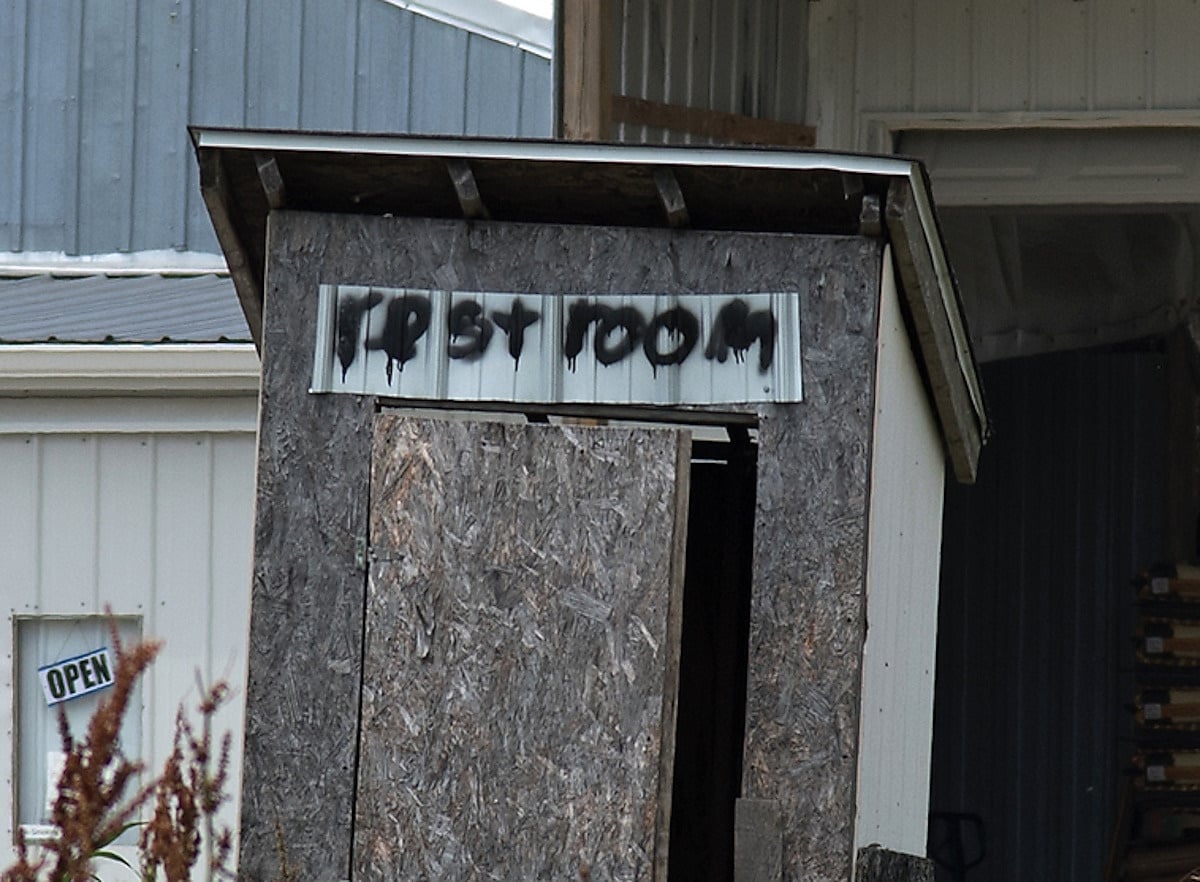
Out House
I agree, the Amish I know do not lie. The Amish I know do not have anything to do with electronic tech, which limits their knowledge of anything beyond their community. I firmly suspect the city officials threatened Mr. Yoder. I never trust any government official. “Trust me, I’m with the government and I’m here to help”.
Once the community allows the government to overstep Constitutional protections… there are no more protections. Once the government is allowed an inch, they WILL take a foot, then another foot, and another…
Outhouses
How would a conservative Amish man in Wyoming find out about a family losing their children to the State of Massachusetts? The conservative Amish folks do not use technology to do research. Does Mr. Yoder have someone doing research for him?
As for the State, they seemed fixated on a method to control a religious group with controls that only increase once a foothold is allowed. There are constitutional protections to protect against government over reach for control. But once the government is allowed in the Constitutional rights cannot help. The government in Wyoming knows that once the Constitutional protections are waived, they can do anything.
The Amish hide behind the false idea that non resistance is the Bible way… too bad they didn’t understand that the apostle Paul appealed to Ceasar.
As for outhouses… for all the decades… centuries that outhouses have been used… how can the government become such a beast toward these people. Where is the documentation that Out houses have been at any time a source of destruction of a family.
Government over reach. Government power move. Government control. What happened to “We the People”?