
Echoes From Amish Country: Voices Of Hope
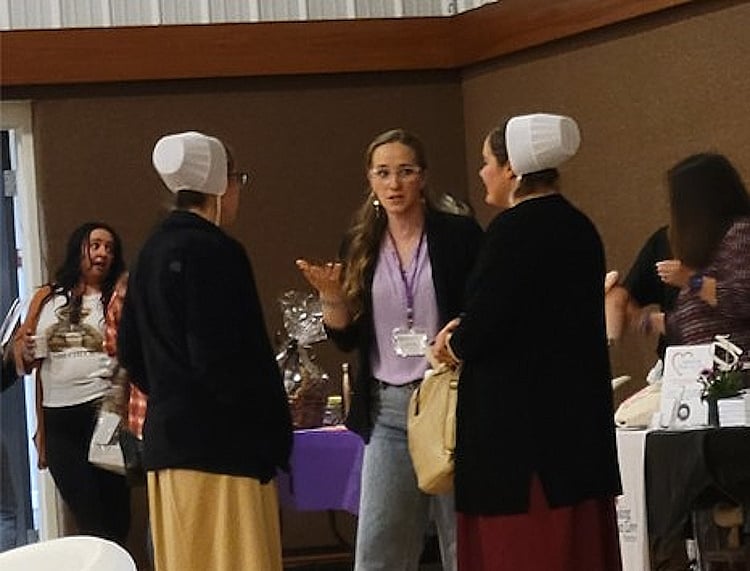
The church parking lot in Holmes County was already filling when Lizzie and I pulled in.
Women in plain dresses, women in jeans, and women in dress slacks moved steadily toward the doors carrying coffee cups, purses, notebooks, and homemade snacks.
Some greeted each other like old friends. Others looked nervous, like they were still trying to decide whether they belonged there at all.

Inside, the smell of coffee and homemade food drifted through the building while women found seats beside strangers who, in many ways, were not strangers at all.
I remember sitting there realizing something uncomfortable:
I was walking into a room full of stories that, for generations, were rarely spoken out loud.
For years, I had seen glimpses of those stories from the driver’s seat of my taxi van.
I have driven Amish women and children to counseling appointments in Ohio, Pennsylvania, Colorado, and Missouri. I have watched Amish men suffer mental breakdowns. I have listened to people cry in the backseat after finally telling someone what was happening inside their homes.
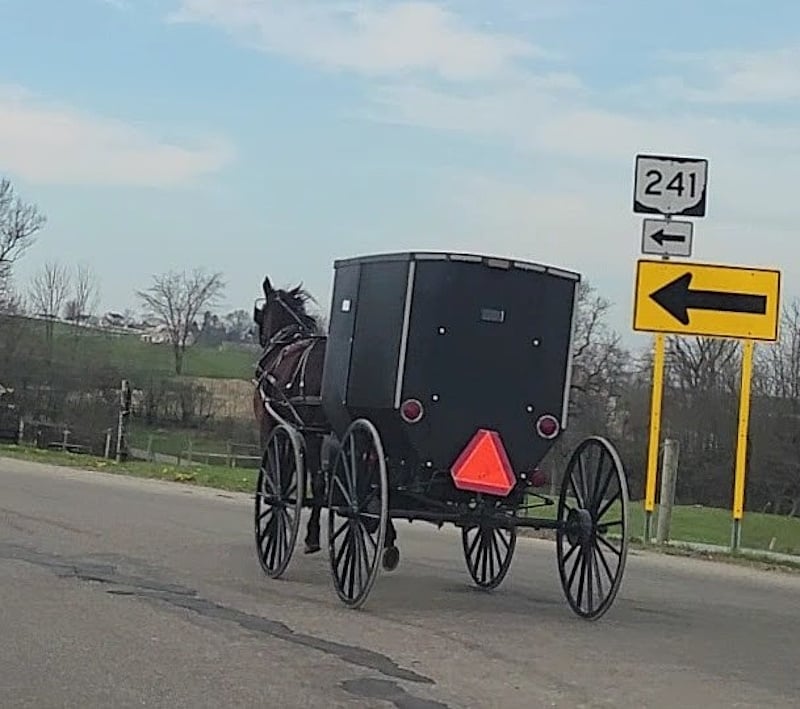
Before becoming an Amish taxi driver, I don’t think I fully understood the depth of suffering that can exist inside close-knit religious communities. Like many outsiders, I saw the beautiful farms, the family closeness, the slower way of life, the homemade food, the peaceful image most people associate with the Amish.
What I didn’t yet understand was that abuse can exist anywhere human beings exist.
And for a very long time, many painful things inside Amish communities simply were not talked about openly.
That is beginning to change.
I first became acquainted with Lizzie Hershberger at an Amish awareness meeting in 2021. These meetings are held for Amish church leaders, parents, teachers, and others who work with children so they can learn to recognize signs of abuse and better understand how to help families in crisis.
Years ago, subjects like abuse, trauma, depression, and mental illness were rarely discussed publicly in Amish settings. Today, some communities are beginning to face those realities more directly.
Lizzie and I became fast friends, and eventually she invited me to attend the Voices of Hope conference in Holmes County, Ohio.
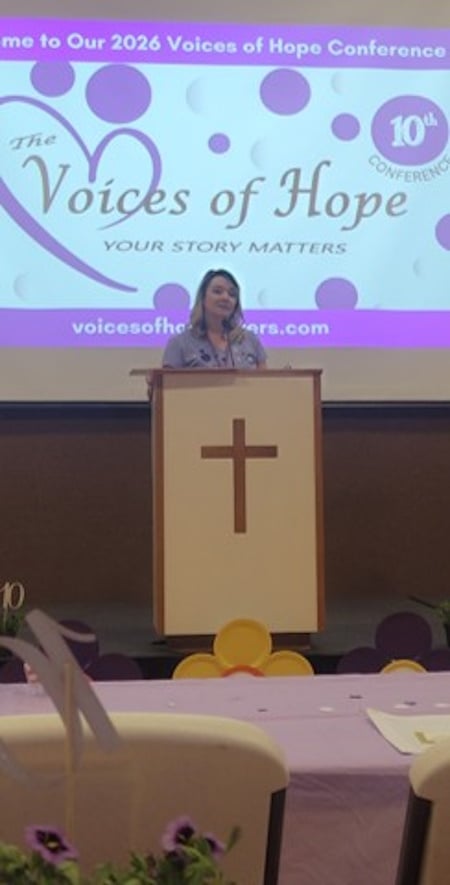
Voices of Hope was founded by former Amish women Dena Schrock and Lizzie Hershberger as a place where survivors of abuse could come together, share their stories, and find hope and healing through faith and community.
To be honest, I wasn’t entirely sure I belonged there.
I had not experienced physical abuse myself, and I didn’t go intending to write an article or investigate anything. I mostly went to listen and to better understand the people I had spent years driving up and down the highways of America.
As a taxi driver, you hear things.
People talk when they are far from home.
They talk when they are hurting.
They talk when they finally feel safe enough.
Still, nothing quite prepared me for sitting in that room and hearing women speak openly about things they had carried silently for decades.
Some spoke about growing up in homes where fear controlled everything behind the scenes while the outside appearance looked perfect. One woman described living on a beautifully manicured property where everyone assumed the family had an ideal life, while privately she struggled with shattered self-worth and constant blame.
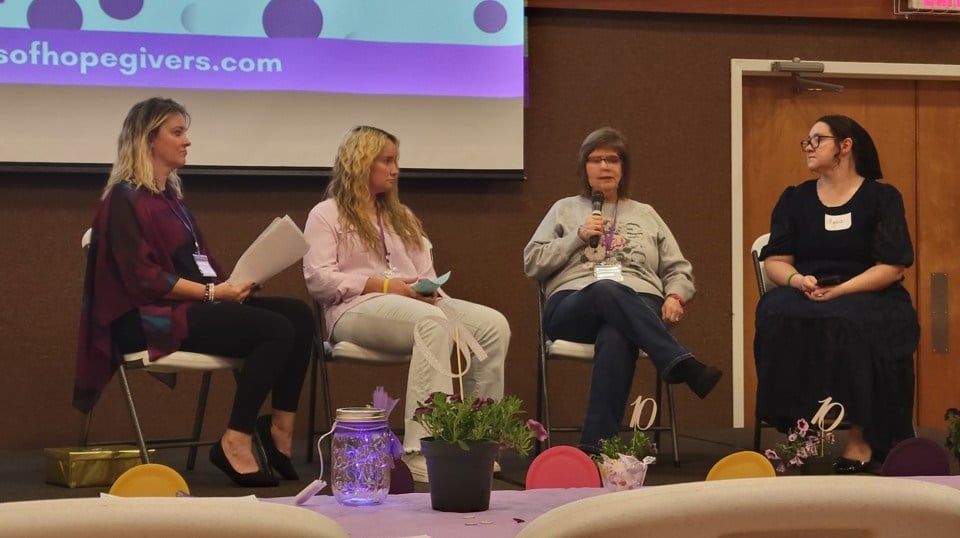
Another speaker shared about growing up with a father battling mental illness and addiction. She spoke about walking on eggshells as a child, being bullied at school, struggling with depression, and eventually ending up in mental health facilities herself.
At one point, she admitted she had no real dreams for the future because so much of her energy had gone into simply surviving one day at a time.
Again and again, women spoke about silence.
About pretending things never happened.
About learning as children that their feelings were a burden.
About becoming people pleasers because approval felt safer than honesty.

But they also spoke about forgiveness.
About healing.
About faith.
About learning they were not alone.
One thing they said at the conference really struck me:
“Trauma and dysfunction are created by not talking about it.”
I kept thinking about that on the drive home.
There was music throughout the conference. Prayer. Laughter. Women gathered around tables eating homemade food and exchanging phone numbers. Some cried while telling their stories. Others sat quietly listening, perhaps hearing their own experiences spoken aloud for the very first time.
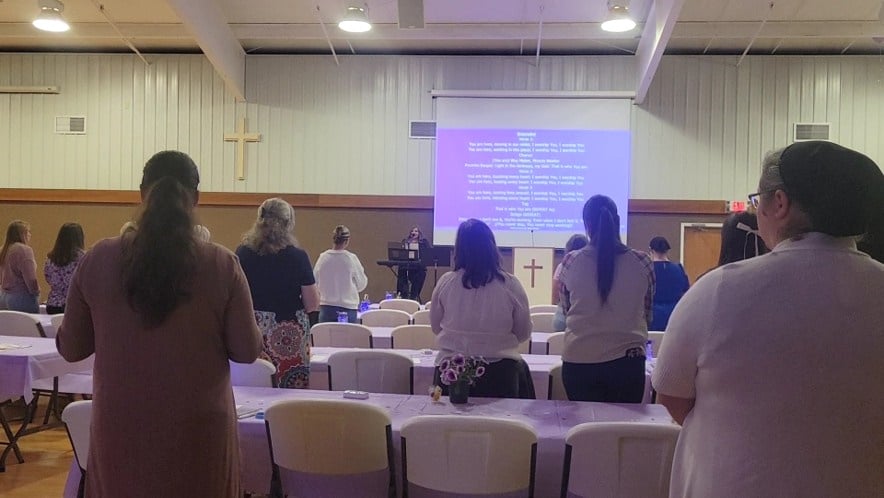
And somewhere in the middle of all of it, I realized something I hadn’t expected.
I recognized pieces of my own story too.
Not physical abuse.
But emotional manipulation.
Fear.
The slow wearing down of self-worth that can happen so gradually you don’t recognize it until much later.
I had come to observe and learn about the experiences of others. Instead, I found myself understanding parts of my own life more clearly too.
That may have been the most surprising part of all.

Before attending Voices of Hope, I think I viewed abuse mostly as something obvious — bruises, violence, broken homes.
What I began to understand there is that wounds people carry are often much harder to see.
Sometimes they hide behind polished kitchens, church clothes, busy families, smiling photographs, and communities that look perfectly healthy from the outside.
And honestly, I think a lot of healing begins when people finally realize they don’t have to keep carrying everything alone and pretending nothing happened.
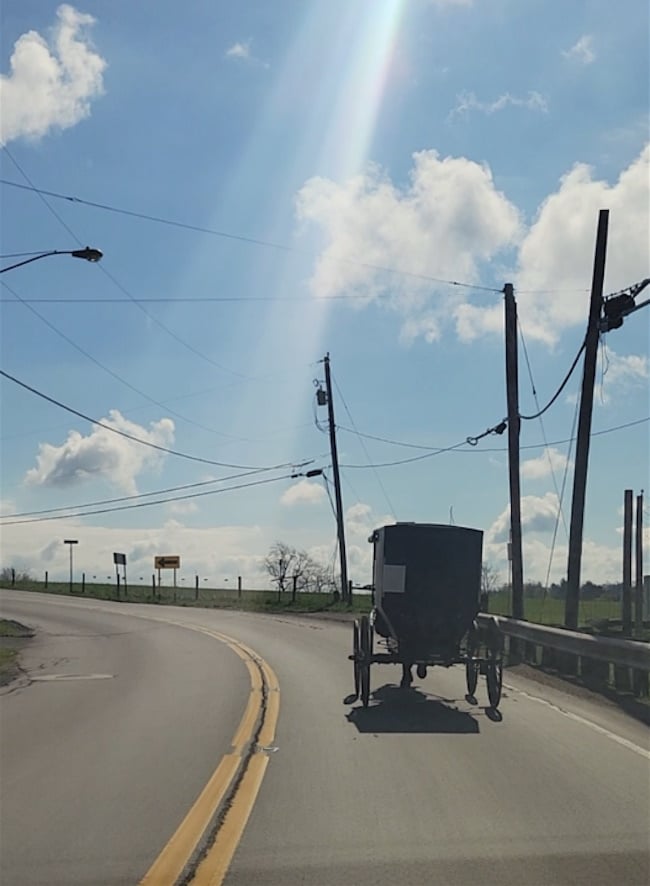
As Lizzie and I left Holmes County and headed home, I kept thinking about how many people are carrying pain in silence — Amish and non-Amish alike.
Maybe that is part of why gatherings like Voices of Hope matter so much.
Not because they erase the past.
But because they remind people they no longer have to carry it alone.
Have you ever heard someone else’s story and suddenly understood part of your own?
Haley Straw is a barefoot homeschooling mom of six who somehow ended up becoming an Amish taxi driver.
From her century-old jailhouse home in rural Missouri, she writes true stories about late-night Amish rides, frolics, disasters, awkward moments, unexpected wisdom, and the kind of community most people don’t realize still exists. Her stories help readers slow down, laugh a little, and remember what matters most.
You can find her signed books, free Amish-inspired goodies, and more at haleystraw.com


Yes, yes, yes!
Yes, Haley…so many put up a false face to cover hurts and scars. I’ve read several books by Amish writer Linda Byler. At first I was surprised that her fiction dealt with physical and sexual abuse, hypocrisy, gossip, racism, extreme judgement and punishment…and even shunning. I think her books (which are read by English and Amish alike) broach these previously guarded secrets in the community. Linda Bylers books may give readers courage that they are not alone. Courage to speak up. Courage to influence change.
Shinging the light
Kelley,
Thank you for this comment.
One thing I’ve learned over the years is that every community has beautiful things worth preserving and hard things that need addressing. The Amish are no different.
Stories can be powerful. Sometimes they help us understand others. Sometimes they help us understand ourselves. And sometimes they give people the courage to realize they’re not the only one carrying a burden.
I appreciate you sharing your perspective, and I think that’s one reason conversations like this matter.
Into the light
Yes, this resonates with me too. Now I have to share a true story. I also have been through every type of abuse on the list both by parents and a husband and others on the road of life. In my young 20’s I was single again, living with my mother, and we both huddled together to survive financially as she was a recent widow. She got me a job where she worked in an office. People said I worked too fast and was efficient. A few months later I was let go. The next day, so was she. I found out later it was due to her mental illness (long story) that caused us both to suffer. It wasn’t the first time. Now neither of us had a job but the rent was still there to be paid as all the other expenses were as well. I went to a church and often looked at their bulletin board and just then I noticed a post for a job opening at a nearby Christian company. So I applied and got the job. Shortly after they had another opening and I suggested my mom, and she got the job. So due to her, we both lost a job but due to me, we both got a job. I know it was God’s providence. Well the job was the type where you were a mandated reporter and had to watch videos about abuse and what to look for. It was a small, close knit company and the wife of the manager had me at her place watching this video in her living room. As I watched, I recognized myself in every form of abuse as the victim and it stirred things up emotionally to the point I was on the verge of tears. Yet some of it was due to my mom. At the end, the woman came back in and sort of looked at me as if to see if I was okay or a ball of sobs. I had to hold it in, I could not reveal any of what I was feeling or thinking and why or it would have cost her and maybe even me the job we both so desperately needed. So I just smiled, and nodded ‘yes.’ So I know this feeling very well. I did not want to have a perfect looking exterior to fool outsiders, but I could not let this out either. As the years went on I kept learning more about abuse and types of it that many do not even realize are abuse. Often religious communities have that perfect appearance on the exterior but inside it is far from it. Many also weaponize religion in ways that are abusive. It is so sad, drives people away from God, and is the total opposite of what Jesus wants and is all about. But this makes all the difference between the real thing and the fake. When I became a Christian God miraculously healed me from the inside out of the abuse I had suffered but that’s not to say we still can’t cry sometimes when we realize something new about the trauma we went through. It definitely needs to be talked about!
messy
Cindylou,
Thank you for sharing this. I suspect many people know what it’s like to smile and say, “I’m fine,” while holding everything inside.
What you said about continuing to learn and understand your experiences years later is likley something you share with many who have been abused. Healing isn’t always a straight line.
I’m grateful you took the time to share your perspective here.