
Rules of the Road: Five Approved Uses of an Amish Taxi Driver

Haley Straw returns today with the second installment on what it’s like to be an Amish taxi driver. And here’s part one if you missed it.
In my last article, I shared what it’s like behind the wheel as an Amish taxi driver. Today, I want to look at the other side of the story: the rules of the road. Because while many Amish see hiring a van as simply convenient, there’s also a moral layer to the decision.
At first glance, that might sound strange—morals connected to riding in a van? However, once you understand the history, it begins to make sense.

It wasn’t always like this. For decades, Amish relied on trains and later buses for long-distance travel. In the 1930s, county seats had trains running daily, offering connections across the state.
By the 1950s, buses reached the smaller towns where trains no longer went. Those trips took longer, which meant visits with faraway friends and family were longer too— aligned with Amish values of plain living and deep-rooted connections.
However, as highways expanded in the 1970s and bus routes decreased, vans and station wagons became the primary mode of transportation. Travel by personal vehicle was faster, cheaper, and more practical.
The Amish, out of necessity, adapted. Hiring a van meant they could still get where they needed to go. Yet it also meant visits were shorter, conversations fewer, and connections more rushed.
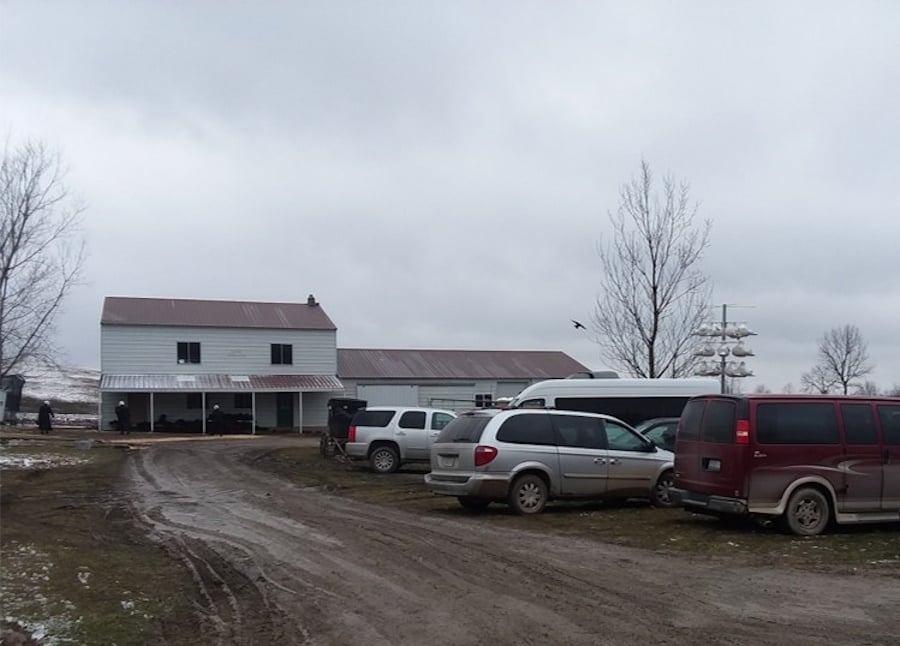
Amish tradition still discourages flying (except for medical emergencies) and forbids car ownership in most communities. The general belief is simple: why lean on the world when you can lean on your people, your God, and your community?
Here’s where the moral question comes in. A car represents freedom, speed, and access to the outside world. To the Amish, that isn’t harmless—it risks distraction from God and dependence on a world they are intentionally separate from.
Hiring a van driver too often can be seen as a “hack” around the rules, drawing them closer to the modern ways they’re trying to resist.

Did you ever stop to think about that the last time you drove to the grocery store or took a road trip? I never did. To most of us, a car is merely a means of transportation. To the Amish, it’s a spiritual decision.
So what, then, are the valid reasons for the Amish to hire a taxi and van? Hop into my van, and let’s take a closer look.
Five (Approved) Reasons Why Amish Hire Drivers
In the Van Rider’s Handbook (introduced in the previous post), five clear reasons justify hiring a taxi driver. Below are the reasons, along with stories from my journeys with the Amish, that bring those guidelines to life.
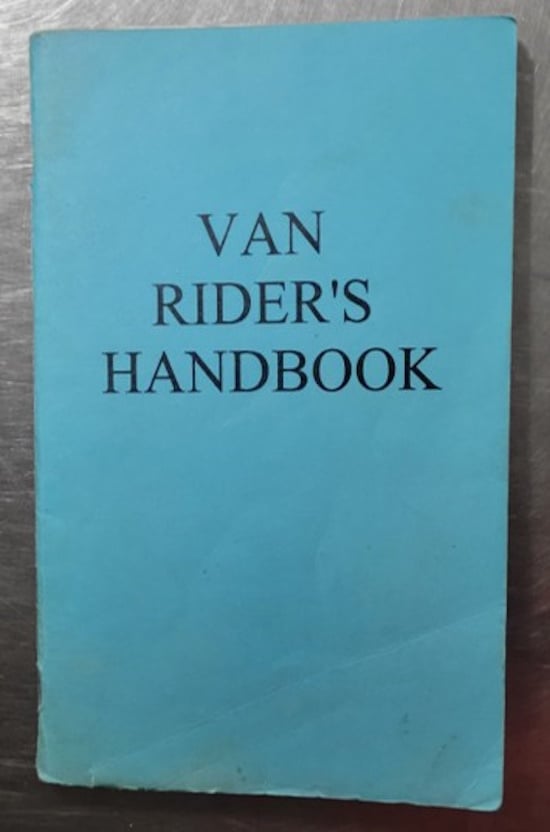
1. Visiting Friends or Relatives
The handbook says: hiring a driver to visit family and friends is acceptable—connection is important.
I remember waking up at Jacob and Laura’s Wisconsin farm in the early morning hours. Children’s laughter, women bustling, men preparing for the reunion—it felt like stepping back in time. Brunch was laid out: homemade butterscotch cookies, noodles, bologna sandwiches, beans, pudding, and fruit cakes.
As plates were cleared and conversation drifted, my children and I (my youngest two children often traveled with me) slipped away into the van and made a short detour to the town library.
The librarian, kind and unexpected, arranged popcorn and a movie for my children while I scoured clearance shelves in the book sale section. We returned to the Amish farm just in time for the tail end of the reunion.
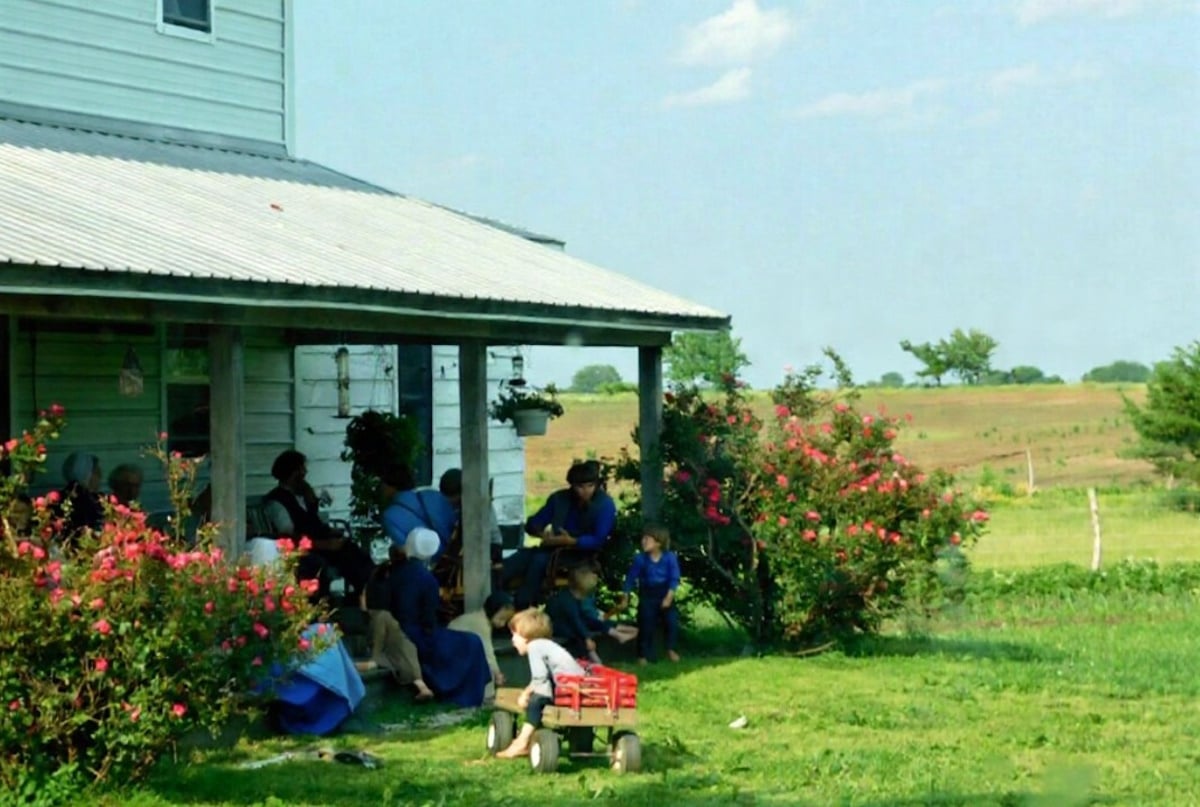
On the ride back, Mary, the woman who hired me to drive her and her family to the reunion, told me of a family dinner planned that evening for an anniversary.
We had to find lodging, but the kindness of the community made it possible – they welcomed all of us into their homes. Cooter, the farm dog, greeted us at the door. On that three-day trip to Wisconsin, I felt part chauffeur, part visitor.
That trip embodies what the handbook means by “visiting,” where the true destination was the time spent together.
2. For Health Reasons
The handbook permits hiring a driver for medical or health-related needs.
One day, a call came: “Driver canceled — can you take me to Des Moines for a chiropractor appointment?” I picked up Lester, Emma, and several of their children. In the back of the van, they placed a large box of homegrown tomatoes, and I wondered why.

Lester explained that as a young man, he had fallen off a roof while building a house. His back never healed right.
I followed them into the office and sat in the waiting room while they met with their doctor. I watched as the tomatoes were given as part of their payment for treatment.
I’ve also taken Amish to individual counseling, marital counseling, long-term intensive therapy, to midwife visits, to get vaccinations, to dental appointments, pretty much anything we commonly use a doctor or therapist for, they do too.
3. For Business Purposes
The handbook permits hiring a driver to facilitate legitimate business activities.
Henry’s call came at night: his driver had canceled, and his business trip to Wisconsin was still on. He asked me. I hesitated — we were strangers, I am a woman, he a man. But he told me, “You live a higher standard as a Mormon, so I’m not concerned.”
We made the trip. Boxes, a black box phone, a whiteboard — items flowed in. On the road, Harvey and I chatted about supplements, healing, and his recovery from a head injury. He even asked, “Do you drink herbal teas and smoothies?” Which I do!
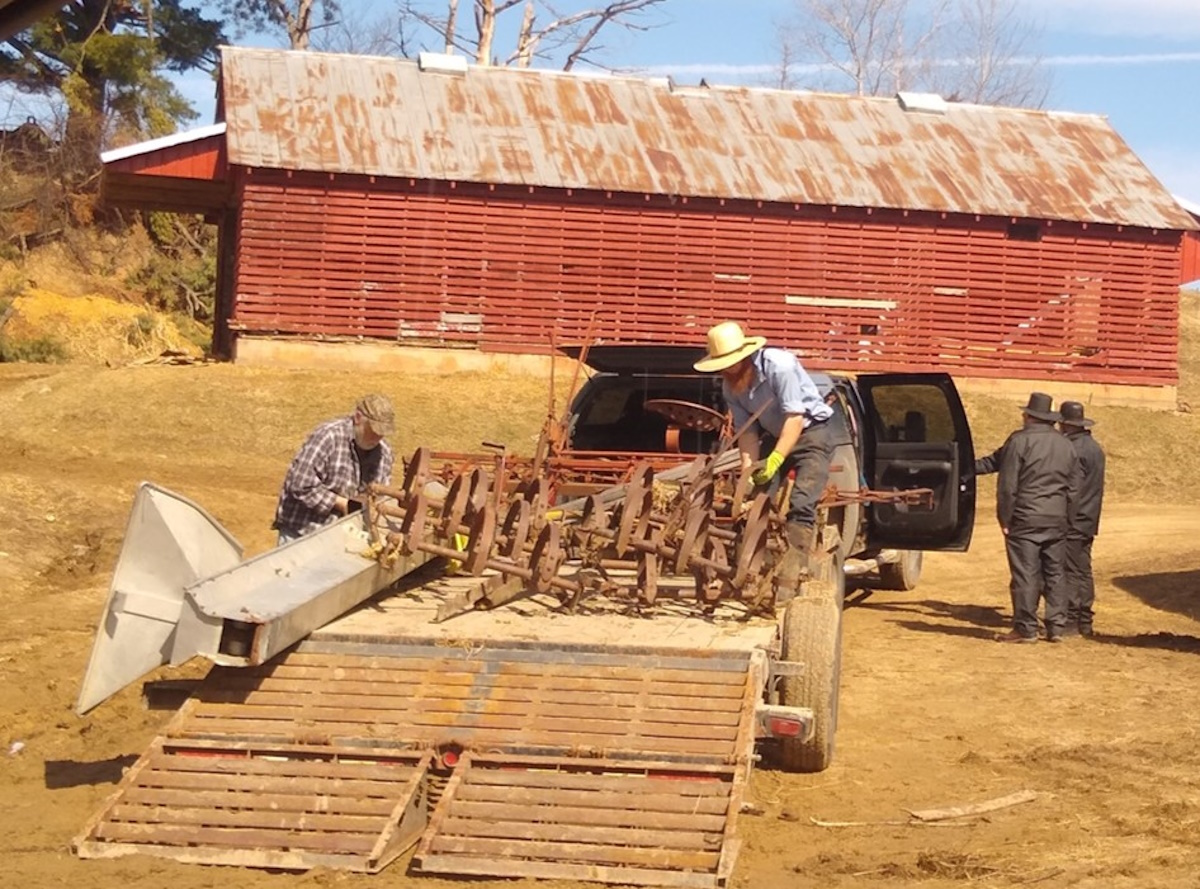
Upon arrival, he held a meeting in Wisconsin; we toured homes, dropped people off at their homes, and made stops for supplies.
That ride wasn’t just commerce—it was both business and a human connection. Business travel demands more from me as a driver: discretion, respect, and patience.
4. Land Shopping or Moving from one community to another
The Handbook allows hiring a driver when looking for land to purchase or when essential shopping is involved.
What counts as essential? That depends on who you ask.
One Christmas, the teenage boys and young men who worked at the community’s sawmill asked me to take them to Cabela’s in Kansas City. At 10:00 a.m., we loaded the van: eleven men and one woman (me). I picked up the passengers from six houses before heading out.
Raymond, the sawmill owner, sat up front as co-pilot. Along the way, Ura’s dog kennel business became fodder for jokes. In the van, music played — country, gospel, Shania Twain — even though Amish in that community usually avoided music other than their own singing.
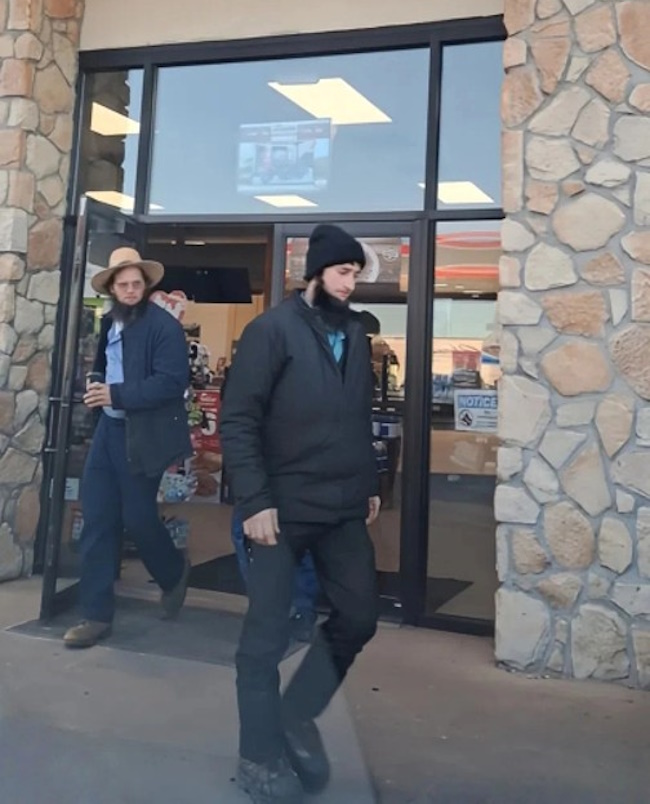
We stopped for ice cream. I watched eleven men swarm the ice-cream shop, all with identical hairstyles and similar attire – that was a sight.
Although shopping wasn’t always “necessary” by their standards, in that rare instance, they deemed it acceptable enough to hire a driver and make it possible.
5. For Social Reasons – Such as funerals, weddings, religious services, parochial school meetings, etc.
The last permitted reason is travel for weddings, funerals, religious services, and school meetings.
In Spring 2020, Felty, a bishop, asked me to drive a load from his community to a funeral in Hazleton, Iowa. It was an early run; I had to get up at 2:15 a.m. and pick them up by 3:00 a.m.
Arriving in Hazelton at 7:30, plenty before the 9:00 a.m. funeral, I watched dozens of vans, SUVs, and buggies converge in the fields surrounding the Miller home, where the funeral was to be held. I took a short nap, then drove Felty and the company to the graveside. Hundreds gathered.
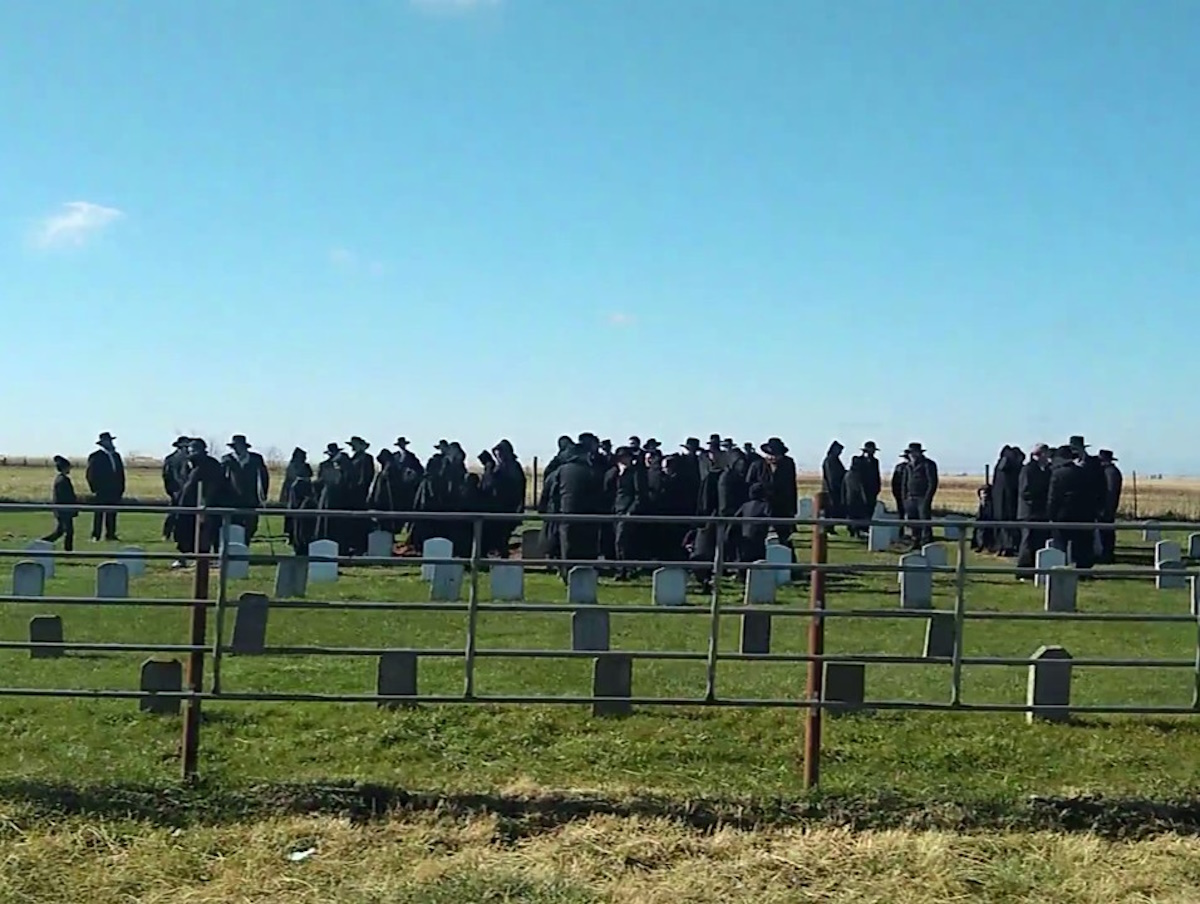
Lunch was handed through windows at the home to the long line of mourners, because it would have been too crowded to host everyone inside. Drivers ate outside in their vans.
That ride wasn’t about comfort, but about community.
Another time, eleven Amish parents and children piled into my van to attend a church meeting miles away. I’d drop them off, wait, and sometimes run errands before driving them home. These rides are for a solemn purpose. They are not about convenience—they are about devotion.
Boundaries not Loopholes
When the Amish hire a driver, it’s not a casual decision. Each trip falls under clear, community-approved reasons: visiting family, health, business, land or moving, and social or religious duties. These are not loopholes—they’re boundaries meant to keep life centered on faith, family, and community.
But what happens when those boundaries are stretched—or even crossed? In my next article, Things That Are Typically Not Allowed—When the Line Gets Crossed, I’ll share what happens when “approved uses” start to blur.
Haley Straw spent eight years driving for the Amish full-time and now writes about those experiences from her century-old county jailhouse home. A homeschooling mom of six, survival-skills teacher, and author, Haley writes about life, faith, and the beauty of ordinary moments.
You can find her books and free Amish-inspired extras — like printable calendars and bookmarks — at haleystraw.com.




Haley Straw, part 2
There’s an actual handbook for this?? What year was it printed?? Who published it?? How can I get one?? Fascinating article! Thanks, Haley. Looking forward to your next post on this site.
Handbook
Hi K.D. I was given the book by an Amish friend of mine. It was published by Plain Interests in the year 2000 – I just ordered 20 of them (they are cheaper in bulk) from an Amish man in Indiana. They were hard to find.
Amish Taxi Driver
Fascinating article, I hope to read more of Haley Straw’s articles in the future on the Amish America website. I explored her website briefly and found it interesting.
Taxi Driver
Hi David, I appreciate it! If you have questions, please feel free to ask!
“The year is a never-ending adventure”. Amish Proverb
Driving
Hi Haley!
The post says that you spent eight years driving the Amish. Are you doing something different now? As a home-school teacher I don’t see how you had time but I realize we do what we need to do.
I believe I’m going to treat myself for my own birthday and order your books! You have another one coming in 2026? I may not wait on it.
God bless!
Loretta
Driving break
Hi Loretta,
Thank you so much for your kind comment — and for your interest in my books!
Yes, I did homeschool while driving Amish full-time. We were part of a homeschool group that met twice a week, and the rest we did online. When I traveled, we switched to what I called “phone school.” My husband and older kids helped the younger ones, and somehow, we made it all work. I’m sure, as a homeschool teacher yourself, you understand how flexible learning can be.
These days I’m driving only occasionally, focusing more on writing, homeschooling, and remodeling our old county jailhouse. Looking back, I’m still not sure how I managed it all—there were plenty of nights with just a couple hours of sleep!
I’m so glad you enjoyed the story. My next book, A Simple Life’s Journey (working title), is planned for 2026, and I hope it blesses, informs, and uplifts readers as my time with the Amish has.
God bless,
Haley
“Carry God’s Word when you are young and it will carry you when you are old.” Amish Proverb
How can I find that handbook?
I drive for a significantly large Amish community in Northeastern Indiana, I have only been driving them for a year. Ive often wondered what would happen if I encountered a situation where my morals collided with my job as a driver.
I have fallen in love with the Amish folks, I often find myself defending them to the English people who don’t understand the Amish. The Amish kids are teaching me the language as well, and I absolutely love it!
Where can I find a copy of that book?
Van Riders Handbook
Hi Christy,
The manual is now printed in Howe, Indiana – in your neck of the woods. I’d call an Amish business and ask them where it is printed there.
I’m glad you are having such wonderful experiences as an Amish taxi driver.
Blessings!