6 Things You Probably Didn’t Know About Ohio’s Largest Amish Community
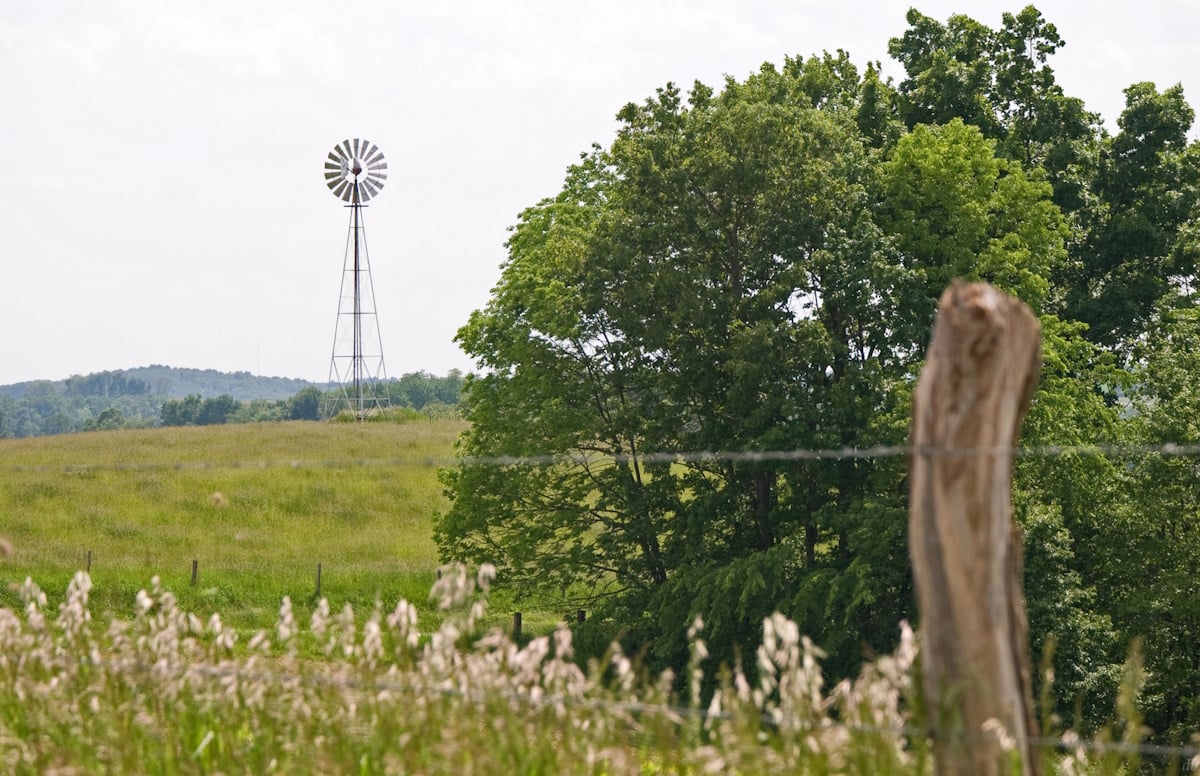
A Population Profile of the Greater Holmes County settlement of Northeast Ohio
Out of 700-plus Amish settlements, there are four that can be considered super-sized. In previous editions of The Journal of Plain Anabaptist Communities (JPAC), profiles for three already were published.
The first of these was by Lawrence Greksa about the Greater Geauga, Ohio settlement, published in volume 1, issue 2. This was followed by one about the Elkhart-LaGrange, Indiana settlement, written by Thomas Meyers in volume 3, issue 1; and also in this same issue is a profile of the Greater Lancaster County settlement by Joe Donnermeyer.
Joe and Henry Troyer have now collaborated to write one about the Greater Holmes County settlement. Titled “A Population Profile of the Greater Holmes County Amish Settlement: Ohio’s Oldest and Largest Amish Community”, and appearing in volume 6, issue 2 of JPAC, it presents information on a variety of demographic characteristics.
The Greater Holmes County settlement began in 1808 with the arrival of its first permanent settler, Jonas “Weiss” Stutzman who also built an extra-large chair for Jesus, expecting his second coming at any time.
That chair is now on display at Behalt (Amish & Mennonite Heritage Center), located near Berlin. The chair itself is in the large room with the 10′ by 265′ painting of Anabaptist history by Heinz Gaugel.
A Pessimistic Outlook…Proven Wrong
One of the earliest studies of the Greater Holmes County settlement comes from a thesis published in 1932 and written by Lyle Fletcher, a student then in the Department of Geography at The Ohio State University.
Even though it is a solid piece of scholarship, he assumes that geographic isolation is essential to Amish survival, and thereby concludes on the final three pages:
“With the coming of the automobile and the subsequent good roads, conditions have changed…So we leave the Amish with great admiration for their social system but with sincere doubts as to its capacity for continuity.”
Wow! He sure did get that one wrong! The Greater Holmes County settlement has grown from only 13 church districts (about 25-35 families in each district) in 1920 to nearly 270 today.
The Greater Holmes County settlement is a mecca for hundreds of thousands of tourists each year and the eastern half of the county is considered as one of the most densely populated areas of Amish anywhere in North America.
Over-all, about 46 percent of Holmes County is Amish, and this does not include Beachy Amish and various Amish-Mennonite groups who do not prohibit the ownership of motor vehicles. The settlement is so large that it spills out into four other counties (Wayne, Stark, Tuscarawas, and Coshocton).
Six Holmes County Amish Population Facts
Here are a half dozen population facts from the Donnermeyer and Troyer study. These population characteristics are based on a statistical study from a one-in-five sample of households found in the 2025 directory for this settlement.
Fact #1: Bishops’ Average Age
The average age of ordination of bishops is 45.6 years. Men are younger when ordained as ministers (35.8 years) and deacons (38.5 years). This makes sense because almost all bishops are first selected as ministers, and occasionally as deacons.
Fact #2: Occupations of Ordained Amish Men
There is no better way to illustrate the Amish transition out of agriculture than to examine the occupations of ordained men. During earlier times, it could be assumed that men who farm are preferred for the ministry. Not today. In the Greater Holmes County settlement, only 19.5% of bishops listed an agricultural occupation, compared to about 22% for ministers and only 9.3% of deacons.
When considering all heads of households who listed an occupation in the 2025 directory, the percent engaged in agricultural pursuits is down to 11.4%.
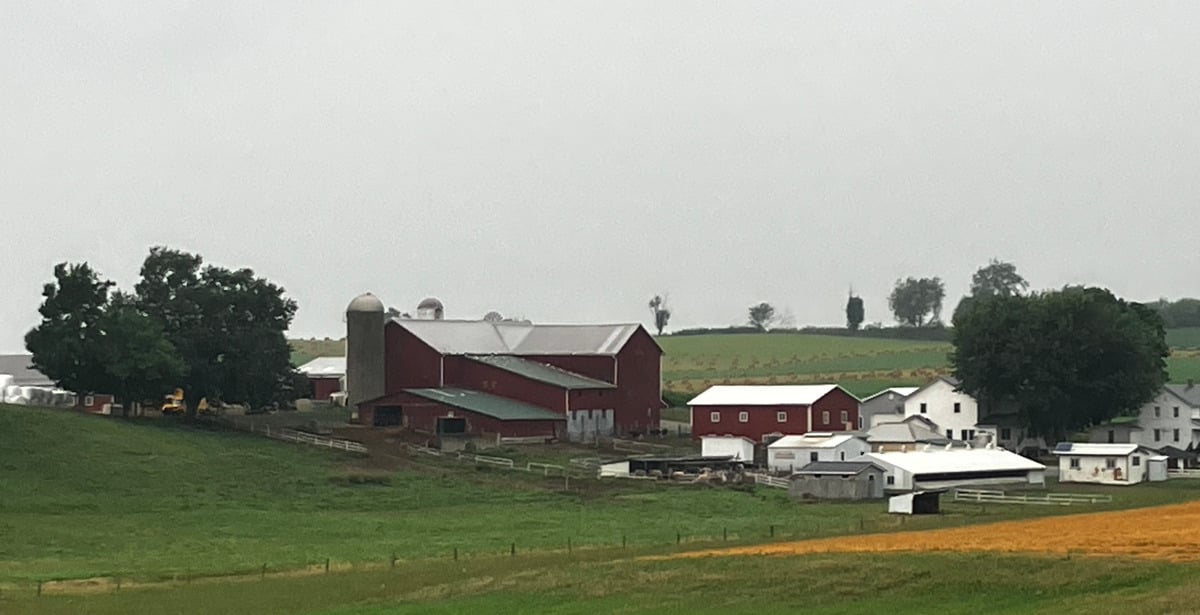
Back in the 1965 directory for this same settlement, fully 71% of men were farmers or farm laborers. Of the three biggest settlements, only 5.5% of men from the Greater Geauga County settlement are agriculturalists and in Elkhart-LaGrange, the percentage was about 15.
However, the proportion in the Greater Lancaster County settlement is substantially higher, at 41%. Not all settlements are alike.
Fact #3: Most Common Occupations For Amish Men
The most frequent occupation of men in the Greater Holmes County settlement today is some sort of carpentry work or occupations associated with construction (33.7%).
Fact #4: Average Marriage Age For Amish Men & Women
The average age of marriage in the Greater Holmes County settlement was 23.5 years for husbands and 22.1 years for wives. This has not changed much over the years.
Plus, the average age for men to first become fathers is 24.9 years and for women to become mothers is 23.5 years. In other words, on average, first born children enter this world about 16 months after marriage.
Fact #5: Most Common Marriage Months
Month of marriage in the Greater Holmes County community is, in order of popularity, May (19.6%), September (19.2%), October (13.5%), June (13.2%), and August (10.2%).
It used to be that marriages waited until the conclusion of harvesting, but with the transition out of agriculture, that pattern in the Greater Holmes County settlement has changed.
There are now two marriage seasons — one in the late Spring and one in the Autumn. What has not changed over the many decades is a preference to be married during the middle of the week, with an overwhelming choice for Thursday.
Fact #6: Total Fertility in Different Amish Groups Varies Greatly
Total fertility is the number of offspring born to women who have completed their reproductive period. Total fertility remains high for almost all Amish, no matter if they live in a large or a small settlement. There are, however, substantial differences by fellowship.
Among the three major fellowships found in the Greater Holmes County settlement directory of 2025, total fertility is 7.8 live births for women in the Dan affiliation, compared to 6.1 for Old Order wives, and 5.8 for New Order wives.
An earlier study published in JPAC (Troyer, 2022) of the Swartzentruber fellowship within the Greater Holmes County settlement is even higher, topping out at 10.4.
With the rapid growth of the Amish population and the number of settlements increasing just as fast (Donnermeyer, 2021), population studies will remain an important way to examine issues associated with social and cultural changes in Amish society.
The Journal of Plain Anabaptist Communities is co-sponsored by The Young Center for Anabaptist and Pietist Studies at Elizabethtown College (PA), Behalt (the Amish & Mennonite Heritage Center, OH), and the Amish America website. Interested readers can subscribe to JPAC by going to its website (https://plainanabaptistjournal.org/issue/384/info/), clicking on “register” (to the upper-right). It requires only a few minutes of time to register. To subscribe to the JPAC listserv and receive special announcements, send a request to Joe Donnermeyer (donnermeyer.1@gmail.com), and he will sign you up.
Selected JPAC references:
- Donnermeyer, J. F. (2021). How do I count thee? Various angles for examining the doubling times of the Amish. The Journal of Plain Anabaptist Communities, 1(2), 104-125.
- Donnermeyer, J. F. (2023). A demographic profile of the Greater Lancaster County, Pennsylvania Amish. The Journal of Plain Anabaptist Communities, 5(2), 1-34.
- Donnermeyer, J. F. & Troyer, H. (2026). A population profile of the Greater Holmes County Amish settlement: Ohio’s largest Amish community. The Journal of Plain Anabaptist Communities, 6(2), 1-36.
- Fletcher, L. R. (1932). The Amish people of Holmes County, Ohio: A study in human geography. M.S. Thesis. The Ohio State University.
- Greksa, L. (2021). Population growth and fertility patterns in an Old Order Amish settlement: A 21-year follow-up study. The Journal of Plain Anabaptist Communities, 1(2), 82-94.
- Meyers, T. J. (2022). A demographic profile of the Elkhart-LaGrange Old Order Amish settlement. The Journal of Plain Anabaptist Communities, 3(1), 65-82.
- Troyer, H. (2022). The varying fertilities of the Amish groups in Holmes County, Ohio. The Journal of Plain Anabaptist Communities, 3(1), 54-64.