
An Amish Auction Will Change What You Think of as Junk (15 Photos)
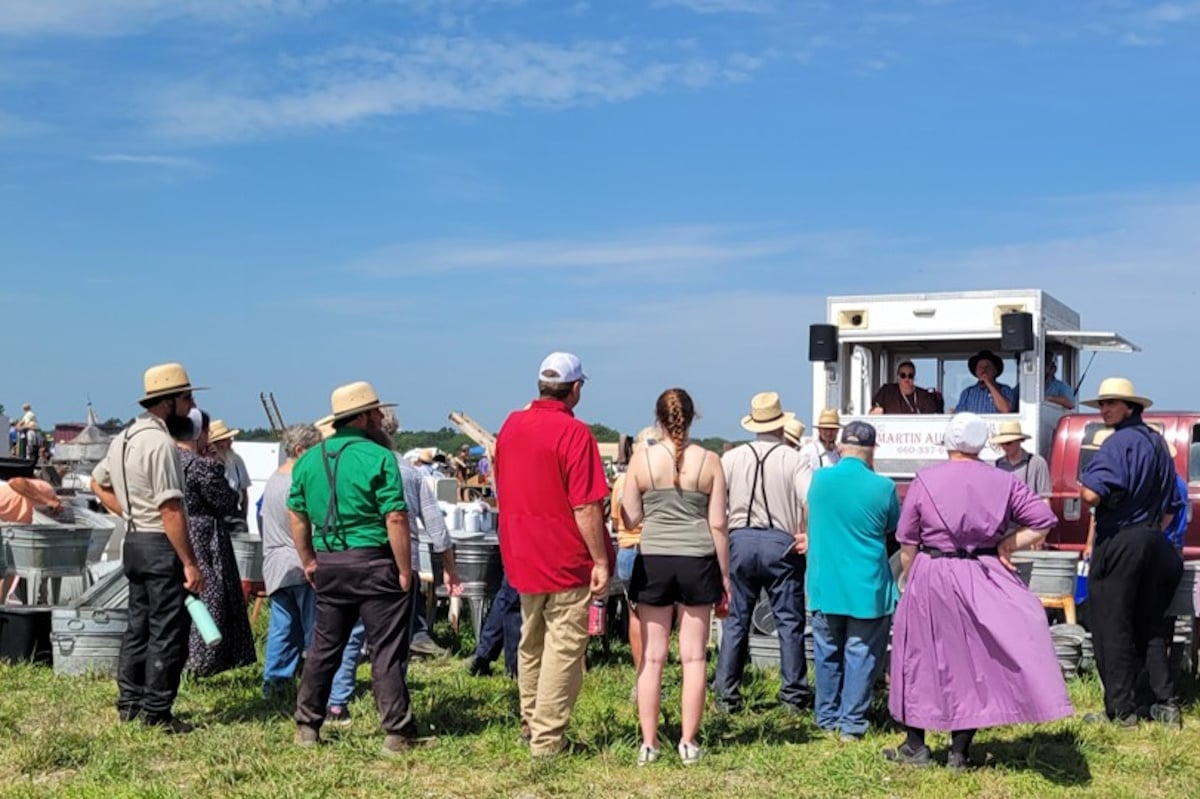
Haley Straw is back with a look at the Jamesport, Missouri Amish School Auction. If that sounds familiar, it’s because we’ve seen it covered here before – by Don Burke back in 2014. Let’s have a look at Haley’s experience at the big event, a dozen years later.
My daughter and I arrived at the Jamesport Amish School Auction around 10 o’clock, two hours after it had already begun, on the same kind of blistering July day it seems to be every year I’ve attended.
The first thing I noticed was how much space there was in both the buggy and vehicle parking lots. The crowd seemed considerably smaller than in previous years.
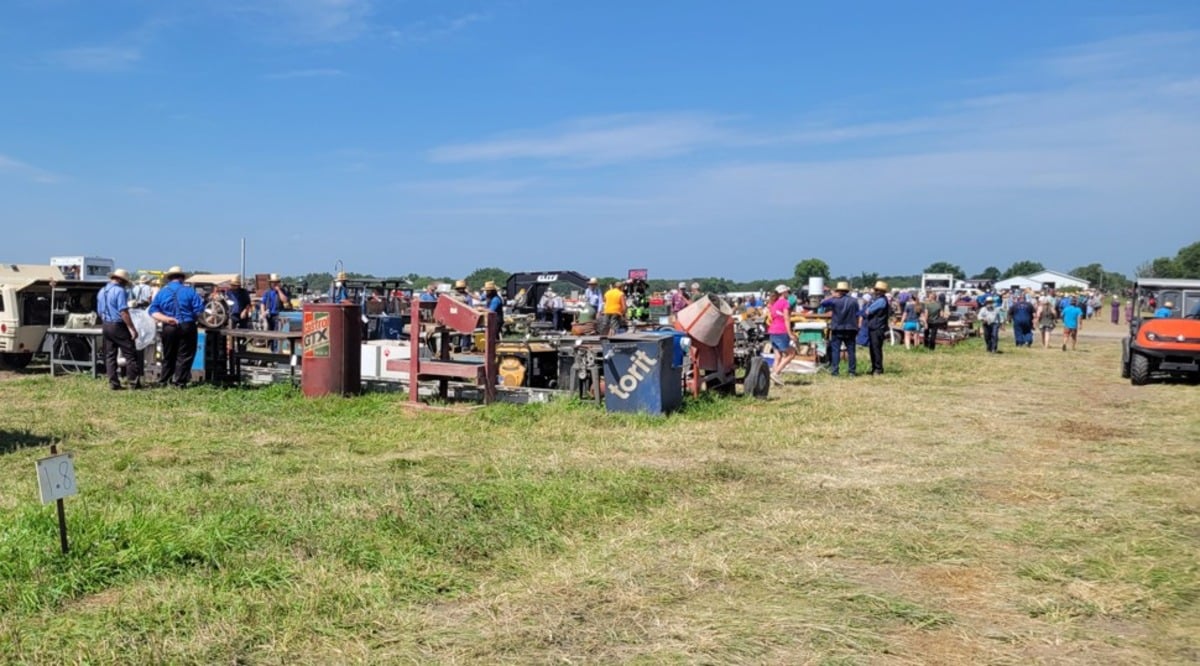
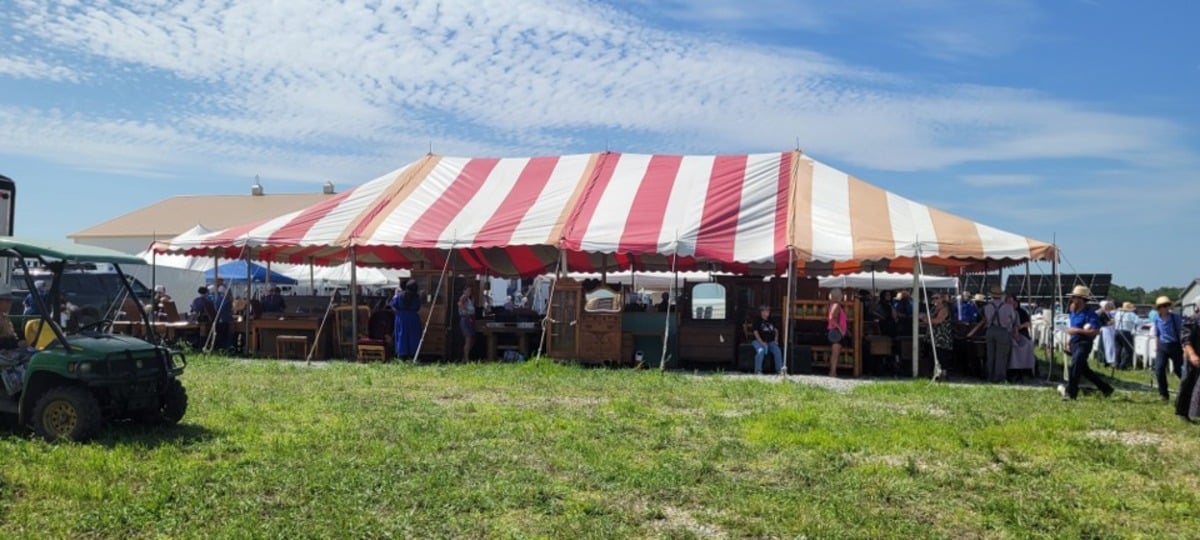
Even so, the good food was there, the tents were set up for furniture and sitting, and the different sections were laid out just as they always are, filled with English people on their off-road vehicles and Amish families, most wearing shoes, though a few were barefoot.

I ran into several Amish people I know. One man walked right up and greeted me by name. I couldn’t place him, but he certainly knew who I was.
I also ran into Delbert, someone I used to drive regularly back when I had my 15-passenger van. We caught up for a while. He told me he now has eight children, and when I marveled at how remarkable his wife must be—since having six did me in—he proudly agreed that Amish women are just made of different stuff.
His chicken barn business is going well, he told me, and he’s usually finished working by 10 o’clock a.m. But because he still wants to do more, he continues to run his construction business too, which is already booked through the fall.
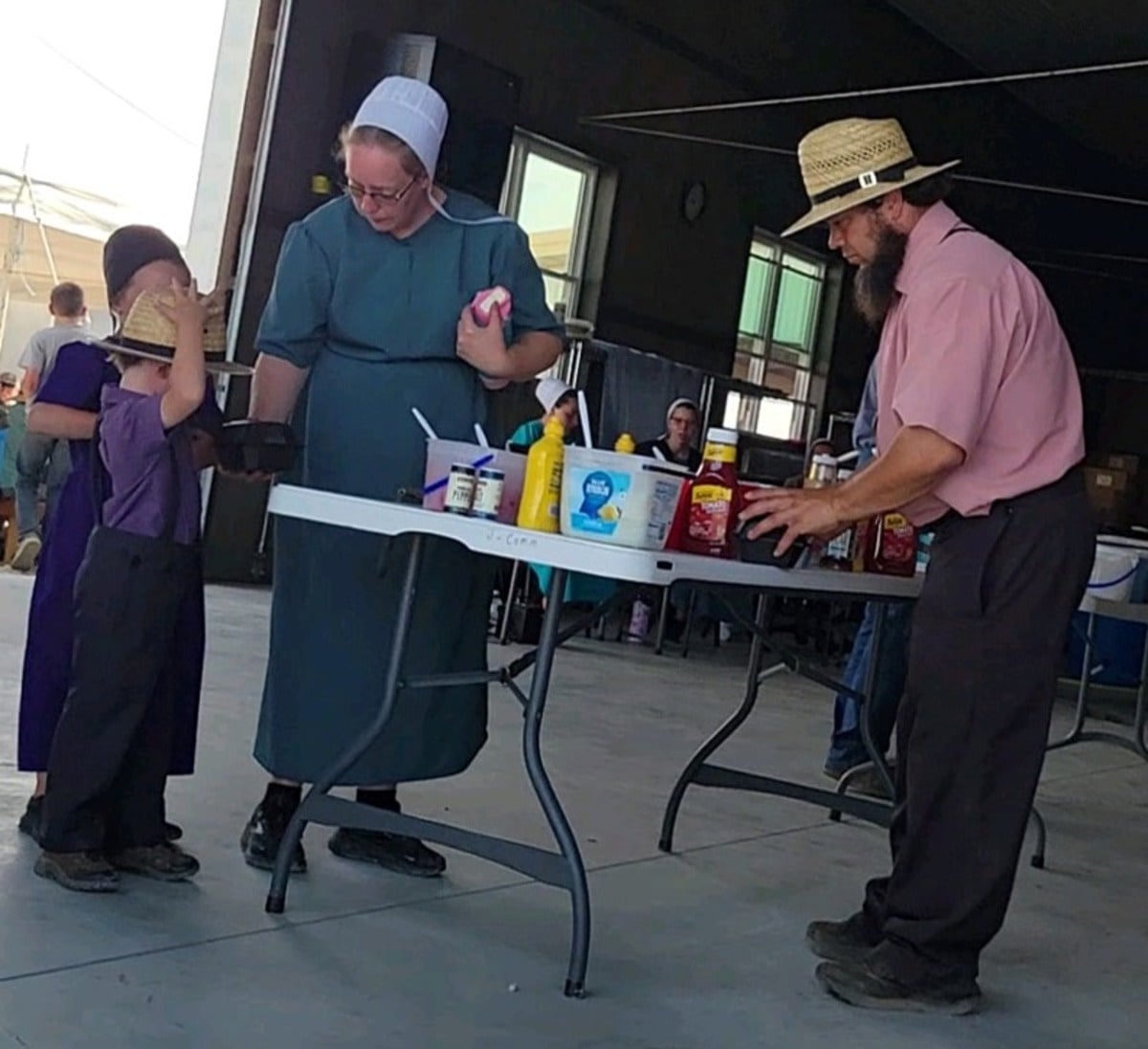
When I asked if his wife would rather have him home with eight children, he chuckled and said she can handle it, especially with their three oldest daughters—11, 10, and 9—being such good workers and such a help to her. Her parents also live right next door.
As I wandered around taking pictures, an old, sun-tanned Amish man with a hunched back and a disheveled white beard approached me while I was photographing the buggies.
“Looking to buy one?”
I told him no, I already had one—which was entirely true. I do.
There were plenty of good bargains to be found that day, but as I wandered through the different sections, I began noticing something else.
It wasn’t just what was for sale.
It was what people had figured out how to keep using.
A Second Life
One of the things that caught my attention was a traditional wooden wagon that had been fitted with seats salvaged from a modern passenger van.
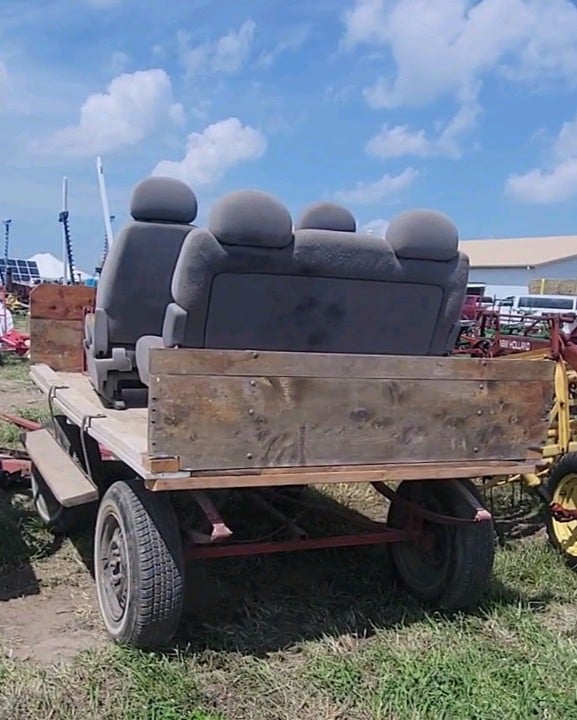
The wagon itself wasn’t new, and neither were the seats, but someone had put the two together and given them a whole new purpose. As I walked around the auction, I kept seeing things like that—old, worn or discarded things that still had plenty of life left in them.
An old manure spreader sat among the equipment, its wooden floor badly rotted and broken. But underneath all that weathered wood was a solid iron frame, wheels and a chain-drive assembly that could still be useful.
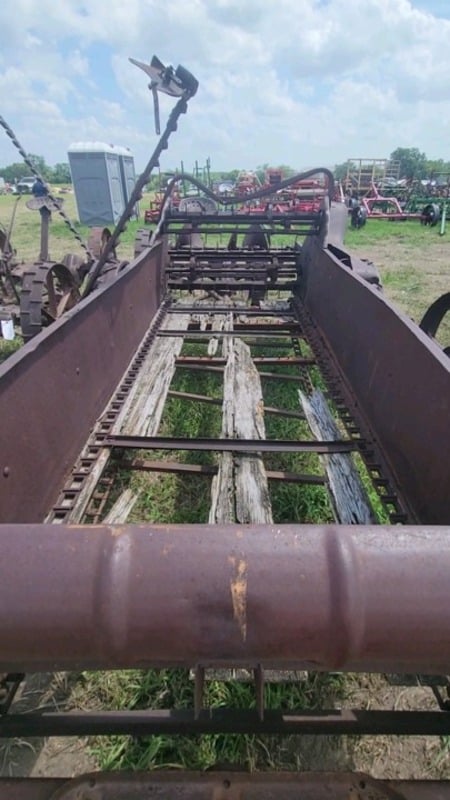
Someone else might have looked at that old manure spreader and seen a machine that was finished. But standing there looking at it, I could see how much of it could still be saved. There were plenty of lots like that scattered across the fields.
There were piles of used tires and rusted metal rims, stacks of buggy leaf springs, detached axles and other pieces of equipment that most people might have considered scrap.
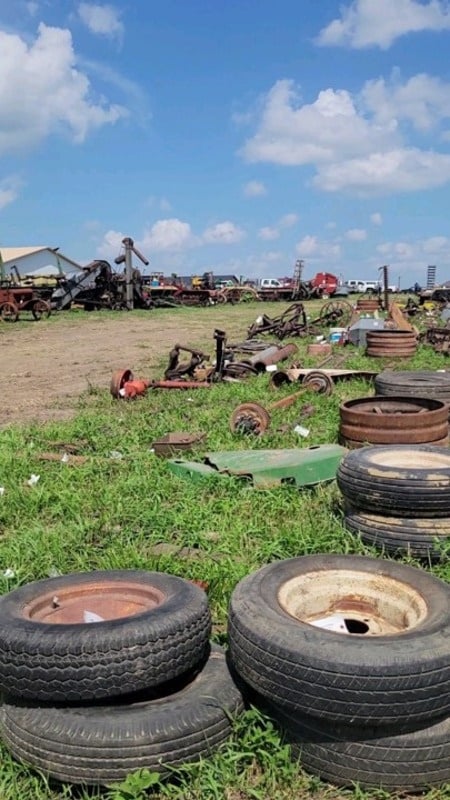
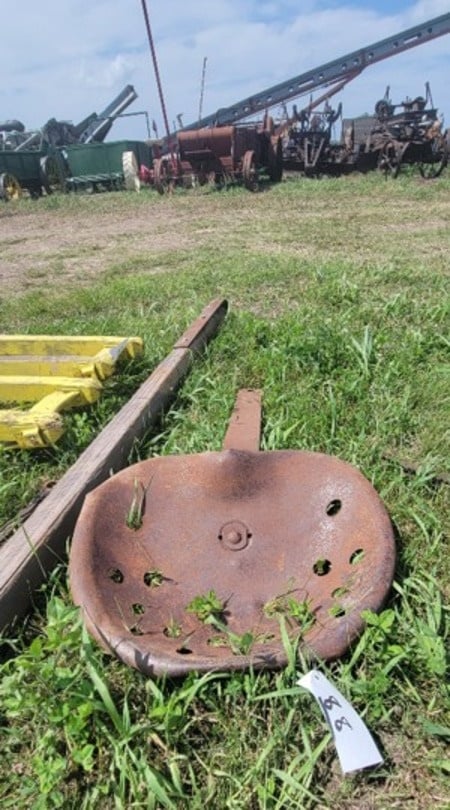
There were also individual pieces sitting in the grass with auction tags attached to them—old implement seats, weathered machinery parts and other pieces whose original purpose may have long since passed.
And then there was the chain.
A heavy, rusted drive chain lay coiled in the grass with a lot number attached.
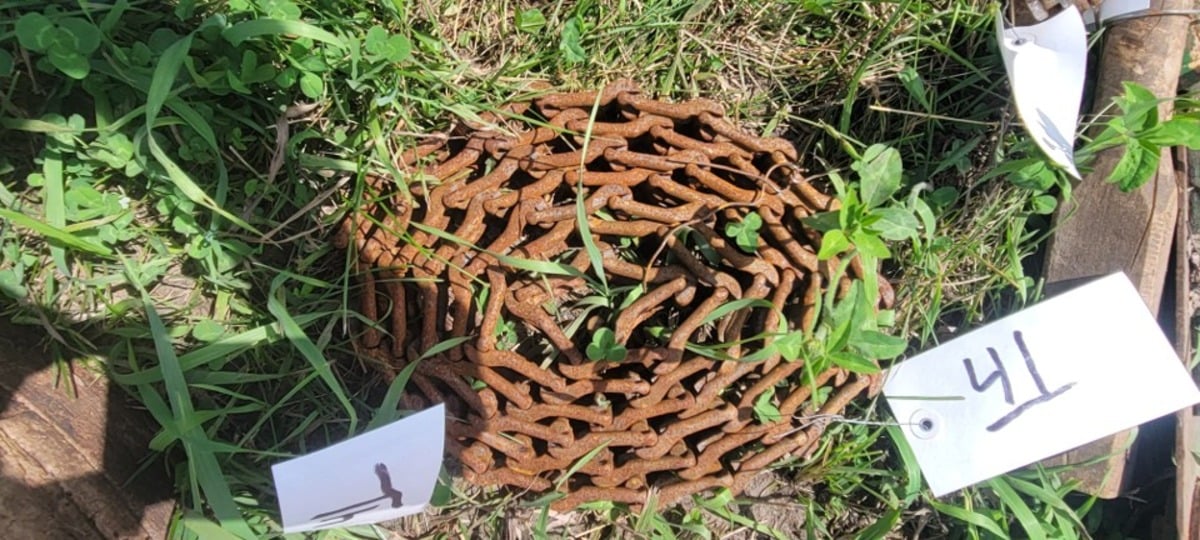
That may be one of the easiest things to overlook at an auction like this.
But somebody had brought it there, believing someone might buy it.
What Someone Else Might Need
As I walked around, I started to realize that people weren’t necessarily looking for something new. They were looking for something they could use.
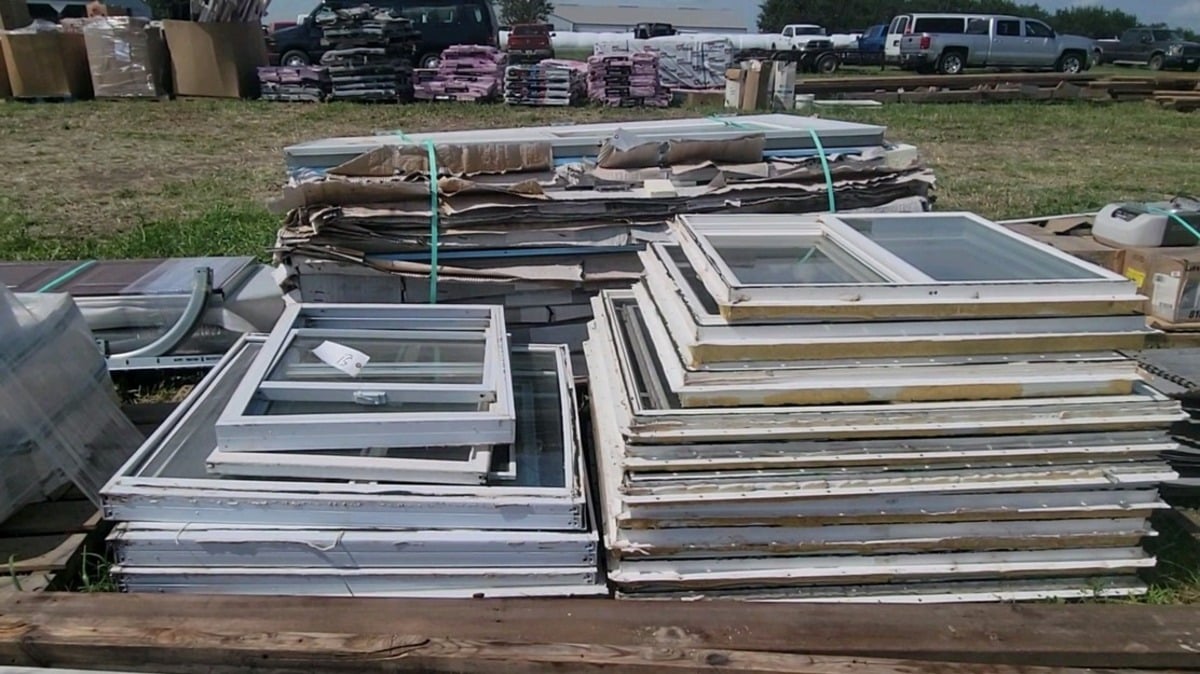
There were stacks of windows in all different shapes and sizes, piles of buggy parts, old equipment and boxes of odds and ends. To me, some of it looked like a collection of things nobody wanted anymore. But there were people walking around looking carefully at this stuff, turning things over and figuring out what they could use.
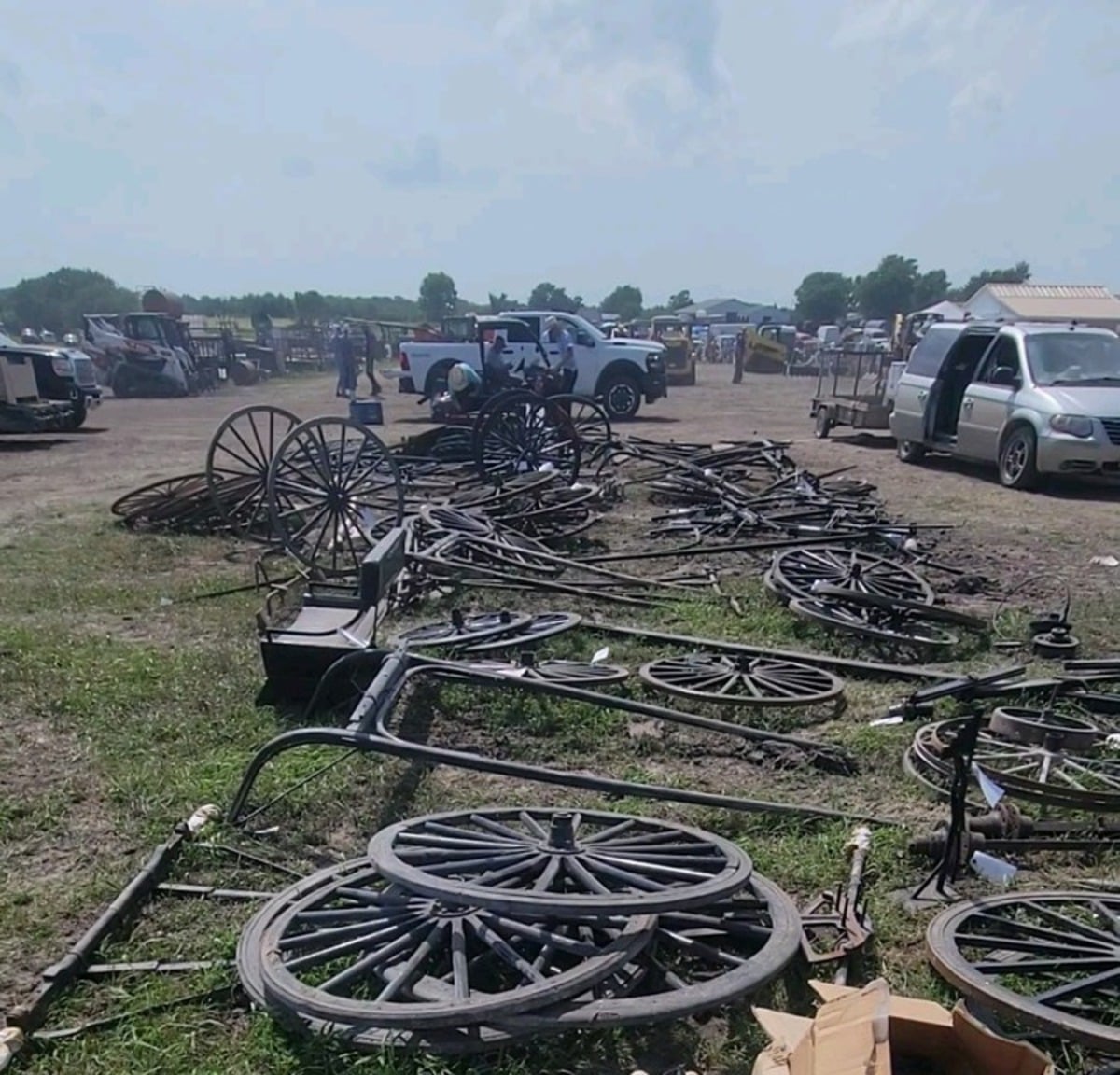
There were piles of buggy wheels, axles and other carriage parts spread across the grass, along with boxes of smaller pieces and even lengths of new lumber.
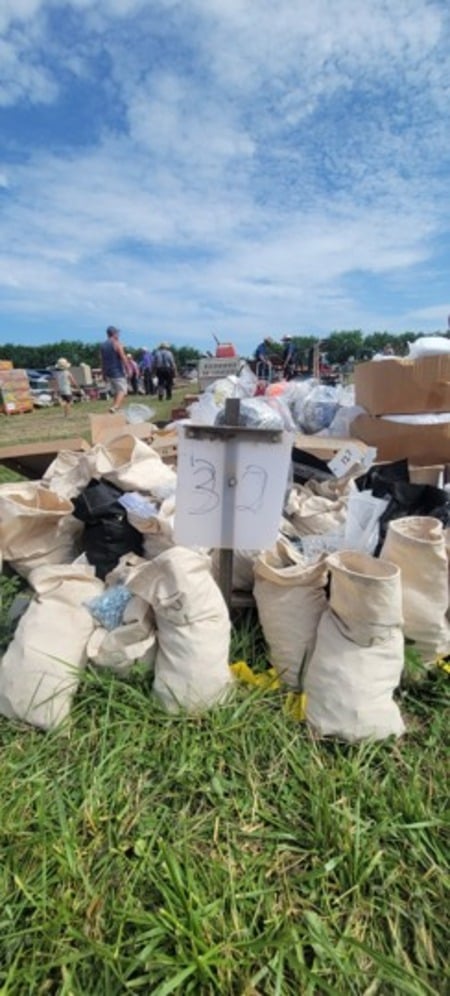
And among the buggies was one of my favorite examples of this way of thinking: a handwritten sign describing an older green two-seat buggy.
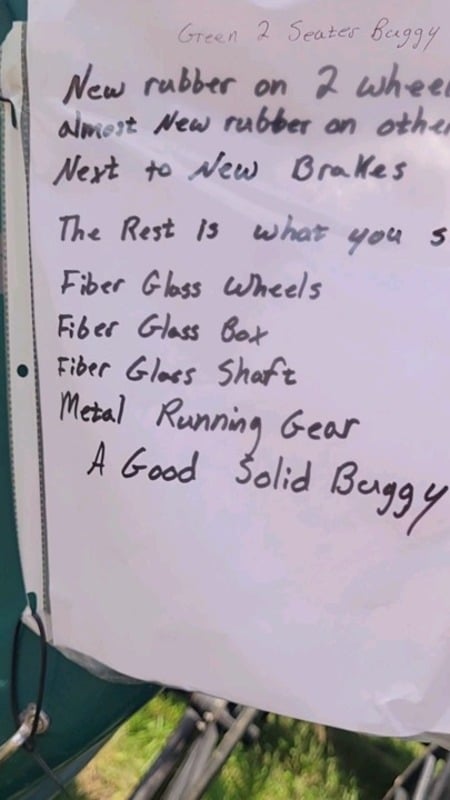
I loved that sign. There was nothing fancy about it. It simply told you what was new, what was almost new, what was fiberglass, what was metal, and what you were getting for your money. No fancy sales pitch—just the facts.
And then, at the bottom, it simply said, “A good solid buggy.”
I thought that pretty much summed it up.
The rest is what you see.
And apparently, what you saw was still worth something.
Still Useful
The more I walked around, the more I noticed the same thing. A piece of equipment could be worn and rusty, a wooden floor could need replacing, a window could be old, and a buggy might have a mixture of old and new parts, but that didn’t necessarily mean any of it was finished. It might just mean that someone else had a use for it.
That’s one of the things I enjoy about wandering through Amish auctions. You never quite know what you’re going to find, and you certainly don’t know what the person looking at something sees in it.
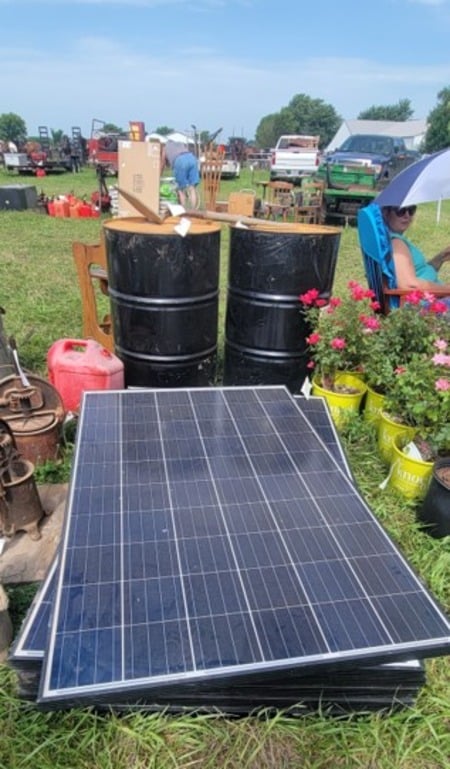
I might look at an old piece of equipment and see something that needs a lot of work. Someone else might see the exact part he’s been looking for. I might see a pile of rusty metal, while somebody else is already figuring out what he can repair with it.
That’s what kept catching my attention at the Jamesport auction. So many things that looked worn-out at first glance weren’t really finished at all. They were simply waiting for somebody who could use them.
Nothing goes to waste.
At least, not if somebody can still find a use for it.
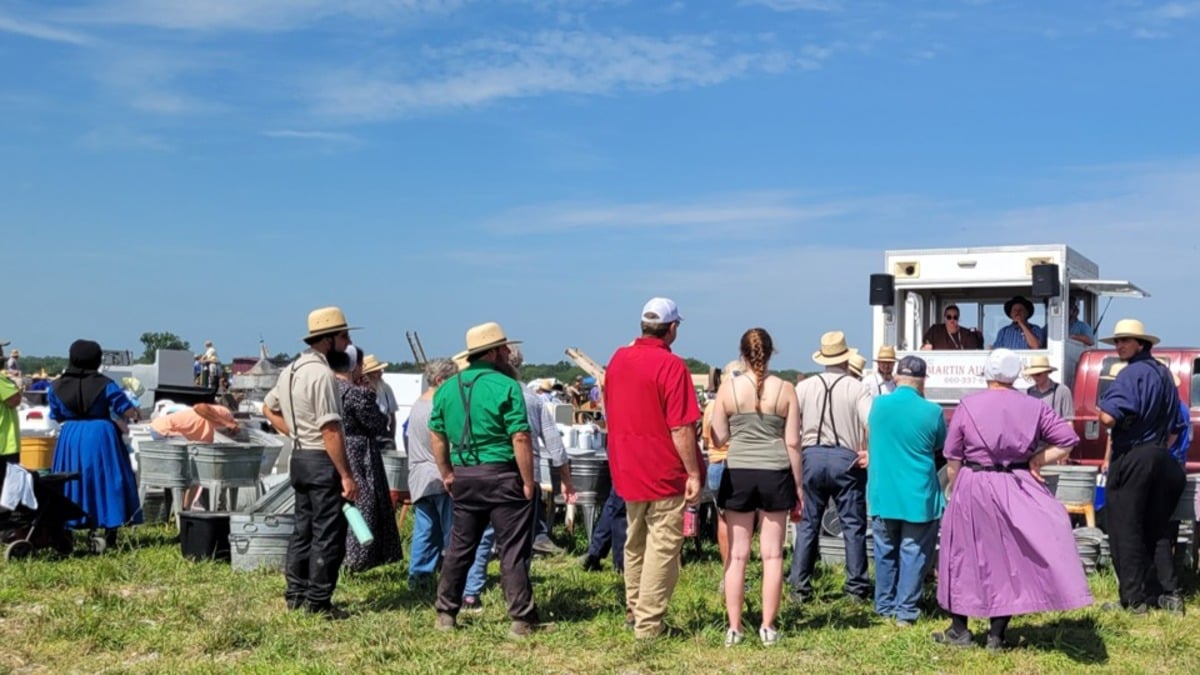
By the time I left, I realized the Jamesport auction was showing me something more interesting than a collection of used goods. It was a glimpse of a way of thinking: that usefulness doesn’t always end when something is old, worn or no longer needed by its first owner.
One person’s castoff can become another person’s repair.
An old wagon can get new seats.
A manure spreader can get a new floor.
A pile of rusty parts can become a working machine again.
And something that looks like it belongs in the scrap pile may simply be waiting for the right person to come along.
Maybe that’s what stayed with me most from the Jamesport auction.
Not everything needs to be new to be valuable.
Sometimes it just needs another chance.
Haley Straw is a barefoot homeschooling mom of six who somehow ended up becoming an Amish taxi driver.
From her century-old jailhouse home in rural Missouri, she writes true stories about late-night Amish rides, frolics, disasters, awkward moments, unexpected wisdom, and the kind of community most people don’t realize still exists. Her stories help readers slow down, laugh a little, and remember what matters most.
You can find her signed books, free Amish-inspired goodies, and more at haleystraw.com


Junk Auction
I just wanted to comment that I always enjoy Haley Straw’s writing; when she is the author it always reads like a short story. Perhaps she should consider assembling various short stories and publishing them as a book. Her stories are not too terribly removed from my own upbringing in the Evangelical United Brethren church; just substitute a station wagon in the early 60s with about ten of us kids in the back during summer vacation (which included Bible School) for buggies, with my mother and her friend from church in the front seat.
I agree David – and I’ll just take the liberty of mentioning Haley does have several books – you’ll find them at her site (linked at bottom of post – haleystraw.com). And good news, we’ve got a couple more installments coming from this auction.
Wonderful Insights...
Haley, thanks for the revisit to one of the many highlights of my Amish experience — the Jamesport school auction. And while I walked away with lots of pictures and having had a great time…, I think with the insights you picked up you walked away with even more than I did.