
Judge May Throw Out Samuel Hochstetler’s Confession In Murder Of Amish Woman Rosanna Kinsinger
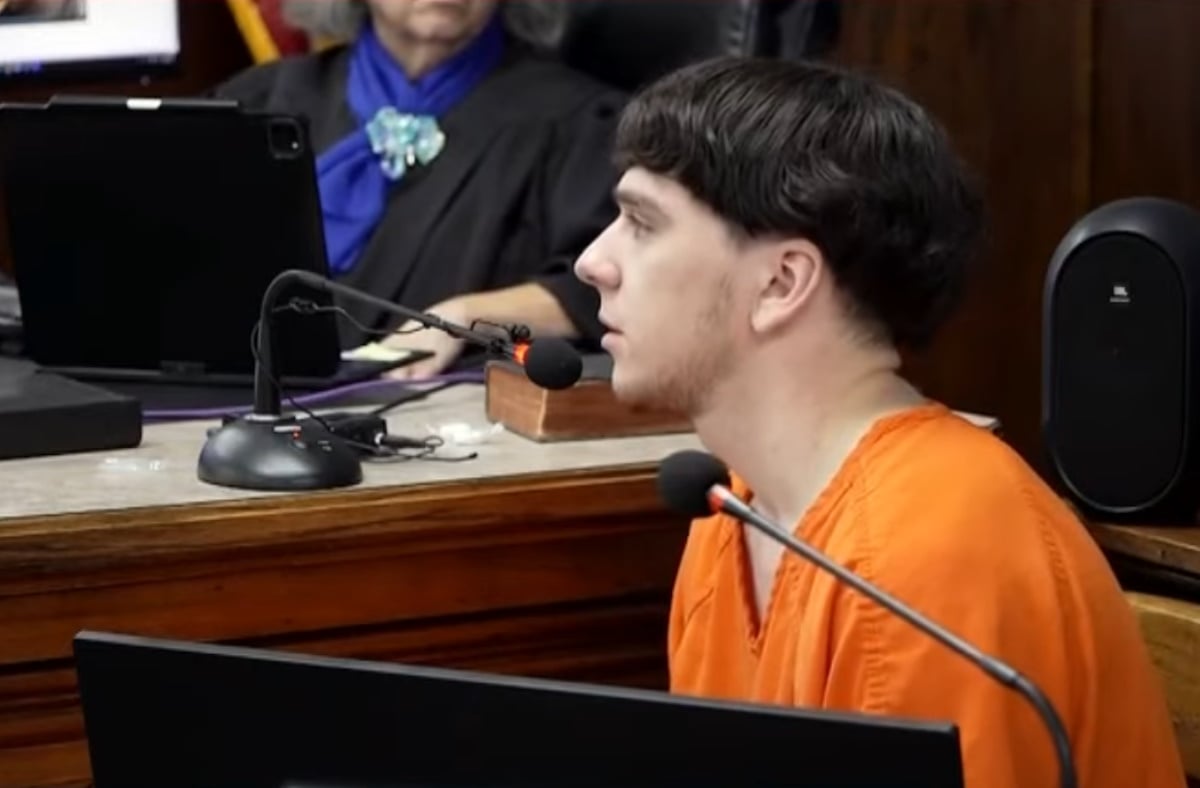
This was not really reported on much at the time, but Samuel Hochstetler – charged with the murder of Amish woman Rosanna Kinsinger, who was found dead in her Ohio home in March – was back in court in late September.
And apparently his legal team argued for his confession of the killing to be ruled inadmissible in the trial. This is being reported on today by Court TV.
The last update we had in this case was late July, when it was reported that Hochstetler got a trial date of December 8 of this year.
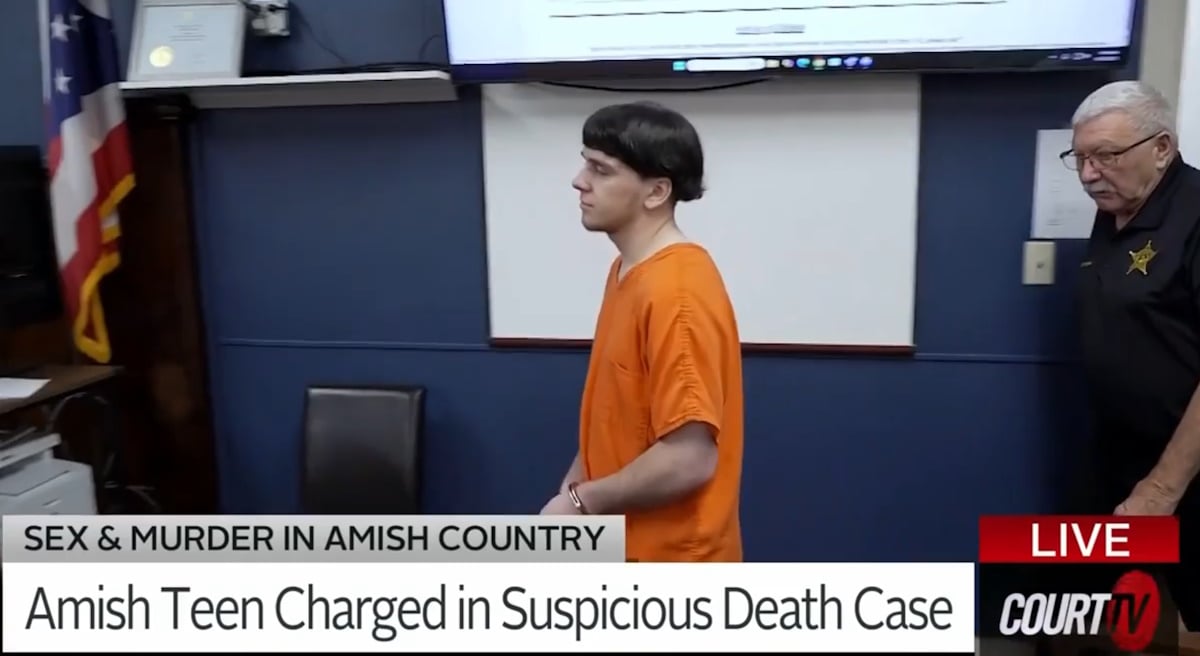
It had been quiet since then, but Hochstetler did have a further court appearance two weeks ago, on September 23rd. Here’s what Hochstetler’s defense team argued:
During a recent motion hearing, Meigs County Common Pleas Judge Michael Barr heard arguments about whether Hochstetler’s recorded confession should be allowed at trial.
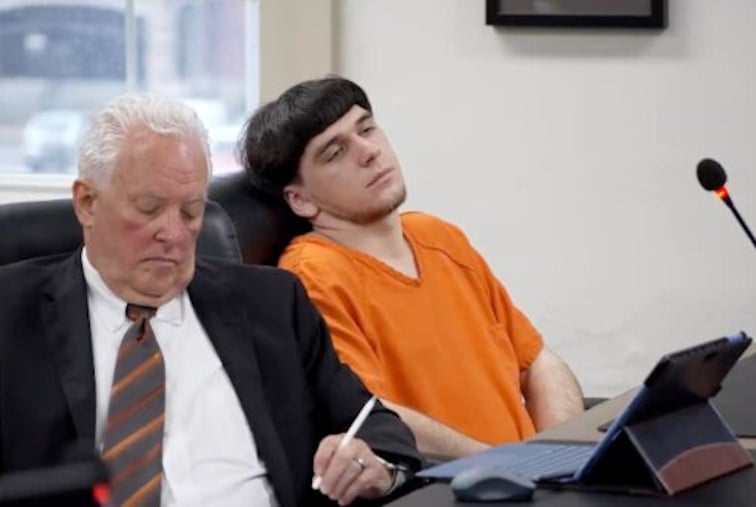
Defense attorney Kirk McVay argued that Hochstetler, who has limited formal education and speaks Pennsylvania Dutch as his primary language, was confused about his constitutional rights when he confessed to killing Kinsinger during what he described as a sexual encounter.
McVay emphasized that his client’s Amish upbringing and language barriers prevented him from fully grasping the legal implications of waiving his rights.
The confession came after investigators brought Hochstetler to the sheriff’s office in May for DNA collection. During questioning, he initially denied being inside Kinsinger’s trailer, but eventually he allegedly admitted to the killing after being read his Miranda rights twice.
So it sounds like essentially they are attempting to use the language barrier as a reason for him failing to understand what he was doing when he confessed. And to get the confession suppressed in the proceedings.
When describing what happened in the March incident, there is this strange piece of information, which might support the defense’s claims:
When discussing the alleged sexual crimes, Hochstetler maintained he didn’t understand the word “sex,” and instead referred to the act as “breeding.” He claimed she didn’t resist or say no, but prosecutors argue the autopsy evidence contradicts his account and shows the sex was not consensual.

Additionally, in the September 23 hearing, Hochstetler testified that he believed that if he told the judge what he did, then the judge would “forgive” him and then he’d be able to go home.
Detective: Hochstetler understood his rights
On the other hand, a detective who took Hochstetler’s confession testified that he believes Hochstetler did in fact understand his rights:
Detective Sergeant Jason Dyer testified that he believed Hochstetler understood his rights, noting that the defendant asked clarifying questions and seemed to comprehend the proceedings. Dyer said Hochstetler appeared relieved after confessing and that his demeanor suggested he wanted to tell the truth.
The detective also revealed that Hochstetler initially suggested another man named Homer might have been involved, but later admitted to the crime himself.
Furthermore:
Prosecutor James Stanley argued that Hochstetler clearly understood his rights and made a knowing waiver of them.
Stanley pointed to Hochstetler’s ability to ask questions and engage in detailed conversations as evidence of his comprehension, noting that the defendant was able to articulate his thoughts and participate in complex discussions about Amish dating practices and religious beliefs.

There is no indication in this report as to what the judge has decided, only that he is “considering” tossing the confession.
As to the judge’s decision on the matter, more is needed before we get to that point:
Judge Barr has not yet ruled on the suppression motion and has requested written closing arguments from both sides. The decision could significantly impact the prosecution’s case, as the confession contains key details about how Kinsinger died.
Hochstetler has pleaded not guilty to all charges against him, which include multiple counts of murder, kidnapping, and strangulation.

More details on both Hochstetler and Kinsinger
There are also several more details about their background revealed in this article that I’m not aware of being made public before.
It was already known that Hochstetler had recently moved to the area from Kentucky, and that he was living with another Amish man by the name of Mose (or Moses) Troyer. Here’s a bit more on the background of both he and Kinsinger:
The case has shaken the small Amish community of about 10 families who lived and worked on a farm operated by Moses Troyer.
Kinsinger had moved from Missouri to work as a teacher, but was making soap and other products from goat’s milk when she was killed. Hochstetler had recently relocated from Kentucky to work at Troyer’s sawmill.
The way this is written makes it sound like there were ten families all living on the same farm – Troyer’s farm. That would be an unusual arrangement, and I’m not sure how ten families would make a living on one Amish-size property to begin with. Perhaps that is an error.

We do learn that Kinsinger had come to be a teacher and was doing some other small sideline businesses of a sort not unusual for Amish women.
At Hochstetler’s first court appearance in May, her father Moses Kinsinger said that “Rosanna was an outgoing, friendly person who liked being around people, and her death was shocking,” and that “he was not aware of any problems between his daughter and the suspect.”
Hochstetler has pretrial hearings scheduled for October 22 and November 25.

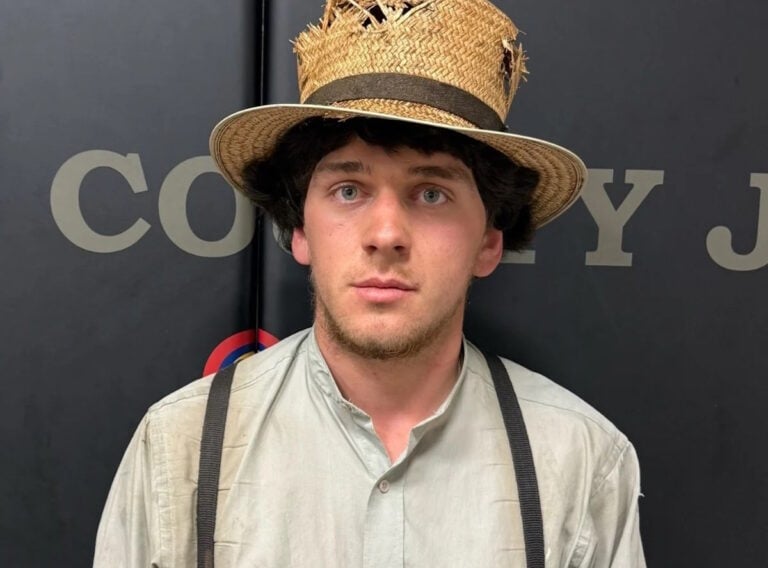



Here we have a predator hiding behind the Amish badge. They may forgive all but we don’t. Off to the can! Hopefully for life. He can take it up with God when we are rid of him.
Legal technicalities
If he’s guilty, it sounds as if he’s hiding behind legal technicalities. If he’s innocent, he seems to be exactly the sort of person these technicalities are most there to protect. I think whoever it was said that it is more important that innocence is a protection than that guilt is punished was right, not only morally but because otherwise there is no social advantage to innocence. It is important for the general integrity of the justice system that people are never legally constrained to give evidence against themselves: personally I would argue that if he wishes to deny his confession, the onus should be on the prosecution to prove their case nevertheless. If a confession someone won’t repeat in public in court is admissible, one increases the problems with torture and bullying on the part of law enforcement in private – it can be bad enough as it is – and innocence becomes even less of a protection.
It’s very hard to tell how someone from another culture who doesn’t really understand the system and who is speaking a second language might think. I hope and pray justice is done, and soon.
Original Source: “The case has shaken the small Amish community of about 10 families who lived and worked on a farm operated by Moses Troyer.”
AA Comment: “The way this is written makes it sound like there were ten families all living on the same farm – Troyer’s farm. That would be an unusual arrangement, and I’m not sure how ten families would make a living on one Amish-size property to begin with. Perhaps that is an error.”
I am in no way familiar with the community mentioned here, so my observations are not based upon any firsthand knowledge. But I tend to agree that the original source’s statement appears to be in error, or at best not well worded. I read three components in that statement: The community, ten families, working on the Troyer farm. 2025 population figures for this community give an estimate of 40 people, reasonably confirming that the whole community likely isn’t larger than ten families. So the part of the statement of “community of ten families” sounds legit. My read from the articles is that at least the victim did not work or live on the farm; plus it is hard to think that all that is needed within the community could be supplied by a single farm on which they all worked. So I’m inclined to think that the statement’s implication that all families lived and worked on the farm was likely a misstatement. Maybe the article inadvertently omitted a modifier such as “[some of which] lived and worked on the farm.”
Family
Where are this guys parents, siblings, any relatives?