
An Amish Department Store Without Walls (14 Photos)
Last week, Haley Straw took us to the most recent edition of the Jamesport, Missouri Amish School Auction. She follows that up with a look back at an earlier visit to the same auction – and some of the many and varied things you find at one of these events.
“I always get what I want” is one of my personal mantras.
Evidence of that happened years ago when I first went to the Jamesport Amish School Auction.
I had heard a lot about the annual auction, which spread across several acres of farmland. I knew the Amish organized it to raise money for their parochial schools, and that Amish and English people came from all over the Midwest to buy and sell. Some even brought their campers and stayed for the two-day event.
What I didn’t know was just how enormous it really was.
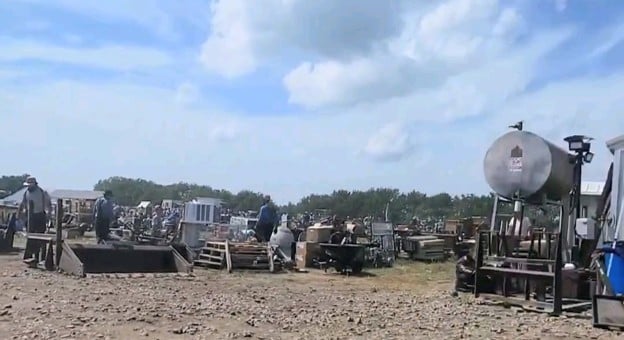
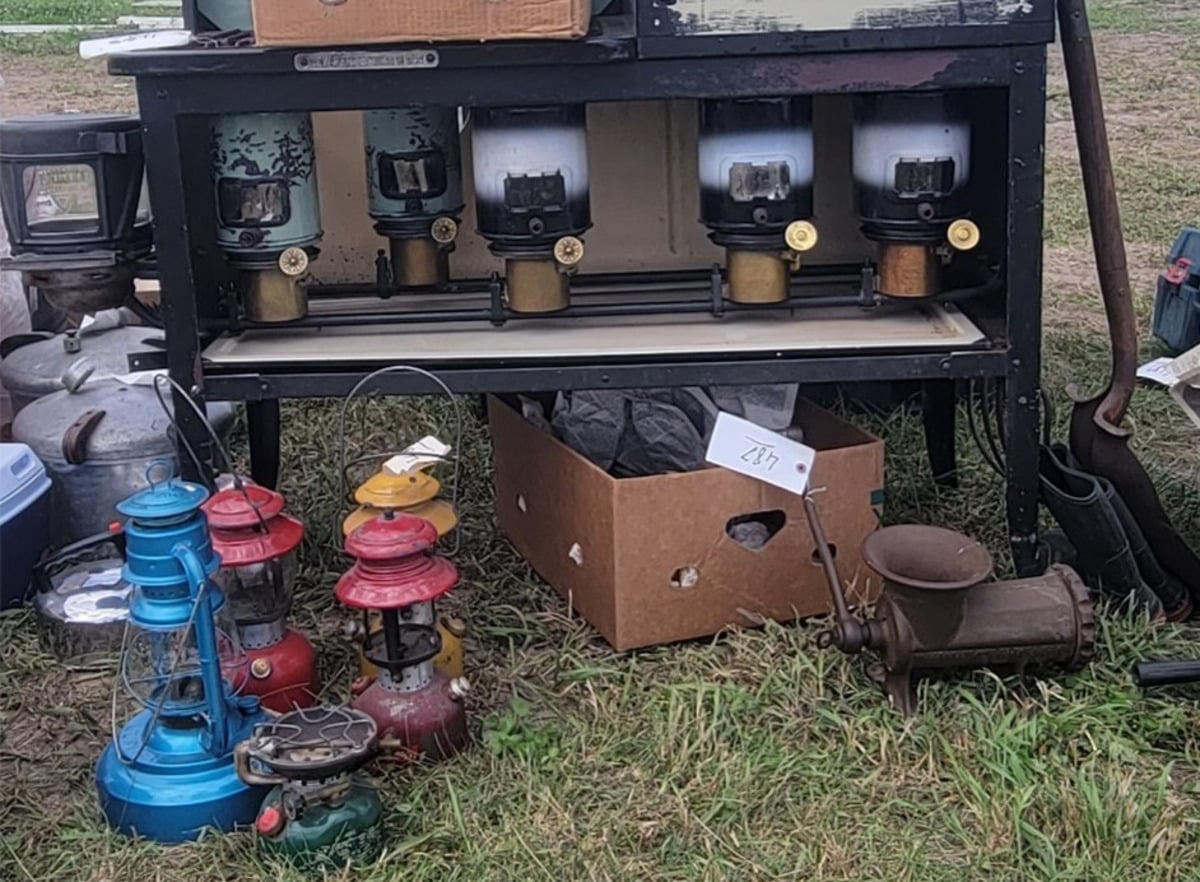
The auction offered practically anything an Amish family might have for their home or farm—handmade furniture, lanterns, tools, buggy wheels, wood stoves, cook stoves, washing machines, wash tubs, kitchen supplies, refrigerators, antiques, carriages, buggies, farm equipment, horses and ponies.
In other words, if you needed it, there was a pretty good chance somebody had brought one to Jamesport to sell.
So when I was asked to haul a group of Amish people there, I decided this was something I needed to see for myself.
Before we could get to the auction, however, there was a delivery to make.
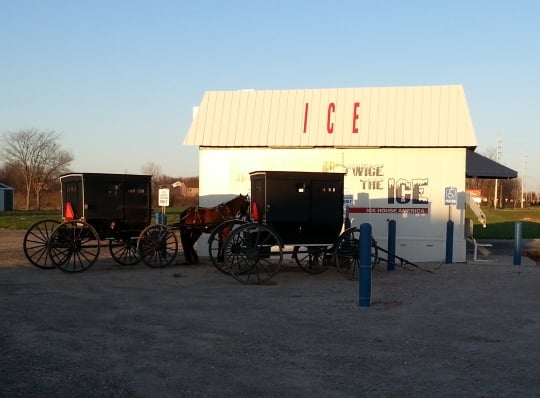
My husband and oldest son had taken two of the back benches out of our maxi-van the night before so we would have room. Early the next morning, my three-year-old daughter Violet and I headed to the Burkholders’ home. We backed the van up to the icehouse while Delbert and his sons loaded dozens of eggs into the van to deliver to the Country Market in Jamesport.
Delbert and Martha had 2,000 chickens and were always looking for a market for all those eggs.
With the air conditioning blasting full force to keep the eggs cool, I felt like I was driving a refrigerated truck. The trip to Jamesport was cold, but it was also slower than usual because I was driving more carefully.
I couldn’t very well show up at the market with a vanload of broken eggs.
By the time we reached Jamesport, the roads were filled with black buggies, trucks pulling trailers and large vans carrying people. The Troyer farm, where the auction was being held, was already beginning to look like a small town.
Vehicles were directed into a field on one side of the road. Buggies went into another field.
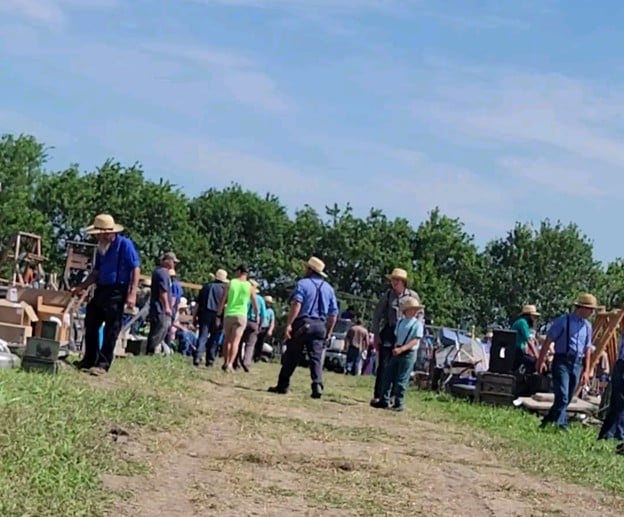
And there were people everywhere.
Delbert and Martha were anxious to get to the auction, which had already begun, and headed off as soon as we arrived.
Violet and I took a little longer.
I had Violet in her stroller, wrapped in a blanket, and the parking lot was muddy. I pushed her through the mud while trying to figure out where I was supposed to go. Finally, I stopped someone and asked for directions to the booth where I could get a number and bid on things myself.
While standing in line, I ran into another Amish driver. We talked for a few minutes, and then I was handed my number.
952.
There were at least that many people registered to bid.
And that didn’t include the spouses, children and everyone else who had come along but wasn’t bidding.
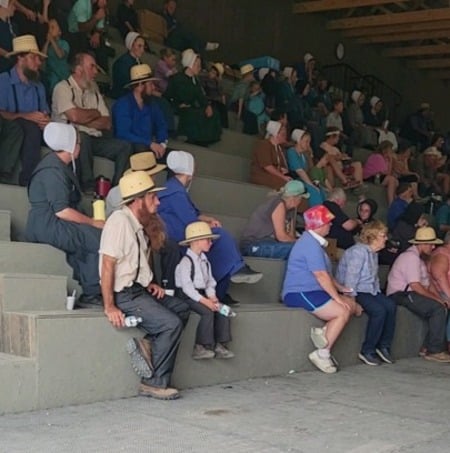
Then I heard them.
Five auctioneers were working in different areas of the auction at the same time. Their rhythmic, almost monotone voices rolled across the fields, competing for everyone’s attention.
I stood there with my list of things I was looking for and wondered how anybody could possibly find what they were looking for.
There were people and things everywhere, and no map showing me where to find the kitchen supplies, the farm equipment or the buggies.
There was just a whole lot of stuff spread across a whole lot of farmland.
So, I did what anybody would do.
I started walking.
A Department Store Without Walls
It really did feel like an Amish department store, only there were no walls or aisles to tell you where one department ended, and another began. One section might be under a tent while another was spread across the grass several hundred feet away.
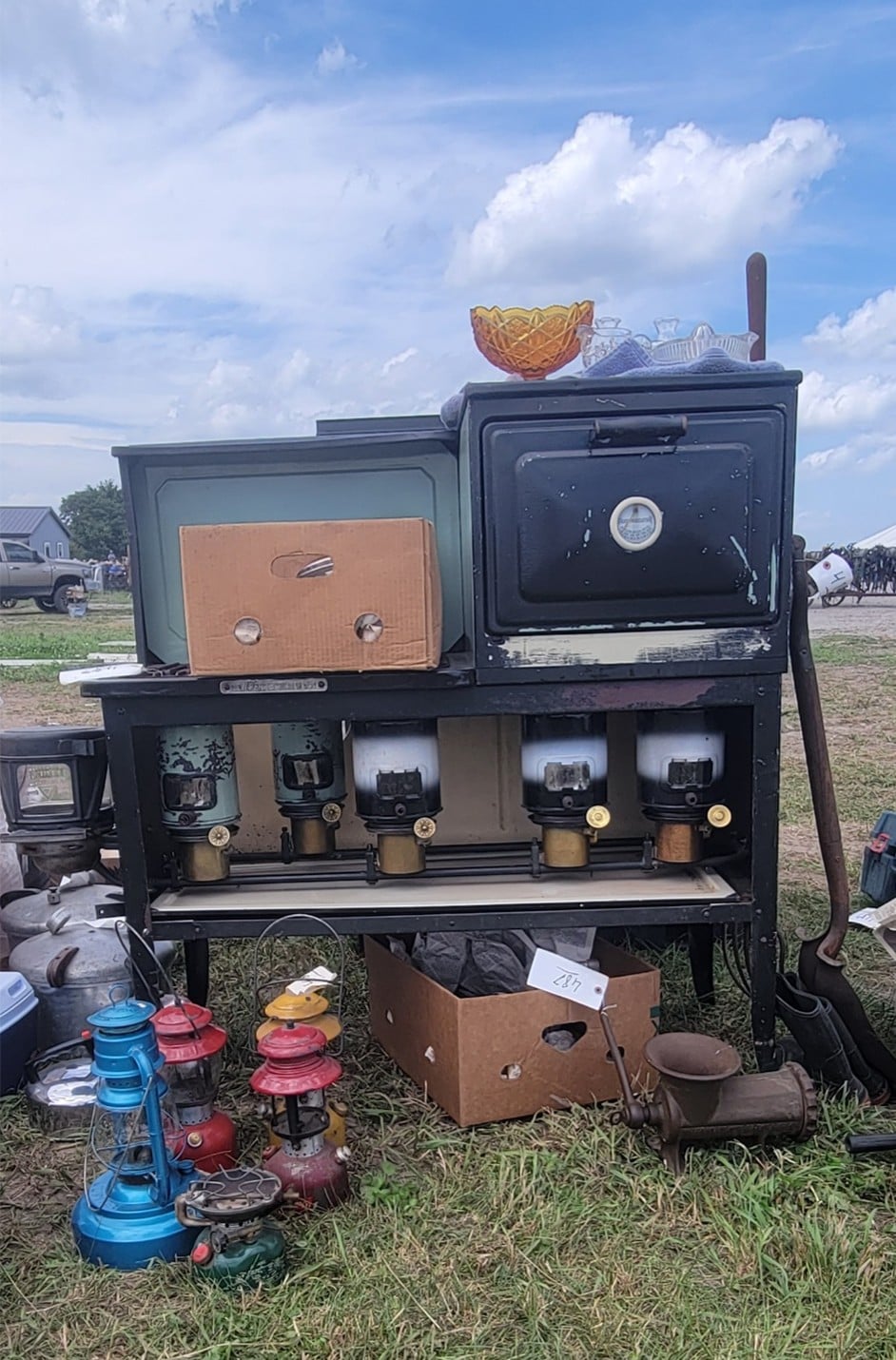
If you wanted to get from one to the other, you simply walked, pushing a stroller through the mud, dodging people and buggies, and trying to figure out which auctioneer you were hearing.
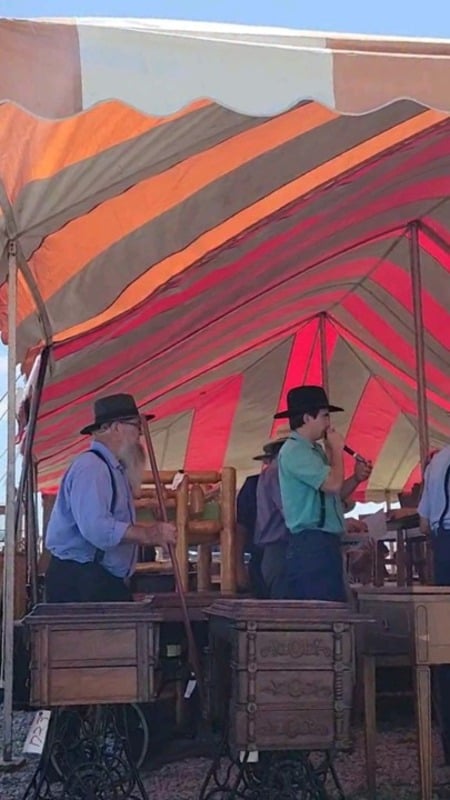
Getting Around
There was a department for transportation, too.
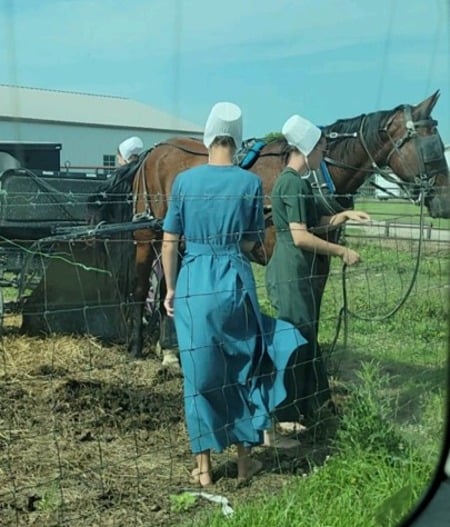
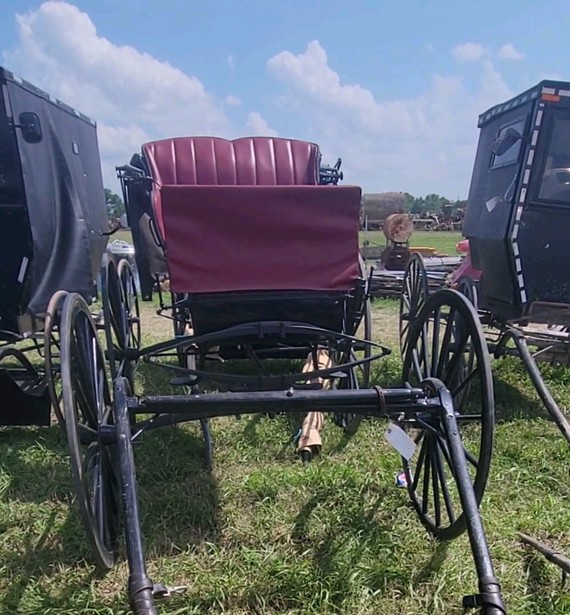
Horses, buggies and carriages were scattered throughout the auction grounds.
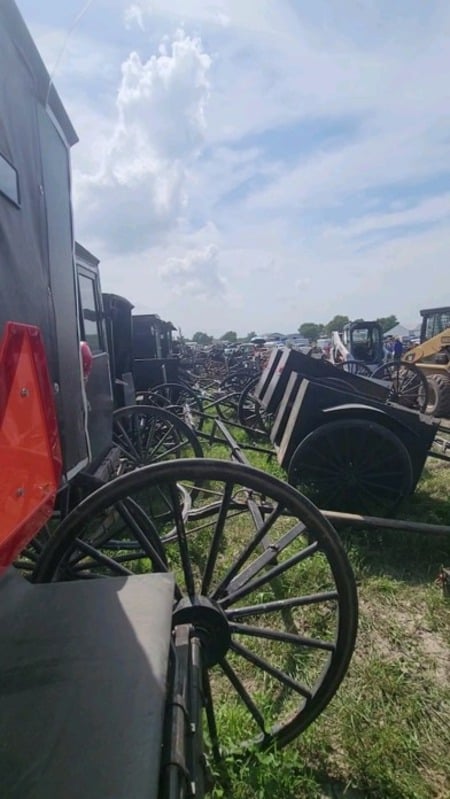
There were things for people who traveled by horse and buggy, things for people who worked with horses, and plenty of evidence that getting from one place to another was an important part of Amish life.
By then I was beginning to realize that the auction wasn’t organized around what I thought belonged together.
It was organized around what people might need.
And apparently, people needed a lot.
The Farm Department
If the household section seemed large, the farm equipment made it look small.
Rows of equipment and tools stretched across the grounds.
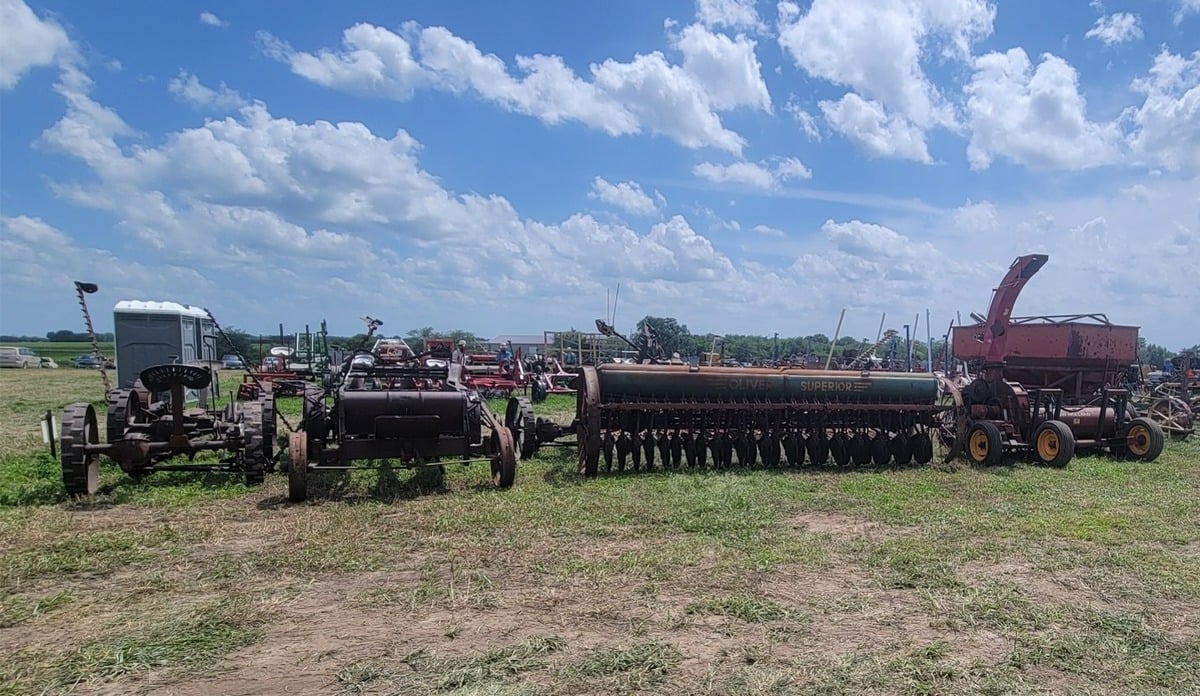
There were garden tools, machinery and equipment of all kinds.
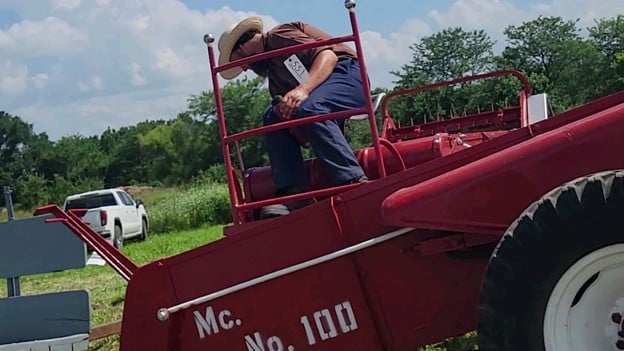
For someone who knew what he was looking for, it probably all made perfect sense. For me, it was still a little overwhelming, but I was beginning to get the idea. This wasn’t the kind of auction where somebody cleaned out a barn and brought a few things to sell. It was an annual event where people came prepared to buy and sell things they could actually use.
The Building-Supply Department
And then there was the building-supply section.
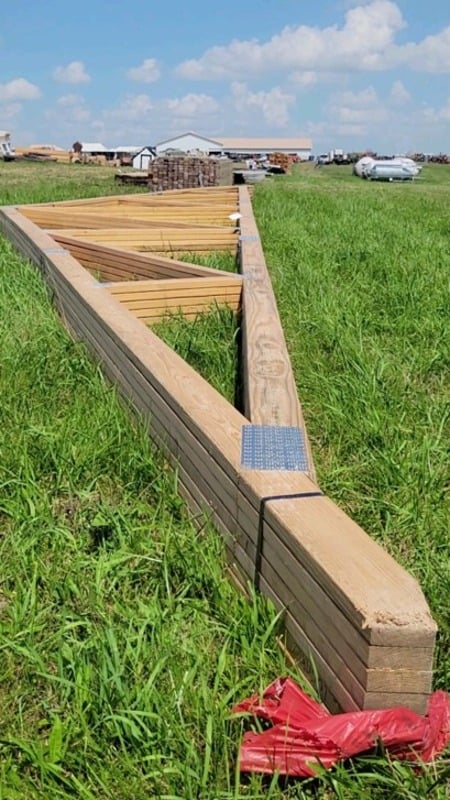
Lumber and building materials were mixed into the enormous collection of things spread across the farm.
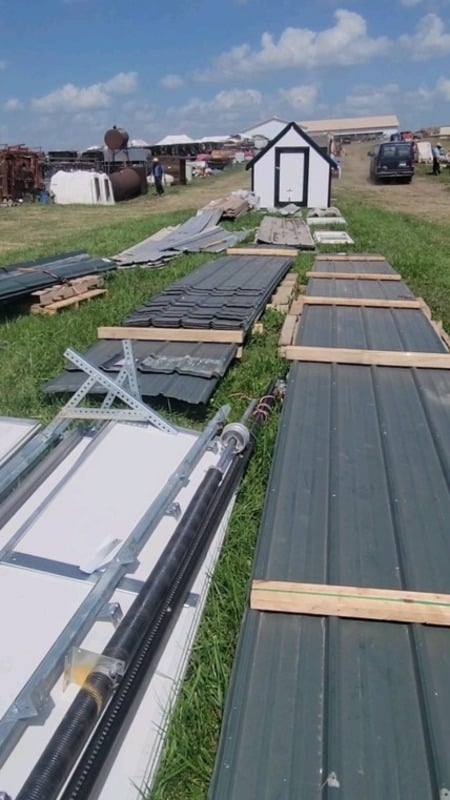
At some point I stopped trying to understand the sheer size of the auction and simply accepted it. If there was something an Amish family might need, somebody had probably thought to bring one—or two, or twenty.
By then, though, something else had begun to stand out to me. The auction wasn’t just about what was being sold. It was about the people who had come. I ran into many Amish people we knew, and everywhere I looked, people stopped to talk and catch up with friends and neighbors. Families moved from one section to another, children tagged along, and people seemed just as interested in seeing one another as they were in seeing what was for sale.
It was an auction, certainly, but it was also a social event. People had come to buy things, sell things, work, eat and visit with their neighbors. Once I realized that, the whole place began to make a little more sense.
At least a little.
I still had no idea how anybody found anything.
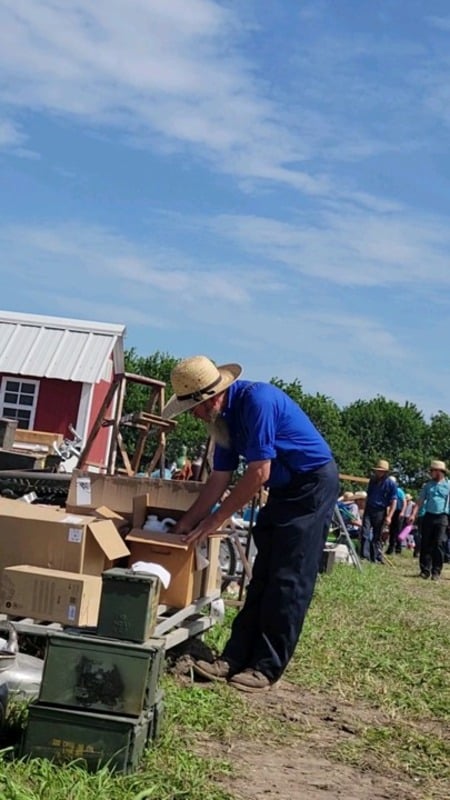
I bid on a few things myself, but the bidding went higher than I wanted to go. Delbert and Martha didn’t fare much better. Prices were higher than they had hoped, and they bought very little.
Eventually the heat, humidity, bugs and sheer exhaustion won, and we left before the auction was over. It had run longer than I expected.
I had come thinking I was going to find some things I wanted. Instead, I had discovered an enormous Amish marketplace spread across a farm, with five auctioneers calling at once and hundreds of people moving through the fields.
As we headed home, I remember thinking that now I knew what the auction was about and how it worked. Next year, I’d be prepared.
I had no idea how much more there was to discover.
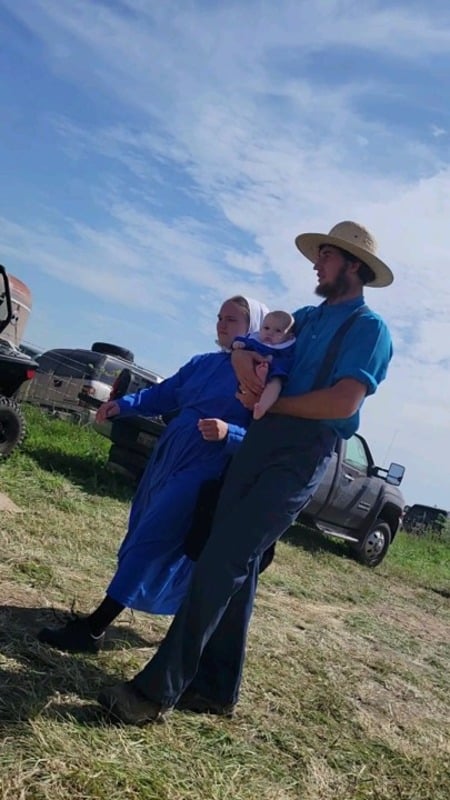
And years later, when I found myself wandering through those same auction grounds again with a camera in my hand, I realized something.
The things being sold were only part of the story.
The rest was waiting between the tents.
Check back for Part 2 of this story next week.
Haley Straw is a barefoot homeschooling mom of six who somehow ended up becoming an Amish taxi driver.
From her century-old jailhouse home in rural Missouri, she writes true stories about late-night Amish rides, frolics, disasters, awkward moments, unexpected wisdom, and the kind of community most people don’t realize still exists. Her stories help readers slow down, laugh a little, and remember what matters most.
You can find her signed books, free Amish-inspired goodies, and more at haleystraw.com

Beaver Run Road Auction.
The Beaver Run Road Auction in the Danville, Penna. area is very similar to the one
described in this article.
It’s held twice yearly, with many sections going on at any one time.
Many items are spread out across several fields. And, you’ll find just about anything at
this auction.
I have attended Beaver Run Road Auctions many times in the past.
Have always had an enjoyable time at the Beaver Run Road Auction.
That’s great to know, I appreciate your sharing!
Looking for quilts to buy
I’m looking for a few queen size quilts or full depending on the prices.
I live in Rolla Mo