Amish Say School Bus Actually Hit Their Buggy — Not The Other Way Around
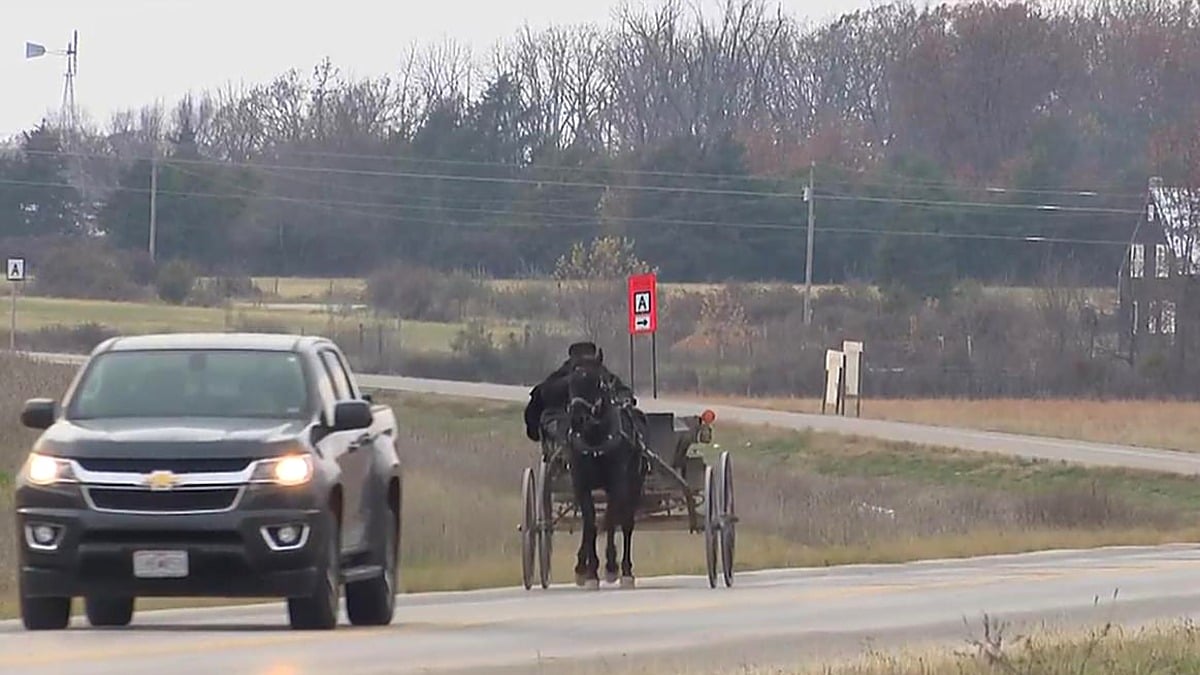
An Amish man speaking on behalf of his community in Seymour, Missouri has spoken to the media to contradict an unusual report from earlier this month.
In that story, it was claimed that an Amish buggy hit a local school bus, then took off. He says that what really happened is exactly the reverse.
Danny Y. Schwartz (more on Schwartz below) says the district’s version of the November 10 collision is inaccurate – and that the bus was on the buggy’s side of the road when it struck the buggy.
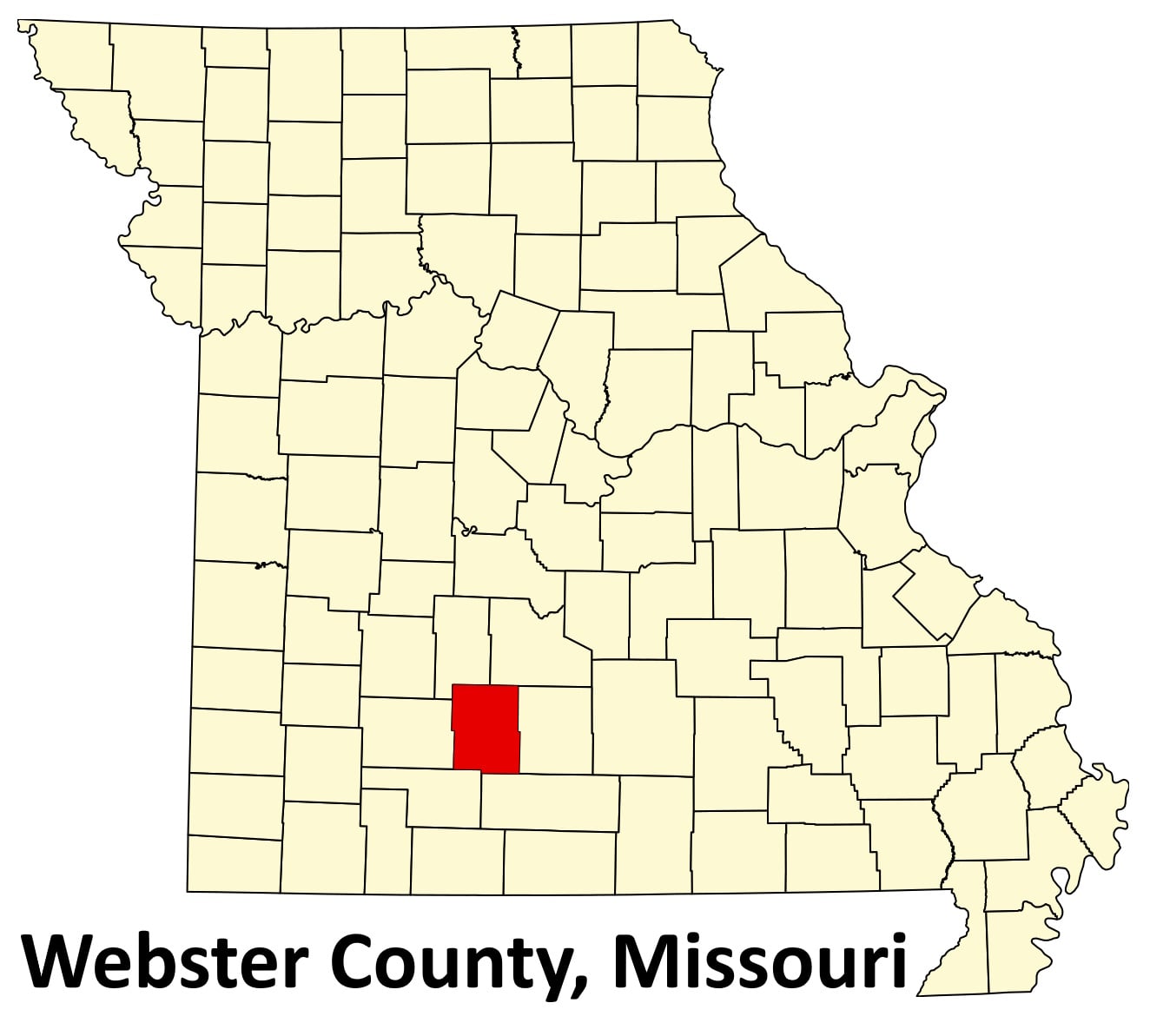
The collision happened just before 7 a.m. on Highway C, a few miles north of Seymour, in the area of Missouri’s largest Amish settlement.
In the school district’s account, covered here last week, the bus driver passed the buggy after finding a safe place to do so – and then the horse reared up and hit the bus. The district said the buggy then “took off” down a nearby rural road. No one was hurt, but damage to the bus was estimated at $4,000 to $6,000.
The Amish Account: A Quite Different Story…
Schwartz gave the Amish side of the story to the Webster County Citizen – and it’s essentially the opposite of what the district claimed:
“That school bus hit the buggy,” he said early Monday. “The physical evidence shows that. The buggy’s back axle was hit. It broke the shafts where the horses are hitched. The buggy reach was broke, too.”
He continued, “After the buggy was hit … yes, the horse was spooked, so it went wild, reared up, then hit the bus. But that happened after the bus hit the buggy.”
The Amish apparently call the stretch where it happened Alcorn Hill, near Alcorn Road. Schwartz says the road is straight there, but the hill limits how far ahead a driver can see:
“The buggy was traveling south and was almost to Alcorn Road, where there is a little hill with double-yellow lines,” he noted.
“The school says that’s a straight stretch, and that’s true, but there’s a good-sized hill there, so the visibility isn’t so good. That’s why there’s a double-yellow line on the road.”
According to Schwartz, the bus began to pass, but never fully moved into the other lane, and clipped the back of the buggy.
The Buggy Driver Says The Bus Actually Left
Schwartz’s account of what happened next doesn’t match the district’s either. The district’s account had the buggy leaving the scene, with its driver having to be located later.
Schwartz presents a different version. He says the buggy driver steered the horse down Alcorn Road until he got it under control, tied it along the ditch, and ran back to Highway C to the bus:
“The bus was safely parked in the next drive on the side owned by (Amish resident) Chris Graber,” he said.
“The boy then seen the bus just leave and go on south. He was left standing at the end of Alcorn Road. So he decided to take the lame horse to his girlfriend’s house.”
The horse lost a shoe in the collision and sprained an ankle, Schwartz says.
The Superintendent’s “Young Buggy Drivers” Comment
We’ve also got another matter to address. The original reporting put another layer onto the story – raising the question of the age of buggy drivers (one that has merit, in my view, and which we’ve covered before, for what it’s worth).
In the original story, the district’s superintendent raised the issue of young children driving buggies on morning bus routes – noting that incidents had occurred – and suggested that a minimum age for buggy drivers should be studied.
That’s all well and good, but one thing in the new reporting gives pause: the buggy driver in this collision was 20 years old. Likewise, Schwartz pushed back on the superintendent’s broader point:
“I want to be very clear in saying us parents (in the Amish community) do not let our school-children drive horses that are not safe. Children are taught safety rules. When it is said we have children on the roads who don’t know what they are doing (driving a buggy), that just isn’t true.”
The question of how young is too young to drive a buggy has come up before. This is important reporting I think, because the prior comments could leave some with the impression that the driver was significantly younger.
When we talk about Amish buggy drivers possibly being too young, we’re not talking about 20-year-olds, but those much younger than that – say 14 or even younger. So those comments seem to me to obscure what happened, and even cause me to raise an eyebrow…
Other Bus Incidents?
And…that’s still not all. Schwartz had something to say suggesting general blame in the other direction: he also said there have been numerous reports in the community of a Seymour school bus being driven erratically, with buggies nearly hit even after pulling as far over as they can.
He says he doesn’t know whether it’s the same bus involved on November 10. But he described one incident from earlier this fall, when a bus came up behind a girl driving a buggy uphill on Smith Road, north of Seymour, and started honking. She had nowhere to pull off, he says.
All in all, this is quite the counter-story to what was presented in the original reporting – which at the time, lacked significant input from the “Amish side” of the story.
One side seems to suggest that the Amish need to improve their driving on the road, while the Amish side is suggesting that someone or someones driving a bus in the district are a danger.
What The Amish Want
Schwartz says the Amish are not asking for an apology, or for any money. If the buggy driver had been at fault, he says, they would pay for the damage. But they don’t believe he was:
“We’re not wanting blame to be passed to the school,” Schwarz concluded.
“However, we don’t want the blame to be laid on this 20-year-old boy. The bus was on (the buggy’s) side of the road. The bus struck the buggy. Saying anything other than that just isn’t true.”
All things considered I’d tend to believe this account – in part because it is detailed and clearly communicated, and it seems to me, unequivocal in that the actual blame should be laid on the side of the bus. The additional context of reports of what sounds like aggressive driving by a bus or buses in the same school system also makes one wonder if there isn’t more to this story. I haven’t seen a response from the district to Schwartz’s account, though one may be forthcoming.
Generally, most Amish do not readily seek media coverage, especially regarding controversial topics like this – and more so in the more traditional communities, which I think we can count Seymour as. And Schwartz acknowledged that not everyone in the community wanted him going to the newspaper. That suggests to me that he feels strongly that what he’s presenting reflects the truth of what happened.
That said, Schwartz isn’t a typical member of this Amish community. Earlier this year he represented the Amish at a City Hall meeting on the proposed U.S. 60 overpass, part of a rare public push by the Amish on that project.
He also says he was among the first Amish to settle in Seymour, arriving with his family in 1968, and describes nearly 60 years of good relations with non-Amish neighbors. Coming to the media to get the story straight as he sees it could be seen as demonstrating a desire to maintain those good relations.
Schwartz also plans to meet with Seymour Middle School Principal Gavin Morris, who serves as the district’s transportation director.
Overpass Money On Hold
These recent incidents (on Sunday night, a Jeep rear-ended a buggy northwest of Seymour, sending a young boy to the hospital) have happened against the backdrop of an important infrastructure issue, which the Amish community have a marked interest in seeing come to fruition.
Returning to his advocacy role, Schwartz says the Amish want more pull-offs on two-lane highways, along with a long-planned overpass across U.S. 60 in Seymour:
“We really need that bridge over (U.S.) 60 in Seymour where the legislature approved the $6.4million, but the governor won’t release the money. Maybe we can turn this accident into something positive.”
As we covered before, Seymour-area Amish helped pay for engineering studies on the overpass earlier this year. In a column published this week, Citizen editor and publisher Dan Wehmer wrote that both houses of the Missouri Legislature approved the $6.4 million, but that Governor Mike Kehoe has put the money on hold, citing the state’s spending problem. Wehmer is calling on the governor to release it.