
Lancaster County Man Pleads Guilty In $402 Million ATM Ponzi Scheme That Hit Amish & Mennonites. But His Attorney Says The Loss Could Actually Be…Zero
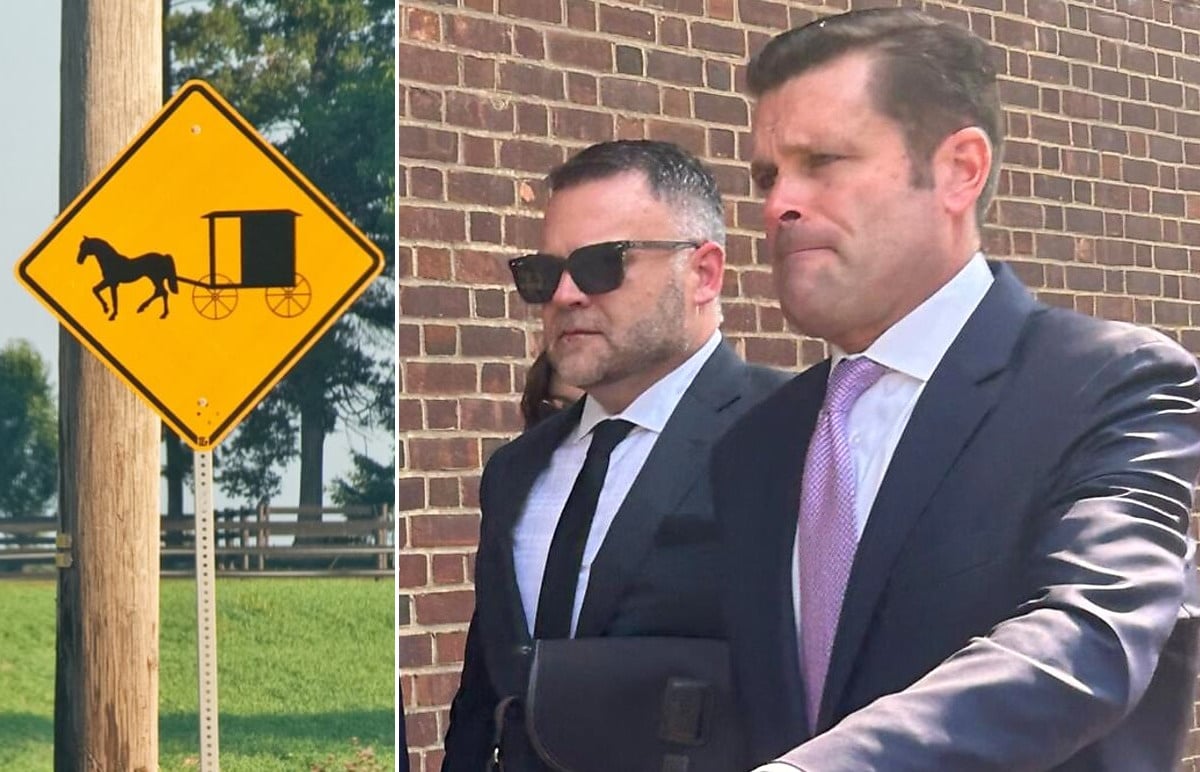
Daryl Heller, the Lancaster County businessman whose ATM investment network drew money from Amish and Mennonites across the Lancaster County area, among others, pleaded guilty to securities fraud on Monday, August 10.
However, no one has yet established how much his investors actually lost – with his attorney even claiming to the court that the figure could be zero.
Charged In September 2025
This is the latest in a case we looked at here in September 2025 when Heller was charged with multiple counts of fraud by the Justice Department.
Heller’s operation raised colossal figures – roughly $770 million from about 2,700 investors between 2017 and 2024. According to the SEC, “many” were Lancaster County Amish and Mennonites. Of that, roughly $402 million is unpaid principal – what investors were left holding when the operation collapsed.
The new reports highlight some eyebrow-raising details – including the attorney’s claim as well as the existence of an email in which Heller allegedly “confessed” to himself – but which is now in dispute.
We also learn how much money it took to get into the investment (answer: pretty big chunks), and the unanswered question of how much Amish and Mennonite investors actually lost.
One Count Of Securities Fraud, Four Wire Fraud Counts Dropped
Heller pleaded guilty to a single count of securities fraud. Under the plea agreement, federal prosecutors agreed to drop four remaining counts of wire fraud.
The securities fraud count is serious. It carries a maximum of 20 years in federal prison, three years of supervised release, and a $5 million fine. Restitution will be determined by the court.
Heller had initially pleaded not guilty, with his defense arguing the case was a business failure, not a crime. The guilty plea means a trial won’t happen. Not everyone is happy about that (more on that below). His trial had been scheduled to begin a month later.
The Defense Says The Loss Could Be…Zero?
Heller’s defense is presenting an argument that I imagine won’t make many of the victims smile, but it sounds like they’re doing their job.
First, the plea agreement did not include a total loss amount. That figure is relevant for more than one reason: under federal sentencing guidelines, a higher total loss pushes the sentence closer to the 20-year maximum.
Heller’s attorney, Christopher Adams, argued that the loss could theoretically be zero. His reasoning was that investors saved considerably on their taxes by depreciating the cost of the cash machines.
Assistant U.S. Attorney Francis Weber rejected that outright, telling the judge the loss would be “well above $100 million.”
U.S. District Judge Catherine Henry scheduled a separate hearing on the loss amount, to be held before sentencing. Depending on the figure they land on, it could mean Heller is jailed until sentencing (he is currently free on bond).
The Curious Email Heller Wrote To Himself
There’s also the matter of a curious email that remains at the center of dispute. It’s an email Heller wrote to himself on July 11, 2024.
That would be roughly three months after payments to investors stopped, and more than a year before he was charged. As reported by Lancaster Online:
“I am 100% at fault and no one is involved but me,” Heller wrote in the email that was included in the government’s plea memorandum.
“I hid it from all partners, stakeholders and friends and traded on trust with everyone. I regret everything . . . and apologize for the hurt and hardships I created for so many people. It was wrong of me.”
Adams told the court that Heller agrees to the “existence but not accuracy” of the email, and that Heller planned to add commentary to it in a later filing or hearing.
Three weeks after writing that note to himself, Heller wrote to his investors to “offer my most sincere apology.”
What It Cost To Buy In
The funds were sold through local people who were paid to bring in investors. They promised double-digit monthly returns, plus tax depreciation benefits.
You can see the appeal of that pitch, especially if it is coming from a local person with ties to the community. Even moreso if they’re speaking to you in Pennsylvania Dutch. Some may have thought “too good to be true,” but many clearly did not.
Investors were told their money would buy and operate cash machines and cryptocurrency kiosks through Heller’s Paramount Management Group. For their investment, they would receive monthly payments funded by transaction fees.
The cost to invest wasn’t small: increments of $52,000, $104,000 or $120,000.
But what that money bought turned out to largely be fiction. A 2024 civil case ended with investors taking control of the network. They learned it held only a fraction of the 30,000 ATMs they believed they owned.
Prosecutors say thousands of the machines either did not exist or simply were not running. A January 2025 lawsuit alleged Heller bought more than 5,000 used ATMs that mostly never left a warehouse.
Heller also admitted creating false records that overstated the size of the network and its revenue.
How Much Did Amish & Mennonite Investors Really Lose?
This is a relevant question not only because the focus of this website is the Amish and related communities, but because it also fits a pattern of big losses suffered by victims of affinity fraud – which hits close-knit religious and ethnic communities of all kinds, not just Plain ones. But unfortunately, we have repeatedly seen the Plain community on the wrong end of such financial schemes.
And it sounds like Heller – the son and grandson of Mennonite pastors, raised on a Lancaster County farm – and his operation tapped into those strong connections and trust networks within the Amish and Mennonite communities, thanks in part to his own background and the backgrounds of those who brought investors in.
The SEC has said “many” of the roughly 2,700 investors were Amish or Mennonite. But that is apparently as precise as it gets. Nothing official has stated the Plain community’s share of the $402 million in unpaid principal.
The above-mentioned loss hearing will produce a number, but we don’t know if it will indicate how much is attributed to Amish and Mennonite households.
Similar cases have run through these communities before, including in Lancaster County, notably the John M. Sensenig case of the late 1990s running through the 2000s.
It’s become a pattern that seems to repeat every few years with the epicenter in a different Plain community – sometimes Ohio, sometimes Indiana, sometimes Pennsylvania as the focus – but often spreading well beyond the home geography of the operators.
Heller Will Remain Free For A Few Months Before Sentencing
Heller remains free on $500,000 unsecured bond, though under travel restrictions keeping him in Pennsylvania, with the exception of trips to his legal team in New Jersey. He has filed for bankruptcy, with assets including real estate and snowmobiles being sold off.
But one of the victim investors, construction company founder Bob Brandt Jr., believes that the guilty plea was the “most convenient way out,” calling him “morally bankrupt,” and saying he should work to pay the victims back.
Heller is scheduled to be sentenced on December 1.





Ans so it goes
You hear about this sort of fraud all the time with variations. A smooth talking, slick shyster rolls into town with a fabulous get rich scheme, signs up a bunch of suckers and cleans-out the victims. Think about it. If someone could actually generate those type of returns, wouldn’t it be a lot easier to market to a very small group of wealthy investors rather than a large group of everyday people?